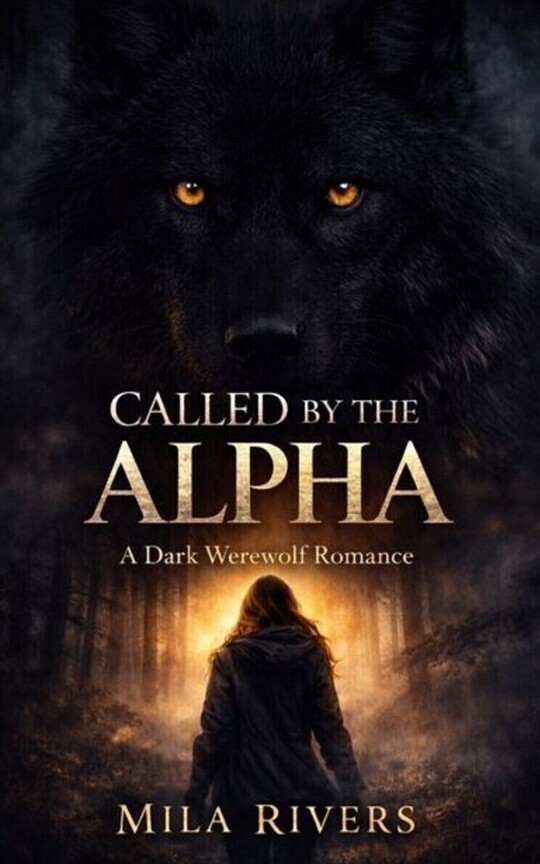
Chapter One — The Alley That Learned Her Name
The alley smelled like wet brick and old smoke, the kind that clung to the throat even after you left it. Rain had passed through earlier, leaving the ground slick enough to reflect broken light from a dying lamp overhead.
Gizem didn’t remember choosing to run.
Her shoes hit the ground too fast, too loud. Every step echoed back at her like something following just a fraction behind her movement. She kept her eyes forward because looking back would turn imagination into confirmation.
And she didn’t want confirmation.
The alley narrowed as she turned the corner, the darkness folding tighter around her like it had somewhere better to be but decided to stay instead.
That was when she saw him.
Micah.
He wasn’t moving. He never seemed to move as other people did. It was always as if he had already arrived, and everything else was just catching up.
He leaned against the lamppost as it belonged to him. Like the street had decided long ago that resistance was unnecessary.
Gizem stopped so abruptly that her breath stumbled.
For a second, she just stared at him.
He hadn’t changed. That was the strange part. Not in years. Not in the way people were supposed to. The kind of “not changing” that made you question whether time had ever actually touched him at all.
Then she ran straight into him.
It wasn’t graceful. It wasn’t planned. It was relief disguised as impact.
She slammed into him and wrapped her arms around his waist with a force that had nothing to do with affection alone.
Her face pressed into his coat.
“I’m being followed,” she said, her voice muffled.
For a moment, Micah didn’t respond.
His hands hovered in the air like they were deciding whether they were allowed to exist in this situation. Then, slowly, carefully, they settled on her back.
A hesitation so small it almost didn’t count.
“I know,” he said.
His voice was calm in a way that didn’t match the alley.
Smooth. Controlled. Heavy, like something that didn’t need to be raised to be understood.
Gizem felt it then—the shift in the air behind her.
Not movement exactly. More like attention becoming directed elsewhere.
She turned her head slightly.
There was a man behind them.
Far enough to pretend it was a coincidence. Close enough that it wasn’t.
He stood still, breathing hard, his hand tucked too tightly into his pocket. Whatever was in there wasn’t meant to be seen in daylight.
Micah didn’t look at him right away.
That was what made it worse.
When he finally did, it wasn’t curiosity.
It was recognition.
Like the man had already failed at something important and just hadn’t realised it yet.
The man took a step back.
Then another.
And then he ran.
No shouting. No confrontation. No warning that something had gone wrong.
Just the absence of him.
Gizem exhaled shakily, only then realising she had been holding her breath for too long.
Micah’s hands remained on her for a moment longer before he let go, as if it was a decision, not a reflex.
“Walk you home?” he asked.
It wasn’t really a question.
But he still waited for an answer.
Gizem nodded.
The walk to Calvary Street felt longer than it should have.
The city around them didn’t feel asleep, exactly—it felt like it was pretending to be. Streetlights flickered inconsistently, and distant traffic sounded like it belonged to another world entirely.
Gizem kept stealing glances at Micah when she thought he wouldn’t notice.
He always noticed.
That was the problem.
Calvary Cathedral rose ahead of them first, its structure dark and heavy against the night sky. Beside it, the Sacred Miracles Orphanage stood quieter, older in a way that didn’t come from age alone, but from memory.
From things that had happened, and refused to leave.
Gizem’s hands had started to sweat.
“You don’t have to follow me all the way,” she said quietly.
“I know,” Micah replied.
That was his answer for most things.
They stopped at the gate.
The metal felt cold when she touched it.
Micah’s gaze moved over the street once, slow and deliberate, as if he were reading something written in the dark that only he could understand.
“Lock it,” he said. “As soon as you’re inside.”
Gizem gave him a flat look. “I’m not helpless.”
“I didn’t say you were.”
A pause.
“Ground floor windows,” he continued. “Check them. All of them. Even the ones with locks already installed.”
“That’s excessive,” she muttered as she pushed the gate open.
“Security often is.”
She hesitated before stepping in.
Then, softer, almost unwillingly:
“Thank you.”
Micah didn’t answer immediately.
He watched her instead.
Like he was making sure she would actually make it inside.
Then she turned away and walked quickly up the path, refusing to look back even though she could feel his eyes still on her.
Only when the orphanage doors locked behind her did she finally breathe again.
Micah stood for a moment longer outside the gate.
Not moving.
Not leaving.
Just listening.
When he was satisfied, he turned away from the orphanage and walked back into the night.
The alley was exactly as he had left it.
Which meant no one had cleaned it.
The same man from before was still there—along with another now, both leaning casually against the wall like they hadn’t just lost something important.
Like they hadn’t been afraid.
Micah stopped a few feet away.
He tilted his head slightly.
“I’ve been meaning to ask,” he said, voice calm, “do you enjoy following females at night for your own sick enjoyment, or do you have darker motives for wasting oxygen the way you do?”
The men exchanged a look.
Then one of them scoffed.
“You’re pretty stupid coming back here alone.”
Micah looked mildly disappointed.
Not angry.
Not even amused.
Just disappointed, like they were behind schedule on becoming better people.
“That’s an interesting assumption,” he said. “Incorrect, but interesting.”
He took a step forward.
Unhurried. Like time wasn’t a constraint, he respected.
“The real issue,” he continued, “isn’t that I came back alone. It’s that you assumed that mattered.”
His gaze moved between them.
Slow.
Measured.
“You’ve confused isolation with vulnerability,” he said. “A common mistake. Not an impressive one, but common enough that I’ve stopped being surprised by it.”
He stepped forward.
Slowly.
Deliberately.
Like time itself had agreed to move differently around him.
The man in front adjusted his stance, trying to look braver than he felt.
Micah watched him for a long moment.
Then reached up and removed one of his rings.
The metal caught the light briefly.
“Tell me,” he said, almost conversational, “do you believe consequences are optional… or just inconvenient?”
A faint pause.
Then:
“I’m curious which delusion you prefer.”
He flicked the ring.
It struck the lamppost with a sharp sound when it shattered into silence as the light died.
And the alley became something else entirely.
Something it didn’t have a name for anymore.