
Prelude: What the World Called Love
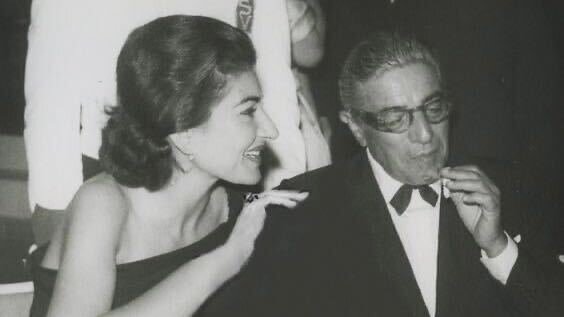


Maria Callas was one of the most extraordinary voices of the twentieth century. Born in 1923, she became an icon: a soprano whose discipline and brilliance bent opera to her will and earned her the name La Divina. The world watched her on stage in awe, and off stage with hunger.
In 1959 she met Aristotle Onassis, the shipping magnate who would dominate nearly a decade of her life. Their relationship was intense, public, and ruinously unequal. She left her marriage, risked her career, and surrendered what little safety her fame still allowed her to remain within his reach. He gave her spectacle. Control, disguised as devotion. Absences, timed to break her. Betrayals designed to remind her that she was never free.
None of it was love. All of it was power.
In 1968, he married Jackie Kennedy.
The newspapers told her before he did.
The world called it a love story. The tragic diva, discarded for a former First Lady. But the truth was far uglier. Onassis's hold over Maria was deliberate. He kept her unsteady with financial pressure, manipulation, and a cycle of abandonment that left her dependent on the man who was undoing her. The world applauded, called it passion, called her heartbreak poetic.
Even now, the story is softened, the impact of Onassis' behaviour undermined or blatantly disregarded. Biopics (such as Maria starring Angelina Jolie) render her fragile and ethereal, a lonely figure whose pain is framed as beautiful. They do not name what was done to her. They do not call it abuse.
I began my research into this subject expecting tragedy. What I found was a pattern—one that has never stopped repeating in the lives of women. This story began as a question: What if Maria had a second chance? Not to love again, but to reclaim what was taken. To haunt the myth that buried her. To let her answer to it, one last time.
This is not a biography.
This is not a love story.
This is a reckoning.















Hi there!
I just started reading Aria For A Phoenix and I’m already really into it! The way you reframe that famous voice and the emotional journey you’re building around her after everything she’s been through is so compelling I found myself wanting to know what she’s going to do next with that strength you hint at. Your take on her story especially the shift from silence into power has really stuck with me. It’s the kind of narrative that makes you think, Wow, this character deserves her own spotlight Thank you for sharing something so dramatic and thoughtful!
By the way, I’m on Instagram: @lizziedoesitall
Warmly,
Lizzy