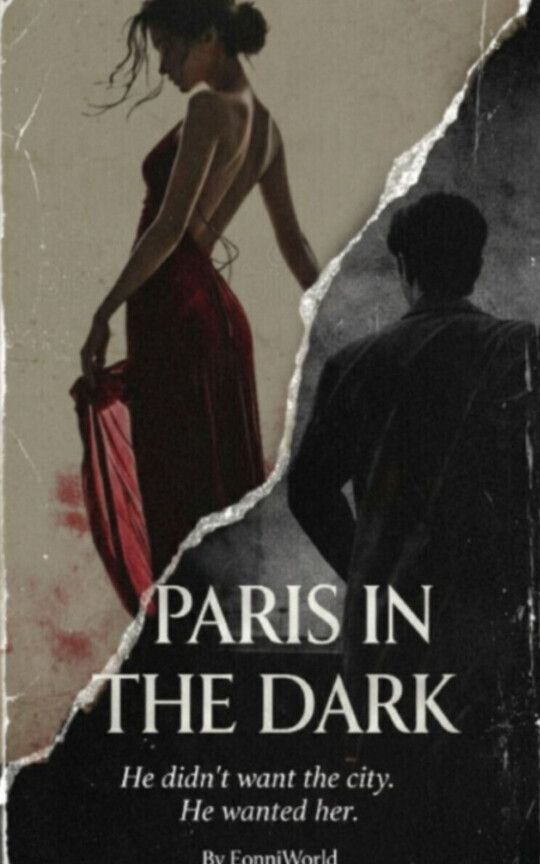
1. Silence
“Do you realize what you’re doing to me?”
She laughed, tilting her head slightly as they swayed beneath the dim golden lights of the ballroom. “What exactly am I doing?”
He pulled her closer, slowly, deliberately, until the space between them no longer existed. Her breath brushed against his jaw. His hand settled at her waist, fingers pressing just enough to remind her that she belonged exactly where she was.
“That slit,” he murmured near her ear, voice low enough that only she could hear. “It’s dangerously unfair. So close, yet refusing to reveal anything. You enjoy testing my patience.”
She smiled, eyes shining with mischief. “You’re exaggerating.”
“Am I?” His gaze flickered briefly to the room around them before returning to her. “Every man in this hall has been staring at you since you walked in. The only reason they’re still breathing is because you’re in my arms. Otherwise, I would have forgotten mercy tonight.”
She shook her head, amused, knowing the weight behind his words. He was not a man who threatened lightly.
“You’re impossible,” she whispered, resting her hand against his shoulder as the music slowed further.
“And you,” he said, brushing his thumb lightly against the fabric of her dress, “are reckless with the effect you have on me.”
For one fragile second, the world felt contained within the circle of his arms.
Then...
A sharp crack split through the melody.
Not loud enough to be understood immediately. Just wrong enough to freeze every movement in the room.
She stiffened.
He frowned, confusion flickering across his face before instinct took over.
His hand tightened at her waist and that was when he felt it. Warmth spreading, a sticky feeling, familiar in the worst possible way.
He looked down slowly.
Yellow fabric darkened beneath his palm.
Her smile faltered, replaced by something softer.
His voice broke when he said her name.
Her knees weakened, and he went down with her, holding her before she could collapse fully to the marble floor.
“Stay with me,” he whispered urgently, brushing hair away from her face. “Look at me. Do not close your eyes.”
Around them, chaos erupted. Security rushed in, forming a protective circle, shouting orders.
But he heard none of it.
All he could see was the slow dimming in her gaze.
She smiled again, faintly.
As if she were the one comforting him.
And then... Silence.
✨
Bhavya’s vision blurred slightly as she closed the book halfway, her chest tightening in the same place it had tightened the first three times she had read this chapter. A faint burning sensation gathered behind her eyes, but she blinked it away stubbornly.
She kept her thumb pressed between the pages, holding the book open as if refusing to let the silence that followed settle too quickly, her eyes lingering on the space where the words ended even though she knew them by heart now, knew the exact rhythm of the sentence that described his devastation.
She felt a faint burning sensation at the back of her throat and she tilted her face slightly toward the window so the morning light could distract her from it.
The bus engine hummed steadily beneath her, pulling her away from the quiet edges of her small town toward the widening roads that led to Patna.
Morning sunlight filtered in through the slightly dusty window beside her, resting gently across the open page as if it too had paused at the tragedy.
She traced the edge of the page slowly, her nail catching faintly against the paper where she had underlined a line weeks ago.
He always chose pain.
That was what unsettled her.
Not the violence, not the power, not even the tragedy itself.
It was the way his characters loved fiercely and then lost helplessly, as if the universe in his stories rewarded devotion with destruction.
She should have stopped reading him after the first book.
She had promised herself she would and yet here she was, rereading the novel she already has read 3 times and knew would break her again.
Across the aisle, seated on the outer seat, a man noticed.
He had not meant to notice her this closely.
He had only recognized the cover of the book she was reading out of instinct, the same way a musician might recognize the first note of his own composition drifting from somewhere unexpected, but once he had realized what she was holding, something within him had shifted.
She was not performing her emotions.
That was the first thing he observed with quiet precision.
There were readers who exaggerated their reactions in public spaces, who sighed audibly or wiped tears in a way that invited sympathy, but her response felt private, almost stubbornly contained.
That difference mattered to him more than it should have.
The bus hit a shallow pothole, and a subtle jolt ran through the seats. She steadied herself instinctively, fingers tightening around the book, her shoulder brushing lightly against the metal frame of the window. Sunlight shifted across her face as the angle of the bus changed, illuminating the faint crease between her brows.
He remembered the exact night he had written that ballroom scene, she was reading.
The rain had been heavy against his apartment window, the city outside blurred by water and neon reflections, and he had been certain that the only way to make the love feel real was to make the loss irreversible.
He had not imagined someone would sit on a morning bus years later and quietly disagree with him.
“He could have saved her,” she murmured again, softer now, almost to herself.
The words drifted across the narrow aisle without her realizing they had.
Rishit’s fingers twitched slightly against his knee.
He turned his gaze toward the opposite window, careful not to let amusement reach his expression.
He wondered, briefly, what kind of person believed so firmly in second chances.
Whether she would have written the ending differently.
Whether she would have chosen hope over devastation.
The thought lingered longer than it should have.
Bhavya reopened the page she had marked and reread the final paragraph, slower this time, as if testing whether familiarity might dull the ache. It did not.
If anything, knowing what was coming made the words heavier, because she could feel the impending loss in every preceding sentence.
She shifted slightly in her seat, tucking a strand of hair behind her ear as the breeze from the half-open window moved through it. The air carried the faint scent of soil and diesel, a strangely comforting combination that had accompanied her every morning since college began.
This bus had become part of her routine, part of the invisible bridge between her small town and the city that held her lectures, her notebooks filled with scribbled formulas, her ambitions that felt larger than the fields she passed daily.
And lately, his books have become part of that bridge too.
She closed the novel finally, pressing her palm flat against the cover as if sealing something sacred inside it, and rested it against her chest for a moment before lowering it to her lap.
She did not notice the man across from her observing the gesture with unexpected attentiveness.
To him, that small movement said more than any online review ever could.
The conductor called out the next stop faintly, his voice rough from repetition, and a few passengers shuffled toward the front. She remained seated, gaze drifting once more toward the passing landscape, though it was clear her thoughts were still somewhere inside chandeliers and marble floors and a man kneeling beside the woman he could not save.
Rishit shifted slightly in his seat, the fabric of his shirt catching against the worn cushion.
He was acutely aware of the diagonal distance between them.
Aware of the narrow aisle separating fiction from reality.
Aware that the girl who believed his hero should have chosen differently was close enough for him to hear her breathing if he tried.
He wondered, unexpectedly, whether she followed him online.
Whether her username was hidden somewhere among the thousands of comments he skimmed late at night.
Whether she had ever typed out a message condemning him for cruelty.
The idea unsettled him in a way that was not entirely unpleasant.
Bhavya adjusted her grip on the book and slipped a thin bus ticket between the pages. She always marked her place this way, small slips of her everyday life tucked inside a fictional heartbreak.
Her stop approached gradually, the familiar bend in the road appearing ahead like a quiet signal.
She felt it before she heard it.
The conductor called out the name of her stop, and she exhaled, reluctantly.
There was always something disappointing about closing a story mid-ache, about stepping away from emotions that still demanded resolution.
She rose from her seat, balancing herself as the bus slowed unevenly. For a brief second, her hand rested against the top of the seat in front of Rishit, steady and unaware of the fact that he had instinctively drawn his legs back to give her space.
As she stepped into the aisle, she glanced toward him automatically, a polite acknowledgment of proximity rather than curiosity.
Their eyes met. Not long enough but just long enough to register his presence.
He noticed that the sadness from the book had not entirely left her expression.
Then she stepped down onto the roadside.
Morning light surrounded her, soft and forgiving, dissolving the sharp edges of fictional tragedy.
The bus door folded shut with a mechanical sigh.
Rishit remained seated as it pulled away, watching through the slightly dusty glass as her figure grew smaller against the quiet stretch of road, her bag slung over one shoulder, her pace unhurried.
He did not understand why the empty seat by the window felt conspicuous once she was gone.
The engine continued its steady hum.
Passengers resumed their small conversations.
And yet something had shifted, subtle but undeniable.
He leaned back against the seat, exhaling slowly, telling himself it was nothing more than coincidence, nothing more than the passing curiosity of a writer observing a reader.
But when his own stop arrived deeper inside the city and he stepped down into the layered noise of Patna, the morning felt less automatic than usual.
His phone vibrated in his pocket as he walked toward his office building.
He scrolled briefly, expression unreadable, before locking the screen.
None of them had said that he could have chosen differently.
✨
By the time Bhavya reached her college gates, the ache from the book had settled into something quieter, less sharp but still present.
The campus was already alive with movement. Students gathered in small clusters beneath trees, some revising hurriedly before lectures, others laughing too loudly for so early in the morning. The building walls carried the warmth of the rising sun.
She adjusted the strap of her bag on her shoulder and walked toward the courtyard where her friends usually waited.
It always felt strange to return to ordinary life after living inside heightened emotion.
“Look who finally decided to rejoin civilization,” Annu called out the moment she spotted her. “Did you finish crying over your fictional husband again?”
Bhavya rolled her eyes but could not suppress the small smile tugging at her lips as she took a seat beside them on the low cement boundary wall.
“He is not my husband,” she replied calmly, placing her bag down. “And I wasn’t crying.”
“Fourth time reading the same book,” Kavya said dramatically, leaning forward. “Fourth. That is not normal behavior.”
“It is completely normal,” Bhavya insisted, though the softness in her voice betrayed that she did not actually feel the need to defend herself very strongly. “Some stories deserve to be read more than once.”
“Some stories,” Annu corrected, snatching the book from her bag before Bhavya could stop her, “or some dangerous fictional man with anger issues and too much power?”
Bhavya reached for it immediately. “Give it back.”
Her friends laughed. They had grown used to this ritual. The teasing. The exaggerated sighs. The way Bhavya would pretend to be unaffected while still guarding the book as if it were fragile.
“You have never even seen the author,” Kavya said, flipping the book over to look at the back cover. “He doesn’t post his face. He barely does interviews. For all you know, he could be seventy and let’s not talk about the name. His pen name is Reez, you don’t even know his real name.
Bhavya took the book back carefully, smoothing her hand over the cover.
“It doesn’t matter,” she said, more quietly now.
“It doesn’t matter?” Annu repeated, raising an eyebrow.
“No,” Bhavya replied, meeting their curious expressions with surprising steadiness. “I don’t care what he looks like or what his name is.”
Her fingers tightened slightly around the edges of the book.
“I love the way he writes people,” she continued, her voice losing its defensive tone and becoming something more certain. “His characters feel real. They feel flawed and intense and complicated. They don’t love safely. They don’t leave quietly. They make mistakes that feel human.”
Kavya tilted her head. “And that makes you fall in love?”
Bhavya hesitated, searching for the right phrasing.
“It makes me feel understood,” she corrected gently. “There’s a difference.”
Her friends fell momentarily silent, perhaps not expecting that answer.
She looked down at the cover again.
“Do you know how rare it is,” she added, softer still, “to read something and feel like the person who wrote it has felt things the same way you have?”
The campus noise continued around them, but something in her expression had shifted from playful to sincere.
“I don’t need to see his face,” she said finally. “I see his mind every time I read him. That’s enough.”
Annu exchanged a glance with Kavya, somewhere between teasing and thoughtful.
“You are impossible,” she declared lightly, bumping her shoulder against Bhavya’s. “If he ever reveals himself and turns out to be completely average, I want to see your reaction.”
Bhavya laughed softly at that.
“I think I would still choose the characters,” she admitted. “They’re the ones I fell for first.”
And somewhere across the city, unaware of this conversation yet somehow woven into it, the man who had written those characters sat in an office filled with drafts and deadlines, never imagining that a girl in a sunlit campus was defending him without ever knowing his face.