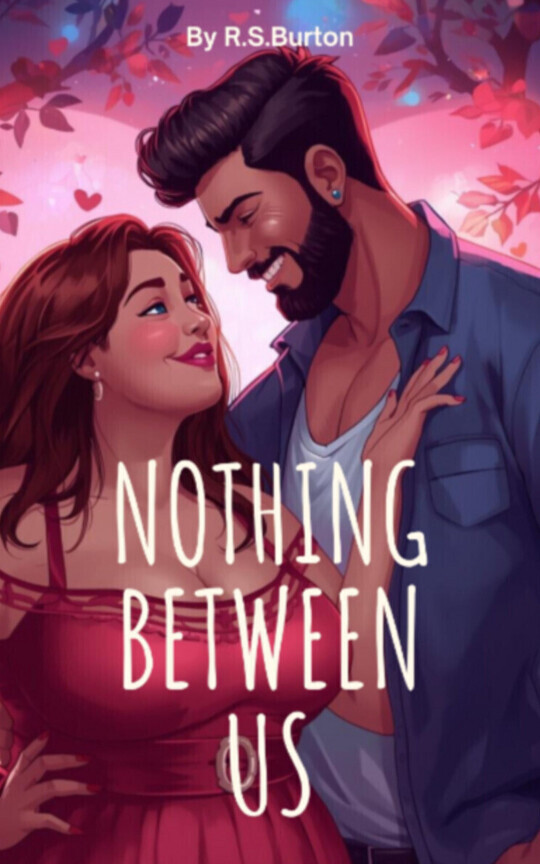
Chapter 1
The alarm went off at six-fifteen, and Zara Mielle silenced it before the second buzz.
She lay still for a moment, staring at the water stain on her ceiling. It had been there since she moved in, shaped vaguely like the state of Florida, and she had long stopped noticing it the way she had long stopped noticing the radiator that groaned at odd hours, the neighbor upstairs who wore hard-soled shoes at midnight, and the window that let in a thin ribbon of cold air no matter how many times she sealed it with tape. The apartment on West 148th Street was small and imperfect and entirely hers, and that still meant something to her even after two years.
She got up.
The kitchen was barely big enough for two people to stand in at the same time. She put the kettle on, pulled her notebook from the counter where she had left it the night before, and flipped to the page she had been working on. Three lines of a verse. An arrow pointing to a word she had crossed out and rewritten four times. A small star drawn in the margin, which was her shorthand for something she was not yet ready to throw away.
She made coffee, stood at the window with the mug in both hands, and watched Harlem wake up.
She loved this part of the morning. The street below moved slowly at first, a delivery truck idling at the corner, a woman walking a small dog, a man in a bright orange vest unlocking the gates of a hardware store. Then gradually the rhythm picked up, more people, more noise, the city finding its pace, the way a song found its groove, tentative at first and then all at once inevitable.
Zara had grown up watching cities from windows. She had done it as a child in her mother's house in Queens, watching the block like it was the only television
she needed. She did it now for different reasons. New York still fascinated her. It still made her feel like anything could happen, which was either the most dangerous thing about it or the most beautiful, depending on the day.
Today, she had not yet decided which.
By seven, she was at her keyboard, a secondhand Yamaha she had bought from a musician in the Bronx who was moving to Atlanta and needed the cash. It took up a third of her living room. She did not care. She played through the chord progression she had been building all week, soft at first, then with more pressure as the melody opened up and told her where it wanted to go. She sang quietly, just shaping the sounds, not performing, just feeling.
This was the part of her life she protected most fiercely. The hour before the world got loud. The hour when the music was still only hers.
Two years had changed her in ways she sometimes catalogued and sometimes tried not to think about. She was twenty-five now, sharper in ways that mattered and softer in ways that surprised her. She had built something real in the time since that night at the Meridian Showcase, not by forgetting what happened there, but by refusing to let it be the last thing that defined her. She had released three singles independently, recorded in a friend's home studio in Brooklyn, mixed by a sound engineer she paid in home-cooked meals and gratitude. The songs had found people. Not millions. Not yet. But enough. Enough that her name was being said in rooms she was not in. Enough that a small and growing corner of the internet knew the words to her bridge in "Salt and Silence" and sang them back to her at the open mic nights she still played on weekends.
She had a manager now, too. That still felt strange to say, even in her head.
Marcus Webb had come to one of her shows eight months ago, a Tuesday night at a venue in the East Village that held maybe ninety people, seventy of whom were actually paying attention. He had waited by the merch table afterwards, a compact man in his late forties with reading glasses pushed up on his forehead and the calm energy of someone who had seen enough of the industry to stop
being impressed by it and had started, instead, being interested. He had handed her his card. She had gone home and looked him up for two hours before she called him back.
Marcus was not a flashy manager. He did not promise things he could not deliver. What he did was work steadily and talk plainly, and in Zara's experience, those two qualities were rarer in this business than talent itself.
It was almost nine when her phone rang, and his name appeared on the screen.
She set down her coffee and answered. "You're calling early."
"I've been up since five," Marcus said. He sounded like it. "Are you sitting down?"
Zara glanced at the keyboard bench she had just vacated. "I can be."
"Vertex Records called me last night." A pause. Just long enough to matter. "They want to talk about a full contract, Zara. Not a development deal. Not a handshake conversation. A real contract. They've been watching your numbers, and they like what they see."He sat down.
Vertex Records was not a small name. They had shaped careers she had admired since she was fifteen years old. Their roster was the kind of list a person printed out and stuck to a wall when they were young and dreaming, which she had done, more than once, in more than one apartment.
"There's a condition," Marcus said.
Of course, there was. There was always a condition. Zara had learned that about this industry the hard way, that every door that opened also revealed the dimensions of the room it was guarding. "Tell me."
"They want the debut album produced by Adrian Cole."
The name landed in the room as something dropped from a height. Zara did not move. She was aware of the kettle starting to whistle faintly in the kitchen, aware of the sound of traffic four floors below, aware of her own breathing, which had become very deliberate and very controlled.
"Zara."
"I heard you," she said.
"I know what that name means to you. I know the history. But I need you to hear the rest before you say anything." Marcus spoke carefully, the way he always did when he had already thought through both sides of an argument. "If you walk away from this, the contract disappears. They're not offering it to anyone else on their roster right now. This is specifically for you, specifically with him. They believe the pairing works. They've heard the kind of music you make, and they believe Cole is the producer who can take it where it needs to go."
She pressed the phone harder against her ear. Outside, a car horn sounded twice, then stopped.
"How long do I have to think about it?" she asked.
"They want an answer by Friday."
Three days. She had three days to decide whether the dream she had been building, brick by careful brick, was worth the price of walking back into the orbit of the person who had tried to convince her it was worthless.
After she hung up, she sat at the keyboard for a long time without playing anything. She looked at the notebook on the counter. She looked at the window, at the street below where the city moved on without waiting for her.
Then she opened her notebook to a fresh page and wrote two words at the top.
Adrian Cole. And underneath it, in letters pressed hard enough to indent the page below: Now what?