
Chapter 1
Eight years ago, my mother Evelyn and I were driving home in a blizzard when we hit black ice, spun out of control, and our SUV violently hurled off a bridge and into a frozen river.
We’d been on our way home from a librarian conference in southern Alberta, Canada. My mom was a librarian, and though I often dreaded the many trips she dragged me on for her work—whether a conference or something for her seemingly never-ending research—I’d give anything to be able to take one more work trip with her.
I remember the moment my mom lost control of the vehicle and the following seconds where she attempted to regain control, but what I remember most—before our SUV obliterated the bridge railing and plunged over the edge—was the split-second look she and I shared in the millisecond that we both realized we were going off the bridge and we couldn’t avoid it.
An overwhelming number of emotions passed across her face in a mere blink of an eye—fear, sadness, defeat, resignation, even exhaustion—and for just a moment, the perfectly refined mask I knew my mother to wear so well shattered, and I glimpsed what was beneath it, even if it was just a fragment of what lurked there, carefully hidden my entire life for reasons I still don’t understand and probably never will.
That day, I remember our SUV airborne, and instinctively bracing for the impact. Somehow, a handful of seconds seemed to linger so much longer. I remember my own panic and fear in those moments before our car smashed into the river. When it happened, the front of the car hit the ice first. The windshield shattered and seemed to almost explode as the front of the car crumpled. I heard the initial impact. After that, though, all I remember is the pain of the icy-cold water infiltrating the car.
I know I managed to undo my seatbelt. I know my entire body hurt. I know my mom was unconscious. Her side of the vehicle took most of the impact. I remember blood. So much blood. Mine. Hers. On us. On the shattered bits of glass. In the car. In the water. There was just so much blood. Another thing I know is that I unbuckled her seatbelt—barely—and grasped her hand in mine.
Nobody tells you how utterly painful ice-cold water feels. There’s cold, and there’s freezing, but then there’s something else entirely—unbearably frigid.
The last thing I remember before I blacked out—either from pain, shock, or horror—is pulling my mom out of the vehicle toward the light of the moon shining through the ice and water. The way the car hit the ice meant it submerged entirely too quickly—there was no time to think—just react on pure survival instinct.
The next thing I remember is my eyes opening to blurry red and blue lights as I was pushed frantically into an ambulance on a stretcher. I have no memory of getting out of the water. No memory of anything after locating the light of the moon and pushing frantically toward it in the icy-cold water.
I glanced around for my mom, heart racing, wondering if she was only unconscious, or if it was something far more permanent. I tried to speak, but I was so cold. So cold. My body convulsed with shivers. Pain radiated from every extremity. But still, my eyes shifted. I did everything I could to locate my mom, but I couldn’t see her, and I’d never see her again.
Today is the eight-year anniversary of her presumed death. Her body was never found, but the temperature was far below freezing, and it’s been endlessly repeated to me how my own survival was a complete miracle in the given climate and circumstance.
I force myself to push the memories of that night back down. I could get lost in them. I take a sip of my coffee and take a deep breath. Before I can let it out slowly, my phone vibrates.
Chris: Thinking of you today. Also, I will fight you if you don’t eat something that isn’t just coffee…
Chris: Also also, I know you’re not going to open the boxes today either and that’s fine too, Bryn. Call me later if you’re up to it.
I glance up from my phone screen to the three cardboard boxes stacked in front of me on the kitchen table.
He’s wrong, but I don’t tell him that.
I’ve sat and stared at these boxes for eight years. Every anniversary of the accident, I pull them out, stare at them, cry, then inevitably put them right back in the closet.
I’m not sure if part of me is hopeful that, because they never found a body, she will come back, or if I’m just so broken that I can’t process the fact that she’s gone. She was all I had—at least until I met my best friend Chris in college. I just know that I have to open them eventually, and every year, instead of getting easier, it just gets harder.
I was only 18 when mom was ushered out of my life forever. No family. No close friends. I had to figure it all out on my own. For a couple of years I kept all her stuff in boxes, but eventually I donated most of it. The three cardboard boxes in front of me are different. They were boxes I found prepackaged with my name scribbled across them in black marker.
This year, I’m finally ripping off the bandaid. I need some sort of closure, or maybe, I just need some semblance of my mom’s presence to comfort me and eight years is my breaking point.
I pick up the largest box, run my index finger across the marker where mom scrawled my name, and take a deep breath before I pull the top of the box open. I’m not entirely sure what I’ve been expecting to find in these boxes. I’ve thought about the possibilities, of course, but I’ve always come to the conclusion that I should keep it a mystery until I am ready to open them. After all, she had a will—we have no family, so everything came to me: the house, her life savings, all her belongings, including her heaps and heaps of collectible socks that she bought my entire life and clearly started hoarding long before I was around, because there are boxes upon boxes of them in my garage.
Because we have no family, one thing I thought I might find in here would be some heirlooms from the grandmother I only barely knew existed—Helen. Maybe some old china or childhood toys.
The first thing I see upon opening this box is a painting of an old barn. A classic red one, like you see in movies. I see why it was the star of a painting—it’s both rustic and beautifully timeless. My mom didn’t paint. In fact, she cursed every time she had to do anything remotely crafty, so I turn the painting over to look for a name or reason this would be in the box.
A name is indeed written on the bottom left corner in the most perfectly delicate penmanship I’ve ever seen and reads “Helen Gray”—my grandmother. I didn’t know she painted. If my grandmother could paint like this, and yet, my mom couldn’t even draw a circle… The thought makes me chuckle out loud and encourages me to see what is next in the box.
A handful of greeting cards. It looks like a mix of birthday cards, Christmas cards, even a graduation card. I open them up one at a time. There’s a common theme—they’re all to my mom from my grandmother. I put them to the side and clutch the last thing from the first box—a clear plastic container full of 5x7 black-and-white photos. I take them out and start shuffling through them. I immediately recognize my mom’s wavy brown hair on the child in the first few photos. They’re all photos of my mom throughout her childhood that my grandma must’ve taken—at least that’s what I assume initially, because the resemblance is uncanny—until I start noticing odd details that just don’t quite add up.
Mom had me at twenty. I’m twenty-six now.
These photos should have been taken in the 1980s.
They weren’t.
The clothes. The cars. Even the paper itself.
They belonged decades earlier.
They’re so dated that this must actually be my grandmother’s childhood being documented. There aren’t many of the first few years of her life, just a handful. Next, there’s some of her as a preteen and teen. The pictures then switch from black and white to colour photography sometime in the late 50s or so.
The girl within them keeps getting older, and the older she gets, the less she resembles some faded idea of my grandmother as a child, and the more she resembles someone I know better than anyone in the world. By the time she reaches her teens, it isn’t a resemblance at all anymore—it’s 100%, without a sliver of doubt, my mother’s face. The exact face I spent eighteen years memorizing every detail of without ever meaning to.
I flip the photo over, hoping to find something that tells me I’m seeing things.
My 15th birthday - 1955.
The handwriting is unmistakably mom’s, only younger—rounder, softer, not yet grown into itself. It’s definitely not Helen’s careful penmanship.
I sit with that photo for a long time, unable to talk myself out of it, even though rationally I know there has to be an explanation. I just keep staring at it because I don’t know what else to do.
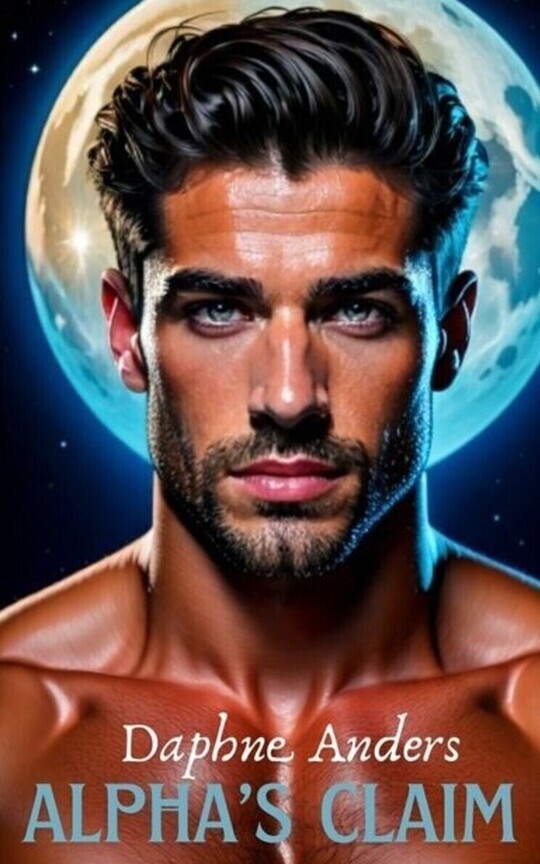
The next photographs aren’t of mom. They’re of a man in his mid-late twenties, and the moment I see the first one, it feels like an ice pick pierces my heart.
In the coloured photos, his eyes are a blue so bright that they seem to be near unnatural. Even in the old black-and-white photos they seem to catch the light wrong in the most eerie way. He’s staring directly at whoever wielded the camera, and the emotion on his face doesn’t belong to someone being photographed with their approval. It belongs to someone who noticed a teen following him and snapping photos from the shadows—he appears almost amused in some, annoyed in others.
I have never seen this man before—I’m certain of it—and yet, the sight of him tugs at something deep within me that I have no name for—not quite fear, not quite recognition—and for the length of a single shallow breath, I feel the frigid water creeping over me again and hear my mother’s voice saying something I just barely can’t make out, and then it’s gone as fast as it came over me. I suddenly feel like retching.
I blink and the flashback fades. I’m back at my kitchen table, still holding the photograph, my hands shaking uncontrollably.














nice job so far
Hold on... is this inspired by The Age of Adaline? 🤨
I pictured the crash happening almost exactly the same way, and the detail about the pictures of her mother not ageing past a certain point really gave me those vibes.
Regardless, you've got an intriguing concept here.