

-
 Writers Write
Authors can write and upload their manuscripts on Inkit for free and writers retain 100% of their copyrights while writing on Inkitt
-
 Readers Discover
Readers can read all books for free, without any ads and give the authors feedback.
-
 We Publish
Books that perform well based on their reader engagement are published on our Galatea app.
When I Bloomed
All Rights Reserved ©
Story Notes
Summary
She loved him before she was old enough to understand what love could cost. Elena spent years quietly loving Adrian—the boy who became part of her family, the man who never seemed to see her as anything more than his best friend’s little sister. Until one night shattered everything. So Elena left. Four years later, she returns to New York no longer the girl he remembers. Brilliant, successful, and determined to prove she outgrew the heartbreak she left behind, Elena has no intention of falling for Adrian again. There’s just one problem. While she was learning how to live without him, Adrian was discovering exactly what her absence meant. Now a wedding is bringing them back under the same roof, old wounds are reopening, jealousy is getting harder to hide—and the feelings they buried are becoming impossible to ignore. Some love stories begin with a first glance. Theirs began years ago. It just had to wait for her to bloom.
- 1The Girl Nobody Was Looking For
- 2The Boy Who Carried Winter
- 3When You Bloom
- 4The Girls Who Came Before Me
- 5Twenty-Two
- 6The Thing I Was Never Supposed to Hear
- 7Learning to Disappear
- 8Goodbye, Adrian
- 9The Things She Left Behind
- 10The First Christmas
- 11The Years Between Us
- 12Three Geniuses and a Terrible Idea
- 13Four Years
- 14Going Home
- 15The Place That Remembers
- 16The Space Between Before and After
- 17Karma
- 18Fight For Her
- 19The Life She Built
- 20The Third Founder
- 21Nate
- 22Courtship
- 23Your Move
- 24The Man With Nothing to Prove
- 25The Years He Missed
- 26Ghosts Don’t Stay Buried
- 27What We Don’t See
- 28The Game Changes
- 29Jealousy Is an Ugly Color
- 30Between Yesterday and Forever
- 31Four Years Late
- 32One More Move
Subscribe to one of the following tier(s) to read this story
When I Bloomed Access$3 / month
For readers who only want to step into Elena & Adrian’s story. 🖤
This tier gives you access to all subscriber-only chapters of When I Bloomed.
If you’d like access to all of my subscriber-only novels, bonus content, and future stories, Alexandra’s Inner Circle is available for $5/month. ❤️
Show more
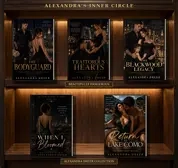
Alexandra’s Inner Circle$5 / month
Step inside Alexandra’s Inner Circle. ❤️Get access to my subscriber-only romance novels, including When I Bloomed, Return to Lake Como, The Bodyguard, Traitorous Hearts, The Blackwood Legacy and other future stories, bonus scenes, and exclusive updates.
Fall in love, get addicted, and stay for what comes next.
Show more
Further Recommendations
Bargara4670: This is a real feel-good love story. I enjoyed it very much. I'll certainly read more by this author.
Read Now
ceruleandecay: Great book! couldn't peel my eyes of it... finished it in one go!! Amazing!!
Read Now
Caspian Gray: Hello everyone!I'm Caspian Gray, a writer who focuses on deep, character-driven emotional dramas. I'm currently looking for trial readers for my new short drama, "Love of the Introvert."It's a story of...
Read Now
Carla Little: This is a great book! I like the story so much I don’t want it to end! I will definitely read it again.
Read Now
Denver: Superb story, can't wait for the other two parts to this. Strong characterisation and story telling.
Read Now
Asm272: This has been a delight to read. Such a well crafted story. Not a single word wasted, while it might be shorter than some, it does not lack emotion, excitement, romance, or humor. I am looking forward to reading the others in this series.
Read Now
Dorota: I can not put this book down, it consumes my attention. The plot and characters feels real, and it is easy for my brain to put me into the world in the book, while I am reading it.
Read Now



