Prologue — The Name on the Paper
New York City — Eleven Years Earlier
The first thing Daniel Goldfred learned about his family was that money could make people smile while they lied.
He was eleven when he heard his father say the name Vichi for the first time.
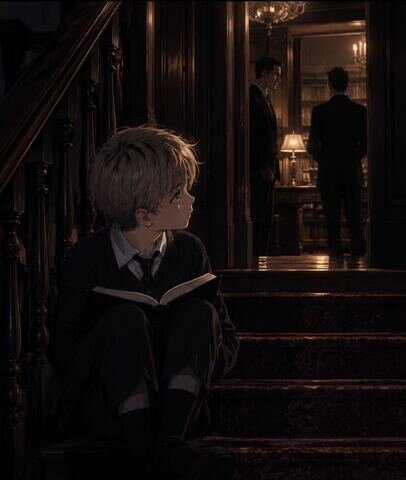
It was raining that evening. Rain tapped against the tall windows of the Goldfred residence, blurring the lights of Manhattan into long, trembling lines. Daniel sat on the staircase, a book resting open on his knees, listening to the adults downstairs.
He wasn’t supposed to be there.
He was supposed to be in bed.
But his mother had promised to read him another chapter of his favorite novel, and she was late. Daniel had gone looking for her when he heard his father’s voice coming from the study.
Alexander Goldfred rarely raised his voice. He didn’t need to. People listened when he spoke, and when they didn’t, they usually regretted it.
That night, however, something in his tone made Daniel stop.
“The agreement was never supposed to involve the children.”
A second voice answered. Daniel didn’t recognize it.
“Agreements change, Alexander.”
There was a pause.
Then his father said, “Not this one.”
Daniel leaned forward, trying to see through the gap between the banister rails. He could make out the edge of his father’s desk, a glass of untouched whiskey, and a man standing with his back to the room.
The stranger placed a folder on the desk.
Daniel couldn’t see what was written on it.


He could, however, see the photograph that slipped halfway out.
Two families stood in front of a large brick building. His father was younger, smiling in a way Daniel had almost never seen. Beside him stood another man with a hand resting on a little girl’s shoulder.
The photograph was old enough that its edges had begun to yellow.
Daniel recognized his father immediately.
The little girl, he didn’t know.
“She has nothing to do with this,” Alexander said.
“Not yet.”
The stranger pushed the folder closer.
“That is precisely why we need to decide what happens next.”
A door opened somewhere behind Daniel.
He turned too quickly, nearly dropping his book.
His mother stood at the end of the hallway.
She wasn’t looking at him.
She was looking at the study.
For a moment, her face changed in a way he would remember years later: not fear exactly, but the expression of someone who had just heard a familiar nightmare calling her by name.
“Daniel,” she whispered.
He got to his feet.
“Who is that man?”
She crossed the hallway and took his hand.
“Someone your father used to know.”
“Why does he have our photograph?”
His mother went still.
Daniel had never seen her struggle to answer a question before.
“Sometimes,” she said finally, “people keep things because they are afraid of what will happen if they let them go.”
She led him upstairs.
Before closing his bedroom door, she looked back toward the study.
“Promise me something, darling.”
Daniel nodded.
“If you ever find something that doesn’t belong to you, don’t assume it was lost by accident.”
He didn’t understand.
Not then.
He only remembered the warmth of her hand and the rain against the windows.
Eleven years later, he would remember the photograph.
And the name printed beneath it.
VICHI.