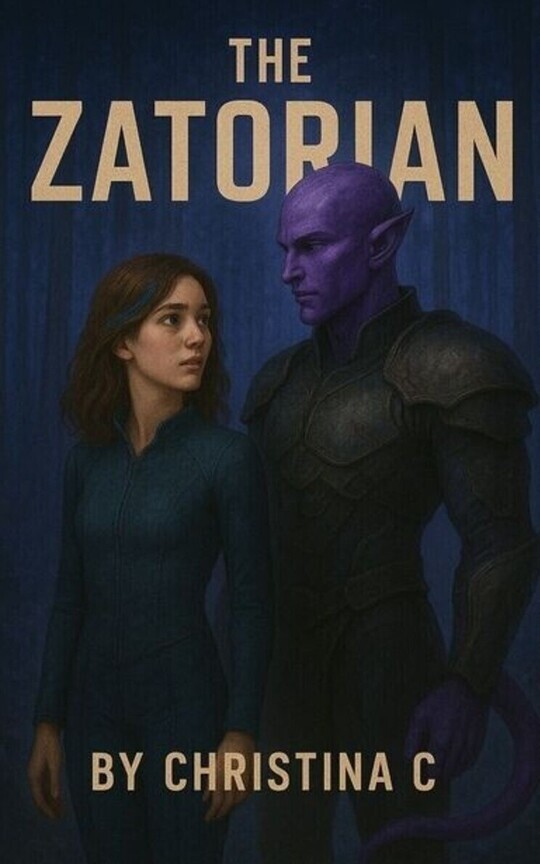
Chapter 1 THE WOMAN IN THE TREE
SOME HOUSES NEVER SELL. THEY WAIT.
Damp. Gray. Patient.
The listing agent calls Voss House a Southern Gothic gem with good bones. I call it the place my childhood went to die, but nobody puts that on Zillow.
A quarter mile of gravel runs from the highway to the front porch, under live oaks so old their lowest branches rest on the ground like tired elbows. Spanish moss drags across my rental car's roof. At the end of the drive, the house rises two stories against a sky the color of dishwater, deep porch, tall windows, every shutter latched tight. Eleven years since I last stood here, and the place still looks at me like I owe it an explanation.
I kill the engine and sit.
Forty-eight hours, I tell myself. Photos, a cleaning crew, a sign in the yard. Then back to Houston and my aggressively normal life.
October twenty-eighth, and Louisiana still refuses to admit summer ended. Heat fogs the windshield. On the drive through Bellwether, Main Street wore inflatable ghosts and cotton cobwebs, and the Piggly Wiggly stacked pumpkins three deep beside the carts. Cute, harmless, the kind of Halloween where nobody bleeds.
My door opens on wet leaves and black water. A mosquito finds my neck before my shoes find the gravel. Out past the house, the swamp hums in the late heat, cicadas grinding, something heavy sliding off a log.
Then, I hear the rope.
Anyone raised near cypress knows the sound. Old hemp under load, a slow creak, the way a porch swing groans when nobody sits in it. It comes from behind the house.
My feet carry me around the side porch before my brain can object. The yard slopes toward the tree line, grass gone shaggy and silver with damp. Floodwater stands in the low places. At the edge of the swamp, the oldest cypress on the property leans over the water like it wants a closer look.
Something hangs from it.
My first thought: decoration. Bellwether's Junior League takes Halloween seriously.
Then: not this seriously.
A woman turns at the end of the rope, bare feet a yard above the mud. She wears a pale blue dress, browned at the hem, the collar buttoned to her throat, a cameo pinned crookedly at her breastbone. Gray-blond hair hangs loose over one shoulder. Her skin holds the color of candle wax, smooth and whole, with no bloat, no rot, no flies.
Somebody sewed her mouth shut.
Red thread, neat X's from corner to corner, each stitch pulled tight enough to pucker the lips.
The world narrows to that thread. My stomach climbs into my throat and stays there.
Above her, carved into the bark, the letters still bleed fresh sap.
MARA VOSS OWES US A BODY.
Under my ribs, something old opens one eye.
No. Hell no. I dig my thumbnail into the pale scar across my right palm until the sting drowns everything else, a trick I taught myself at seventeen in a Greyhound bathroom in Shreveport. Pain keeps the door shut. It reminds whatever lives behind that door that I quit.
My hand shakes so hard I dial 911 twice.
The deputy who answers the call turns out to be Beau Landry, who sat behind me in eleventh-grade chemistry and set his own eyebrows on fire. Twenty minutes later, he climbs out of his cruiser with a belly, a wedding ring, and the same freckles. He takes one look at the tree and walks back to the cruiser to throw up.
Fair.
"Mara." He wipes his mouth on his sleeve. "Hell of a welcome home."
"I've seen better."
He studies the woman for a long minute, and the color drains from his face again. "Jesus. That's Miss Delphine."
The name drops into me like a stone into black water.
Delphine Arceneaux. Piano teacher at the Methodist church. She smelled of rosewater and smacked knuckles with a pencil when you rushed the tempo. She died the spring I turned eleven. Heart, everyone said. My mother took me to the funeral at Saint Agnes, and I remember the hymn, the heat, and my mother at the graveside with dry eyes, watching the casket go down like she wanted to make sure it stayed.
Seventeen years in the ground.
"Can't be her," I say.
"That's her cameo. My mama bought it for her retirement." Beau thumbs his radio. "And she got buried in that blue dress. I carried the casket."
"She should be bones by now, Beau."
"I know what she should be." His voice cracks on it.
By dusk, half the parish sheriff's office stands in my backyard. Yellow tape loops from the porch rail to the cypress. Flashlights sweep the water, and every beam turns up the same nothing: no footprints, no ladder, no truck tracks in the mud. Whoever hung Miss Delphine did it without touching the ground.
A Baton Rouge detective named Pruitt plants himself in front of me with a notepad and a face like a closed fist. "Saint Agnes called. Her vault's open. Lid's in the grass." He taps his pen against the pad. "You get in last night or this morning?"
"This afternoon. Gas receipt's in my car."
"You know why somebody would carve your name in a tree?"
"I can think of a few people who don't like me. None of them can carve."
He doesn't smile. "You owe anybody a body, Ms. Voss?"
"My student loan servicer, my dentist, and a man in Galveston who sold me a timeshare. None of them strike me as the grave-robbing type."
His pen stops. Somewhere behind me, a deputy snorts and turns it into a cough.
"Don't leave the parish," Pruitt says.
They cut her down at full dark. Two men from the coroner's van hold her legs while Beau saws through the rope, and when the last strand gives, her head tips forward onto one man's shoulder like a tired child. Her eyes stand open, milky, the color of skim milk in a glass.
For one second, they track me across the yard.
I tell myself the flashlights moved. I tell myself a lot.
The van pulls away at nine. The cruisers follow at ten. Beau lingers last, idling at the foot of the porch steps, and offers me his couch, his wife's casserole, and a room at the Bellwether Inn, in that order.
"I'm fine," I lie.
"Lock your doors, Mara."
"Nobody in Bellwether locks their doors."
"Nobody in Bellwether hangs dead piano teachers in trees, either." He puts the cruiser in reverse. "Times change."
Inside, Voss House smells of cedar and old rain and something sweeter underneath, something I refuse to name. I walk every room with the overhead lights on. Dust sheets drape the parlor furniture like a congregation of short ghosts. The library door holds firm against my shoulder, locked, and so does the sewing room at the end of the upstairs hall, my mother's room, the brass knob cold enough to sting.
I don't try it twice.
My old bedroom faces the swamp. Same iron bed, same faded wallpaper, roses climbing toward a water stain shaped like Florida. On the nightstand sits a white candle I don't remember, its wick black. I touch the wax.
Soft. Warm.
Somebody lit it today.
Great. Love that for me.
I pull the candle off the nightstand and drop it in the hall as if it might bite. Then I wedge a chair under the doorknob, climb into bed in my jeans, and stare at the ceiling while the house ticks and settles around me.
Sleep comes in pieces, and the pieces cut.
Fire, orange through black trees. A woman screaming, high and endless, a sound with no bottom. My hands slick and red to the wrist, and the blood still warm. A voice in my ear, low and urgent, my mother's voice.
Run, Mara. Don't look back. Don't remember.
Eleven years of that dream. I know every frame. I know where it ends, with my bare feet on wet grass and the heat at my back, and I know I never see whose blood covers my hands.
Something taps the window.
I come awake with my heart slamming. The clock on my phone reads 3:12. Outside, the night lies black and wet, the frogs silent, which in Louisiana means something bigger owns the dark.
Tap.
The porch roof runs beneath my window, a slope of old tin. A branch, I tell myself. Wind. A raccoon with ambition.
Tap.
My body goes before my good sense does. Floorboards cool under my feet. Moonlight cuts a long, pale bar across the room, and I follow it to the glass.
Miss Delphine stands on the roof of the porch.
Mud cakes her to the knees. Her blue dress hangs torn at one shoulder, and a paper toe tag dangles from her left foot on a white string loop, fluttering. The coroner's office sits thirty miles from here. She walked. Barefoot, through the swamp, in the dark, she walked back to me.
Her palm flattens against the glass, gray and wrinkled, as if she spent the night in water.
Behind my ribs, the old thing opens both eyes, and this time my thumbnail does nothing. My scar burns. My whole body knows this magic the way it knows my mother's footsteps. I want to scream, and my throat refuses the job.
The red thread twitches.
One stitch pops at the corner of her mouth with a sound like a fingernail on silk. Another follows. Then the rest give all at once, unraveling down her chin in wet red loops, and her lips peel apart.
Her voice comes out thick with swamp water and seventeen years of silence.
"He's alive, Mara." Her milky eyes fix on mine. "You promised us he would die."