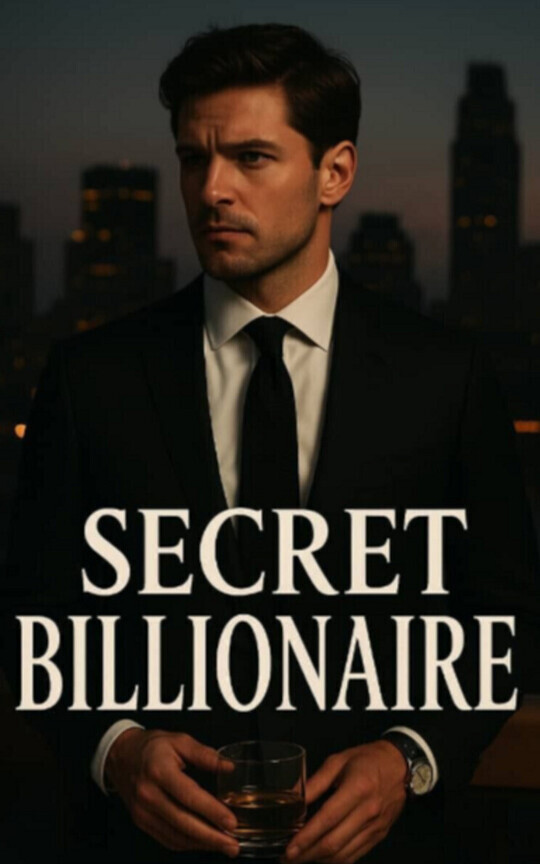
The Red Exclamation Point
CHAPTER ONE: The Red Exclamation Point
In Manhattan publishing, there were two things you never, under any circumstances, trusted:
First, an author swearing on their mother’s grave that a full revised manuscript would hit your inbox “by first thing Monday morning.”
Second, the thirty-thousand-dollar automated espresso machine on the thirtieth floor of Penguin Random House.
Nora Vance swallowed a mouthful of lukewarm liquid that tasted less like fair-trade Colombian roast and more like charred plastic and shattered ambition. She set her porcelain mug down on the reclaimed-oak boardroom table with a sharp, controlled clack.
Nine twenty-eight on a drizzly Monday morning. Two minutes before the editorial board’s monthly status slaughter.
Nora tapped the screen of her iPad, watching her manicured thumb hover over a folder outlined in an aggressive, pulsating shade of scarlet: [HAYES, JULIAN — UNTITLED PROJECT #2].
Right beneath the file name, the tracking software displayed an uncompromising figure in bold Helvetica: DAYS OVERDUE: 342.
Three hundred and forty-two days. Almost an entire calendar year since Julian Hayes—literary prodigy, golden boy of intelligent suspense, darling of The Paris Review, and the man whose debut novel The Silent Pendulum had spent forty-two consecutive weeks glued to the New York Times bestseller list—had essentially evaporated into thin air.
In those eleven months, his total output of editorial communication had amounted to exactly three emails.
The first, five months ago, was an uncompressed JPEG of his golden retriever aggressively gnawing on an unidentifiable piece of driftwood. The caption read simply: Metaphor for Chapter Four.
The second, three months ago, was an expensed receipt from a twenty-four-hour diner in Portland for sixty-four dollars’ worth of buttermilk pancakes. Note attached: The muse requires complex carbohydrates.
The third, received two weeks ago via his panicked literary agent, was an automated out-of-office reply: “Mr. Hayes is currently in deep creative isolation. Please do not contact this address unless the Eastern Seaboard is actively on fire or World War III has been declared.”
“Nora, darling. You look like a woman who just realized her parachute is actually an anvil.”
Nora didn’t flinch. She didn’t need to look up to recognize the suffocating cloud of Tom Ford citrus cologne drifting across the table.
Richard Cole pulled out the chair directly across from her. He smoothed the lapels of his aggressively tailored, charcoal double-breasted suit—a suit that practically screamed, I spend more time curating my LinkedIn profile than reading manuscripts. With a theatrical flick of his wrist, he slid a glossy, foil-stamped folder into the exact center of the table.
“The Wall Street Journal ran the exclusive twenty minutes ago,” Richard murmured, his smile radiating the smug satisfaction of a cat that hadn’t just caught the canary, but had inherited the birdcage. “The former Federal Reserve Chief Strategist’s memoirs. North American rights, seven-figure preempt. Signed, sealed, and wired.”
A collective, envious murmur rippled through the junior editors already seated around the perimeter.
Underneath the mahogany table, Nora’s left fist tightened until her fingernails dug sharp crescents into her palm. On the surface, however, her posture remained immaculate, her spine as rigid as a newly bound hardcover. She lifted her chin, deploying the cool, razor-sharp professional smile she had spent eight years perfecting.
“Fascinating, Richard,” she said evenly. “Let’s just hope his prose does a better job explaining inflation than his congressional testimonies did. It would be such a pity if your readers slipped into an irreversible coma before finishing the introduction.”
The twitch in Richard’s left eyelid was subtle, but to Nora, it was poetry.
He leaned forward, lowering his voice to a conspiratorial hiss. “At least my author produces actual words on actual paper, Nora. Whereas your golden goose… word on forty-four is that the audit committee is drafting the breach-of-contract paperwork as we speak. If fiction takes an eight-figure hit on Q4 projections because of Hayes, I doubt our departmental bonus pool will cover the front-desk poinsettias.”
Nora took another sip of her battery-acid coffee, using the porcelain rim to hide the sudden, vicious knot twisting in her stomach.
Before she could deliver the verbal evisceration Richard so richly deserved, the double doors swung open.
The hush that fell over the conference room was instantaneous and absolute.
Vivian Brooks walked in. The Editor-in-Chief of Adult Fiction was fifty-four, possessed a silver bob so sharp it could slice printer paper, and wore an all-black Céline ensemble that made her look like an elegant executioner. She did not sit down immediately. She stood at the head of the table, planted both hands on the dark wood, and swept her gaze across the room until it locked onto Nora with the precision of a heat-seeking missile.
“Let’s dispense with the pleasantries,” Vivian said, her low contralto cutting through the drone of the HVAC system. “Julian Hayes.”
Nora’s stomach plummeted straight through the floorboards.
“Legal handed me their final assessment at eight this morning,” Vivian continued, devoid of emotion. “Hayes is in material breach. The corporate finance committee has officially run out of patience. They intend to issue a formal termination notice by Friday afternoon, demand the immediate return of his one-point-five-million-dollar advance, and write off the production deficit against our fiscal year.”
The room held its breath. Richard had to physically bite the inside of his cheek to stop from grinning.
“Vivian, that’s short-sighted,” Nora spoke up, keeping her tone measured, authoritative, and stripped of the panic hammering against her ribs. “Julian’s debut netted this house eighteen million dollars. He is one of the vanishingly few authors under thirty-five who bridges highbrow critical acclaim with massive commercial appeal. If we terminate, FSG or Penguin UK will step in, pay off his advance within twenty-four hours, and ride his second book to the top of every holiday gift guide. We’d be handing our biggest asset to our competitors on a silver platter.”
“We are a commercial publishing conglomerate, Nora, not a luxury sanitarium for fragile temperaments!” Vivian snapped, cutting her off. “The board will not leave an eight-figure crater in our budget on the off-chance that a pampered recluse suddenly rediscovers his work ethic.”
“He isn’t pampered. He has writer’s block,” Nora countered, hating how weak the defense sounded even as it left her mouth.
“I don’t care if he’s blocked or stuck in an escape pod orbiting Jupiter,” Vivian said, snapping her leather portfolio shut with a sound like a gunshot. “The winter trade catalog locks for print in twenty-one days. If Julian Hayes’s title isn’t on the back cover, and a production-ready manuscript isn’t in typesetting by the end of this month, the contract is revoked.”
Vivian leaned in, her steely gray eyes drilling into Nora.
“You want the Executive Editor title, Nora. You’ve proven you can line-edit in your sleep and spot trends before TikTok does. But an Executive Editor doesn’t just polish prose in an ivory tower. An Executive Editor goes down into the trenches and drags the bloody book out of the writer’s throat.”
Vivian raised three fingers.
“Three weeks. Twenty-one days. Deliver me an acceptable, complete draft of at least ninety thousand words. If you do, the corner office with the river view is yours. If you don’t…”
Vivian glanced pointedly at Richard, whose chest swelled with preening arrogance.
“…you can draft the official write-off memo for the board yourself, pack up your cubicle, and transfer to Non-Fiction as Richard’s senior deputy.”
Ten minutes later, the heavy frosted-glass door of Nora’s modest office clicked shut, and she finally let her composure fracture.
She slumped against the door, burying her face in her hands as a long, trembling breath hissed through her teeth.
Deputy to Richard Cole.
The thought was so foul she could taste bile.
She hadn’t spent six years living on five hours of sleep, canceling every vacation, and surviving on sad desk salads just to become the glorified proofreader for an over-cologned frat boy’s ghostwritten finance memoirs.
Three years ago, when her ex-fiancé had stolen her boutique imprint proposal, jumped ship to an independent press, and dumped her over cold pad thai, he had called her “a soulless, hyper-controlling editorial machine who loves tracking spreadsheets more than human beings.”
She hadn’t cried then. Instead, she had outbid his new press for their biggest fall acquisition, worked ninety hours a week, and made it an instant bestseller.
Control wasn’t a flaw; it was armor. Control was how you survived in a city that ate dreamers for breakfast. People were unpredictable, selfish, and fickle. But contracts? Deadlines? Print runs? Those were measurable. Those didn’t wake up one morning and decide they didn’t love you anymore.
And now, her entire future was hostage to a man who thought a picture of a dog chewing a stick constituted a literary update.
Nora spun around, marched to her filing cabinet, and yanked open the lowest drawer. She pulled out Julian Hayes’s original onboarding dossier—a thick, pristine manila folder from two years ago.
She flipped past the accolades, the rave reviews, and the standard agency contracts, straight to the confidential emergency intake form.
Most of it was useless—his agent’s office number, an obsolete Chelsea loft address. But down in the bottom margin, scrawled in faint pencil by a harried former assistant, was a single, unverified note:
[Primary Residence / Private Retreat: 42 Cliff Road, Little Gull Island, Maine.]
Beneath it was a handwritten post-it note: Warning: Decommissioned lighthouse cottage inherited from grandfather. Extremely isolated. Zero cell service in winter. Subject is aggressively hostile to unannounced visitors. Will threaten to call local sheriff or set his hound on intruders.
Nora stared at the address. The knot of dread in her chest slowly hardened into something sharp, cold, and dangerously determined.
Call the sheriff? Set the dog on me?
She let out a dry, humorless laugh.
Julian Hayes could have a pack of rabid Siberian timber wolves stationed at his front gate, and it wouldn’t stop her. She would pry that manuscript out of his cold, procrastinating hands with a crowbar if she had to.
She snatched her desk phone, punching the direct line to corporate travel.
“Marcus? It’s Nora Vance. Book me an all-wheel-drive SUV. Snow tires, emergency chains, full tank. I need it at the curb by two o’clock.”
She slammed the receiver down, grabbed her sleek black carry-on, and unzipped it on the sofa.
Into the bag went her MacBook, an industrial portable scanner, two dozen Pilot G2 red pens, four boxes of extra-strength caffeine strips, three bottles of concentrated peppermint oil for shock-awakening, and a pair of heavy-duty shearling snow boots she hadn’t worn since a disastrous ski trip in college.
Nora zipped the bag shut with a vicious, satisfying whirr.
She pulled her wool coat tight around her shoulders, grabbed her keys, and looked out the window at the gray, rain-slicked Manhattan skyline.
“Julian Hayes,” she whispered to the empty room, “pack your bags. Vacation is officially over.”