
The Infiltrator
Content & Trigger Warnings
This is a work of fiction intended for mature audiences.
This book contains depictions of:
Blackmail and coercionDubious consent (dub-con) and coercive sexual content arising from a severe power imbalancePsychological manipulation and manufactured dependencyAbuse of institutional authorityDeath and suicide (including discussion of a character’s death, initially reported as suicide)ViolenceThemes of grief and loss
The male lead in this story is not written as a good man, nor is he intended to be a romantic ideal or a model for real relationships. His actions are driven by a desire for control and manipulation, and any intimacy that develops is entangled with coercion from the outset. Where those lines blur over the course of the story, that blurring is deliberate — it is something the narrative examines, not something it endorses.
The dynamics depicted here — blackmail, coercion, and dependency cultivated through a position of power — constitute abuse, and in many places, crimes. Nothing in these pages should be read as a template for real relationships or real conduct.
If you are currently in a relationship or situation involving coercion, manipulation, or abuse, you deserve support...please look up your local domestic violence or crisis support service.
Reader discretion is strongly advised.
The taxi smelled of stale cigarettes and pine air freshener, a combination that had been fighting for dominance since Leeds. I’d spent the last forty minutes with my forehead pressed against the cold glass, watching England scroll past in shades of grey and green. The North Yorkshire Moors didn’t roll so much as they hunched—broad, wind-scoured shoulders of heather and rough grass disappearing into fog that never quite lifted. Stone walls crisscrossed the landscape like sutures, holding the land together.
“Blackwood, yeah?” The driver’s voice crackled through the partition, thick with a West Yorkshire accent. “Big place. You a student, then?”
I turned from the window. The movement felt deliberate, a performance I was still rehearsing. Keep the shoulders squared, the chin level, the voice pitched low but natural. “Transfer.”
“Bit late in the year for that, in’t it?”
“Family circumstances.”
The lie tasted smooth. I’d been practising it for months, along with a hundred other details that made up the life of Erik Vance. Erik Vance, eighteen years old, scholarship boy, father working overseas for a shipping company, mother recently deceased after a long illness. Erik Vance, who preferred chess to rugby and kept to himself but wasn’t unfriendly. Erik Vance, who did not exist.
The taxi crested a rise, and the driver pointed with one nicotine-stained finger. “There she is.”
Blackwood Academy emerged from the moor like a wound in the landscape, all grey stone and sharp angles against the pale September sky. It wasn’t a school so much as a fortress—a sprawling Gothic monster with pointed arches, crenellated towers, and windows that caught the thin light like sheets of black ice. Ivy crawled up the eastern facade, dark green against darker stone, and even from this distance I could see the gargoyles. They lined the roofline, mouths open in silent screams, wings folded against the wind.
“Christ,” the driver muttered. “Looks like something out of a horror film.”
I said nothing. My throat had gone tight.
The gates were iron, tall and spiked, flanked by two stone pillars topped with crumbling lions. A security guard in a dark uniform emerged from a small gatehouse, consulted a clipboard, and waved us through. The gravel drive stretched ahead, winding through grounds that had been cultivated for over a century. Ancient oaks lined the route, their branches interlocking overhead to form a tunnel of shifting shadow. Through gaps in the trees, I caught glimpses of playing fields, a boathouse on what looked like a small lake, and the distant flash of a river.
“What’s the deal with this place, then?” The driver’s eyes flicked to the rearview mirror. “Fancy lot, aren’t they?”
“Something like that.”
We pulled into a circular courtyard in front of the main building. The stone here was pitted with age, stained dark in places where centuries of rain had carved paths down the walls. A massive oak door stood at the top of a short flight of steps, studded with iron nails and flanked by gas lamps that flickered despite the daylight. Above the entrance, carved into a weathered stone lintel, were the words: *Non nobis solum nati sumus.*
“Not for ourselves alone are we born,” I murmured.
“Sorry?”
“Nothing. Just the motto.”
I paid the driver and hauled my single suitcase from the boot. It wasn’t heavy—I’d packed light, every item chosen for its ability to serve the disguise. The taxi pulled away, gravel crunching, and then I was alone. The silence was immediate and total, broken only by the wind and the distant cawing of rooks somewhere in the trees.
I stood there for a moment, breathing it in. The air was cold and clean, with an undercurrent of damp earth and woodsmoke. It smelled like the countryside I’d known as a child, before everything went wrong. It smelled like Leo.
The oak door swung open before I could knock. A man in a dark suit stood in the entrance, his face set in the kind of pleasant-but-firm expression that suggested he’d been doing this for years. “Mr. Vance?”
“Erik.” I adjusted the strap of my bag, fighting the urge to clear my throat. “Erik Vance.”
“Welcome to Blackwood Academy.” He stepped aside, gesturing me into a vast entrance hall. “I’m Mr. Holloway, the school’s registrar. The Headmaster is unavailable this afternoon, but I’ll see you through the formalities.”
The hall was like stepping into another century. Flagstone floors polished by generations of feet, walls panelled in dark wood that gleamed with the dull sheen of age, and a ceiling so high it disappeared into shadow. Portraits lined the walls—generations of headmasters, I assumed, their eyes following me with the universal disapproval of the Victorian dead. A massive fireplace dominated one wall, cold now but clearly capable of holding logs the size of small trees. The air smelled of beeswax, floor polish, and something else—something older, like the accumulated breath of a thousand boys who had walked these stones before me.
“If you’ll follow me.” Holloway set off down a corridor, his footsteps echoing. “We’ll get you registered, photographed, and measured for your uniform. After that, I’ve arranged for one of our senior scholarship students to show you around.”
“Scholarship student?” I kept my voice carefully neutral.
“Yes. I understand you’ll be joining that cohort.” He didn’t look back, but I caught the slight shift in his tone—not condescension exactly, but awareness. Everyone here would know what I was. “It’s a fine group this year. Several boys of exceptional ability.”
The registration process was efficient and impersonal. Forms to sign—I used the signature I’d practised until it flowed without thought. A photograph taken against a white wall, my face carefully arranged into the neutral expression of a boy who didn’t particularly care about photographs. Measurements for the uniform, taken by a stooped woman with cold hands and a tape measure that had clearly been in service since the school’s founding.
“The uniform will be ready by morning,” Holloway said when it was done. “You’re in Whitby House, the scholarship wing. I’ve arranged for Mr. Okonkwo to show you the way.”
He led me back to the entrance hall, where a boy was waiting. He was tall and thin, with skin the colour of dark honey and a face that looked like it spent more time reading than sleeping. His uniform was immaculate but clearly not new—the blazer slightly faded at the shoulders, the trousers hemmed with visible care. He smiled when he saw me, and it reached his eyes.
“Erik, yeah?” He extended a hand. His accent was English, but with a soft musicality underneath that I couldn’t quite place. “Chidi Okonkwo. I’m in upper sixth too. Classics and Economics.”
“Erik Vance.” We shook. His grip was warm and sure. “Literature and History.”
“Excellent choices. We’ll get along.” He looked to Holloway. “I’ll take it from here, sir.”
Holloway nodded and vanished into the administrative warren. Chidi turned to me with a grin that was considerably more genuine than the registrar’s professional smile.
“Right then. Welcome to Blackwood, home of draughty corridors, bad food, and the finest education money can buy—or, in our case, that excellent exam results can earn.” He set off walking, and I fell into step beside him. “What do you want to see first? The library is genuinely impressive. The chapel is genuinely cold. The playing fields are genuinely muddy.”
“Whatever you think is important.”
He laughed. “Practical. I like that. Come on, then—I’ll give you the proper tour. The one they don’t put in the prospectus.”
He led me through a labyrinth of corridors, talking the whole time in a way that was somehow both rapid and relaxed. He pointed out the dining hall—“avoid the shepherd’s pie, it’s a crime against both shepherds and pie”—the mail room, the tuck shop that only opened on Saturdays, the prefects’ common room, and the various houses that made up the school’s residential structure.
“The houses are named after abbeys,” he explained as we emerged into a quadrangle. “Whitby, Fountains, Rievaulx, and Jervaulx. Whitby’s the scholarship house, obviously. We’re in the old west wing, which is either charmingly historic or genuinely freezing, depending on your tolerance for draughts.”
The quadrangle was beautiful in a severe way—perfectly manicured grass, stone paths, a central fountain that looked like it hadn’t worked in decades. Boys walked in groups of two or three, their voices carrying in the crisp air. I noticed the subtle divisions immediately: the groups that moved with easy confidence, their accents clipped and polished; the ones who walked a little faster, heads slightly down, careful not to take up too much space.
“You’ll learn the geography quick enough,” Chidi said, following my gaze. “The legacy boys keep to themselves, mostly. Not unfriendly, exactly. Just... aware.” He shrugged. “Their families have been coming here for generations. They know each other from birth. Can’t really compete with that.”
“You sound philosophical about it.”
“I’ve had two years to become philosophical.” He turned down another corridor, this one narrower and less well-lit. “Don’t get me wrong—it’s not a bad place. The teaching is excellent, the opportunities are real, and if you keep your head down and your grades up, you can go anywhere from here. But there are rules. Unwritten ones.”
“What kind of rules?”
He paused, considering. “People like us—scholarship boys, I mean—we need to stick together. That’s the first one. The legacy boys have their networks, their old family connections. We have each other, if we’re smart about it.” He glanced at me, his expression curious. “You’ll figure it out. You seem like the kind who watches and learns.”
I wasn’t sure if that was a compliment or an observation. “I try.”
He grinned again. “Good. Now, the most important thing you need to know about Blackwood: the library is the only reliably warm building on campus. It’s also the only place you can get any peace. The heating in Whitby House is... temperamental.”
He pushed open a heavy wooden door, and we emerged into a long, narrow corridor lined with doors. The floor here was polished wood rather than stone, and the walls were painted a pale cream that had yellowed with age. It was quieter than the rest of the school, the sounds of conversation and footsteps muffled by distance.
“Whitby House,” Chidi announced. “Home of the academically gifted and financially disadvantaged since 1872.” His tone was light, but there was a hint of pride underneath. “Your room’s at the end. They’ve given you a single, which is either a compliment or a warning.”
“What do you mean?”
“Singles are usually reserved for prefects or boys with medical needs. They might be keeping an eye on you—new transfer, mid-year, unusual circumstances.” He shrugged. “Or they might just not have had anywhere else to put you. Either way, you’ve got your own space, which is more than most of us can say.”
We stopped outside a door marked with a small brass number: 47. Chidi produced a key from his pocket and handed it over.
“Lock’s a bit sticky. Jiggle it left, then right, then left again.”
I tried it. The key resisted, then turned with a satisfying click. The door swung open on a room that was small but surprisingly comfortable—a single bed with a worn quilt, a wooden desk and chair, a wardrobe that had seen better decades, and a window overlooking the moor. The walls were panelled in the same dark wood as the rest of the school, but someone had tried to warm the space with a faded rug and a small lamp on the bedside table.
“Attached bath,” Chidi said, nodding toward a narrow door in the corner. “Luxury. Most of us share a bathroom down the hall. You’ve either got excellent luck or a guardian angel on the admissions committee.”
The room was cold, but there was a radiator under the window that clanked and hissed when I touched it. “It works?”
“Sometimes. In the winter, sometimes is about as good as it gets.” He leaned against the doorframe, watching me take it all in. “I’ll leave you to settle in. Dinner’s at seven—I’ll come by and walk you over, if you want. It’s easier to face the dining hall with backup.”
“I’d appreciate that.”
“Right then.” He pushed off from the doorframe. “I’m three doors down, number 44. If you need anything—soap, cough medicine, someone to complain to about the heating—just knock. People like us have to look out for each other.” He said it without irony, like it was a creed he’d learned to live by. “Welcome to Blackwood, Erik.”
He left, his footsteps fading down the corridor. I closed the door and turned the lock, then stood for a long moment in the centre of the room, listening. The silence was different here than it had been outside—closer, more intimate. I could hear the wind against the window, the faint hiss of the radiator, the creak of old timbers settling.
And then, slowly, I let out a breath I hadn’t realised I’d been holding.
The room was small, but it was private. That was the thing that mattered most. After months of planning, of worrying about shared dormitories and communal showers and the thousand small exposures that could undo everything, I had a door that locked. I had a room of my own.
I set my suitcase on the bed and opened it, scanning the contents with the practiced eye of someone who had packed and repacked a dozen times. The boy’s clothes were on top—jumpers, shirts, trousers, socks, all chosen to fit the frame I presented to the world. Beneath them, carefully wrapped in a worn linen cloth, were the other things. The things that belonged to the person underneath.
I worked methodically, moving to the window first to draw the curtains. The moor stretched out below, purple with heather, bisected by the long grey ribbon of the drive. No one was watching. No one could see.
Then I began to undress.
The blazer came first, then the tie, then the shirt. Each piece was folded and set aside with the same care I’d practiced in a dozen rented rooms and motorway service stations. The trousers followed, then the socks. I stood in the middle of the room in nothing but the silicone body suit, the prosthetic, and the layers of compression that held everything in place.
The transformation had taken ninety minutes that morning in a hotel room in Leeds. The wig—a custom piece, dark brown, cut to mimic the style of a private school boy—had been fitted first, the lace front blended against my hairline with practiced precision. Then the contouring, carefully applied to sharpen my jaw and flatten the softness of my cheeks. Then the binding, layer upon layer of medical gauze, tight enough to flatten but not so tight I couldn’t breathe. Finally, the body suit, a full-torso piece that smoothed the curves of my hips and added subtle bulk to my shoulders.
Now, alone behind a locked door, I reversed the process.
The wig came off first. I set it on the wardrobe shelf, next to the spare I’d packed. Then the makeup, removed with cold cream and cotton pads until my face was clean and bare. I looked younger without it, softer, more like the person I used to be.
The body suit was next. It peeled away from my skin with a sound like a whispered apology, leaving me in the gauze binding and a pair of plain black briefs. The relief was immediate—my skin could breathe, my ribs could expand, my body could exist again in something close to its natural state.
The gauze took longer. I unwound it carefully, layer after layer, feeling the pressure release by degrees. When the last strip fell away, I gasped—a small, involuntary sound, half pain and half relief. My breasts, full and heavy, marked with deep red lines from hours of compression, finally hung free.
I looked down at myself and saw what I’d been hiding: the curve of my waist, the swell of my hips, the soft flesh that had been flattened and disguised and denied all day. In the dim light of the room, with the moor stretching empty outside the window, I was no longer Erik Vance.
I was Wren.
But only for now. Only for this small, stolen pocket of privacy. Tomorrow, and every day after, I would wake before dawn to bind myself again, to paint on the angles and shadows that made me invisible, to become the boy who had walked through those gates with his shoulders squared and his jaw set.
I sat down heavily on the edge of the bed, suddenly exhausted. The room felt very small, and very quiet, and very far from everything I knew.
*This is for Leo,* I reminded myself. *This is all for Leo.*
I pulled the quilt over my legs and stared at the dark window, watching my own reflection stare back. The face in the glass was a stranger’s—my face, but softer than I remembered, younger and more uncertain. Somewhere out there, in the labyrinth of stone and shadow that was Blackwood Academy, someone knew what had happened to my cousin. Someone had lied.
And I was going to find them.
The wind moaned against the window like a warning, and I pulled the quilt tighter around my shoulders. The room settled around me, creaking and shifting, and I listened to the old building breathe.
Tomorrow, the real work would begin.
Tomorrow, I would learn to be Erik Vance in a place full of watchful eyes.
But tonight, for a few more hours, I could close my eyes and remember. The way Leo laughed. The way his voice sounded on the phone in those last weeks. The way he’d said *I’m fine, Wren, honestly* in a tone that I’d known, even then, was a lie.
*I’m here,* I whispered to the dark. *I’m here, Leo. And I’m not leaving until I know the truth.*
The radiator clanked once, then fell silent. Outside, the first drops of rain began to tap against the glass, a soft percussion that would build through the night into a proper moorland storm. I lay back on the narrow bed, still half-wrapped in the quilt, and let the sound wash over me.
Somewhere in the distance, a bell began to toll. I counted the chimes—seven o’clock. Dinner would be starting in the dining hall. Chidi would be coming to knock on my door in a few minutes, ready to walk me into the lion’s den.
I sat up slowly, reaching for the gauze that would begin the transformation again. Binding. Suit. Wig. Makeup. The ritual that would turn Wren back into Erik.
The bell continued to ring, echoing through the ancient corridors like a summons. Or a warning.
I had come to Blackwood looking for answers.
I had no idea, yet, what kind of answers I would find.



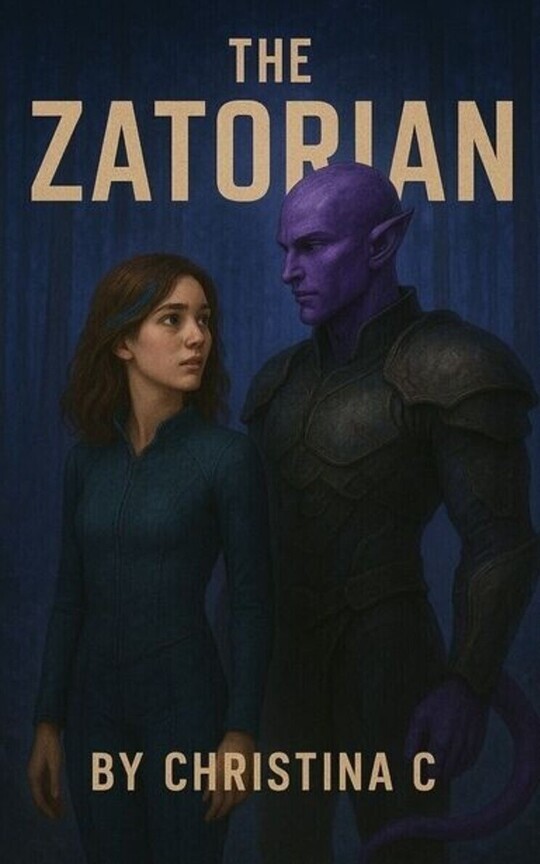















Imposter among us!
What happen to Wrens cousin Leo? Good start to a mystery.
gripping!