
Chapter 1
Three Slaps on the Face of a Rickshaw Puller
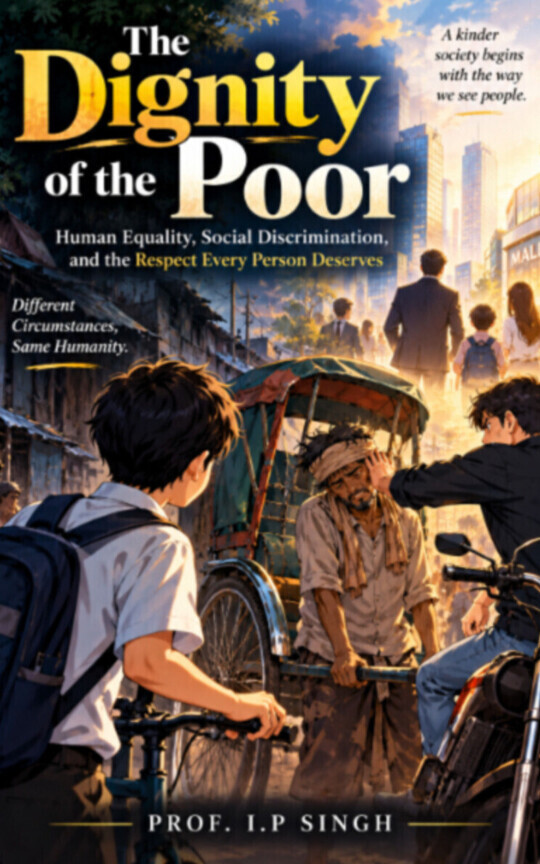
The sound of three slaps still echoes in my memory, even though many years have passed since the day I witnessed them. I was a schoolboy returning home on my bicycle, carrying the ordinary thoughts of childhood, when I suddenly became a silent witness to an incident that left a deep impression on my mind. It was an ordinary day, and there was nothing unusual about my journey home. Yet, what I saw that day changed the way I looked at human beings, social status, and the meaning of dignity. I did not know then that a brief incident on a city road would remain with me for so many years and eventually become one of the reasons I wanted to write about the lives of people whom society often overlooks.
I was riding my bicycle through a small route within the city. Like many schoolchildren, I was familiar with the roads and the turns that connected the quieter streets with the main road. My journey was routine, and I was simply making my way home after school. As I approached the main road, I noticed a rickshaw puller moving along the street. His rickshaw was part of the everyday life of the city, a familiar sight among vehicles, pedestrians, shops, and people occupied with their daily responsibilities. There was nothing remarkable about his presence. He was simply another worker trying to make his way through the city.
Then, in a moment, an unfortunate incident occurred. The rickshaw puller accidentally came into contact with a motorcyclist. It appeared to be an ordinary road mishap, the kind of situation that could be resolved through a few calm words, a little patience, and a willingness to understand that accidents can happen. Neither person needed to turn the incident into a confrontation. A road belongs to everyone, and people using it must share space with care and consideration. If a mistake has occurred, the sensible response is to establish what happened and resolve the matter without unnecessary anger.
But what happened next was something I could never have expected.
The motorcyclist became aggressive and slapped the rickshaw puller across the face. Before I could properly understand what was happening, he struck him again. Then came the third slap. The sounds were loud enough to remain etched in my memory. For a few moments, I found myself watching a scene that seemed difficult to believe. A human being was standing in front of another human being, and instead of discussing a minor accident, one was using physical force against the other.
I was a child, and I did not possess the maturity, confidence, or understanding that I developed in later years. Nevertheless, I understood that something deeply wrong had happened. The rickshaw puller had not deserved to be treated in that manner simply because an accident had occurred. Even if he had made a mistake, that mistake did not give another person the right to humiliate him physically. A road accident might require an apology, a discussion, or an appropriate resolution, but it should never become an excuse for violence.
I felt angry. I felt disturbed. Most importantly, I felt helpless.
As a schoolboy, I could not imagine myself stepping forward and confronting the motorcyclist. I did not know what might happen if I intervened. I was young, and the person who had slapped the rickshaw puller appeared much more confident and physically capable than I was. I could only watch the incident unfold and experience the frustration of knowing that something was wrong without knowing how to stop it.
There are moments in childhood when we witness something that our minds cannot fully explain, yet our hearts recognise its injustice. This was one of those moments. I might not have possessed the vocabulary to discuss social inequality, economic insecurity, or the psychology of humiliation, but I could understand that one person was treating another person unfairly. I could see that the rickshaw puller had been hurt and that the motorcyclist had acted without the patience that such a situation required.
What troubled me even more than the slaps was the rickshaw puller’s response. He did not retaliate. He did not raise his hand against the motorcyclist. He did not respond in the manner I might have expected from someone who had just been slapped three times in public. He remained silent.
As a child, I wondered why he did not protest. Why did he not ask the motorcyclist what right he had to strike him? Why did he not defend himself? Why did he accept such humiliating treatment without responding?
At that age, I could only observe his silence. I could not fully understand what might have been happening inside his mind. I did not know whether he was afraid, shocked, exhausted, or simply trying to avoid making the situation worse. I could not know his thoughts, and it would be unfair to pretend that I did. But as I reflect upon the incident today, I realise that silence can have many explanations, particularly when the person who has been humiliated is economically vulnerable.
Perhaps he feared that answering back would lead to further violence. Perhaps he thought that an argument could cost him valuable working time. Perhaps he worried about his rickshaw, especially if it did not belong to him. If he depended on a rented vehicle to earn his daily income, even a small dispute could threaten the work on which his family depended. Or perhaps he simply recognised that the person standing before him was prepared to use force and decided that remaining silent was the safest way to end the confrontation.
These are possibilities, not facts I can claim to know about that particular man. Yet they reveal an important reality about poverty. People do not always enjoy the same freedom to respond to injustice. Someone with financial security may feel able to argue, complain, seek assistance, or take time away from work. Someone who lives from one day’s earnings to the next may calculate the consequences of every confrontation. The price of defending one’s dignity can seem dangerously high when one’s livelihood is already uncertain.
The motorcyclist had a vehicle that distinguished him from the rickshaw puller in that particular situation. The rickshaw puller had his own means of earning a living, but his work depended on physical effort and the willingness of others to hire his services. Their economic circumstances may have been different, but both were human beings. Both possessed feelings. Both deserved respect. Neither man’s possessions could determine the value of his life.
Yet the way the incident unfolded made me wonder whether society always recognises this equality in practice.
Why was it so easy for one person to strike another? Why did the rickshaw puller appear unable to defend himself? Why did the difference between their circumstances seem to matter more than the simple fact that both deserved to be treated with dignity?
These questions did not immediately find answers in my childhood mind. They remained with me as an uncomfortable memory, a scene that I could recall long after the details of many ordinary schooldays had faded. I continued growing up, learning new things, meeting different people, and observing the world around me. As my understanding of society developed, I began to recognise that the incident was not merely about a motorcyclist and a rickshaw puller. It reflected a wider question about the way human beings sometimes treat one another when they believe that money, occupation, or social position makes one person more important than another.
A rickshaw puller performs physically demanding work. He may spend long hours transporting passengers through crowded streets, dealing with traffic, weather, fatigue, and uncertain earnings. His work may not bring him prestige or public recognition, but it provides a service that people need. When someone hires a rickshaw, the worker gives his time, strength, and effort in exchange for payment. That exchange should be based on mutual respect. The passenger is entitled to receive the agreed service, and the worker is entitled to be treated as a human being.
Unfortunately, people sometimes confuse economic status with personal worth. They may believe, consciously or unconsciously, that someone who earns less deserves less consideration. They may speak politely to a well-dressed customer but impatiently to a worker whose appearance suggests financial hardship. They may show respect to a person arriving in an expensive vehicle while ignoring the feelings of someone who earns a living through manual labour. Such behaviour reveals a weakness in social values, not a weakness in the people who experience it.
The rickshaw puller in my memory had been struck in public. Yet the humiliation he experienced may have extended beyond the physical pain of the slaps. Being insulted in front of others can affect a person’s sense of dignity, particularly when the person feels unable to respond. A public humiliation can leave questions behind: Why was I treated this way? Would the other person have behaved similarly if I had been driving a more expensive vehicle? Would someone have dared to strike me if I had possessed greater wealth or social influence?
I cannot claim that the motorcyclist acted because of the rickshaw puller’s poverty. I did not know his intentions, and I cannot establish what was in his mind. Perhaps he was angry, impatient, or accustomed to responding aggressively when things did not go according to his wishes. Nevertheless, the difference in their apparent circumstances made me reflect on a troubling possibility: economic inequality can create situations in which some people feel powerful enough to humiliate others, while those who are vulnerable may fear the consequences of resisting.
This is one of the reasons that the dignity of poor people deserves serious attention. Poverty is not simply a shortage of money. It can also involve insecurity, limited choices, unequal access to opportunities, and the constant fear that a single unexpected problem may disturb an already fragile life. A person who cannot afford to lose a day’s income may tolerate treatment that someone with greater financial security would immediately challenge. Someone who depends on customers may hesitate to complain about insulting behaviour. Someone who has few resources may find it difficult to pursue a grievance, even when the injustice is clear.
Such circumstances do not mean that poor people lack courage. On the contrary, many demonstrate remarkable courage every day by continuing to work despite hardship, supporting their families with limited resources, and maintaining hope under difficult conditions. Their silence in a particular situation should not be mistaken for an absence of strength. Sometimes the decision not to retaliate is an attempt to protect oneself and one’s family from further harm.
When I look back on that childhood incident, I also think about the people who may have witnessed it. There may have been others nearby, each occupied with their own work, journeys, and responsibilities. I cannot say what they saw or thought. But the possibility that someone might witness such an incident and continue walking raises another uncomfortable question. How often does injustice become normal simply because people learn to look away?
There are many reasons why a person might hesitate to intervene. A bystander may fear becoming a target, may not understand the situation, or may be uncertain about how to help safely. We should not assume that everyone who remains silent is indifferent. Nevertheless, a society becomes more compassionate when people learn to respond to mistreatment in safe and constructive ways rather than treating humiliation as an ordinary part of daily life.
Even a simple act of speaking calmly, seeking assistance, checking whether the affected person is safe, or refusing to encourage abusive behaviour can make a difference. The purpose is not to create another confrontation but to prevent one person’s anger from becoming an excuse to deny another person basic dignity.
As a schoolboy, I was unable to change what happened on that road. I could not undo the slaps, and I could not know what the rickshaw puller experienced after the incident. But I remember how strongly I felt that he had been treated wrongly. That feeling became a point of reflection as I grew older. It encouraged me to look beyond appearances and to consider the lives of people whose work and circumstances are often overlooked.
The incident also taught me something about the limitations of outward appearances. A motorcyclist may appear more prosperous than a rickshaw puller, but a vehicle cannot establish the quality of a person’s character. A person’s income cannot tell us whether that person is honest, compassionate, intelligent, or responsible. Likewise, a simple occupation cannot reveal the depth of someone’s knowledge, the sacrifices they have made, or the responsibilities they carry at home.
We often see people for only a few seconds. We see a worker pulling a rickshaw, a cleaner sweeping a street, a mechanic repairing a vehicle, or a waiter carrying refreshments. We observe their immediate role and then continue with our own lives. We rarely consider the family waiting for them, the education they may be trying to provide for their children, the financial difficulties they may be managing, or the hopes they still hold for the future.
A person becomes much easier to overlook when society sees only the service they provide. The rickshaw puller becomes merely someone who transports passengers. The mechanic becomes someone who repairs a bicycle. The waiter becomes someone who serves food. Their individual lives disappear behind their occupations, and their dignity is too easily forgotten.
Yet every one of these people has a story beyond the work we see. They have memories, relationships, fears, ambitions, and feelings. They experience pain when insulted and happiness when respected. They may possess talents that remain undiscovered because their circumstances have limited their opportunities. They may have sacrificed personal comforts to support their families. Their lives are no less meaningful simply because society does not celebrate them.
The three slaps I witnessed as a child have therefore become more than a memory of an unpleasant incident. They remind me of the importance of questioning the attitudes that allow humiliation to occur. They remind me that equality cannot remain merely an idea that we repeat in speeches, books, or classrooms. It must be visible in the way we speak to a worker, settle a disagreement, respond to a mistake, and recognise the dignity of someone whose circumstances differ from our own.
Respect does not require wealth. It does not require an expensive vehicle, a prestigious job, a large house, or a position of influence. Respect begins with the recognition that another person has feelings and deserves fair treatment. A person may be poor and still possess extraordinary dignity. A person may be wealthy and still have much to learn about humanity. Neither poverty nor prosperity should become the measure by which we decide whose feelings matter.
I also believe that the responsibility for changing these attitudes begins with ordinary behaviour. We do not need to wait for a major social reform before treating people better. We can begin by speaking politely, listening patiently, avoiding insulting remarks, paying agreed charges fairly, and refusing to make another person feel small because of their occupation. Parents can teach these values through their conduct, teachers can reinforce them through education, and institutions can support them through fair policies. These everyday choices help create a society in which dignity is not reserved for a privileged few.
But there is another part of the incident that continues to trouble me. The rickshaw puller did not answer the three slaps. I do not know whether he felt afraid, ashamed, angry, or simply determined to continue with his work. I cannot speak on his behalf. What I can do is question the conditions in which a hardworking person might feel that defending himself is more dangerous than enduring humiliation.
Perhaps the deepest injustice was not only that one man slapped another. It was the possibility that the injured man had reasons to believe that protesting might make his situation worse. If a person must choose between defending his dignity and protecting his livelihood, society should ask why that choice exists in the first place.
As I began to understand these issues more clearly, I realised that the experiences of poor people cannot be understood merely by looking at their earnings. We must also examine the treatment they receive, the opportunities available to them, the confidence they are able to develop, and the freedom they possess to express themselves without fear. We must consider whether they feel welcome in places where others move comfortably, whether they can seek justice when mistreated, and whether their children are taught to see their work as something worthy of respect.
These questions extend far beyond the streets where rickshaws operate. They reach into shops, schools, colleges, workplaces, social gatherings, and homes. They influence how children learn to judge one another and how adults decide whom to respect. They shape a society in which some people are readily noticed while others remain invisible, even when their labour contributes directly to everyone’s daily life.
I cannot return to that road as the schoolboy I once was. I cannot change the scene that unfolded before my eyes, and I cannot know what became of the rickshaw puller after our paths separated. But I can preserve the lesson that the incident taught me: the dignity of a human being should never depend on the value of the vehicle they drive, the clothes they wear, or the amount of money they earn.
When we witness humiliation, we should not ask only whether the person being mistreated has the power to defend himself. We should also ask why another person believes he has the right to inflict that humiliation. When we encounter someone who remains silent, we should not assume that the person has accepted the injustice. We should consider whether fear, insecurity, or responsibility has made speaking out difficult.
The rickshaw puller may have continued his journey that day, just as I continued mine. To an outside observer, the incident might have appeared brief, unimportant, and soon forgotten. For me, however, it became a lasting reminder that the true character of society is revealed in the treatment of those who have the least power to demand respect.
The memory still leaves me with a question that has no easy answer. If a hardworking man can be slapped three times in public and remain silent because he may have more to lose by protesting, how many other humiliations are endured by people whose struggles we never see? How many workers lower their eyes, suppress their anger, and continue earning a living because their families depend on them? And how many times do we pass such people without recognising the human dignity that remains theirs, regardless of their circumstances?
Perhaps the first step towards a more equal society is to listen to the silence of those whom we have failed to hear.