
11 Kapitel gelesen
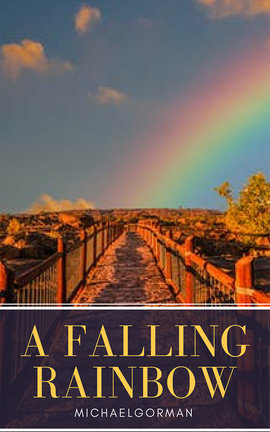
A Falling Rainbow
"FALLING RAINBOW Mongolia is a land of extremes. Many are visible. The vastness of its sparsely populated landscape and unforgiving terrain ranging from arctic wasteland, through desert to the green oceans of grassland steppe stretching apparently forever to the distant castellated mountain ranges of Siberia. And hardly a tree to be seen on the way. The scale is jaw-dropping. But so are the other extremes - of poverty and wealth, ragged and dirty kids scrabbling amongst rubble strewn crumbling districts of the capital Ulaan Baatar as if they have just emerged through the clearing smoke of an airstrike. Or the ring of tented camps - the ger districts - that fringe the city on three sides with none of the facilities we take for granted like sanitation or running water. The contrast with the inhabitants of the smart villas of the elite in Zaisan, safely on the other side of the river near the presidential palace estate, is absolute. And of course, there are the women. While Mongolian boys are expected by and large to carry on the nomadic traditions of the Steppe, the girls pursue their education. As a university city, Ulaan Baatar has an unusually low average population age, many of them breathtakingly beautiful young women, like our heroine Solongo, in stark contrast to the flat, leathery moon-faced stereotype of Western expectation. These are the features of Mongolia that strike even the most casual visitor - but no-one visits Mongolia on a whim - even before he gets off the aircraft. Those who come by land will arrive in Ulaan Baatar awestruck by what Michael Gorman describes as a fourth dimensional experience - with luck in the sense he refers to. But there are also the invisible extremes that the visitor is less likely to discover; those of morality, corruption and venality, of those struggling daily on the fringes of survival - all instincts deeply ingrained in the Mongolian character by the force of history. And the extremes of alcoholism and alcohol fuelled violence. There is a dictum which says that when the women start drinking it's time to hide the guns and the knives. These, with an appropriate nod to the other, more physical characteristics of this fascinating country, are the areas in which the author excels. In this book he reveals not only his formidable authority on Mongolia - something to which other distinguished authors who precede him also justifiably lay claim - but also his unique mastery of the Mongolian psyche . In this book the author has taken me back with shocking and immediate effect to the vivid realities of my time as Ambassador to Mongolia. As I read I'm back in that world with a shattering immediacy. The characters, the places, the episodes he describes with a depth of perception that invokes this reality, sent shivers through me. I'm right there at John's Place. I know many of his cast almost personally - Solongo and her parents, Mark, Ozzie John, and the urbane Excellency, and those that I do not are direct analogues for identifiable others that I came across on a daily basis. While on one level the author has produced a novel, at quite another his work is a vividly penetrating analysis of the socio-economic desperation that typifies the Mongolian condition. To those - and there will be many - who may be tempted to dismiss the experiences described in his work as hyperbole, I would simple say that there is none; this is the reality of modern day Mongolia. The author's deep experience of Asia and its diverse cultures, particularly China and Japan, shines through in the latter stages of his work as Solongo is lured to Yonago in Japan and falls into the clutches of Hashimoto and the dark web of the Yakuza. The impending sense of violence, and tragic ending, is inevitable. In all of this, as in the rest of the work, there is, one cannot help but suspect, a tantalising hint of autobiography, of the elements of roman a clef that serve to underpin the reader's conviction of its authenticity. What other treasures will be revealed in the third book of this trilogy? This is a book which covers many genres. It is at once a novel, an anthology of the most explicit erotica, a travelogue, and a socio-economic essay, all set within its historical heritage, and as such will appeal to a wide readership. It is authentic in every respect and therefore utterly convincing; this is life as lived in Mongolia. Bill Dickson. UK"
- Gesamtbewertung
- Handlung
- Schreibstil
- Grammatik und Zeichensetzung