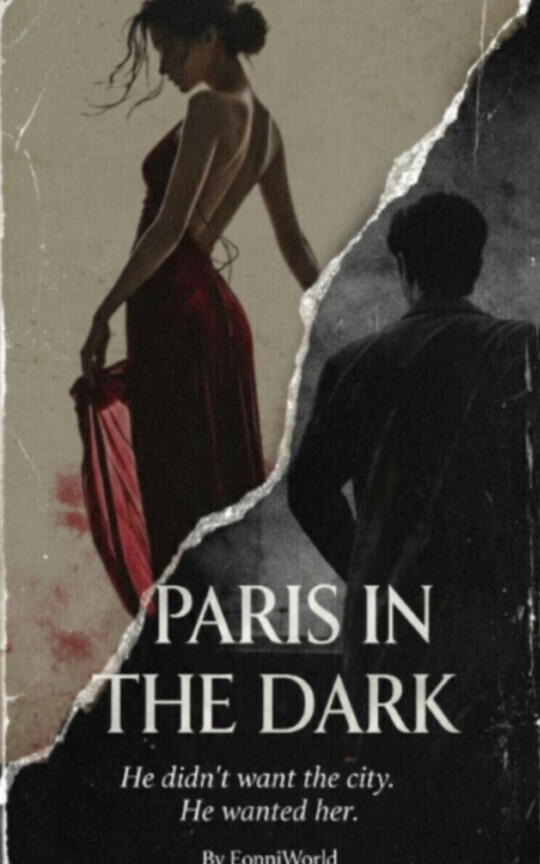

Chapter One
CHAPTER ONE
The bar stood at the farthest edge of town, hidden behind a maze of narrow alleys where even the streetlamps seemed reluctant to venture. It was the kind of place respectable people pretended did not exist.
Inside, the air was thick with smoke, cheap liquor, and the low murmur of men who had learned that loose tongues could be dangerous. Laughter rose occasionally from the crowded tables, followed by the clinking of glasses.
Then the door opened. A figure stepped inside, wrapped from head to toe in a dark robe. The stranger paused beneath the dim light, and conversation died instantly. Every face turned toward the door. For several long seconds, nobody moved.
The stranger did not acknowledge them. Instead, the figure crossed the room slowly, footsteps measured and deliberate, heading toward the darkest corner of the bar. The patrons gradually returned to their conversations, though more than one pair of eyes continued to follow the mysterious visitor.
At the very last table sat a man alone. He looked up, and the moment he saw the figure approaching, the colour drained from his face.
The stranger pulled out the chair opposite him and sat.
“I have a job for you.”
The man’s throat tightened. “What kind of job?”
The stranger leaned forward. “I want Lady Beatrice dead.”
The man’s eyes widened. For a moment, he wondered if he had heard correctly. “Lady... Beatrice?”
“Yes.”
“But why?”
“That is none of your concern.”
The man stared at the stranger. “She’s a good woman.”
A quiet laugh escaped from beneath the hood. “Good women die every day.”
The man shifted uneasily. “You don’t understand. I drive her sometimes. If something happens to her while she’s in my car—”
“That is precisely why you were chosen.”
The man’s hands began to tremble. The stranger’s voice turned colder. “She will be going to the hospital soon. You will drive her there.”
“And then?”
“You will make sure she never arrives.”
Silence stretched between them. The man’s breathing grew heavier. “You want me to kill her?”
“I want you to make it look like an accident.”
He shook his head. “No.”
The stranger sat back. “No?”
“I can’t.”
“You can.”
“I won’t.”
The stranger reached slowly into the folds of the robe and placed a small envelope on the table.
The man stared at it. “What’s that?”
“Open it.”
His fingers trembled as he pulled out the papers. His face changed. One by one, the debts he had desperately tried to hide were listed there — names, amounts, dates. Every loan. Every creditor. Even the debts he had borrowed from men he prayed never to see again.
He looked up in horror. “How did you—?”
“I told you. I know everything.” The stranger’s voice was almost a whisper now. “I bought your debts.”
The man’s lips parted. “You... bought them?”
“Every one of them.” The stranger leaned closer. “So listen carefully. If you refuse, I will collect every debt tomorrow.”
The man swallowed. “You can’t.”
“I can.” A pause. “And when your creditors come looking for their money, your house will be gone. Your family will have nowhere to go.”
The man’s eyes filled with fear. The stranger continued mercilessly. “Your daughter will have an even worse fate.”
“Leave my daughter out of this!”
“Then do exactly as I say.”
The man clenched his fists. “Please...”
“There is nothing to beg for.” The stranger stood. “You will drive Lady Beatrice to the hospital.” The man stared at the floor. “You will make it clean.” The stranger turned toward the door. “No evidence. No witnesses. No mistakes.”
The man looked up. “And if I fail?”
The stranger stopped. Slowly, the hood turned in his direction. “You won’t.”
Then the figure walked out. The door closed.
The man remained frozen at the table, staring at the envelope in his hands. His entire body shook. Lady Beatrice had always been kind to him. She knew his wife’s name. She had once brought medicine for his sick child. She had never treated him like a servant. And now he had been ordered to kill her.
He lowered his head into his hands. “God help me.”
Across town, the atmosphere inside the Bancroft mansion could not have been more different. Warm candlelight spilled across the long dining table. Silverware gleamed against white linen, and the scent of roasted meat and herbs filled the room.
Lady Beatrice sat beside her husband, Henry. Across from them sat the Duke and Duchess of Bancroft.
Henry watched his wife closely. There was something different about her — something she had been trying desperately to hide. He smiled. “When are you going to the hospital to confirm it?”
Beatrice’s eyes flashed toward him. “Not now,” she whispered.
But the Duke and Duchess had heard. The Duchess’s face lit up. “Confirm what?”
Beatrice froze.
Henry smiled. “Father, I think we may finally have something to celebrate.”
The Duke’s expression changed instantly. “A child?”
The Duchess clasped her hands together. “Oh, Beatrice!” She looked at her daughter-in-law with shining eyes. “Are you expecting?”
Beatrice lowered her gaze. “I’m not sure yet.”
The Duke laughed. “My boy!” He reached across the table and slapped Henry affectionately on the shoulder. “At last! A grandchild!”
The Duchess was already imagining the future. “We must begin making preparations.”
Beatrice smiled politely. “We don’t know anything for certain yet.”
“Nonsense,” the Duchess replied happily. “A mother’s heart knows.”
Henry laughed. “And if it is true?”
“Then,” the Duke declared, raising his glass, “the Bancroft family will have much to celebrate.”
The table erupted into laughter. But Beatrice’s smile remained restrained. She did not want to announce anything until she had seen a doctor. She had learned long ago that hope could be dangerous when it arrived too early.
The doors suddenly opened, and Elizabeth walked in. The conversation immediately softened. The young woman stopped when she saw everyone seated at the table.
The Duchess looked up. “Elizabeth! Where have you been?”
“Out with some friends.”
“Have you eaten?”
Elizabeth shook her head. “I’m not hungry.”
The Duchess frowned. “You should eat something.”
Elizabeth looked around the table. “What were you all discussing?”
Before anyone could answer, Beatrice spoke quickly. “Nothing.”
Elizabeth’s eyes moved to her. Nothing? She smiled faintly. “Of course.” She turned and walked upstairs. No one noticed the hurt in her eyes.
Elizabeth closed the door to her bedroom and leaned against it. The laughter from downstairs floated faintly through the corridor. She closed her eyes. Something inside her cracked.
She walked to her bed and sat down. For twenty years, she had believed that this was her home. Her family. Her place.
She had been three years old when her parents died in a terrible car accident. Her father had been one of the Duke’s most trusted executives; he had been travelling out of town for a site inspection and had taken his wife along. It was supposed to be a simple day trip. They never returned. Elizabeth had been left behind with her nanny.
After their deaths, the Duke and Duchess adopted her. Henry had been seven at the time, and they grew up together. For Elizabeth, the Bancroft family became everything. She was loved. Protected. Spoiled — treated like the princess of the household.
And somewhere along the way, her feelings for Henry changed. At sixteen, she realized she no longer saw him as a brother. She loved him. She began imagining a future where she would one day become his wife — walking down the aisle, hearing the Duchess call her daughter-in-law, watching Henry look at her the way husbands looked at the women they loved.
But Henry had noticed the change long before she said anything. The hugs had become too frequent, and too long. The way she looked at him had changed. The little touches that once meant nothing suddenly lingered.
So Henry deliberately created distance. He began introducing her to his friends — young men he believed were suitable, men who might distract her, men who might make her see him differently. But Elizabeth had seen through it.
Then, at eighteen, she finally found the courage to tell him. “I love you.”
Henry had stared at her in disbelief. Then anger. “Don’t ever say that to me again.”
Elizabeth’s heart had shattered. “But why?”
“Because I don’t see you that way.”
“You don’t?”
“No.” He had taken a breath. “Elizabeth, you are my sister.”
“I’m not your sister.”
“You are.”
“No!” Her voice had broken. “I love you!”
“And I am telling you to forget it.”
He had walked away. But the damage was already done. From that day onward, Henry became colder — not because he hated her, but because he did not know how else to protect her, and himself, from feelings he could never return.