The Snow Doesn’t Hide Everything
The first scream was swallowed by the wind.
A child’s cry, muffled by the howl of the mountain. No one heard it—no one wanted to. The village of Elmsbrook had long learned not to listen too closely to the night.
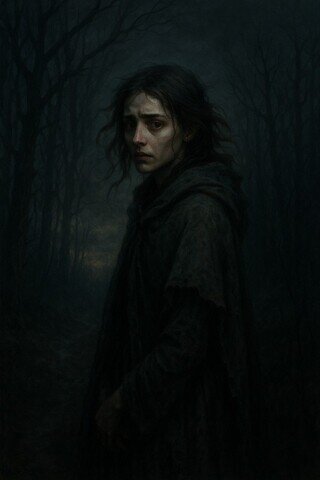
Marga stood at her window, breath fogging the cold glass, her uneven eyes fixed on the edge of the woods. She had heard it. She always did. Her ears were trained not for music or poetry, but for things people ignored—pain, silence, fear. She wrapped her threadbare shawl tighter and stepped into the snow.
The path to the woods was black with shadow and heavy with old stories. It was where she was found as a child—abandoned, malformed, half-dead. “The forest gave her to us,” they used to say. “And it should have kept her.” But she walked now as if the trees recognized her. Maybe they did.
She found him near the creek, sprawled in the frost like a discarded doll. Blood on his temple, lips blue, body trembling. A stranger. No one from Elmsbrook would come this far after dusk. They knew better.
Marga knelt beside him. He flinched as she touched his cheek, even unconscious—his body recoiling from a kindness wrapped in ugliness. Her crooked fingers hesitated, then steadied.
“You won’t die here,” she whispered. “Not tonight.”
As she dragged him through the snow, her breath came in sharp bursts. Her back ached. Her arms burned. But her eyes—those odd, misaligned eyes—never left his face. Not because he was handsome. Not because he was mysterious. But because he reminded her of someone who once begged for help with the same broken mouth, and then cursed her the moment he saw her face.
She saved him anyway.
She always did.
And the village never thanked her.