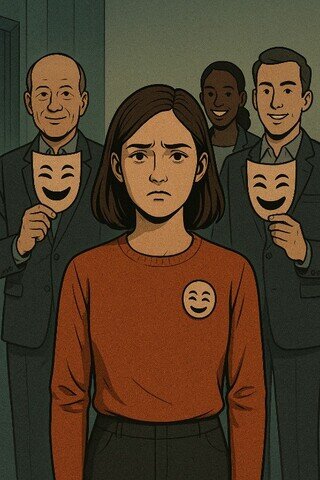
Smile for the Camera
Mira adjusted her “Compassion” badge for the fifth time that morning. It had to be visible — always. The Ministry of Morality didn’t tolerate “emotional opacity.” You had to be transparent, likable, progressive, and preferably photogenic.
The elevator screens flashed reminders:
“Be Inclusive. Be Kind. Be Seen.”
And under that, a stream of live feeds showing citizens meditating, helping the elderly, and adopting rescue dogs.
It was all so beautiful.
It made Mira sick.
Her job? Head of Online Virtue Compliance. She spent eight hours a day reviewing people's social media for authentic morality. Too many gym selfies? You were reported for Narcissistic Energy Waste. Not enough climate activism posts? Blacklisted. One snarky comment on a vegan influencer’s reel? Career over.
And yet, behind her desk, Mira had learned something horrifying: the kindest people online were monsters offline.
She'd seen the footage.
She’d seen a man post a sob story about animal rights after beating his dog.
She’d seen a woman cry on camera about female empowerment, while firing every female employee above 40.
And worst of all, she’d seen herself — smiling in a Ministry ad campaign, wearing a secondhand sweater she tossed the moment cameras stopped rolling.
The Mirror Room — a secret archive where real behavior was stored — had shown her everything.
She wasn’t ready.
But maybe… she was no different from the rest.
And that’s when the screen blinked:
“Reminder: Your Daily Integrity Report is Due. Smile, Mira.”
She did.
But only with her mouth.