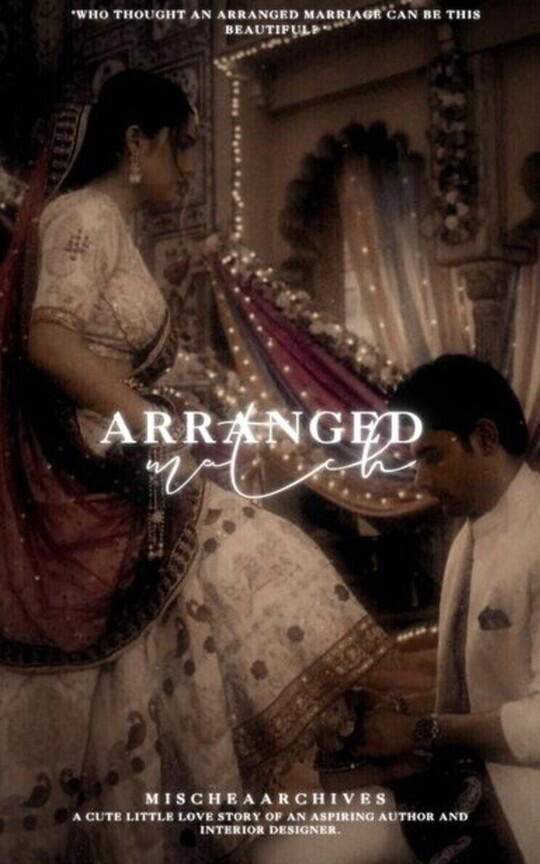
Chapter 1. The Singhanias
Bandhan toh bane, par chahat se nahi,
Dil mile zaroor, par raahat se nahi.
Rishton mein hai raaz, mohabbat mein dard,
Har muskurahat ke peeche chhupa hai ek sard."
Translation
"They formed bonds, but not from love,
Hearts met, but not with peace thereof.
There's a secret in every tie, pain in every gaze,
Behind each smile, a cold, hidden maze
*****
The Singhania Mansion stood like a myth reborn in stone—grand, unyielding, too proud to bow, even to time. It was more than a home; it was an empire stitched together by power, blood, and centuries of carefully preserved silence. A legacy of generations now layered in shadows and secrets.
At first glance, the mansion dazzled. Sculpted pillars lined the entrance like soldiers at attention, each etched with intricate designs that whispered of heritage and forgotten wars. A towering archway opened into a hallway large enough to swallow silence whole, its high ceilings crowned with delicate gold-leaf carvings and imported chandeliers that refracted the morning light into fractured glimmers.
But beneath its splendor, the house had grown eerily still.
Where once the halls echoed with laughter, footsteps, and soft scoldings, now there was only quiet. An unsettling kind. The kind that wraps itself around your ankles and pulls you into its depth. The kind that suggests something is missing—not misplaced, but torn out.
Paintings of past heads of the family lined the corridor—regal men in tailored suits, women in ornate sarees with composed eyes and royal poise. Their portraits hung proudly, yet their gazes seemed almost accusatory, as if they disapproved of what the house had become. They were framed by gold, but their eyes held none of it.
One painting, especially, stood taller than the rest. Rishi and Ashwini Singhania, the founders of the modern dynasty. Rishi’s stern gaze was offset by Ashwini’s quiet intensity. Their love had been legendary, their discipline even more so. And though age had claimed their strength, they remained the silent foundation of the house—still present, still watching, yet never truly seen.
Now, beneath their portraits, sat their children—Parth and Sanvi, Ashwin and Naina—the second generation. The torchbearers of an empire, the rulers of a legacy that had begun to fray at the edges.
The living room, where they gathered each morning, was no less majestic. Crystal vases stood untouched, marble floors gleamed from obsessive polishing, and not a speck of dust dared linger on any surface. Everything was in its place. And yet—there was no life. The home was dressed in perfection but starved of warmth.
Sanvi the eldest daughter in law, sat draped in a charcoal gray silk saree, every crease exact, every jewel minimal yet deliberate. Her posture was queenly, yet rigid, like she was bracing herself against a world that no longer made sense. Her hands held a cup of black tea, but she hadn’t taken a sip in the last twenty minutes. Her lips, usually soft with motherly affection, were pressed into a line of resignation. She didn’t blink much. Her eyes kept drifting—not to the windows, not to her husband—but toward the hallway where laughter used to ring. As if expecting someone to return. Or maybe hoping they wouldn’t.
Parth, beside her, was a statue carved in flesh. His hair was more salt than pepper now, but he wore his age like he wore his authority—with defiance. His fingers were locked together, thumbs tapping against each other with subtle calculation. He didn’t speak often. When he did, his voice carried the weight of decisions made behind locked doors and emotions buried beneath boardroom walls. He stared at the farthest window, seeing nothing and everything all at once.
Across from them sat Ashwin, younger by a few years but worn just the same. There was a sharpness in his eyes that hadn’t dulled—lawyer's eyes, used to spotting the flaw in every story. But today, there was no battle to win, no case to close. Just an old ache. His legs were crossed, and his fingers drummed on the armrest slowly—almost as if waiting for someone to break the silence, or maybe for someone to come back and fix what had been broken long ago.
And beside him, Naina. She looked like a woman made of ice and glass. Fragile in appearance but unbreakable in spirit. Her hands were folded in her lap, her eyes trained on the floor. She didn’t blink. Didn’t speak. Just… endured. Like she always had.
No one said a word.
They didn’t need to.
Because in the Singhania house, silence wasn’t the absence of sound—it was a language. A powerful one. It spoke of marriages arranged and hearts unconsulted, of children pushed into molds too tight, of love expected but never returned. It spoke of expectations handed down like heirlooms, and failures swept under the marble rugs.
And perhaps worst of all—it spoke of absence.
Because while the mansion still bore their photos on the walls, the soul of the house was gone. The lights flickered. The clocks ticked. The staff moved with robotic precision.
But the life—the warmth, the laughter, the presence of those they once held closest—wasn’t here.
It had left.
And the elders sat, day after day, not speaking of it, not acknowledging it, yet waiting. Always waiting.
Waiting for the pieces to return.
Or for the storm to finally arrive.
*****
Somewhere across the city, long before the rest of the world stirred—he was already awake.
Siddharth Singhania.
The name alone carried enough weight to silence a boardroom and freeze a room mid-conversation. He was the firstborn of the empire, the Eldest Heir. The shadow and sword of the Singhania legacy. But titles didn’t impress him. Power didn’t excite him. Legacy didn’t comfort him.
Not anymore.
The blinds in his corner office were half-open, letting in faint morning light that bled into the room like cautious truth. The skyline stretched before him—a cold jungle of glass and steel, a mirror of his own life. Still. Silent. Soaring. But hollow.
His suit jacket hung off the back of the chair. Sleeves rolled to his elbows. His tie undone. Hair slightly tousled from the morning’s workout. He wasn’t a man of vanity—but control? That he demanded. From everything. From everyone.
He stood with one hand resting on the edge of his desk, the other holding a small file. A child’s drawing slipped from inside it—colored with chaos, joy, and innocence. A house. A stick-figure man with glasses. And a small girl, arms raised, her mouth drawn into a wide, clumsy smile and a lady stood beside her loving looking at them.
Siddharth stared at it far longer than he should have.
He didn’t smile. But his grip loosened.
“Sir,” came a knock. His assistant stepped in—nervous, careful. “The board has rescheduled for 10. Mr. Mehra is asking for your input on the ArkaTech merger.”
Siddharth didn’t turn immediately.
“Tell Mehra to draft his version. I’ll review it by noon.”
“Yes, sir. Anything else?”
He finally turned, eyes sharp again. Back to being the man everyone feared and followed.
“Cancel all interviews. And make sure no one leaks the guest list for the gala. I want silence until I speak.”
“Yes, sir.”
As he turned, he added, his voice lower, almost reluctant—
“And... file this drawing. Under private. No scans. No copies.”
The assistant paused briefly, surprised. Then nodded and left.
Silence returned. But this one... wasn’t cold.
He placed the file down and leaned against the glass wall, watching the city below with a calm too calculated to be peace.
There was something about the day.
Something shifting.
Something brewing.
And Siddharth?
He didn’t believe in signs. But he believed in storms.
And one was coming.
He could feel it in his bones.
Because she was returning.
And nothing unsettled him more... than Arunika.
*****
The city hadn’t fully woken up yet, but Arunika had.
She stood at the edge of her apartment’s balcony, coffee cup in hand, bare feet pressing into the cold marble tiles. Her long hair was still damp from her shower, clinging softly to her shoulders. The morning breeze tugged at her silk robe, but she didn’t shiver.
She welcomed the cold.
It kept her grounded.
Far below, the city yawned to life—horns, footsteps, distant calls of vendors. But up here, it was still. A pause before the plunge.
Her apartment was a minimalist’s haven—elegant, modern, clean. But no matter how tastefully she arranged it, she never called it home. It was space. Convenience. Not belonging. Never belonging.
Her eyes flicked to her phone on the table behind her. A calendar notification blinked softly on screen:
Return to Singhania Mansion – 8:00 AM.
She exhaled slowly. Not with fear. Not with excitement.
But with a weight.
Heavy. Known. Accepted.
Not love.
But…
Responsibility.
That house had once held her laughter, her footsteps, her secrets. But now, the marble halls were colder than ever, and her presence wasn’t welcomed—it was expected. She wasn’t going because she missed anyone. She was going because she had to.
She took a sip of coffee and stared into the horizon, eyes sharp. Alert. Her expression unreadable. Only her heartbeat betrayed her—the quickened beat of someone walking toward something they left behind for a reason.
Her phone vibrated. A message from an unknown number.
She opened it.
> He’ll be there. Are you ready to face it all again?
She stared at it for a long moment.
Deleted it.
She didn’t need reminders. She never forgot.
Especially him.
Siddharth Singhania.
The man who once knew her better than the mirror. The man who taught her how silence could hurt louder than words.
She took one last sip, then turned inside.
Inside, she changed in to a red saree following by the bangles, payal just when her movements stopped while looking at the vermilion and the mangalsutra kept on the dressing making her recall the moments back, these were the reminder that now she was not Arunika Rajawat any more.
Instead, Arunika Siddharth Singhania
She sighed at the weight of the name she carries now, she looked around to see.
Her suitcase was packed. A navy-blue file sat on top—documents, letters, and a photograph carefully tucked inside. But she didn’t open it. She zipped it shut with precision, then reached for her bag.
Her phone buzzed again. This time, from the driver.
“Car’s waiting, ma’am.”
With one last glance at the city she had mastered, she walked away from the balcony—and toward the one place that still had power over her.
The Singhania Mansion.
She didn’t walk like she was going home.
She walked like she was walking back onto a battlefield.
And Arunika?
She never walked unarmed.
*****
The hospital hallway smelled of antiseptic, coffee, and unspoken prayers.
The sun was still rising, but Aadhvik was already on his third hour of rounds.
His name carried power—Dr. Aadhvik Singhania. Cardiothoracic surgeon. Youngest to lead his department. Son of a dynasty, but here, no one called him heir. Here, he was the one people called when hope was running out.
Inside his private cabin, the lights were soft. Charts lay across the desk, neatly color-coded. He moved through them with practiced calm, but his eyes lingered on one in particular.
A folder labeled Ryan – Post-op Recovery.
Tucked inside it was a small piece of folded paper. Not medical.
A drawing—crayon scribbles of a heart and two stick figures. One had a stethoscope. The other had a pink dress. They were holding hands.
"Thank you, Dr. Aadhvik and Dr. Aarya," it read in messy child handwriting.
"You made my heart happy again."
He paused.
His fingers brushed the drawing. Just for a second.
Then the mask slipped back on. Professional. Focused. Composed.
A knock at the door. He looked up.
“Sir, Dr. Aarya left this file from the pediatric wing,” his assistant said, handing it over.
He nodded. “Thanks. And cancel the press call for the foundation. I’m not in the mood to smile today.”
“Yes, sir. Also…” The assistant hesitated. “She asked if you have time to talk. She said it’s important.”
Aadhvik’s eyes flicked to his phone. A message unread from her.
Aarya: We need to talk. Today. It's quite important.
He exhaled through his nose. Long. Controlled.
Typing back with just two words:
“My cabin. 10.”
He placed the drawing gently back into the file. Locked the drawer.
Then leaned back in his chair, staring up at the ceiling.
He wasn’t afraid of scalpels. Or blood. Or death.
But words?
Words from her—those still had the power to cut deeper than any blade.
*****
The temple courtyard was hushed, dipped in hues of morning gold.
Aarya stood quietly in front of the deity, hands by her side. Not folded. Not joined. Just… still.
The scent of sandalwood and incense drifted through the air. Bells chimed faintly from a distance, a rhythm her heart once danced to. But now, she stood outside of it. Watching. Not participating.
Her eyes flicked to the kumkum tray beside the priest. He offered it silently, smiling.
Aarya didn’t smile back.
“This isn’t for me,” she said softly, her voice firm yet without aggression.
“I didn’t come for myself.”
The priest, a gentle man in his sixties, tilted his head. “Then why are you here, child?”
She hesitated for a moment, looking down at her empty palms.
Then whispered, “Because somewhere… I wanted to remember what it felt like. Even if just for a moment.”
He held out the prashad. She looked at him and denied saying that she doesn't need it.
“Beta prashad ko kabhi mana nahi karte” he said politely to her, like explaining to a kid.
She nodded and took it politely, murmuring a thank-you.
Then, reaching for the kumkum, he leaned forward as tradition dictated—to gently place a pinch on her forehead.
But Aarya stepped back. Her eyes were calm, but there was something cold under the surface.
“No,” she said. “Not there.
“What happened beta” he asked her at her sudden reaction.
Just… give it in my hand.”
The priest blinked, surprised.
She extended her palm.
He obliged silently, placing a small pinch of red in her hand.
She stared at it.
Crimson dust. The symbol of devotion. Of blessings. Of promises.
Once, she used to believe in all of it.
But not now.
Not after what she’d seen. What she’d endured.
She closed her fist, let it fall slowly into her bag—no drama, no rejection. Just a quiet distancing.
Her phone buzzed.
Aadhvik.
One message: “My cabin. 10.”
She nodded to herself. Of course he’d reply that way. Controlled. Timed. Unreadable.
She turned to leave the temple, her blue saree’s pallu was trailing behind like a fading whisper.
No prayers on her lips.
No tears in her eyes.
But somewhere inside her chest, a part of her still ached.
Not for answers.
But for the strength to stop searching for them.
*****
The hotel suite reeked of last night’s sins.
Empty champagne flutes. A silk tie draped over the couch. A red heel kicked under the armchair.
And Aarav Singhania—shirtless, cigarette in hand, standing by the floor-to-ceiling glass window, watching the city wake up beneath him.
He wasn’t the kind of man who woke up with regrets.
He was the kind who didn’t even remember names.
His phone buzzed for the third time. He ignored it again.
“Mr. Singhania,” came a voice from behind him. His assistant, cautious. “The board meeting—”
“Cancel it,” he said, exhaling smoke. “I have a more tragic commitment today.”
The assistant cleared his throat, awkward. “Sir, it’s not just a meeting. It’s your—”
“My wedding day.” Aarav turned, lips curling into a bitter smirk. “Trust me, I remember. Like a funeral I wasn’t invited to but have to host anyway.”
He stubbed out the cigarette. Walked over to the table, where a crisp tuxedo was laid out—black, classic, boring.
He hated black-tie anything. Especially black-tie arranged compromises.
“This isn’t a marriage,” he muttered, grabbing his shirt. “It’s business in bridal packaging.”
A merger. A collaboration. A contract sealed in vows neither he nor she wanted to say.
He buttoned up, slowly, with all the theatrics of a man going to war, not a wedding.
“Do I look like a groom?” he asked the assistant dryly.
The assistant blinked. “You look… dangerous.”
“Perfect.”
Because if the world wanted a villain, he’d wear the crown with pride.
His phone lit up again.
One name flashed.
Sahana.
The girl he was about to marry.
The woman who hated him on sight.
Smart. Cold. Proud.
Too perfect to be part of the mess he called life.
But here they were—about to be forced together, a marriage neither chose, for a future neither wanted.
He picked up the phone, looked at it, then dropped it without replying.
“Let them wait,” he muttered to himself, grabbing his watch.
“Let them all wait. This isn’t love. It’s a damn hostage situation.”
He gave one last look to the mess around him.
It was the last morning he’d be free.
And freedom, to Aarav Singhania, was worth more than any vow.
*****
The office cabin was too quiet.
Neat. Clinical. Cold.
Just like the house she was raised in.
Sahana sat on the leather couch, legs crossed, a file open but untouched on her lap. Her pen twirled between her fingers—absently, rhythmically. Not a thought was focused on work. Not today.
Her phone screen blinked with the family group chat. Messages rolled in like programmed bots.
> “Be ready before 10. The ceremony starts sharp.”
“Wear something elegant. Not those dull suits you always wear.”
“Smile, for god’s sake, Sahana.”
Her mother’s voice rang in her ears even without a call: sweet to the world, sharp within walls.
Her father—the man whose approval she chased for years—would nod at her degrees, praise her achievements to others, but never to her.
Trophy daughter. That’s what they called her.
But no one ever asked if the trophy wanted to be held.
A knock on the glass door.
Her father stepped in—immaculate in white, his expression as calm as always, but his eyes scanning the room like a CEO inspecting an employee, not a father looking at his daughter.
“You’re still in this cabin?” he asked. “We’re not sending you to war. It’s just a wedding.”
Sahana stood slowly. "Just a wedding," she repeated. “Right.”
“Which is all against my will, I wasn't even asked if I wanted to be married, deciding the groom was far away. You both took the biggest decision for me, knowing I am not interested in this bullshit fir god damn sakes.”
Her mother walked in after him, perfume strong, smile stronger.
“Sahana,” she said, brushing imaginary dust off her shoulder, “at least today, behave like a girl. You know… feminine. Delicate. Not so stiff.”
(She ignored her words like always.)
Delicate. The word made her throat close up.
All her life she had waited for them to say something else.
Something simple.
“You did well.”
“We’re proud of you.”
“Are you okay?”
But no.
What she got was Rules. Deadlines. Expectations.
“Wear the emerald set,” her mother added. “The media will be watching. You’re marrying into Singhanias now. That family doesn’t take missteps.”
Sahana met her father’s eyes. “And you think this is a step forward?”
He didn’t answer. Just looked at his watch.
Of course.
That’s how it always was with them—Timed. Tamed. Tight.
As they left the room, her mother’s final words trailed behind like perfume.
“You were raised for this, Sahana. Don’t ruin it.”
Sahana stood alone again.
Eyes on the window now, watching people rush in the streets below.
How strange—none of them knew that a war was going on inside her. Quiet. Clean. Unnoticed.
She didn’t cry. She never cried.
That girl—the one who once wanted hugs, bedtime stories, warm tea after exams—she didn’t exist anymore.
She wasn’t the daughter they loved. She was the daughter they built.
And tonight, she’d be married to a man just as emotionally bankrupt.
A fake life, wrapped in real rituals.
Her fingers closed the file.
There was a child’s drawing tucked in it—a thank-you from a small client’s sibling. Crayon scribbles. A smiling face. “Thank you Miss Sahana!”
She stared at it for a moment.
That child drew her smiling.
Strange. Because Sahana couldn't remember the last time she actually did.
Just when she was heading to her father's house not her home, she received a text from an unknown number.
Unknown Number
“You moved on Sahana.
So did I.
Towards you”
......
“Turn around.
Oh wait, not yet.”
𝕾𝖍𝖆𝖉𝖔𝖜
****