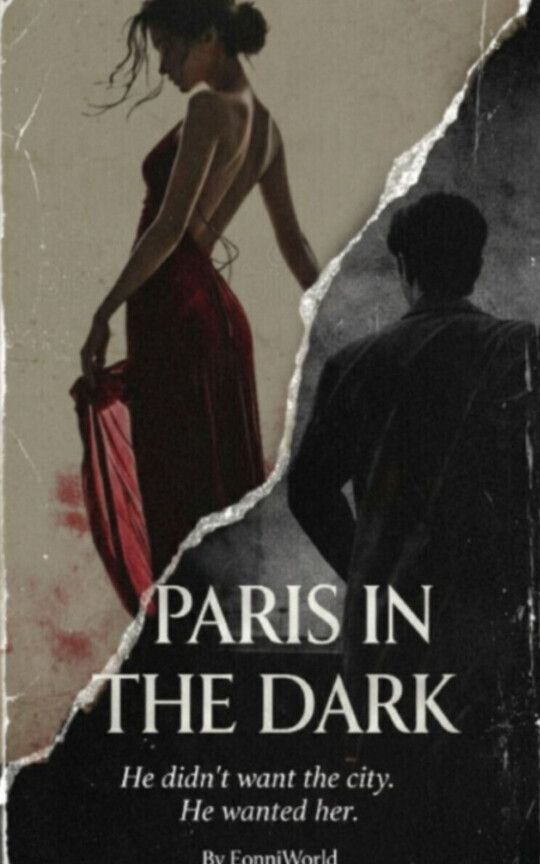
Prologue - The Girl in the Snow
Paris, Winter 1875
Ésméralda
They say newborns cry at birth to demand love. I don’t know if I cried. What I do know is that I never did afterward. Not once, in all the years I lived there. And not because I was particularly cheerful. I simply never felt the need—not even in the worst moments.
When the nuns of the Saint-Claire convent found me wrapped in a rough wool blanket on the frozen stone doorstep, my face was still, eyes wide open to the ashen January sky. No crying. No whimper. Just silence.
In the basket, nothing. No pendant, no sign of where I came from. Just a crumpled note, with a name scribbled in a shaky hand:
Ésméralda.
Some nuns swore I was born of noble sin, the secret daughter of a maid and her master. Others, whispering through rosary-worn fingers, hinted my mother was a witch, or a cursed soul fleeing from scandal. Whatever the truth, one thing was certain: she never came back for me.
I was considered different. By the nuns, mostly, but also by the other children, who gladly kept their distance. Solitary, reserved, with eyes too clear for a childhood made of cold and hunger. At five, I spoke with a fluency that unsettled everyone. And most of all—the thing the nuns never forgave—I didn’t believe in God.
And I said it without fear. Out loud. Maybe to provoke. But also because, to me, it was true. I couldn’t stand how others worshipped an invisible lord who, in my eyes, didn’t exist.
But that "blasphemy" was, for them, the final proof: I wasn’t a child of God, but a creature born of shadows. Born of sin. Daughter of fire.
Still, I laughed at their scandalized looks. Maybe, deep down, I hoped they were right. That there was something exceptional in me.
Meanwhile, I grew up in silence, within the damp walls of the orphanage, between hard beds and cold hands, learning that affection was a rare coin no one was willing to spend. Yet even there, in that void, I found something of my own: movement. I remember one night, trying to warm myself against the constant chill, I began walking on tiptoe in the dormitory. And my body, as if answering some ancient call, started to move.
My arms painted the air.
My legs skimmed the floor with instinctive grace.
It was as if dancing were a memory carved into my bones.
From that moment, the night became my stage. I danced in silence, in secret, as if that gesture alone could warm my heart.
One evening, Sister Justine caught me.
“What are you doing, flitting around like a lost soul?”
Her voice was harsh, but it didn’t faze me.
She stared at me for a long time, waiting for an answer. I gave none. I simply met her gaze with defiance. Normally, that would’ve earned me a beating for insolence. But this time, she didn’t raise a hand. Not that beatings ever worked on me. There seemed to be no way to “correct” my nature.
In the end, she said nothing. She just let me continue and walked away.
Maybe she saw something too. Or maybe it was just more proof to her that I was the result of some sacrilegious union.
I was nine years old when my life finally changed.
It was February. Frost covered the windows, and our fingers trembled as we held our bowls in the refectory. Then came the sound of heels—an elegant rhythm, different from anything we’d heard.
A woman stepped into Saint-Claire. Her stride was sure, her coat charcoal gray. Her hair was gathered in a flawless chignon. The scent of lavender followed her every move.
**Colette Laurent.**
Director of the Paris Opéra ballet school.
Her gaze sliced through the row of children like a silent blade, until it landed on me—the last in line. I was small, barefoot, disheveled. But I held my chin high and met her eyes without fear or hope. Unlike the others, desperate to escape that hell, I remained still—ready to be chosen, but unwilling to beg.
“You,” she said, at last.
No hesitation. No explanation.
The nuns handed me a bundle. They sent me away like a package: no farewells, no words. It was clear how relieved they were to be rid of me.
I said nothing. But for the first time, I felt my heart beat with a strange emotion I didn’t yet know how to name.
Colette’s house in Montmartre was made of dark wood and gentle silences. It smelled of lavender, stationery, and polished floors. There were light curtains on the windows, an old piano no one played, and a quiet warmth that seemed to radiate from her.
Colette wasn’t a cold woman. Just cautious. She was forty, with no husband, no children. Only her work at the Opéra and a void she never spoke of. But I could feel it. I saw it in the care with which she made my bed, poured my tea, brushed my hair with tender fingers.
She didn’t hug me at first. But she began to, once I stopped expecting it. One morning, she embraced me tightly without a word, and I understood that even if she never said it out loud, she loved me. And I, in turn, never confessed how long I’d waited for that gesture. Because I loved her too. She was the mother I’d never known.
One night, she caught me dancing in the living room. I thought she was asleep. But she stood in the shadows, in her robe and slippers, eyes glistening.
“You truly are an extraordinary child,” she whispered. “Your body speaks. And no one taught it, I assume.” Her contempt for the convent was obvious.
It was then that she enrolled me in the Opéra’s school. Among elegant girls from high society, I was a body too thin and a will too sharp. But it didn’t take long.
My body moved as if it had its own memory. As if someone before me had already danced with this same rage, this same grace. And Colette’s teachings only made me stronger.
“You don’t have to be like them,” she’d say as she brushed my hair in front of the mirror, after I confessed how I still didn’t feel like I belonged. “You just have to be the purest version of yourself.”
Those words were enough to erase every doubt.
I danced with need. With hunger. With all the loneliness I carried inside. And Colette was genuinely proud of me. Of her daughter—not by blood, but by soul.
At eighteen, I became the étoile of the Opéra. The youngest in the company’s history.
And that night, in my dressing room, I cried for the first time in my life. It was a strange sensation—so freeing, it frightened me at first. I didn’t understand what was happening. I cried because, finally, I felt real. As if the girl abandoned in the snow had finally found a name, and a place to exist.
And yet, even then, in the quietest moments, she came back to me.
Sometimes, after rehearsals, I stayed in the empty dance hall. I sat on the floor, in front of the mirror, and looked at my reflection. I saw the étoile. The elegance. The control. The body sculpted by discipline, the straight spine like a blade, the soft but precise hands, shaped by sacrifice. My brown hair fell in gentle waves on my shoulders, tamed by grace and civilization. My lips were red, glossy with effort, but carefully painted. Every gesture spoke of art, of poise, of restrained strength. I looked born to belong to the stage.
But beneath the light, something still shimmered: the barefoot girl, untouched, in the green eyes that bore my name. That wild, defiant creature. Raised in the cold, without tenderness, spine bent from frost, eyes burning with hunger. Hair once tangled and windblown, smelling of cheap soap and corridor drafts. Knees scraped, hands rough, feet that knew how to run and dance with the same feral instinct.
And that untamed girl, the one the nuns called “strange,” the one they feared and despised—she was still there, inside me. And she was the one who kept me standing when the adult faltered.
“Have you ever wondered why you can’t stop dancing, even like this?” Colette asked one evening, with both concern and admiration, as she wrapped my foot—raw from the pointe shoes.
“Because dancing is the only way I feel alive.”
She nodded, then took my hand in hers. “Then keep dancing, Ésméralda. Until the flame consumes you,” she said, despite the fear in her eyes.
And I smiled, promising her I would.
Even though, deep down, I knew:
every light—sooner or later—calls to its shadow.