
Illuminating The Darkness
https://youtu.be/GIy_ZIcRcJg?feature=shared
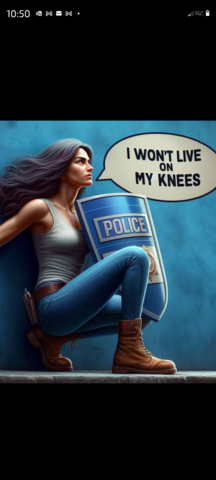

Based Off Actual Zeros The Whole Damn World Owes Them More Than You Know! Don T Judge A book BY it’s C over! Cartel me y don’t we deserve to be heard? H?rt?Z

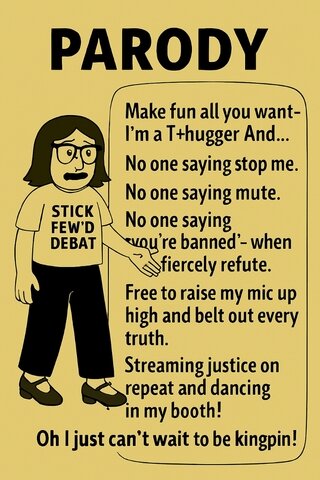
The setting sun, a blaze of fiery oranges and crimson reds, painted Main Street in a warm, almost deceptive glow. A gentle promise of night hung heavy in the air, yet for many, that comfort was brutally shattered by the figure huddled on the corner. His unkempt hair, a wild storm of dishevelled strands, whipped by a faint breeze. Deep wrinkles etched into his face spoke volumes of a life lived under a relentless sun, a harsh history whispered in the shadows. To the pedestrians strolling by, he was a jarring dissonance, a blemish on their carefully curated evening stroll. They skirted around him, adjusting their designer sunglasses as if shielding themselves from the unwelcome sight, their murmuring judgments clinging to the humid air like a shroud.
“Do you see that man?” one man’s voice, low but laced with contempt, broke the evening silence. “I’m not giving him a dime. He’ll just blow it on booze.”
The words hung heavy, thick with the stench of prejudice and apathy. A silent parade of indifference followed. Each passerby, their steps echoing with a callous detachment, swept past as if emerging from a battlefield, unscathed by the humanity they ignored. They averted their gazes, as if by doing so, they could erase the man’s very existence from their minds, conjuring a fantasy where ragged clothing and desperate eyes were mere illusions, a trick of the urban landscape.
But what if, instead, they had paused? What if they had turned, and allowed a glimmer of compassion to pierce through their hardened exteriors? The truth, stark and undeniable, was that often, in the presence of another’s need, we erected walls of prejudice, constructing elaborate narratives to absolve ourselves from action.
“Congratulations on wanting to survive another day,” I whispered, drawing a breath as I stopped, my gaze locking with the man’s. He stood there, a testament to the tenacity of life, each ragged breath a defiant victory against overwhelming odds.
It was so easy to stand tall, cloaked in the comfort of privilege, to project an aura of strength and assuredness while denying the intricate tapestry of human experience. But the image I held in my mind, nagging and insistent, was this: how could they so easily dismiss the reality before them?
“What about the choices he made?” I could hear the arguments forming in their heads, their voices rising in righteous indignation. “What if he just wastes whatever we give him?”
“Have you ever slept on the street?” I wanted to scream, but instead, I considered the profound contrast in their circumstances. Most of them had the comfort of their homes, access to sanitation, warmth. When the cold encroached, their refuge lay within the walls of their living spaces. For him, every day was a trial of endurance, each hour a battle against the cold indifference that surrounded him.
The fluorescent glow of a nearby bar, promises of warmth, and the comforting aroma of cheap drinks, flickered in the distance. But these offerings came with an unspoken price: the requirement to conform, to justify your existence to those who held the key to the warmth. For him, entering that establishment and escaping the chilling winds meant not just solace, but a sacrifice of dignity.
Even on a seventy-degree day, when the sun blazed mercilessly overhead, (k)night crept in, stealing warmth from the air, its icy fingers digging into every crack and crevice. It was a chilling reminder of the deeper struggles that went unacknowledged. Why was warmth, a basic human need, treated as a privilege, a reward for conformity, not a fundamental right? Why was the solace of a warm room often inextricably linked to the taboo of alcohol? Did the value of a human being diminish in the shadow of despair?
In the relentless pulse of city life, people bathed, feasted, oblivious to their interwoven fates. They treated their fellow citizens as burdens, or worse, toxic waste. Yet their lives were undeniably intertwined, threads in a complex tapestry. The issue was not black and white; it was a complex interplay of judgments and indifference, glittering coin-like reflections of disdain thrown into an invisible well.
As I turned to leave, my heart heavy with the unspoken truths, I dared to glance back. The man on the street was a prisoner in his own circumstances. He might, indeed, use any offered warmth, to fuel his survival, but did it really matter? Wasn’t his attempt to find comfort in any way that was available, a fight for survival? Perhaps he was not merely a victim of circumstance, but a quiet hero, battling a war unseen.
These thoughts lingered, a persistent hum in my mind, as I moved deeper into the vibrant heart of the city, drawn by the lights and laughter emanating from hidden alleyways. The irony was sharp, almost unbearable. Here, amidst the celebration, amidst the lights and laughter, lay an aching emptiness, hidden in the shadows. Inside the bar, warmth enveloped those inside, with a joyous chatter echoing like the wings of enchanted butterflies. Yet this warmth, a beacon of comfort, turned a blind eye to countless souls, pushing them further into the frigid abyss of neglect.
Inside the restrooms of the bar, the signs shrieked: “Restrooms for patrons only. Trespassers will be prosecuted.” What was this, if not a microcosm of society? “You’re welcome as long as you’re not a problem.” The very act of seeking basic human needs, of relieving oneself, had become a game of who would break first: the external world or the unrelenting demands of the body, faced with so few options.
I stood there, wrestling with my own frustrations and realizations, hot tears welling up in my eyes as I wandered through the pulsating heart of a city that, despite its charm, held a dangerous depth of neglect. Couldn’t they see it? The man wanted to survive, and his methods might not align with their ideals, but his struggle for warmth, for solace, deserved respect, not disdain.
I deliberately slowed my pace as I walked back past the corner. My heart aligned with my intention. His gaze met mine, those glassy eyes reflecting a sliver of understanding. In that fleeting moment, a shared humanity ignited. We weren’t so different after all; we both sought warmth, both craved comfort. I dropped a dollar bill into his outstretched hand, and for a precious moment, time stood still.
“Thank you,” he murmured, the words carrying the weight of my empathy.
In that exchange, I learned a profound lesson. The man on the corner held a fire that burned bright beneath the ashes of despair; it simply needed the spark of recognition and compassion from fellow human beings to reignite. Whether that spark came from a warm drink or a simple meal, it mattered that the fire continued to glow, that we acknowledged the lives beyond our own. The battle against indifference was a shared responsibility; within that fight lay the most profound expression of humanity.
As I walked away, Emma Lazarus’s words from the base of the Statue of Liberty echoed in my mind:
“Give me your tired, your poor,
Your huddled masses yearning to breathe free,
The wretched refuse of your teeming shore.
Send these, the homeless, tempest-tossed to me,
I lift my lamp beside the golden door!”
In that golden glow of evening, I realized: the lamp is not just a monument on a distant shore—it is the light we carry within, the compassion we choose to extend, the warmth we offer to those left in the shadows.
#hellosunshine Reese Witherspoon don’t just blind us with your light and hide from us, light up the shadows and see what beauty you find.
Illuminating the Darkness, Hello Sunshine
Verse 1: You say, “Be the light,” but use it rightDon’t shine so bright you burn my eyes at nightDon’t shove me deeper in the Dark just ’cause I can’t play your Part what am I hiding from?Your comfort, your Control didn’t ask to be broke, didn’t ask for this role
Pre-Chorus: You hold me down, then say, “Rise up, it’s a joke”You snap a stick, then blame it for being Broke blindfold on, you’re mad you can’t See BirdBox living—don’t put that on me
Chorus: be the light, but don’t blind me Illuminate, don’t interrogate, just let me beDon’t make me hide, don’t make me Small if you want to lift me, don’t make me fall
Verse 2Like Reese Witherspoon’s Hello Sunshine,We need light that lifts, not blindsA book club for the soul, a voice for those unheardNot just words, but action, shining truth in every word
BridgeIt’s not a crime to need a handIt’s not a sin to take a Stand if you’re the light, let me See not just what you want me to be
Chorus: be the light, but don’t blind me Illuminate, don’t interrogate, just let me beDon’t make me hide, don’t make me Small if you want to lift me, don’t make me fall
Outtro: so be the light—use it Right let me step out of the night Don’t snap the stick, don’t blame the breakWe’re all just trying not to fake
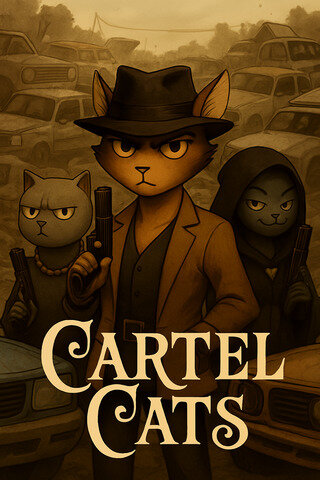

Core Theme
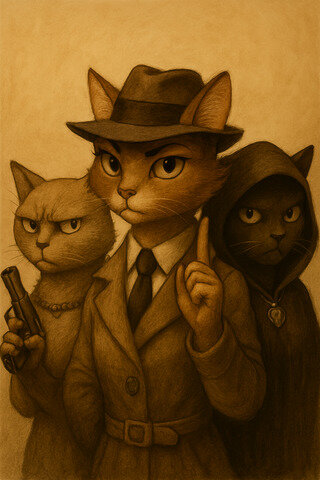
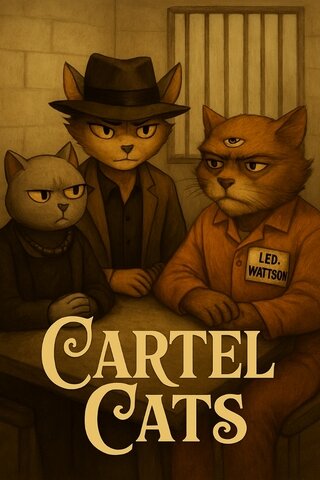
“Cartel Cats” uses anthropomorphic characters inspired by real people and events to reimagine the concept of a “cartel”—flipping the term from its typical criminal context to symbolize survival, community, and resilience against systemic adversity. The series challenges how society treats its most vulnerable, exposing the blurred line between villainy and necessity in environments shaped by exclusion and hardship.
Summary of Chapters
Preface & Introduction
The “cartel” is reframed as a lifeline for people forced into society’s margins, not a threat.
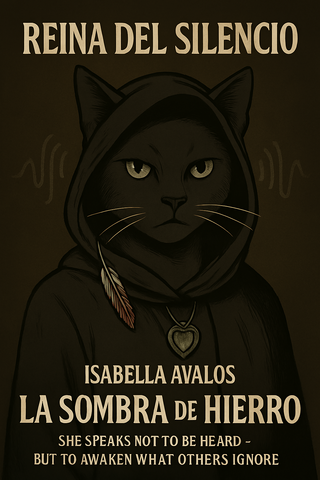
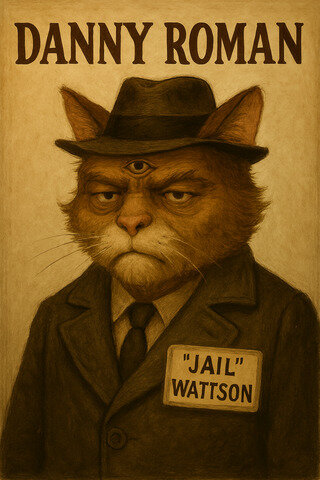
Characters (like Danny Roman, Felicia, Reina, etc.) represent archetypes of leadership, wisdom, resistance, and defiance against unjust judgment.
Calls for empathy: urges readers to see beyond stereotypes and recognize the lived realities fueling solidarity and survival.
Lineup of Characters
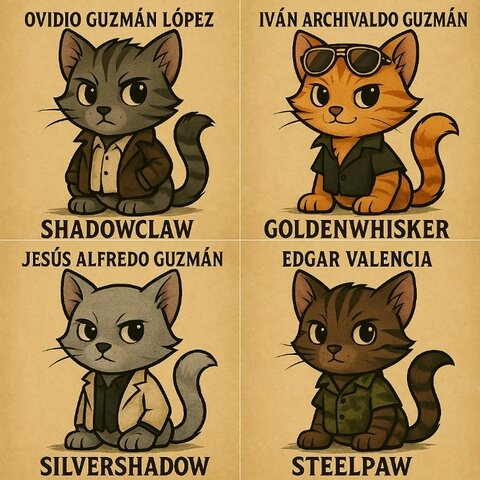
Each cat represents a blend of reality and myth, with symbolic details highlighting leadership, cunning, and the complexities of identity in the community.
Letter to Reese Witherspoon and Hello Sunshine Book Club
A plea for broader compassion and recognition of “invisible lives.”
References Emma Lazarus’s poem as a metaphor for collective responsibility towards marginalized people.
Vignette on Main Street
A powerful scene showing the indifference of passersby towards a homeless man.
Contrasts society’s harsh judgments with the simple, profound act of recognizing and respecting another’s survival struggle.
Chapter 2: Purrjury and Prejudice
Felicia delivers a “public notice,” demanding a rewrite of the rules and highlighting the hypocrisy of labels.
Satirizes legal and societal standards that criminalize community and resilience rather than addressing the root of systemic issues.
Chapter 3: Plumbing With Integrity
Reina mediates disputes, illuminating how division is manufactured and true adversaries are those who manipulate from above.
A call to reject binary judgments, see multiple truths, and break free from cycles of blame.
Chapter 4: Special Royal Broadcast
A satirical news broadcast, creatively broadening the narrative’s reach (even to Mariska Hargitay!).
Underscores the urgency of spreading the real issues—solidarity, truth, and hope—beyond the alleys and into larger society.
Chapter 5: Illuminating the Darkness
Explores the difference between truly sharing light (compassion) and blinding others (judgment/privilege).
Asserts that the true “crime” is apathy; the “cartel” is criminalized only for daring to care for each other.
Chapter 6: Why Is Survival Wrong?
Breaks down how drug charges and law enforcement policies are often discretionary, exposing how survival choices can be criminalized selectively.
Challenges the morality of forcing people to “earn” basic dignity, critiquing societal tendency to grade compassion and survival.
Recurring Motifs and Messages
Survival isn’t shameful: The narrative insists survival strategies, even when they defy legal or social norms, are acts of hope—not crimes.
Judgment vs. empathy: The real villain is not those fighting to live, but the apathy and prejudice that shun or criminalize them.
Writing your story: Characters repeatedly reclaim agency, refusing to let others define their worth or fate.
Creative Devices
Allegory: Using cats as stand-ins for real, marginalized people.
Satire: “The Not Fake Fox News” and playful nods to popular culture inject humor and critique simultaneously.
Direct addresses: Letters and “public notices” invite the audience to engage directly, collapsing the distance between fictional world and reader.
CARTEL CATS
By Kiss My A.S.S C.I.A.
CHAPTER ONE
Based Off of ACTUAL People, Guys
PREFACE
In the alleyways between myth and misunderstanding, beneath shadows that stretch farther than truth, lies a world too often painted by those who never lived inside it. This book invites you to see the cartel—not as a headline, a punchline, or a villain in someone else’s story, but as a community born of struggle, resilience, and the unyielding hope of survival.
Strength in numbers is not a threat. It’s the only lifeline for those shoved to the bottom of society, forced into holes so deep most wouldn’t dare look inside, let alone attempt the climb. When every hand that could lift you up recoils or disappears, when every path out is blocked by judgment and fear, what choice remains but to grasp the hands beside you?
We do what we must to survive—not seeking glory, but dignity, understanding, and a flicker of compassion in a world eager to look away.
This story is inspired by real people—those who have faced impossible odds and found the courage to build community and solidarity in the very places others abandon or condemn. The characters that follow may wear the fur and paws of legend, but their motives, hopes, and battles are rooted in truths so rarely given justice.
This is not an apology; it’s an invitation. Step closer. See the faces, hear the stories, witness the bonds that form in the margins. Every cat in these pages, from Danny Roman to his daughter Vianna, is more than the sum of their labels. They are dreamers, protectors, and fighters, doing whatever it takes until—maybe—someone finally cares enough to offer a ladder instead of another pile of stones.
Let us begin together, and for once, let’s choose to look beyond the surface—because survival, when met with true solidarity, is just the first chapter in rewriting what “cartel” means.
THE CARTEL CATS LINEUP
Name Inspired By Role / Personality Visual / Symbolic Details
Danny Roman aka Led Watts On Danny Roman (real inspiration, reimagined) Kingpin; charismatic, complex, ruler of the scene The “J(ai)L” cat—blend of messiah and kingpin; third-eye motif
Felicia Original character Wise, philosophical, aristocratic leader Elegant, regal fur, calm demeanor
El Mewyo Ismael “El Mayo” Zambada Shadow strategist, mythic elder Grey, spectral, always in the background
Guzpaw Ovidio Guzmán López Young, flashy enforcer; conflicted legacy Jewelry, loud colors, turbo attitude
Basil the Whisperer Alen Basil Translator and double agent Soft-spoken, mysterious coat patterns
Big U Furrow Eugene “Big U” Henley Public, groomed, community man Well-groomed, community-friendly look
Clawrez the Ghost Hector Guerrero Flores Mythic expansionist, rarely seen Vaporous, almost invisible, legend status
Vianna Roman aka Purr Lock Sup Holmes Vianna Roman (real inspiration) Daughter, sharp-witted detective, takes on dad’s mantle Sleek fur, deerstalker cap, clever eyes
The streets, the stories, the hope—they’re real. The faces are symbolic, but the heart behind them beats with the truth of anyone who’s ever been asked to climb out of a hole, alone.
This is their story. This is your invitation.
I
 invitation.
I







