01. Eerie Dinner
*read in dark mode*
Disclaimer
This book contains immersive scene, gore, pain, and violence.
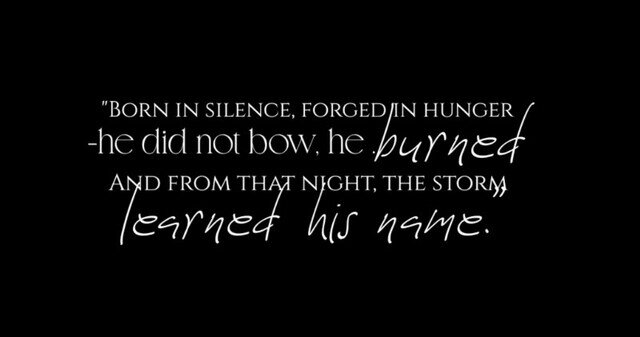


A low, grinding thunder rolled across the crooked rooftops, shaking the brittle panes of the workhouse windows. Rain came next, hammering the stone walls as though the sky itself wanted to beat its way inside. The building moaned with each gust of wind, timbers creaking like bones ready to snap.
Inside, the air was thick—choking with the stink of boiled cabbage, sour sweat, and mold that grew unchecked in the corners. The dining hall stretched long and narrow, a cavern of shadows broken only by a single swinging lantern. Its light was weak, sickly, and every time it rocked, the shadows moved like things alive, crawling across the stone walls.
The children sat at long wooden tables, their spines bent, their faces pale. Hollow eyes stared into tin bowls filled with water-thin soup, the greasy surface broken only by limp fragments of cabbage or potato skin. No one spoke. Their spoons clattered quietly against the bowls, scraping, desperate, like rats gnawing bones. Silence was safer than words. Silence kept the overseer’s gaze away.
Until it didn’t.
A voice cut the room in two.
“This slop,” the boy muttered, holding up his bowl, “isn’t fit for rats.”
Heads jerked up. A spoon clattered to the floor. The air seemed to freeze, the thunder outside pausing just long enough for the words to hang there.
He was small for his age, twelve at most, his body little more than skin stretched thin over bone. But his eyes burned pale gray, cold and sharp as metal, lit with something none of the others dared to show—fire. His lips curled into a thin, mocking smile.
“I want more.”
The workhouse children stared, horrified. Hunger had beaten rebellion out of them long ago. To demand food was worse than madness—it was suicide.
The overseer moved.
Mr. Crake—called the Crow in whispers—was a thin man with hollow cheeks and eyes black as coal. His hooked nose cut his face into a cruel silhouette, and his long fingers twitched at his side as if itching for the whip he carried on his belt. His boots thudded as he crossed the room, each step heavy and deliberate.
“More?” Crake asked softly. His voice was silk dragged over broken glass. “You want more?”
The boy met his gaze without flinching. “Yes. Feed me.”
Gasps skittered through the room like cockroaches.
The overseer’s smile spread, showing yellowed teeth. “You think yourself special, boy? A prince among the vermin?”
The boy tilted his head. “If being alive makes me a prince… then yes.”
The room went still. Even the storm seemed to hush.
The slap came fast. Crake’s palm cracked against the boy’s cheek, snapping his head sideways. Blood sprayed from his split lip, a bright smear across the table.
But he didn’t fall.
“You’ll eat what I give you,” Crake hissed.
The boy wiped his mouth with the back of his sleeve, leaving a streak of red. He spat into the bowl, blood mingling with broth. “Then keep it.”
The hall erupted in whispers. Some children ducked their heads; others stared wide-eyed, trembling.
Crake’s face darkened. He unhooked the whip from his belt—a length of cracked leather tipped with iron. He let it dangle in the air, swaying like a serpent.
“Up,” he barked.
The boy rose. His chair screeched against the stone. His pale eyes shone in the lantern light, daring, unyielding.
“Name,” Crake demanded.
The boy’s lips twisted. “I don’t give names to crows.”
The whip lashed through the air. The first strike tore cloth and skin alike, leaving a bright welt across the boy’s back. He staggered but didn’t cry out.
The second blow came harder, biting deep. Blood spattered the stone floor.
The third ripped a scream from one of the smaller children, though not from him. His teeth clenched, his breath hissed, but no cry escaped.
Crake struck again. And again.
The boy’s shirt shredded into ribbons. Flesh opened beneath the lash, strips of skin peeling away, raw muscle showing in flashes of crimson. Blood ran down his back, dripping onto the floor, pooling beneath his feet. His body shook, but his eyes stayed fixed on Crake, burning with defiance.
“Say it!” Crake roared, spittle flying. “Say you’re sorry!”
The boy’s chest heaved. He spat a glob of blood onto the floor, crimson splattering at the overseer’s boots. “No.”
The whip cracked once more. This time the iron tip caught his cheek, tearing it open. Blood poured down, hot and thick, into his mouth. The taste of iron filled his throat, choking him. He coughed, spitting teeth and blood.
Still—he didn’t bow.
The children were silent, frozen, their spoons forgotten. Some wept silently, heads buried in their arms. Others stared in horror. A few—just a few—watched with something else in their eyes. Awe.
Crake’s arm shook with rage and exhaustion. He raised the whip again—but the boy moved first.
His hand shot up, grabbing Crake’s wrist. Small fingers dug into pale flesh with the strength of iron. The whip dangled, useless.
“You’ll break before I do,” the boy said. His voice was raw, wet with blood, but steady.
Crake’s face drained of color. His eyes flickered with something he had never felt before toward a child—fear. He yanked his arm free and stumbled back, the whip clattering to the floor.
The boy straightened slowly, blood dripping from his wounds, painting his shirt red. He turned, his pale eyes sweeping the room. Every child stared at him. Terrified. Reverent. Silent.
He smiled.
Dinner ended in silence.
Later, the storm battered the workhouse until the walls themselves trembled. The children lay on their cots, whispering in the dark.
“He’s mad,” one muttered.
“He’ll be dead by morning,” another said.
But one voice, hushed and trembling with awe, whispered: “He stopped the Crow. He didn’t bow.”
On his cot, the boy lay awake, staring at the cracked ceiling. His body burned, every lash still bleeding, but his eyes stayed open, unblinking. The storm roared above, lightning flashing, thunder cracking like the echo of the whip.
Let them whisper. Let them fear.
If the world had wanted him dead at birth, then survival was rebellion. And he would not stop.
The storm reached its peak. In the lightning’s brief, blinding light, his face seemed carved not from youth, but from stone and shadow, something ancient, cursed, and unbreakable.
By morning, they would whisper his name only when the thunder drowned it out.
To be continued