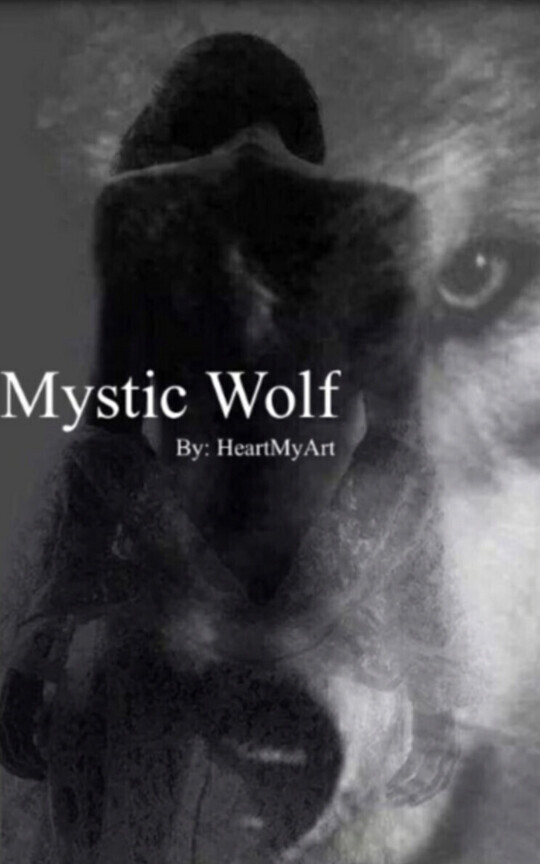
Where the Moon Sets Her Seal
PROLOGUE
Where the Moon Sets Her Seal
In the elder reckoning of years, before the keeps of men lifted their bright windows against the dark, and before the iron roads cut the valleys like scars, the North belonged to the old blood and the older silence.
There were mountains there that seemed not made so much as remembered—grey backs of the world, crowned in snow that never wholly melted, even in the brief summers when the sun lingered and the pines drank deeply of light. Between those heights ran forests vast enough to swallow armies and secrets alike. Wind moved through them with a voice that could sound like prayer or warning, depending on what one had done and what one feared.
And over all, as if she were a queen who required no throne, the Moon kept her slow dominion.
The wolves of the North did not worship as men worship—by temple and book and loud confession. They held their faith in the bones of things: in the rising of the white disc above the crags, in the wild music of winter nights, in the silvered fur of their children, and in the unbroken line of kings who wore the Moonbound Crown.
Yet even the wolves knew this: the Moon was not gentle.
She did not give without taking, nor bind without burning.
It began, as many great tales begin, with a promise made too easily and a price named too late.
Long ago—so long that even the oldest among the clans spoke of it as one speaks of storms remembered in scars—there lived a king called Aldren Blackmoor, first of his blood to be crowned at Blackmoor Keep. He had been a great wolf, so the songs insisted: broad-shouldered, bright-eyed, laughter quick upon his mouth and fury quicker in his hands. He drove the raiders from the eastern passes, broke the hunger-wolves of the barren fens, and forged the Northern Clans into a single howl that shook the valleys.
In those days there was no Moonbound Crown. There was only a king and the peril of kingship.
Then came a winter that did not end.
It began with frost. It became famine. Streams froze in their beds. Deer died standing upright, trapped by ice that formed too fast for flight. Even wolves—wolves that had hunted these lands since the world was young—found their bellies empty and their cubs thin as shadows.
The clans gathered at Blackmoor Keep with hollow eyes and ragged tempers. They demanded answers, demanded fire, demanded certainty. Aldren gave them what he could: his storehouses, his hunters, his own blood spilled in battle against the unseen enemy of cold.
But winter laughed at swords.
So Aldren climbed the highest peak above Blackmoor, alone, as the oldest rites required. There, beneath a sky like black glass, he laid down his cloak and his pride and called to the Moon.
He did not call in humble prayer.
He called like a king who believes the world owes him an answer.
“Lady of Night,” he cried into the frost, “if you would have these lands endure, if you would have wolves keep your roads and howl your name, then lift this winter from my people. I will give you what you ask—whatever it is.”
The Moon rose then, slow and implacable, and her light turned the snow to a field of knives. The wind died. The world became very still, as if it leaned close to listen.
And in that hush, Aldren heard her—not in words, for the Moon spoke no mortal tongue, but in the way his blood warmed and his bones thrummed and his wolf rose within him, staring up at the sky with eyes too bright.
If you would keep the North, she answered, you will be bound to me. Your crown will be mine. Your line will be mine. Your strength will be mine, and your heirs will carry my mark.
Aldren’s breath plumed silver in the air. His pride—great as his shoulders—should have bristled.
But he thought of starving cubs. He thought of the wolves who had followed him through blizzards and blood. He thought of a kingdom that would be ashes without him.
“Then bind me,” he said, and his voice shook like thunder.
The Moon’s light struck him like cold fire.
When he returned to Blackmoor, dawn came with him. The ice loosened. The rivers sighed and ran. Deer returned to the valleys as if guided by unseen hands. Winter ended as suddenly as it had begun.
The clans hailed Aldren as blessed.
But blessings, in the North, often wear the shape of chains.
On the night of the next full moon, Aldren woke with a ring of silver upon the stone beside his bed: a circlet wrought of moonsteel, pale as a frozen lake and sharp as truth. When he lifted it, it was cold enough to bite. When he placed it upon his brow, power rushed through him—wild, clean, ancient—so fierce that he fell to one knee, panting.
The Moonbound Crown had found its first king.
And the Moon claimed her due.
From that night onward, every Blackmoor king was bound to the Moon and to a law older than any treaty: that the crown did not belong solely to the man who wore it. It belonged to the one the Moon chose beside him—the Luna.
Not every king received that gift.
Some were chosen swiftly, their Lunas found before their first winter on the throne. Some waited years and grew hard with loneliness, wearing their power like armor, pretending not to feel the hollow ache that the Crown could not fill. And some—rare and ill-fated—were never chosen at all, their reigns marked by unrest and blood, as if the kingdom itself sensed an imbalance in the old bargain.
For the Luna was more than a mate.
She was balance.
She was hearth-fire to the king’s storm. She was the tether that kept the crown’s power from consuming its bearer. She was the voice that could soften a decree, the hand that could steady a blade, the presence that could calm the wolf when rage climbed too high.
Without her, a king might still rule.
But he would rule like a sword—bright, dangerous, and liable to break.
So the clans watched the Moon and watched their kings, and whenever a new Blackmoor ascended, the same question hung in the air like frost: Whom will the Moon bind to him?
And always, beneath the question, another fear whispered: What will she take to pay for it?
For the Moon never gave without taking.
Time passed. Crowns turned to dust and legends to murmurs. Blackmoor Keep endured, its stones darkened by snow and war, its towers rising like stern fingers toward the sky.
Then came Maxwell.
He was born on a night when the Moon wore a veil of cloud. Wolves said it was a sign: that he would be a king touched by shadow, marked by restraint. He grew tall and quiet, with a gaze that could pin a man in place and a patience that could outlast insult. In him the old blood ran strong; in him the wolf was not merely a beast but a presence—watchful, intelligent, hungry for the wild.
When Maxwell’s father died—too soon, as fathers often did in the North—Maxwell took the throne at an age when some men were still learning what they wanted of life.
He took it without ceremony.
He took it like a burden he had already carried in his bones.
On the night he was crowned, the Moonbound Crown settled upon his brow as if it had been waiting. The power in it surged, and every torch in the Great Hall guttered. Wolves—proud, fierce wolves—went still with instinctive submission, their eyes reflecting silver.
And in that same breath, as the last echo of the old rites faded, Maxwell felt the absence.
Not in the way a man notices an empty chair at a table, but in the way one notices a missing limb: a phantom ache, a shape that should have been there, a space in the air where warmth ought to live.
The Luna had not appeared.
The Seer of Blackmoor, old Maerwyn, watched Maxwell from the edge of the hall, her eyes milky with age and sharp with knowing.
“She will come,” Maerwyn said when the feast ended and the last of the clans drifted away, leaving only embers and silence behind. “The Moon does not forget her bargains.”
Maxwell did not look at her. He unfastened the cloak from his shoulders and set it aside, as if shedding ceremony could shed expectation.
“Perhaps she has,” he replied.
Maerwyn’s smile was thin as a knife. “The Moon forgets nothing.”
The years proved that much, at least. Maxwell grew into his reign the way winter grows—slowly, inevitably, consuming what is weak and preserving what is strong. He quelled border skirmishes, broke a rebellion in the western ridges, and negotiated with men of the lowlands whose words were smooth and whose hearts were not. He did all of it without the softening presence of a Luna, without the counterweight that steadied kings.
And because he lacked that balance, he learned to become his own.
Where other kings drank and raged and reveled, Maxwell restrained himself. Where other kings sought pleasure as a balm, Maxwell refused it like poison. His wolf pressed for release; the Crown sang to his blood; the kingdom demanded strength.
So Maxwell became steel.
He became law.
He became a king who would not be claimed—because to be claimed, he believed, was to become weak.
And weakness in the North was a death sentence.
Yet the Moon did not cease her slow watching.
There are nights when the world seems woven of omen, when even the smallest event carries a weight that makes one’s skin tighten. Such a night came in the twelfth year of Maxwell’s reign.
Clouds had torn apart at dusk, leaving the sky so clear it looked freshly washed. Stars glittered like frost. The Moon rose full and bright, unashamed of her power.
Maxwell stood alone in the high watchtower of Blackmoor, one hand resting on cold stone, his breath pale in the night air. Below, the keep was quiet; wolves slept; guards paced in measured, familiar rounds.
Then the Crown warmed.
Not much—only a shift, as if the metal had remembered skin. But it was enough to make Maxwell’s spine stiffen.
His wolf stirred beneath his ribs, not with anger, but with keen alertness—like a hunter scenting something on the wind.
Maxwell frowned, eyes narrowing toward the southern road.
Far below, a pair of lanterns bobbed in the dark, approaching the bridge that spanned the ravine beneath the keep. The bridge was old stone, built by hands long dead, and it groaned in winter winds. Few dared cross it at night. Fewer still dared cross it in the presence of the Moonbound King.
Yet someone did.
As the lanterns drew closer, Maxwell caught the scent—faint at first, then stronger as the wind shifted. It was not wolf. Not deer. Not smoke or steel.
It was human.
Warm skin. Soap. A trace of herbs, crushed leaves, and sunlit meadows. A scent that did not belong in the North’s cold mouth.
Maxwell’s jaw clenched.
The Crown warmed again, and the power in it rose like a tide pressing against the inside of his bones.
His wolf growled, low and possessive, in a way it had not in many years.
“Impossible,” Maxwell murmured, though the word sounded like denial spoken to a truth too large to hold.
The lanterns reached the bridge. A carriage followed—modest, plainly made, its wheels dark with road mud. It creaked and swayed as if tired of the journey.
Then the carriage door opened.
A woman stepped down.
She did not move like a noble. She did not move like prey, either. She moved like someone who has walked through hardship and learned that fear is only useful when it sharpens the senses, not when it steals the breath.
Her cloak was simple wool, but the way she held herself made it look like a mantle.
She paused at the bridge, and for a heartbeat she lifted her face to the sky.
Moonlight touched her hair—golden, as if a piece of summer had been careless and left itself behind. Her eyes, when she tilted her head, caught the silver like river water.
And in that moment, Maxwell felt the Crown pulse.
Not with threat.
With recognition.
With hunger.
With a pull so fierce it was almost pain.
The air thickened, as if the night itself had drawn close to listen. Somewhere in the forest a wolf howled—one voice at first, then another answering, and another, until the sound became a weaving of voices, a chorus rising through the trees like prophecy.
The woman’s lips parted, startled by the sudden song of the wild. She looked toward the keep’s dark towers, as if she could sense the gaze upon her.
Maxwell did not move.
He should have turned away. He should have ordered the guards to send the human back down the road, to the warmer lands where humans belonged. He should have stamped down whatever treacherous, aching instinct rose in him.
Instead, his hand tightened on the stone.
Because the Crown had spoken, and it did not speak lightly.
Because his wolf had risen, and it did not rise without reason.
Because the Moon—ancient, patient, merciless—had finally turned her gaze upon him and said, without words:
Here is the one I have chosen.
Below, the human woman drew in a slow breath, as if tasting the air. Her shoulders lifted. Her chin tipped higher.
And though she did not yet know it, though she had no name for the power that had just brushed her skin, the Moon set her seal upon her all the same.
For fate, when it comes, is not always a thunderclap.
Sometimes it is only a warmth at the edge of a cold night—
and the quiet certainty that one’s life has just been changed forever.
Her name, the guards would later learn, was Sunny Vale.
And the North would remember it, long after blood had been spilled, long after oaths had been broken and remade, long after the Moon’s bargain demanded its price.
Because a king without a Luna is a dangerous thing.
And a Luna stolen is the kind of offense that wakes old monsters from old sleep.
Under the full Moon’s bright, unblinking eye, the story began.