
Chapter One – Whispers Behind the Mask
Venice, February 1785
Snow sifted down in lazy, glittering spirals over the Grand Canal, settling on the tiled rooftops and the black-lacquered gondolas moored along the banks. The air was crisp with winter, yet warm with the promise of music, wine, and whispered secrets.
The Winter Carnival had begun — the season when Venice shed its propriety like an unwanted cloak,
when masks made lovers bold and enemies indistinguishable from friends.
Isabella Conti stepped into the pawnshop as though into a confessional.
The bell above the door gave a low, metallic groan, and a draft of cold air followed her inside.
Her gloved hands tightened around the velvet pouch she carried — not for warmth, but for resolve.
Inside, the shop smelled faintly of old cedar and tarnished silver.
A row of dusty chandeliers hung crookedly from the beams, their crystals catching the dim light like frozen tears.
“Signor Bianchi,” she greeted the pawnbroker, her voice low.
The man emerged from behind a stack of gilt-framed mirrors.
He was pale and stooped, with a manner as calculating as a moneylender’s ledger.
“Donna Isabella.” His gaze slid to the pouch. “Have you brought me something of value?”
She placed it on the counter. The velvet parted to reveal a necklace — a delicate chain of rose gold,
set with a teardrop of pink tourmaline.
“My mother’s,” Isabella said, forcing the words past the tightness in her throat.
Bianchi lifted the pendant and held it toward the light. “Exquisite work. Venetian, early Rococo. Sentimental value?”
“All the value it ever had is sentimental,” she said, meeting his gaze squarely.
I require enough for a gown. Modest. But fine enough to avoid… comment.”
“Carnival?” His lips twitched in what might have been a smile. “Ah, yes. Masks may hide the face, but never the fabric.”
The scale tipped, weights clicked, and Bianchi named a sum. She accepted without bargaining.
When she left the shop, the wind from the canal was sharper, biting her cheeks until they stung. She told herself the prick in her eyes was from the cold.
Back in the crumbling Conti palazzo, her father was waiting.
Count Marco Conti still carried himself with the bearing of an old Venetian lion,
though illness had sharpened his bones and left a faint tremor in his hands.
“You have the gown?” he asked, rising slightly from his chair.
“I will,” she replied. “Tomorrow. I found a seamstress who can work quickly.”
His approval was brisk and entirely practical. “Good. You must be seen, Isabella. You must charm someone with means.
Our creditors grow impatient, and I…” He hesitated, pressing a hand to his chest. “…I am not a well man.”
Her jaw tightened. She wanted to remind him she was not a courtesan to be displayed and bartered.
But then she thought of Luca — her brother, not yet seventeen — and the future he would inherit if the Conti name fell into disgrace.
“I understand,” she said softly.
The Count leaned forward, eyes sharpening. “Vittorio Moretti will attend the ball at Palazzo d’Angelo tomorrow night.
He is wealthy, unmarried, and—”
“And utterly without scruple,” Isabella finished. “I have seen the way he looks at women.”
“You are clever enough to guide a man’s gaze where you wish it,” her father said. “We do not have the luxury of choice.”
Her silence was an agreement he took for granted.
The next evening, the city gleamed under torchlight.
Venice was never more beautiful than during Carnival — and never more dangerous.
The canals mirrored ribbons of gold from the lamps strung along the bridges;
the air was heavy with the mingled scents of roasting chestnuts, candle wax, and the faint salt of the lagoon.
Music poured from open palace windows, spilling into the night along with laughter and the occasional cry of scandal.
Isabella’s gown was pale silver, the color of winter moonlight, trimmed with delicate embroidery of frost-laced vines.
A half-mask of pearl-white lacquer hid her face from nose to brow, but her lips were unpainted — a quiet rebellion against the more brazen masqueraders.
She stepped into the ballroom of Palazzo d’Angelo, and for a moment the sheer splendor made her forget herself.
Crystal chandeliers scattered light over hundreds of masked faces.
The air shimmered with perfume and the heat of too many bodies in close quarters.
Her father had already vanished into the throng, moving toward the card tables and the men who might be persuaded to forgive his debts — or to gamble with them. Isabella lingered near the edge of the marble floor, watching the dancers weave in glittering patterns.
Two matrons nearby whispered behind their fans, their voices carrying in the swell of the music.
“…the Contis? I heard the creditors will strip the palazzo bare before Lent.”
“…a pity about the girl. She’s pretty enough. But beauty without fortune—”
Isabella turned away before she could hear more. Their words were nothing she didn’t already know,
but hearing them in the open was like a cold hand around her throat.
Luca’s future flashed before her — an apprenticeship in some provincial town, their family name reduced to a footnote.
She drifted toward the tall windows that opened onto the terrace, where the night air might steady her. Gondolas glided below, their prows cutting through torchlit ripples. The music faded just enough for her to hear the soft brush of footsteps behind her.
She turned — and saw him.
The man was masked in black and gold, the edges worked in fine filigree that caught the light with each movement.
His height alone set him apart from most Venetian men, and his bearing was unhurried, as though the crowd parted for him without his asking.
He stopped before her, and for an instant she thought she had met his eyes — though the mask hid everything but the curve of his mouth.
“Signorina,” he said, inclining his head.
His voice was warm velvet, carrying a faint accent she could not place.
“You are far from where you are expected to be.”
“I am exactly where I wish to be,” she replied, though her heart had begun a faster rhythm.
A faint smile touched his lips, as if at some private amusement.
“Then you will indulge me. One dance.”
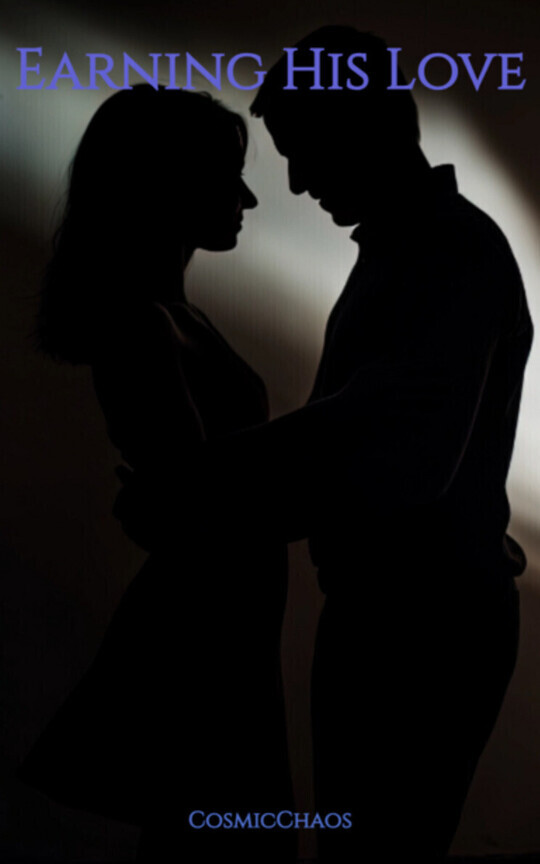
Before she could protest, his gloved hand closed gently around hers. The touch was firm enough to guide, not so forceful as to offend. She allowed herself to be led into a small side chamber — lit only by a scattering of candles, the sound of the orchestra muffled by distance.
He placed a hand at her waist, the other still clasping hers, and began to move in a slow, deliberate waltz.
“You mistake me for someone,” she said.
“Perhaps,” he murmured, his gaze fixed on her as though the mask were no barrier at all. “But perhaps not.”
The air between them seemed to hum, each turn of the dance drawing her fractionally closer.
She could feel the heat of his body through the silk of her gown, the faint catch in her breath when his thumb traced an idle pattern against her palm.
“You dance as though you have a secret,” she said, searching his hidden expression.
“And you,” he returned, “as though you carry the weight of the world beneath your skirts.”
A startled laugh escaped her. “And yet you know nothing of me.”
“I know enough.” His voice softened. “That you do not belong to the man who sent you here tonight.”
Her breath stilled. “What makes you so certain I was sent?”
“Because women who arrive of their own will do not watch the door as though they might flee through it.”
The waltz slowed; his hand lingered a moment too long at her waist before releasing her.
Feeling hot from his gaze, she excused herself and was gone — swallowed by the shadows beyond the doorway.


















Thanks a lot. I would love to hear it.
This story is not just meant to be read, but to be felt. The way you express emotions makes every scene appear full of life and presence. There’s a special pull in your writing that keeps the reader connected from beginning to end. Beautifully done. My contact details are available on my profile.