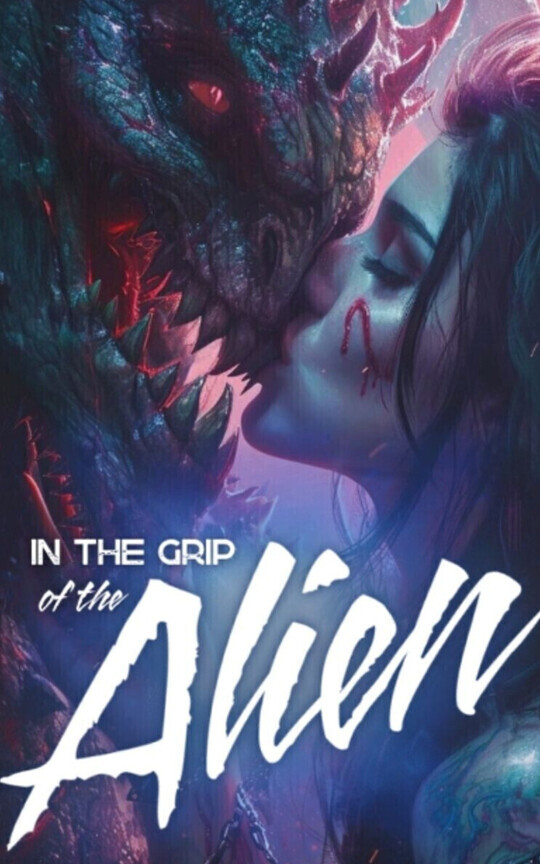
Chapter 1 – The Long Dark Between
The starship Horizon slipped out of Earth’s shadow like a shard of midnight glass, its hull catching the last thin line of sunlight before the planet became just another blue memory behind them.
Lieutenant Aria Solberg sat strapped into the navigator’s cradle, surrounded by holographic star maps that hung in the air like constellations frozen mid-breath. Her fingers danced over the controls, refining the jump trajectory, while lines of data shimmered across her visor.
“Course is locked,” she said, her voice steady, though her chest felt tight. “Destination: Kepler-186f transit corridor. Estimated travel time to first gate: twelve days, four hours.”
“Copy that, Lieutenant.” Captain Jace Korran’s voice came from the command chair behind her—calm, clipped, with the faint gravel that came from far too many recycled-air missions. “Helm, bring main drive to seventy percent. Let’s leave home before anyone changes their mind.”
A low hum grew through the deck plating as the Alcubierre drive spooled up, bending spacetime ever so slightly around the hull. Outside the viewport, stars stretched into smears of white. Earth dwindled, then vanished.
“Goodbye, blue marble,” muttered Riya Patel, the ship’s chief engineer, from her station to Aria’s left. “Try not to burn without us.”
No one laughed, but a few small smiles cracked through the tension. It was easier than acknowledging what they all knew: this might be a one-way trip.
Horizon was humanity’s most advanced exploration vessel, built not by one nation but by a coalition of desperate ones. Climate catastrophes, resource wars, and the slow, gnawing loss of biodiversity had turned Earth into a place in recovery rather than ascendancy. So they built a ship and pointed it toward the unknown, hoping that somewhere in the black there was an answer—a new home, a new equation, a new miracle.
For Aria, the mission was more than just humanity’s last-ditch gamble.
It was personal.
Her older brother, Leon, had vanished ten years ago on the Dauntless, the first starship to attempt a deep-space transit beyond the outer gate network. They’d lost contact three days after the ship entered an experimental warp corridor. No debris. No signal. No goodbye.
Then, two years ago, a ghost had whispered from between the stars.
A distorted transmission, little more than static and a broken fragment of a voice, had reached a relay station orbiting Titan. After months of reconstruction, the analysts found a pattern. A few syllables.
Aria recognized one of them.
“—ria…”
Her name, dragged through noise and vacuum.
The signal’s origin didn’t match any known path. It seemed to come from a point between transit gates—somewhere ships were never meant to be. An impossible location.
The coalition’s answer was predictable: build a new ship, load it with the best minds they had left, aim it at the coordinates of the ghost, and hope nothing else broke.
So now Aria watched the warped stars on the main display and held the memory of her brother’s laugh like a talisman.
“Navigator,” Captain Korran said, pivoting his chair toward her. His short, dark hair had gone silver at the temples, and deep lines etched the corners of his eyes. “Talk to me. How does the corridor look?”
Aria glanced at the projections. “We’re still three days from the first gate. No anomalous gravity wells, no unexpected shift in stellar density. The corridor’s clean.”
“And the signal?”
She swallowed. A separate holo floated on her right—an endless stream of numbers, a faint waveform that pulsed like a dying heartbeat.
“Still there. Faint, but consistent. It’s…anchored. It doesn’t drift like normal distortion. It’s almost like it’s nailed into spacetime.”
Riya leaned back, chair creaking. “’Nailed into spacetime.’ There’s a comforting phrase.”
Dr. Ishikawa, the mission’s lead physicist, spoke from the dark corner of the bridge where he preferred to observe rather than command. His thin face and sharp eyes were half-lit by his console. “If the signal is fixed in a region outside known transit routes, it suggests some kind of artificial topology. Constructed space.”
“You mean a structure?” Korran asked.
“Not necessarily a ‘structure’ in the way we understand it. But someone—or something—might have folded spacetime in a way that creates a pocket. A bubble. A cul-de-sac where information can linger longer than it should.”
Aria thought of Leon. “Could a ship survive in there?”
“That depends,” Ishikawa replied, “on who built the bubble, and why.”
The captain stood, the motion fluid in the low artificial gravity. He walked to the center of the bridge, hands clasped behind his back, staring at the ghost signal’s display.
“Our mission,” he said, speaking now not just to the officers present but to the rest of the crew listening below, “is twofold. Officially, we’re tasked with investigating anomalous subspace activity that may represent a threat or an opportunity for Earth. Unofficially…”
He paused. Aria’s throat constricted.
“Unofficially,” he continued, “we’re looking for answers. Answers about the Dauntless, about what exists beyond the mapped corridors, about whether we are truly alone in the dark. There are risks. We all read the briefings. We all signed.”
He turned, meeting Aria’s gaze directly. “But I’ll say this again: I did not bring you out here to die. I brought you here because no one else on Earth is better suited to walk into the unknown and return to tell the tale.”
A murmur of acknowledgment came over the comm.
Aria forced a faint smile. “No pressure, sir.”
He actually chuckled at that. “Get some rest when you can, Lieutenant. I have a feeling the quiet won’t last.”
He retreated to his chair as the ship continued its silent surge into the void.
Later, when her shift ended, Aria unstrapped herself and floated down the dim central corridor toward the observation deck. The artificial gravity was dialed low to conserve energy, so every push sent her drifting weightlessly until she caught a handhold.
The observation dome at the bow of the ship was her favorite place. Here, the hull gave way to a reinforced transparent alloy, opening a window into forever. She slipped inside and sealed the hatch.
Stars surrounded her. An ocean of light, cold and indifferent.
She let herself float, knees tucked, watching the slow drift of distant nebulae. The hum of the ship faded until there was only the steady beat of her heart in her ears.
“Leon,” she whispered. “If this is you… if you’re really out there… hold on.”
As if in answer, her wrist console pinged softly.
INCOMING: ANOMALOUS DATA PACKET.
Aria frowned and flicked her wrist, bringing up the interface. The origin was internal—Horizon’s own sensor array—but the timestamp was wrong. It claimed to be from ten years in the future.
“What the…”
The packet unfolded into a single audio file. She hesitated, then tapped play.
Static hissed, like wind clawing at a broken radio. Then, beneath the noise, a voice emerged.
“—ria… Aria… don’t trust… the light… it remembers us…”
Her blood went cold. The voice was older, rougher, warped by interference—but it was unmistakable.
“Leon?”
The recording cut off. No metadata. No explanation.
Aria stared at the suspended waveform, her breath coming shallow.
Somewhere in the distance, the ghost signal pulsed on, unchanged.
And for the first time since they left Earth, she felt something that wasn’t duty, or fear, or grief.
She felt the sharp, electric spark of destiny.