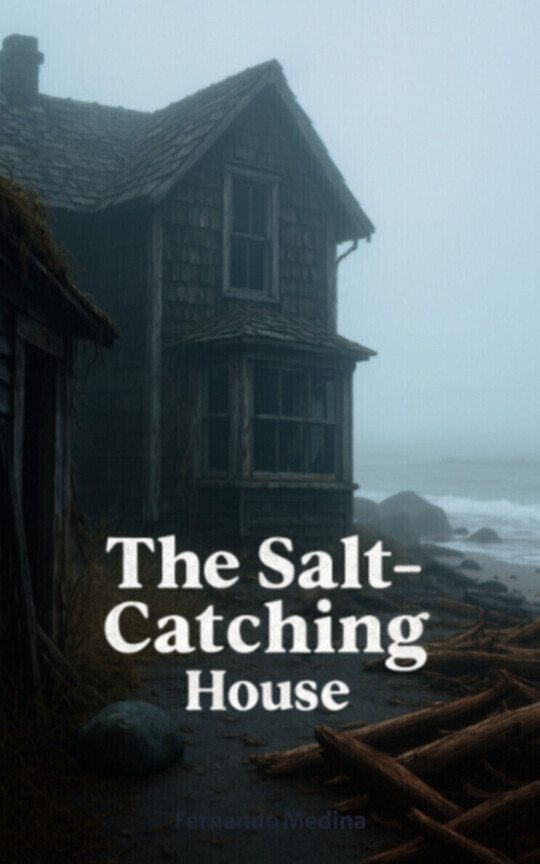

Chapter 1: Return
Return
Mara stepped off the bus into a wind that had learned to move like accusation. Graymarsh sat smaller, its clapboard teeth patched with plastic, new pylons like bones shoved upright. At the funeral the church smelled of boiled tea and lilies; neighbors traced the aisle with eyes that would not meet hers. At home she moved through Eveline’s rooms—soap-slick towels, jars of desiccated herbs, a ledger of names tucked beneath a shawl.
That night the house exhaled salt as if remembering the sea; Mara lay awake while a child’s voice thinned from beneath the stairs, calling a name she almost knew.
She went down on bare feet, following the thin, sure voice into a cupboard beneath the stairs where Eveline kept jars of herbs and a crooked pile of saucers. The air there tasted of old sea and mint; a child’s shoe lay crumpled in a nest of twine and salt. Beneath a shawl Mara found the ledger—softened leather, edges bleached by damp. When she opened it the ink had gone to sea on some pages; other names stood stubborn and black, like stones. A small handprint had been pressed into the margin in heavy, impatient graphite.
Back upstairs she lay awake with the book across her ribs and the house breathing around her. Memory unspooled in tiny, wrong fragments: a jetty that did not belong, laughter stitched to the sound of counting, a palm that fit hers and then did not. The child’s voice came again, thinner, threading the joists, and Mara kept her eyes open until the room blurred with salt and the ledger seemed to thrum like a held, secret tide.
She turned the ledger until the light from the hall lamp caught a row of names like knots—some crossed, some circled, some smudged into nothingness. Each felt private and public at once, as if Eveline had balanced a town’s weight on a single spine of paper. Mara pressed her thumb to the graphite handprint and felt the ledger answer with a coolness that traveled up her wrist. Outside, the wind found the eaves and made the shutters pant; inside, the house kept time with a slow, damp pulse.
She tucked the book beneath the shawl again and sat very still, weighing what one does when a place remembers you more accurately than you remember it. Sleep came in fits—salt-scraped dreams, the child’s voice threading through them like a seam. When dawn tilted the sky grey, she rose with the ledger at her side, the house settling around her like something catalogued but not yet opened.