
Chapter 1 – The Last Stop Before Nowhere
The bus coughed itself awake as it climbed the last serpentine turns toward Saint-Émelie, its engine echoing off limestone cliffs and shuttered stone houses perched on ledges like wary birds. Lena Hartmann pressed her forehead to the fogged window, watching the road behind them disappear into the clouds. There was a strange comfort in seeing the world vanish, as if, for once, it was the landscape and not her memory that was full of holes.
“Terminus,” the driver called in French-accented German, though there was still a faint strip of asphalt ahead. “Saint-Émelie. End of the line.”
The bus lurched to a stop in a small square paved with glistening cobblestones. The village clung to the slope just above a deep valley, copper roofs dark with rain, chimneys sending up pale threads of smoke. A clock tower rose above it all, its hands stalled at eleven forty-two. A stray dog lifted its head from a doorstep and considered the newcomers before deciding they weren’t interesting enough to bark at.
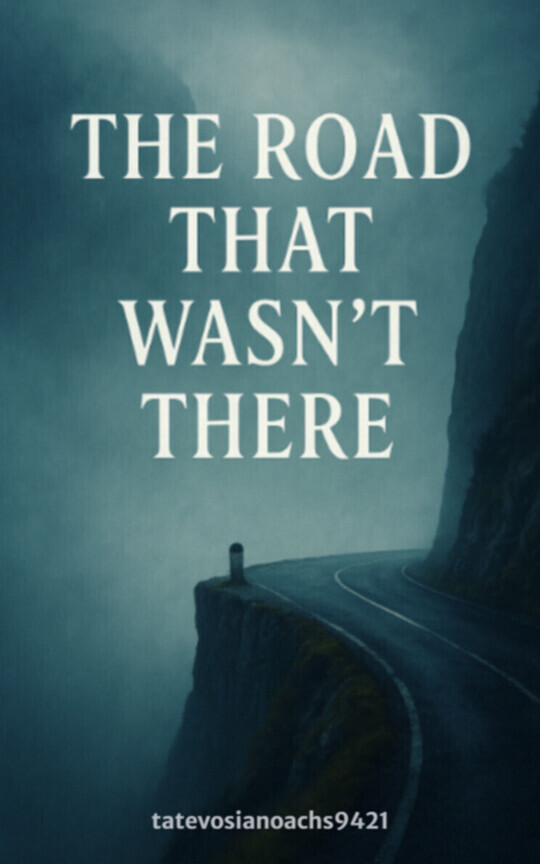
Lena hoisted her duffel bag and stepped down into the thin mountain air. The scent of wet stone and woodsmoke wrapped around her, faintly spiced with pine from the forest that began just beyond the last houses. Above the village, the road continued for perhaps a hundred meters more before melting into gray fog where the mountain fell away.
She knew, without seeing it clearly, where it ended.
“Kilometer Thirteen,” she murmured under her breath, the words tasting metallic.
In the letter, the notary had been clinical: Your aunt, Madame Annelise Hartmann, deceased; estate to be settled; house in Saint-Émelie; please present yourself in person. There had been no mention of her father’s handwriting in the margins of the map she’d found among his old papers. No mention of the scrap where he’d scribbled, Saint-Émelie. Same road. Same point. Thirteen.
Thirteen was the kilometer where, ten years ago, her brother had vanished.
The Auberge des Cloches was the only inn in the village, a narrow three-story building painted a peeling cream. A bell above the door tinkled as Lena pushed it open, letting in a gust of cold air and the faint echo of the bus departing behind her.
The lobby was more a cluttered parlor: dark wood, lace curtains, a grandfather clock ticking with stubborn determination. Behind a worn counter, a woman in her fifties looked up from a crossword puzzle. Her gray hair was pulled into a bun so tight it seemed to lift her eyebrows.
“Bonjour, mademoiselle,” she said. “You must be Mademoiselle Hartmann.”
“Yes,” Lena said, startled. “How did you—”
The woman slid a guestbook toward her. “Saint-Émelie is small. We have only so many visitors, and your aunt used to talk about her niece in Berlin. I am Mireille. You are in room three. We put extra blankets; the fog brings a cold that goes into the bones.”
Lena signed the book, her hand stuttering over her own surname. “You knew my aunt well?”
“Well enough to argue with her about everything from politics to pastry,” Mireille said dryly. “She had strong opinions. You have her eyes.” The innkeeper’s gaze softened, then shuttered again. “Your key.”
Lena took it, the cold brass weight grounding her. “Thank you.”
Before she could turn toward the stairs, a man rose from one of the armchairs by the window. He’d been half-hidden behind a newspaper, but now she saw he was in his early forties, with dark hair just starting to silver at the temples, and the kind of angular face that looked carved for disapproval.
“Excuse me,” he said in careful German. “You are Frau Hartmann from Berlin?”
“Mademoiselle,” Lena corrected automatically. “Yes.”
He didn’t offer a hand, only produced a leather wallet and flipped it open to reveal a badge. “Inspector Mathieu Delacourt, Gendarmerie Nationale, stationed in Villeroche. I’ve been handling… incidents in Saint-Émelie for the last five years.”
Lena felt something tighten in her chest. “Incidents?”
“Disappearances,” he said simply. “Your aunt’s house is near the old road. I thought it prudent to speak with you when you arrived.”
Mireille sniffed. “Some of us prefer not to frighten our guests before they have even seen their room.”
“It’s all right,” Lena said, though her pulse was beating shards of glass through her veins. “I know about the disappearances. Or at least… one of them.”
The inspector’s eyes sharpened. “Your brother.”
The word hung between them like smoke. Lena’s vision flickered for a moment: Lukas’s laugh, stolen wine in a Berlin park, the way he’d ruffled her hair and promised, We’ll go together next time. Next summer. You’ll love the mountains.
“Yes,” she said.
“Then you know,” Delacourt said, folding his wallet closed, “that Saint-Émelie has a point on the map where the road simply… stops. Kilometer Thirteen. No guardrail, no sign. Just fog and a cliff. And you know there are people who say it’s cursed.”
“People also say it’s none of the gendarmerie’s business,” Mireille muttered, but the inspector ignored her.
Lena met his gaze. “What do you say, Inspector?”
He studied her for a long moment. The clock ticked behind them; somewhere upstairs, a floorboard creaked.
“I say,” he replied at last, “that people do not vanish into mist. They end up somewhere. And I have not yet found where.”
He reached into his coat and took out a card, sliding it onto the counter. “If you go anywhere near the end of the road, call me. Tonight, get some rest. Grief and mountains both play tricks on the mind.”
Lena picked up the card. The number blurred for a moment before coming into focus. “I didn’t come for the road,” she lied. “I came for my aunt’s house.”
“Of course,” he said, but she heard disbelief in the smoothness of his voice. “Bienvenue à Saint-Émelie, Mademoiselle Hartmann. Try not to disappear.”
Her aunt’s house was a ten-minute walk uphill from the auberge, a narrow townhouse of honey-colored stone with green shutters and a ruby-red door. Mireille lent her an umbrella that seemed unnecessary until the fog began to bead into fine rain, dampening her hair and eyelashes.
On the way, she passed the village square where a fountain burbled lazily over a moss-grown lion, and a boulangerie where warm light and the smell of butter spilled out onto the street. An old man sitting on a bench under the clock tower watched her pass, eyes like river stones. She thought he might nod or tip his hat, but he only followed her with that steady gaze, as if measuring her against a memory.
The key turned in the lock with stubborn reluctance. The house greeted her with a sigh of cold air and the faint scent of lavender and paper. Shadows pooled in corners: a narrow hallway leading to a kitchen; a steep staircase curling upward; a sitting room filled with shelves, books pressed in like secrets.
She dropped her bag and took a breath.
“Bonjour, Tante,” she said softly, feeling foolish. “I’m late. As usual.”
The silence that answered was not unfriendly. It felt watchful, like the village itself.
On the small table in the hallway, a stack of envelopes waited, held in place by a chipped porcelain rabbit. The top envelope bore the notary’s embossed seal, but beneath it, Lena saw something else: an old road map of the region, folded so many times that the creases had become pale scars.
She slid it out carefully. Her aunt’s handwriting curled across the margins, sharp and spidery in navy ink. Place names, dates, small comments: Market on Saturdays, good cheese here, avoid in winter.
Near Saint-Émelie, one notation was darker, pressed harder into the paper as if the hand that wrote it had been shaking.
KM 13 – the point where things do not come back.
Underneath, in a different pen and a different hand—her father’s—someone had written, Lukas. There was no date.
Lena stared at the word until the letters swam. Her throat tightened. For a moment, she was twenty-one again, sitting in a police station in Berlin as an officer with kind eyes said, “We’ve coordinated with the French authorities. They searched, Fraulein Hartmann. I’m very sorry. Sometimes the mountains keep what they take.”
She folded the map carefully and slipped it into her backpack.
“I didn’t come for the road,” she repeated, just to hear how the lie sounded in this house. It sounded thin and fragile, like glass about to crack.
Outside, the fog pressed its face against the windows, blurring the world to a soft gray. Somewhere down in the village, the bus that had brought her rattled away, back toward the rest of Europe. Here, above the valley, the road thinned to a single line of asphalt climbing toward a place the maps recorded but could not explain.
Lena glanced at the inspector’s card on the hall table, then at the door.
She was tired to the marrow, but the word on the map pulsed in her mind like a heartbeat: Lukas.
Rest could wait.
The mountain, and the point where the road ended, could not.
She picked up her coat again.