
Chapter 1
Characters
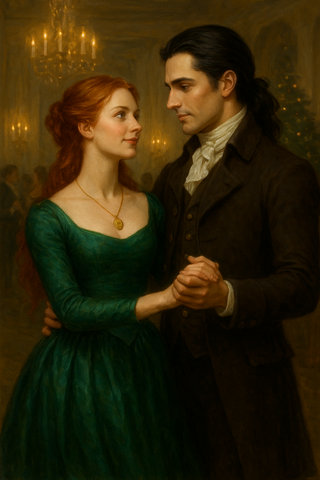
Ben age 32 and Eliza Montclair age 28


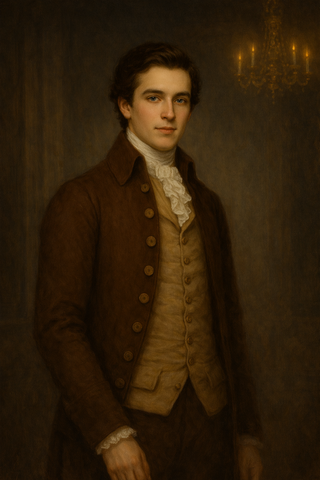
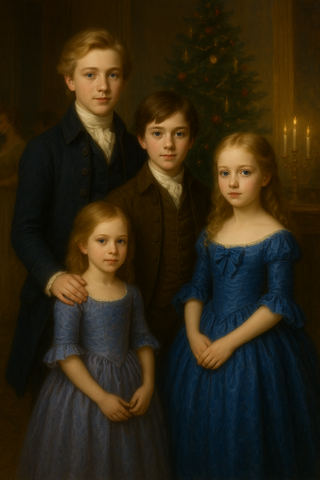
Samuel age 20
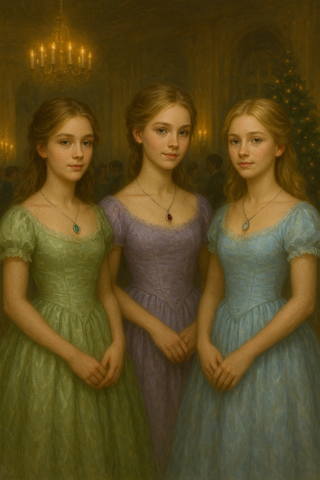
Felicity age 19 middle, Anabell age 17 left, and Catherine age 15 right
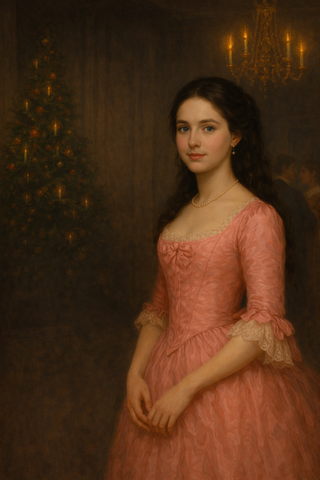
Mary age 14
Johnathan age 13, Benjamin age 11, Grace age 10, and Victoria age 7
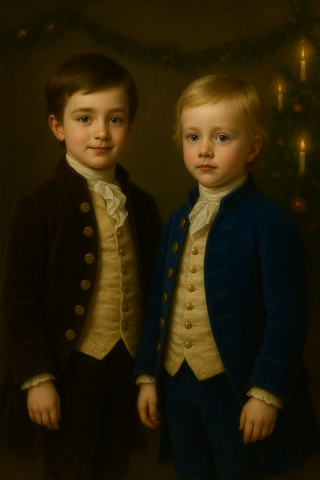
Charles age 7 left and Nathaniel age 7 right
Charlotte Coleman Duchess of Richmond
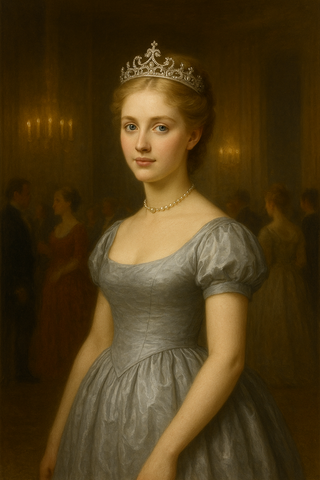
Lydia Harper age 16
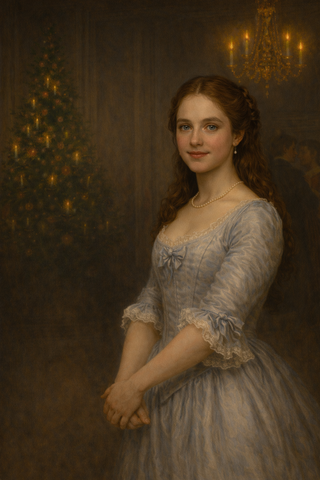
Thomas and Margaret Harper with their sons
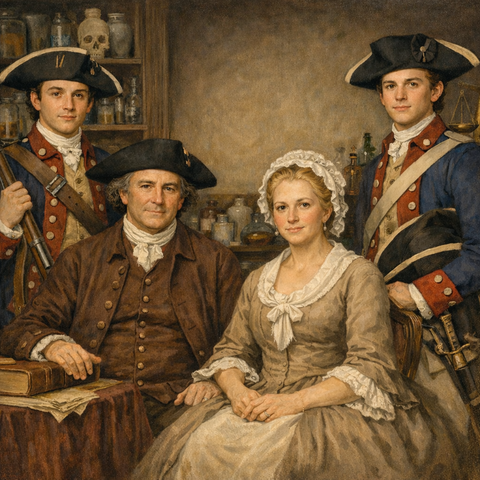
December 1788 The Christmas Ball
The music reached him before the meaning did.
Samuel Montclair stood just inside the ballroom doors of the Coleman Estate, twenty years old and suddenly aware that the war had left him older than the room expected.
Candlelight flashed against polished floors. Laughter rose in easy waves. Silk brushed wool. Boots tapped in patient rhythm. No one flinched at sharp noises. No one scanned windows for smoke.
He did.
Out of habit.
Then he forced himself to stop.
Across the room, he saw his father speaking with former officers men who once commanded regiments and now debated crop rotation and trade. His mother stood near his aunt Charlotte Coleman Duchess of Richmond, posture relaxed in a way that still startled him. She no longer carried contingency in her shoulders.
For years, Samuel had stood beside Ben as aide, messenger, defender.
Tonight, no one needed defending.
And that unsettled him more than danger ever had.
The first invitation came from a young woman he recognized only vaguely the daughter of a neighboring estate that had remained quiet through the war. Her family had kept their distance from both Crown and Continental, surviving by silence.
“Mr. Montclair,” she said with careful politeness. “Will you dance?”
He studied her a moment not suspicious, only uncertain.
Her gloves were new. Her smile measured.
“I would not wish to disappoint you,” he said honestly, “but I fear I am better with maps than music.”
She laughed softly. “Then I’ll risk it.”
He hesitated just a fraction too long.
She understood.
“Another time, perhaps,” she said graciously, and withdrew without embarrassment.
Samuel exhaled.
He could read a battlefield in a heartbeat.
A dance floor was another matter entirely.
The second invitation came from a widow only a few years older than he, though life had made her eyes older still.
She approached without pretense.
“You served under Captain Montclair,” she said quietly.
“Yes, ma’am.”
“My husband spoke of you before…” She let the sentence fade. “He said you were steady.”
Samuel felt the weight of that more deeply than any formal address.
“I tried to be,” he replied.
She held his gaze not flirtation, not expectation.
Recognition.
“I hope you find something gentler now,” she said.
She did not ask him to dance.
She did not need to.
Samuel bowed his head slightly.
That exchange felt more intimate than any waltz could have been.
He noticed her before she noticed him.
She stood near the far column, not quite inside the circle of laughter, not quite outside it either.
Brown hair gathered simply at her nape. Blue eyes observant not timid, not bold just present.
Someone nearby mentioned she was the adopted daughter of a wealthy apothecary and his wife, a couple who had lost both their sons in the war. She had come into their household two years prior.
She did not look like a replacement.
She looked like someone who understood silence.
Their eyes met briefly.
She did not look away immediately.
That, more than anything, caught his attention.
After a moment, she crossed the floor not hurried, not hesitant.
“Mr. Montclair?” she said. Her voice was steady.
“Yes.”
“I am told you decline invitations.”
“Only when I’m uncertain of my footing.”
A flicker of amusement touched her expression.
“I’ve never danced in a room this large,” she admitted. “We could both be uncertain.”
He glanced across the ballroom.
Ben was watching not stern, not instructing.
Simply watching.
Eliza caught his eye and gave the smallest nod.
Not permission.
Trust.
Samuel turned back to the girl before him.
“One dance,” he said.
She placed her hand in his.
The music shifted into an English reel familiar in structure, altered by years and distance.
At first, Samuel moved cautiously.
So did she.
Then, gradually, the rhythm carried them both.
She missed one step; he adjusted without comment.
He turned too sharply; she steadied without embarrassment.
There was no performance in it.
No display.
Only two young people learning the pattern at the same time.
“You were at Yorktown,” she said quietly as they circled.
“Yes.”
“My brothers were not,” she replied. “But my parents speak of the surrender as if it gave something back.”
Samuel met her eyes.
“It did,” he said. “Not what was lost. But what could still be.”
She studied him as if weighing the truth of that.
When the set changed, he guided her through cleanly, confidence settling into his shoulders.
Across the room, Felicity noticed and smiled faintly.
Later, when the dance ended, she thanked him with simple sincerity.
“I’m glad you didn’t refuse,” she said.
“So am I,” he answered.
She returned to her parents’ side.
Samuel stepped onto the balcony for air.
Cold night met warm breath.
Footsteps followed.
Ben.
“You chose well,” his father observed quietly.
Samuel leaned against the railing.
“I don’t know what I chose.”
Ben rested his forearms beside him.
“You stepped forward,” he said. “That’s enough for tonight.”
Inside, laughter rose again.
Samuel looked through the glass doors at Felicity poised and composed, at Anabell laughing too loudly, at Johnathan attempting steps too ambitious, at the triplets asleep beneath a table draped in linen.
At a room no longer braced for impact.
“I don’t know what I’ll become,” Samuel admitted.
Ben nodded. “Good.”
Samuel glanced at him.
“Men who think they already know,” Ben said, “stop listening.”
A quiet pause settled between them.
“I think,” Samuel said slowly, “I want to build something. Something that lasts.”
Ben’s expression softened.
“Then build.”
When the final tune began, Samuel did not wait to be asked.
He crossed the floor deliberately.
The apothecary’s daughter looked up, surprised.
He offered his hand.
“Another,” he said simply.
She smiled and placed her hand in his.
As they moved beneath chandeliers once dimmed by war, Samuel felt it clearly:
The war had shaped him.
But it did not own him.
Not anymore.
Outside, winter rested softly over Virginia fields.
Inside, a generation born of survival stepped into something steadier.
And Samuel Montclair once a boy beneath a fallen oak danced not out of duty.
But out of choice.
The night air was crisp as the Montclairs mounted their carriages outside the Coleman estate. Two sturdy vehicles carried the family: one for the adults and older children, the other for the younger and the triplets. Lanterns swung gently from the posts, casting circles of light across the snowless ground.
Ben climbed first, checking the reins, then glanced back at Eliza. She seated herself with careful grace, little Ben already squirming beside her, the triplets nestled together in blankets.
“Everyone ready?” he asked, voice low but steady.
Samuel, now twenty, opened the carriage door for Felicity and Anabell. He lifted the blankets over the triplets with an ease born of years of responsibility.
“I’ll ride beside the older carriage,” he said. “Keep an eye on the younger ones.”
“Of course,” Eliza replied. Her hand found his briefly, steadying herself as always.
The horses began their trot down the long drive, the sounds of hooves echoing against the silent countryside. Conversation was soft, punctuated by the occasional laugh or question from Grace or little Ben. The older children Samuel, Felicity, Anabell took turns checking on the triplets and guiding the younger ones in conversation, teaching quiet patience as naturally as breathing.
Samuel sat at the edge of the carriage, watching the darkened fields pass in shadowed streaks.
“You think the world will always be this quiet?” Felicity asked beside him. Her voice was soft, barely above the carriage wheels.
Samuel shook his head. “No. Quiet is rare. But we make it matter when we have it.”
Anabell, bundled in blankets, leaned against the side. “I like it. Just us. No orders. No alarms.”
“Even if it doesn’t last forever, we’ll remember it,” Samuel said. He adjusted his cloak. “And when it changes, we’ll be ready again. We’ve always been ready.”
Behind him, Catherine and Mary were whispering to the triplets, coaxing them to sleep, while Johnathan peeked out from the carriage door, half-excited, half-curious about the moonlit landscape.
“Samuel,” Felicity whispered, “do you ever think about Yorktown? About what we’ve seen?”
He did. Too often. But he kept his voice calm. “Every day. But I don’t let it rule me anymore. Not here. Not now.”
A pause settled in the carriage, comfortable and quiet. Outside, the Virginia countryside stretched black and still. Inside, the family’s warmth kept the chill at bay.
The carriage wheels crunched along the familiar drive leading home. Lantern light bounced off the windows of the Montclair plantation, warm against the dark night. Smoke drifted lazily from the chimneys, and for the first time in years, Samuel felt the strange, steady heartbeat of home safe, waiting.
Ben stepped down first, holding the reins steady. “We’re home,” he said simply.
The younger children clambered down, cheeks red from cold, eyes wide at the sight of their familiar rooms lit and ready.
Eliza followed with quiet composure, placing the triplets into waiting arms and checking that the blankets were snug. Samuel helped Felicity and Anabell descend, then returned to assist Johnathan and little Ben. Grace stayed close to Eliza, mimicking her mother’s careful movements.
“Inside,” Ben said, his voice carrying more authority than he intended. “Warmth first. Then stories.”
Sunlight broke through low clouds over the plantation. Snow had not fallen, but frost glittered on the fence posts.
Samuel rose early, naturally years of duty had trained him well. He walked the grounds, inspecting the barns and stables before the others were fully awake. Felicity followed shortly after, carrying a basket of apples and checking the larder for supplies.
The triplets tumbled from bed at the first light, calling for Samuel who responded with giggles and tiny protests of “Not yet!”
Ben and Eliza joined the family for breakfast. The table groaned under the weight of bread, eggs, cured meat, and fresh butter. Candles flickered in the morning sun, casting a warm glow over familiar faces.
Samuel poured tea for his parents, then glanced around the table. Every one of his siblings had a place, every child a role even if that role was simply learning to take a seat at a family restored from war.
“You all slept well?” he asked quietly, a small smile tugging at his lips.
“Yes,” Felicity replied. “Though the triplets refuse to lie still for more than five minutes.”
“Like little whirlwind squalls,” Anabell added.
Samuel laughed a deep, genuine sound that filled the room for the first time without reservation. He realized it had been years since laughter had settled so freely.
Outside, the fields glimmered under frost, the barn doors secure, the horses fed. The plantation was not untouched it bore scars of history but within its walls, life persisted.
Samuel stood by the window, sipping his tea, watching the sunlight stretch across the fields.
“We’re home,” he murmured to himself. “And we’re ready for what comes next.”
He didn’t know exactly what the next year would bring, but for the first time, he was certain they would meet it together.
The morning chores settled into rhythm quickly.
Samuel moved from stable to field to storehouse with the same quiet precision he once brought to military drills. He inspected fencing along the north pasture, adjusted a hinge that winter had stiffened, and spoke with two hired hands about the rotation of winter feed.
Behind him, Johnathan trailed with determined seriousness, notebook tucked beneath his arm.
“You missed a loose board near the creek,” Johnathan reported.
Samuel did not turn immediately. “Did I?”
“Yes.”
“Then we’ll fix it together.”
Johnathan straightened at that equal parts pride and relief.
The frost began to melt by midmorning, leaving the earth damp but steady beneath their boots.
Yet even as Samuel worked, his thoughts wandered.
Not to battlefields.
Not to Yorktown.
To a pair of steady blue eyes beneath candlelight.
He told himself it was only curiosity.
He had danced before. Spoken to women before.
But something about her composure her willingness to admit uncertainty lingered.
We could both be uncertain.
The phrase returned without invitation.
Midday
Inside, the household was louder.
Mary and Catherine were organizing leftover decorations from the ball ribbons folded carefully, greenery hung to dry. Felicity supervised with efficient grace while Anabell declared the pine boughs “still perfectly serviceable.”
Grace sat near the hearth reading aloud to little Ben, who interrupted every third sentence with questions.
The triplets Charles, Nathaniel, and Victoria constructed a fortress of chair cushions that collapsed twice before lunch.
Samuel entered just as the third collapse occurred.
Victoria looked up at him with solemn accusation. “It was not strong enough.”
“No structure stands without proper support,” he replied.
Charles blinked. “Like beams?”
“Like beams,” Samuel confirmed.
Nathaniel studied him. “Or like family?”
Samuel paused.
“Yes,” he said quietly. “Like that too.”
Eliza observed the exchange from across the room, her expression unreadable but warm.
Ben entered shortly after, brushing cold from his coat.
“You’ve the look of a man distracted,” he remarked casually to Samuel.
“I’ve the look of a man who’s been repairing fences since dawn,” Samuel returned evenly.
Ben’s eyebrow lifted just slightly.
“Of course.”
They let it rest there.
Afternoon Quiet
After dinner, the younger children were sent outdoors to burn off energy before sunset. Felicity and Anabell walked with them, laughter drifting faintly across the yard.
Samuel retreated briefly to the study.
Maps lined one wall no longer marked with troop movement but with acreage and irrigation lines. A ledger lay open on the desk.
He tried to focus.
Numbers blurred.
Instead, he saw her again standing near the column, observant but unguarded.
Not performing.
Not seeking notice.
Simply present.
He considered what he knew.
Adopted daughter of an apothecary who had lost two sons.
She would understand grief not as story, but as inheritance.
Would she walk through their orchard and notice the oak planted for Evangeline?
Would she ask its name?
The thought unsettled him.
He was accustomed to planning for danger, not possibility.
A knock sounded at the doorframe.
Felicity entered without ceremony.
“You’re thinking too loudly,” she said.
Samuel did not look up. “Is that so?”
“Yes.”
He closed the ledger.
“What do you want, Felicity?”
She folded her arms. “Her name is Lydia Harper.”
Samuel’s gaze lifted slowly.
“I did not ask.”
“You did not need to.”
He leaned back in his chair. “You’re assuming much.”
“I’m observing,” she corrected calmly. “She watched you long before she approached.”
“And you know this how?”
“Because I was watching her.”
A quiet pause.
“She seemed kind,” Felicity continued. “And steady.”
Samuel considered that word.
Steady.
“I don’t have time for distractions,” he said finally.
Felicity’s expression softened. “Then don’t make it one.”
She turned toward the door, then paused.
“You deserve something built in peace, Samuel. Not just maintained from war.”
She left him with that.
The sky turned lavender over the fields.
Samuel walked alone toward the oak the one planted years ago, roots now deep and certain.
He rested his hand against its trunk.
The bark was rougher than he remembered.
Everything grew, whether one noticed or not.
“I don’t know what I’m doing,” he admitted quietly to the tree, to memory, perhaps to himself.
Wind moved through the branches.
No answer came.
But neither did doubt.
Inside, the house glowed with lamplight.
Laughter rose again Mary arguing about supper portions, Anabell declaring victory over a card game, Grace insisting Victoria had cheated.
Life, loud and unthreatened.
Samuel stood a moment longer before turning back.
He was not the boy beneath the fallen oak.
He was not merely Captain Montclair’s son.
He was twenty years old, standing on land that had survived, in a house full of future.
And somewhere not far away, a young woman who had stepped forward without fear.
Tomorrow, he decided, he would send a note to the apothecary.
Not formal.
Not grand.
Simply an invitation to walk the orchard while frost still silvered the fields.
Not because he was certain.
But because he was willing.
And for the first time, that felt like enough.









