Conscripted
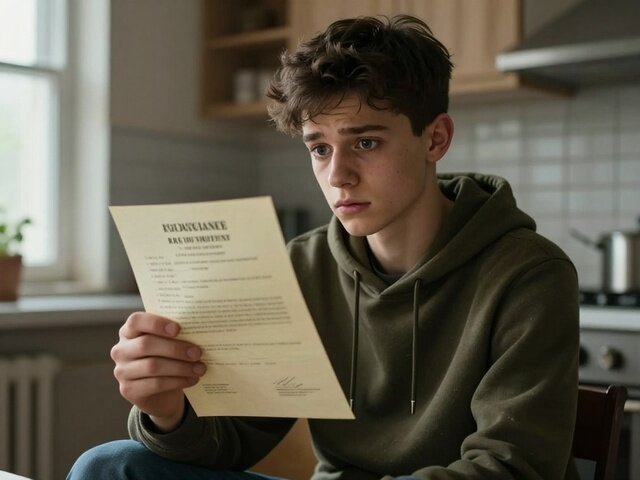
I didn’t want to be here, but I had no choice. The summons for the military aptitude tests was clear: attendance mandatory.
The selection center smelled of disinfectant and cold sweat, a stench that clenched my stomach the moment I stepped through the door. I handed my ID to the sergeant without meeting his eyes, like slipping a confession note through a grate. I was pointed to a bench. Around me, dozens of boys my age—some laughing nervously, others as silent as condemned men. I stared at my shoes. I didn’t want to see anyone. I especially didn’t want to be seen.

After a while, an officer entered, his voice cracking like a gunshot:
— Strip. Everything. Clothes on the bench, line up over here.
My heart pounded against my ribs. Everything? I stole a quick glance at the others, already obeying, some with a nonchalance that struck me as obscene. I was the type to change under a towel in the gym locker room, to look away when a classmate pulled on his underwear. Shame was already burning my cheeks before I’d even moved.

I forced myself to take off my sweater, my t-shirt, my jeans. Each piece of clothing that fell was one less layer of protection. When only my boxers remained, I felt the others’ eyes grazing my skin like invisible fingers.

I gritted my teeth, let the last barrier drop. Naked. In line. Shoulders hunched, arms crossed over myself, as if this feeble gesture could make me invisible.

We lined up. Naked.

Behind me, a warm breath. A stifled laugh? I tensed, muscles rigid, neck burning. I didn’t dare turn around, but I could feel the bodies lined up, too close, the heat radiating from them, mixed with the acrid smell of stress and cheap soap. The officer walked between us, inspecting, noting, indifferent to our discomfort. His boots squeaked on the tiles.
I looked in front of me. The walls were white, the neon lights were harsh. There were the shadows of the others, their blurred silhouettes, their hips, their shoulders. An unbearable proximity. And yet, against my will, my eyes slid for a second to the boy in front of me—his broad shoulders, the curve of his back, the way his hands trembled slightly as he covered himself.
I looked away, disgusted by my own curiosity. Fuck, what’s wrong with me?
— Move forward.
I took a step, then another, my skin electric, as if every inch of air between us was charged with a tension I didn’t understand, didn’t want to understand.
— Next ones.
I entered an examination room.
The medic, a man with graying hair and methodical movements, measured each of us in turn. His fingers brushed my shoulder to turn me toward the measuring stick, then slid down my outstretched arm, as if gauging something more than my height. I held my breath. His palm was dry, warm, and every touch felt like an intrusion. He jotted something in his notebook, silent.

Then he ordered:
— Weigh yourself.
I stepped onto the scale, bare feet on cold metal. The needle wavered, then settled. He marked the number with a stroke of his pen, then looked up at me. A quick, professional glance, but it made me feel dissected. I crossed my arms over my chest, as if to protect myself.
— Breathe normally.
I felt his fingers press against my ribs, just below my chest. He counted my breaths, his thumb grazing my skin with each movement. I stared at a point above his shoulder, jaw clenched. Behind me, the others waited their turn, their stifled laughter, their whispers. I imagined their eyes on my back, on my ass, on this grotesque scene where I was reduced to a naked body, a number, an object of examination.
— Turn around.
I obeyed, my face burning. He felt my shoulders, my shoulder blades, ran his hands down my spine. His fingers lingered for a moment in the small of my back. I shivered.
— Are you cold?
No. No, I wasn’t cold. I was ashamed. I was afraid. And worse than anything, something inside me was reacting to his touch, despite the situation, despite the presence of the others, despite the officer’s voice echoing in the room like a call to order.
I shook my head, teeth still clenched.
The exams followed, mechanical, impersonal, like the stations of the cross.

What bothered me wasn’t just the doctors’ hands, the barked orders, the coldness of the instruments. It was the collective. This forced intimacy, this queue where we were all packed together, naked, exposed, like animals before the sale.
At each exam, there were several of us, lined up, observed, judged. Stifled laughter, murmurs, sideways glances. We brushed against each other, avoided each other, bumped into each other. Shoulders against shoulders, thighs grazing thighs, hands crossing by accident. Every touch was a burn. I made myself as small as possible, eyes down, arms crossed over my chest, as if I could escape this mass of bodies, this suffocating heat, this smell of sweat and disinfectant.

Then we were ordered to line up against the wall, side by side. Backs straight, heels together. Still naked. A dozen bodies pressed against each other, skin touching, breaths quickening. The cold tiles under our feet, the concrete wall at our backs.

Some, like me, covered themselves awkwardly with their hands.
— Hands at your sides, the officer said.
His voice cracked like a whip. I obeyed, muscles tense, knees trembling.
The officer walked in front of us, slow, methodical. He stopped in front of each one.
— You have all been declared fit for military service.
The silence that followed was so heavy you could have cut it with a knife. The officer looked at us, a smirk on his lips, as if he’d just delivered good news. As if we’d won a prize.
— You will be with us for a year. Your service begins now.
A year.
Those two words echoed in the room like a death sentence.
I felt my stomach twist. Now. Not tomorrow. Not in a week. Now. As if we’d been torn from our lives without warning, without transition, without mercy.
Around me, some bowed their heads, others clenched their fists. No one said a word. No one dared to protest. We were already trapped, already swallowed by the machine.
— When your name is called, you will report to the office at the back of the room. There, you will be told your regiment assignment. Then you will get dressed.
The officer spoke in a flat voice, as if reading a shopping list. Not an ounce of humanity, not a shadow of emotion. Just orders, names, destinations. As if our lives had just been reduced to a box to check, a file to close.
One by one, the names were called. One by one, the boys detached themselves from the wall, shoulders hunched, eyes averted. Some walked with heavy steps, others dragged their feet, as if still hoping for a reprieve, a mistake, a miracle.
I clenched my jaw as I listened to the litany. Each name called was a hammer blow: you are no longer you, you are a number, a body, a soldier-to-be.
I was called last.
Of course.
Always last, with my last name. The others had already left, their names crossed off with a stroke of a pen, their files closed. Only I remained.

The sergeant in charge of assignments was less unpleasant than the others. He even had something human in his eyes, a glimmer of weariness that made him almost sympathetic.
— You’re Valentin Zylto, right?
— Yes, Sergeant.
He flipped through files, frowning, as if searching for a solution to a problem that wasn’t mine. My heart was pounding so hard I could hear the blood rushing in my temples.
— Listen, Valentin… All the regiments are full. There are a lot of you this month. The only spots left are in the 41st, but it’s a quasi-disciplinary regiment, you know? Where they send the troublemakers, the ones with discipline problems, the ones who need to be broken. With boots, if necessary. And you don’t look the type.
My stomach tightened.
— Anyway, he continued with a sigh, you haven’t done anything to deserve that, I’m not sending you there.
I held my breath.
— Unless you absolutely want to do your military service, I’ll exempt you.
Fuck. Too good to be true.
— I don’t absolutely want to do my military service, Sergeant.
He nodded, took a blank form, started filling it out. I watched his thick fingers hold the pen, the stamp lying next to it, ready to seal my salvation. In a few hours, I’d be home. Home. The thought hit me like an electric shock, so violent it brought tears to my eyes.
He reached for the stamp.
Just as he was about to stamp the paper, a soldier entered without knocking, leaned over, and whispered something about the barracks’ vehicles. The sergeant sighed, stood up, called a colleague to take over, and disappeared down the hall.
The new sergeant had the face of a mean dog. His eyes pierced me before he even opened his mouth.
— So, you’re Zylto?
I nodded, my mouth suddenly dry.
He took the paper, stared at me.
— Why’s he exempting you?
— There’s no more room, Sergeant.
He rummaged through the files, fingers scraping the paper.
— There are spots in the 41st.
I felt my stomach knot.
— The sergeant said it’s a disciplinary regiment, that…
— The 41st is not officially a disciplinary regiment, he growled, pressing the word like a wound. It’s a regiment like any other. Tough, yes. For the hard cases, yes. But it wouldn’t be fair for the others to do their service and not you.
He tore up the exemption form. The sound chilled me.
— Fit for service. 41st Regiment.
Snap.
The stamp crashed down on my fate.
— One year. 41st Regiment.
I stood there, hands trembling, the paper between my fingers, like a condemned man who has just heard his verdict.
No one had asked for my opinion. No one had given me a choice. The army had just stolen my freedom with a single gesture, and I didn’t even have the right to protest.
A tear rolled down my cheek.