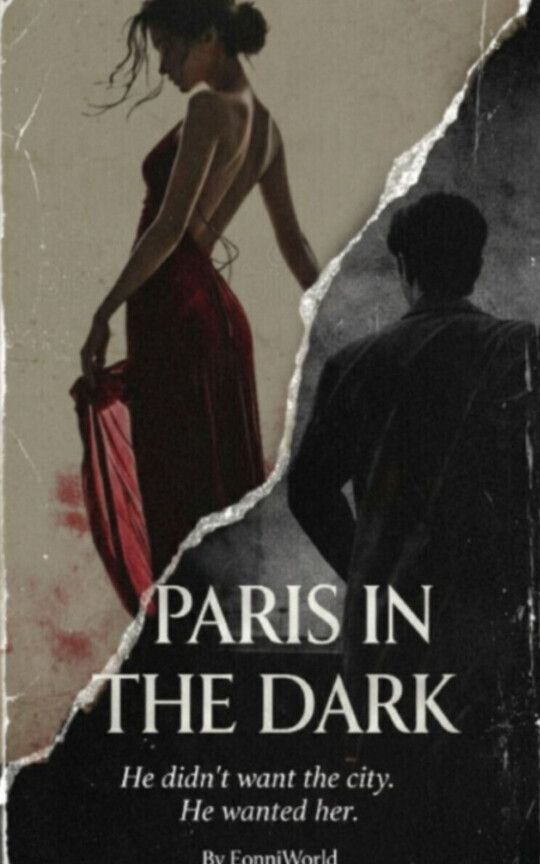
Chapter 1 - Collateral
THE LAST THING A DYING HOUSE SELLS IS ITS DAUGHTER.
Magnolia. Mildew. Rot.
Belle Rêve is dying, and I am the only one in it who will say so.
The house crouches on the bayou, shrouded in the damp, heavy air like a wounded animal unaware of its injury. White columns streaked green. Paint sloughing off in pale scales. Ivy strangling the veranda rails and climbing for the roof, as if it means to drag us all back into the mud we were built on. The gardens went wild the year my mother died. The magnolias have grown so thick that their sweetness never leaves the air, even in winter.
It is October 1884. Twenty years since the war, and my father still dresses for dinner as if it never ended.
Celeste LeClair, the floorboards whisper when I walk. Eldest. Heir. Asset.
I learned grace before defiance, silence before speech. French recited like a catechism. Piano until my fingers knew the music better than my heart did.
A LeClair daughter does not hunger.
Not for freedom. Not for answers.
Not for anything at all.
But I see.
It's the one thing they never trained out of me. My father's mouth goes thin when the word "accounts" is spoken at the table. The silver on the sideboard thinning, one piece at a time. Pale squares on the wallpaper where paintings used to hang.
Four portraits gone from the long hall this year. Six from the dining room.
Nobody mentions it. We eat our soup under the ghosts of the frames.
The LeClair fortune is bleeding out, and the house knows it.
So do I.
"Miss Celeste."
Mireille stands in the doorway of the east gallery, hands folded over her apron. She has run this house for thirty years and has never once wasted a smile on bad news.
"Your father wants you in his study." She hesitates. Then, lower: "Wear your mother's pearls, chère."
Mireille has never told me what to wear.
I go upstairs and put on the pearls.
The long hall takes me past the LeClairs who haven't been sold yet.
Men with cold eyes. Women with small, tight mouths, every one of them looking down at me with the same expression.
Dutiful. Serene.
Already traded.
My father's study smells of cigar smoke and leather and something sour underneath, like wine left too long in a glass. One lamp burns on the desk. Louis LeClair stands behind it with both hands flat on the wood, as if he needs it to hold him up.
"Sit."
I sit.
"The cane has failed three years running. The bank in New Orleans has… disappointed." His mouth tightens. "We cannot afford sentiment, Celeste. Only preservation."
I wait. He speaks. I listen. Silence is the only armor a LeClair daughter is permitted.
"There is a family in Baton Rouge. The Moreaus. Rail money. They have a son."
"Which son?"
"Lucien."
I know the name. Every girl in three parishes knows the name. Two wives buried before thirty, both of them fevers, both of them inside the first year.
"He's buried two wives, Father."
"Fevers." He doesn't look up. "Fevers happen. You'll be introduced at the Harvest Ball."
My pulse doesn't race. It slows, heavy, as if my body has heard the sentence and is lying down to receive it.
"And if I refuse?"
Not one muscle in his face moves. "You will not."
"What if Belle Rêve is already lost?"
"Belle Rêve endures," my father says, "because we make it endure."
We, I think.
He means me.
I don't go to bed.
I walk barefoot into the gardens, which a LeClair daughter does not do, and which I have done every bad night since I was nine. The moon turns the overgrown paths to silver. I press my palm to the oldest magnolia, its bark scarred and older than our name.
"Is this all I am?" I whisper.
Out in the bayou, something heavy moves through the water.
Behind me, the servants' lamps go dark one by one. A door closes. A lock turns.
"You shouldn't be out here alone."
I spin.
A man stands at the edge of the path, half silvered by moonlight, half swallowed by moss.
Tall. Taller than my father by a head. Forty, perhaps, and every year of it worn into his face like weather into stone. A dark coat cut close, mud to the knees of his boots. A scar along his jaw, white in the moonlight. Another across the knuckles of the hand resting on the knife at his belt.
He isn't reaching for it.
He doesn't need to.
He looks at me the way my father looks at the ledgers. Not with hunger. Worse.
With accounting.
"Who are you?" My voice comes out steadier than I feel, and I'm proud of that for one whole second.
"Someone your father didn't invite."
"Then you're trespassing."
"No." His eyes move past me, over the columns, the veranda, the dark windows. Slow. A man walking the rooms of a house in his mind. "I'm not."
His voice is low and rough, Northern, sanded down by years somewhere else.
"Go," I say.
"Not yet."
"You know who I am." It isn't a question.
"Celeste Amélie LeClair. Twenty-two. Eldest of three." He says it the way an auctioneer reads a lot. "You play the piano like a funeral when your father is listening, and like a sin when he isn't."
Heat floods my face. "You've been watching the house."
"I've been watching what's in it."
I should scream. Run. Wake Mireille, my father, and every dog on the property.
I don't move.
Under my ribs, somewhere I've never been allowed to look, something that has slept for twenty-two years opens one eye.
Oh, I think. Oh, that's inconvenient.
"And your name, sir?"
"You'll know it soon enough."
"I'd prefer to know it now."
"I know." Something moves at the corner of his mouth. "That's why you'll wait."
He takes one step. The moss slides off his shoulder like a curtain.
"Your father's been selling," he says. "The cypress stand on the eastern bank. The landing. The road frontage to the Delacroix line. Since spring."
The ground tilts under my bare feet. "That's impossible."
"Not if it keeps the roof up another season."
Another step. Close enough that I smell him. Woodsmoke. Leather. Swamp water, and something sharp underneath like cut iron. Close enough that I have to tip my head back to hold his eyes, and I hate him for it. I hate him for making me look up.
My body doesn't hate him at all.
It's warm. It's leaning. A traitor in my mother's pearls.
He lifts one hand. I flinch. He waits, and lets me watch him wait.
Then he hooks one scarred finger beneath my mother's pearls and lifts them from my throat. Not pulling. Weighing. The backs of his knuckles rest against my skin, and the heat of that one touch goes through me like a struck match.
A lady steps back. My feet have other ideas. Every inch of skin beneath that strand of pearls has gone tight and hot and listening.
"Ask your father," he says, "what he put up as collateral."
"For what?"
"For everything." He lets the pearls fall. They land against my collarbone, warm where he held them. "Ask him why the Moreaus need a wedding to close a sale."
He steps back into the moss.
"We'll meet again, Miss LeClair."
"How can you be so sure?"
His teeth flash white in the dark.
"Because your land is dying," he says. "And so is your freedom."
And the bayou takes him.
I don't remember crossing the garden.
I remember the cold veranda boards. The study door my father never locks, because no one in this house would dare. The ledger beside the lamp, bound in green leather, its spine cracked from too many nights.
Columns. Debts. Interest piling on interest, a slow drowning in my father's careful hand.
And the sales.
Cypress stand, eastern bank. Sold.
River landing and dock. Sold.
Road frontage to the Delacroix line. Sold.
A bank in Natchez. A timber company in Lafayette. A man in Mobile I've never heard of. A different buyer on every one.
The same signature on every bill of sale. The same hard, slanted hand. The same initials pressed into the wax.
C. M.
The last page is a promissory note. Fresh ink. My father's signature at the bottom, shaky and enormous, the way a drowning man signs his name.
Final security for all outstanding debts, payable at the Harvest Ball, October the thirty-first, 1884: the house and grounds of Belle Rêve, and all that resides therein.
Should the undersigned default, or die before payment, title to the whole passes to the holder.
I read it three times.
All that resides therein.
The furniture. The silver. The portraits that haven't been sold.
Mireille, who hasn't been paid.
My sisters.
Me.
Below it, the holder's name, written out in full for the first time.
Cassian Morel.
I touch the pearls at my throat. They're still warm.
Out in the garden, under the oldest magnolia, a shadow I never saw leave lifts one hand to the lit window.
As if he knew which page I'd stop on.
As if he wrote it.