
Chapter 1 - Arrival
Day 2/30
⋆ ✦ ⋆
“VCS‑6‑N1 is in visual range,” crackled the comms in her ears. The voice of Captain Jorin Halvek came steady and clipped, all business. “Surface scanning in progress. We’ll be dropping to orbit in sixty minutes. Veyran HQ confirms: planetary entry is a go.”
Dr. Lark Whitmore moved through her lab, running through the pre-entry checklist. The lab cut directly across the ship’s top deck, interrupting the main corridor rather than branching off from it. Anyone moving fore to aft had to pass through its center. The room spanned nearly the full width of the ship, with the exception of the space over the wings-wide rather than deep, stretching left to right across the hull-while running only a short distance along its length.
The central passage opened into the main lab space, which was deliberately sparse. Two stainless steel sinks were set into the starboard corners, flanking a broad conference table fixed in place at the center of the room, four chairs anchored around it. This was not where delicate work happened; it was where samples were logged, data was reviewed, and decisions were made before anyone sealed themselves into something more controlled.
The real workspaces were pushed to the edges. In the starboard corners of this section of the ship, two smaller labs-chemistry toward the bow, geology toward the stern-were walled off behind sliding doors, with a narrow lounge alcove tucked between them. There was a storage closet on the aft end of the port wall, and the rest of the wall was dominated by a larger, enclosed lab reached only by passing through a compact decontamination chamber.
That final room was the biology lab and where Lark was going to spend most of her time. It was separated from the main lab by a wide stretch of reinforced glass, allowing a clear view back toward the conference table and the chemistry and geology labs on the other side of the lab. From inside, Lark could watch crew pass through on their way to the escape pods just aft of the lab, and farther still, the medbay beyond.
Against the port wall, a row of bio-safety cabinets and laminar-flow hoods provided enclosed workspaces for handling live cultures and unfamiliar organic samples. Their internal lights cast a cool, steady glow over neatly arranged trays, pipettes, and sealed field vials. Along the lab bench in the center of the lab sat the more analytical equipment: a PCR thermocycler and microcentrifuge bolted into vibration-dampened mounts, a compact spectrophotometer, and a portable gas chromatograph designed for preliminary atmospheric and biological compound analysis.
At the aft end of the room, an incubator and culture chamber occupied a reinforced alcove, their displays quietly tracking temperature, humidity, and growth cycles. Nearby, a small autoclave was integrated directly into the cabinetry for sterilizing tools and waste without leaving the controlled space. Overhead, labeled conduit runs carried filtered air, power, and data lines, all feeding back into the ship’s environmental controls.
Every instrument was able to be restrained so nothing could shift during turbulence. Before any serious work could begin, each instrument would need re-calibration and baseline testing, but once operational, the lab would allow Lark to identify incoming residents and begin cataloging the earliest biological signatures of Nigh without exposing the rest of the ship to unnecessary risk. She checked the resident DNA samples and chemical storage again, ensuring that nothing fragile or volatile would be disturbed during the drop into orbit.
“Affirmative,” she murmured, more to herself than anyone else. Her gloved fingers brushed along the console as she scanned the lab one last time.
Satisfied, she exhaled and stepped out of the biology lab, moving through the solar panel access room and the forward pod room into the staircase to head down a level to Middeck. The ship’s interior was utilitarian: exposed conduits snaked along the ceiling and modular panels could be removed for maintenance. The low hum of the engines vibrated beneath her boots, a constant reminder of the power propelling them through the void.
One flight down, she passed through the first door on her right into the tight hallways around Captain Halvek’s quarters. In this section of the ship, two manned barbette guns were mounted on either side. Why a ship of this size needed such heavy weaponry, she wasn’t sure-but she suspected Captain Halvek had stories to match their size. Behind her, on the other side of the stairwell, the crew quarters stretched along the length of the ship: small but efficient, each with a bunk, a personal locker, and just enough room for a few personal items.
Lark continued past the gunner hall and the forward airlock, entering the bridge lounge. She paused, letting her gaze drift through the curved viewport to the planet below. Even from this distance, its surface shimmered beneath a lattice of swirling clouds like some impossible gemstone. A deep crimson wash suggested dense forests, while winding silver threads marked rivers cutting across the terrain, glinting in the morning light.
Lark’s gaze swept across the bridge, taking stock of the team.
Dr. Kellan Vire was hunched over the sensor array in what would usually be the co-pilot’s seat, broad shoulders curved forward as his fingers moved rapidly across the console. He was solidly built-though the ship’s loose uniforms made it hard to tell-and carried himself with a restless, coiled energy. Dark curls fell forward from where his hair brushed his forehead, one nearly slipping into his eyes as he leaned closer to the display. He muttered numbers under his breath, occasionally calling out to Captain Halvek without looking up.
“Vector’s off by a hair-trim left a touch!”
His voice was steady but sharp-edged, his hazel eyes flicking between readouts with relentless focus. There was something almost anachronistic about him-bearded, sun-darkened, like he belonged more in an old Earth illustration of a frontier laborer or woodsman than on a starship bridge. Lark could tell he lived for this part of the mission, thrived on obsessing over every small deviation to ensure the ship followed the plan exactly. She couldn’t decide whether she found it infuriating or impressive.
Behind the forward seats, Dr. Greer Tamsin sat at the large conference table in the lounge with her earbuds in, tapping briskly on a datapad. She held herself upright despite the lounge seating, sharp-featured and composed, her chin-length bob perfectly even as if cut with a ruler. Her dark blue eyes never lingered on any one display for long. At rest, her expression was the same as always, reading as cool, bordering on severe.
At the same table, Dr. Selene Orin leaned slightly forward, hands folded in her lap, her attention fixed on the planet slowly filling the viewport. She was smaller than the others, her posture relaxed but intent, and her pale gray-blue eyes reflected the light of the approaching world. Her silver hair was pinned neatly back from her face, and the fine lines in her skin spoke of years spent under open skies. There was a steadiness to her presence that didn’t demand attention yet quietly anchored the room.
Captain Jorin Halvek, the navigations officer and pilot of VRCS‑7, or Versus-7 as he affectionately called the ship, sat at the helm, one hand steady on the controls, the other hovering near the comms panel. His dark skin caught the glow of the displays, and white hair cropped close to his head framed a face marked by deep smile lines. Even now, with atmospheric entry underway, his expression held a trace of warmth-as if he were privately amused by the controlled chaos around him. He seemed entirely at home here, a man who thrived on responsibility while making it look effortless.
The remaining bridge seats were occupied by the two systems engineers. Tavik Rael sat rigidly upright, his light brown hair thinning at the temples, jaw set as his blue eyes tracked the atmospheric data. Mira Solen in the fourth and final seat across the bridge from Tavik leaned slightly closer to her console, dark eyes wide and alert. She was younger than the rest of them, but her fingers hovered with practiced confidence, ready to react at a moment’s notice.
Lark could feel the subtle tension of the next month of isolation and high-stakes responsibility pressing down on the bridge, even with everyone in their roles and trained to precision.
And here she was, a biologist, about to witness a planet that didn’t care whether they arrived safely or not. She wasn’t even the right kind of biologist for this mission. She didn’t study plants or animals or bacterium or even the oh-so-ancient and admittedly pretty cool archaea. She studied humans - specifically deceased ones. There was no way that her career in forensics had properly prepared her for this kind of mission and she could not come up with a reasonable reason that Veyran Dynamics would have sent her specifically. Yes, she had some military experience, but she couldnt even see how that may be relevant here
She reminded herself that the job was simple: catalog, observe, report. She didn’t have to write a paper on a mysterious alien plant, she just had to take some samples and do some basic tests so that she knew how best to transport them back to Veyran HQ on NGC 5195‑VCS‑1‑V1. Just ensure the colonists would have a world to step onto. Easy on paper. In reality? Outside the scope of her experience.
Her thoughts wandered to the mission’s ticking clock: one month. Veyran had given them a single month to determine whether life could survive here and if they found it could not, that was just too bad. The transport ship with the new residents of Nigh would be sent only one month from now and would only take a day to arrive. So, like it or not, they had just thirty days to find resources, analyze threats, and prepare a world for people who would never understand the true risks.
Captain Jorin’s voice interrupted her review of all the things she was stressed about. “Surface scans complete,” he said. “Atmospheric composition stable. No immediate hazards detected in landing zone. Prepare for atmospheric entry, my friends.”
Lark exhaled slowly. One hour. In an hour, they would be on the ground, stepping out onto Nigh. She moved to the lounge table and settled into one of the specially designed chairs with harness straps built for moments like this. Strapping herself in, she took a moment to check the restraints, the hum of the engines vibrating through the deck beneath her.
The ship shuddered, a low, groaning vibration that ran through every bulkhead and console. Lark tightened her straps as the viewport filled with streaks of color. The upper atmosphere of Nigh glimmered like molten glass, the clouds roiling and churning as VRCS‑7 plunged deeper.
“Stabilizing,” Captain Halvek’s voice cut through the tension, calm and clipped. “Vector holding steady. Adjusting thrusters for turbulence.”
Dr. Vire’s fingers never stopped moving across his console. “Slight lateral drift,” he muttered. “Turbulence stronger than predicted at twenty-three kilometers. Reduce port thrust by half.”
“Copy,” the captain said, the ship responding with a shudder and a hiss as the thrusters fired in controlled bursts. Lark didn’t have a good view of Mira and Tavik from where she was seated, but she assumed they were locked in just as the Captain and Dr. Vire were.
The clouds below parted slowly and in patches, revealing glimpses of Nigh’s surface that Lark could barely focus on through the shaking of the ship. Eventually, the turbulence nearly disappeared, and the ship broke through the clouds, a clear view of the planet sprawling out before the crew. Crimson and amber forests sprawled across jagged ridges, rivers glittered like liquid silver threading through valleys, and high mountain peaks pierced the cloud deck like the spines of some ancient beast. Lark felt her stomach tighten at the sight - it was breathtaking and terrifying all at once.
“Landing site is stable,” Captain Halvek said. “Touchdown in three minutes. Clear plains, minimal obstacles.”
Lark took a shallow breath. The hum of the engines was now joined by the subtle roar of the atmosphere pressing against the ship. VRCS‑7 tilted slightly, adjusting to the final descent, and finally, with a gentle jolt, the landing gear touched the ground. The ship shuddered once, then settled, dust and fine particulate rising around the base of the hull. For her first time flying with Captain Halvek, he had done wonderfully.
“Sealed and stable,” the captain reported. “Atmospheric pressure within tolerance. We’re down.”
“Copy,” Dr. Kellen said, still scanning readings. “Minimal risk of microfractures in the hull. Entry nominal,” he stated, taking a brief pause to read some more, “Nothing unexpected.”
With this conclusion, the captain grinned and clapped Dr. Vire on the shoulder. For the first time in several hours, Lark heard his voice clearly without the crackle of the comms muddying it, “Well. We made it, my friends. I suppose its time for someone else to get to work,” he joked, shooting Lark and Dr. Tamsin a look as he stood from his seat and stretched, “I’m in need of a bit of caffeine.”
The rest of the crew were stirring now, with the engineers already heading off down the corridor, checking on cargo movement and preparing for unloading, Lark supposed. She glanced over at Dr. Tamsin nearby, who had also risen, earbuds still in and focused, seemingly unconcerned with the bustle around her.
“Looks like it’s our turn, eh?” she said, approaching Lark.
“Yes, I suppose so. I need to fetch a few instruments from the lab and then ill be ready to suit up,” Lark replied, standing up from her own seat.
By the time Lark arrived at the ship’s rear boarding ramps, she found the rest of the crew had almost finished suiting up. Lark moved to her locker, pulling the light, insulated environmental suit from its harness. It was the first time she’d worn one of these on a planetary surface, but she remembered from training, it was as much ritual as protection. She checked the seals, the oxygen supply, and the comms link.
“Exciting first step,” Dr. Tamsin said beside her, voice bright but measured through her own suit comms. “You’d think after all the simulations it wouldn’t feel this real.”
Lark looked at the woman through the visor of her helmet. “Is it your first time too?”
“Hah! No.” the doctor laughed sharply, “I meant it must feel strange for you.” Lark couldn’t help but feel there was something less than kind and supportive implied by that, but she couldn’t put her finger on it.
The engineers, Mira and Tavik, were already at the rear ramp, checking the mechanisms and preparing to lower it for the crew. “Keep your heads up,” Mira said over comms. “Dust’s not going to kill the ship, but visibility can get tricky if a wind kicks up.”
“Good advice,” Lark replied, stepping toward the ramp with Dr. Tamsin. “Let’s see what we’re dealing with.”
The ramp lowered slowly, its mechanical hinges whining softly as it moved. Dust and loose grass shifted beneath it, stirred by the motion, until the metal settled firmly against the ground. The outside light washed over them in a soft, reddish glow. The plains were broader than anything she’d imagined, crimson grasses waving gently in a mild wind. Jagged, black rock outcrops cut through the fields, and distant hills rolled toward a forested ridge.
Dr. Tamsin brushed past Lark and began to kneel just off of the ramp, setting up a portable atmospheric analyzer. “Oxygen levels are within human tolerance,” she said, tapping the sensors. “Trace amounts of nitrogen compounds, nothing immediately toxic. CO2 slightly higher than predicted, but breathable with the suit filter.”
Dr. Orin moved among the team with quiet efficiency, her medical kit slung across her back. She paused at each crew member in turn, scanning vitals through suit telemetry, eyes flicking across her tablet as she confirmed oxygen saturation, heart rate, and neural response times.
“Everyone’s adapting well so far,” Dr. Orin reported over comms. “Minor elevation in heart rate across the board - adrenaline and exertion. Nothing concerning. Let me know immediately if anyone feels lightheaded or disoriented.”
Lark caught Orin’s eye as she passed and gave a small nod. The reassurance was welcome, even if it didn’t do much to ease the tight knot in her chest.
“I’ll keep an eye on you,” Orin added quietly, lowering her voice as she scanned Lark’s suit readout. “First planetary touchdown jitters are normal.”
“Good to know,” Lark replied. “I’ll try not to pass out dramatically.”
That earned a faint smile before Orin moved on.
Lark began looking around at their immediate environment. This was what she was good at-investigation. She may not be a plant or animal expert, but she was fairly positive she would be able to make some solid predictions about behavior here. Tiny luminescent fungi clung to shaded rocks. A birdlike creature darted between the trees in the distance, its wings mostly translucent and shimmering with red-gold hues. She made quick notes, storing some samples for later analysis.
“Looks like basic life forms aren’t hostile,” Lark murmured, more to herself than to Dr. Tamsin, “Well, not any that we have encountered yet at least.”
The engineers began offloading a small, prefabricated shelter, portable power units, and communication arrays. Tavik grunted as he hefted a modular crate. “Let’s get the essentials up first - shelter, comms, and power. Everything else can wait.”
Lark glanced toward the forest. The planet was alive in a way that made her stomach twist - it was beautiful, but on any planet, creatures need to survive and who knows what survival meant here. She and Dr. Tamsin would be the first to make contact with Nigh in a scientific sense, but the rest of the crew was already making it habitable in the most basic terms.
Lark turned back to the VRCS-7, letting her gaze take in the full three-level profile of the ship. From this distance, it looked impossibly compact for everything it carried, almost like a modular stack of blocks held together by purpose rather than design. The bottom deck, mostly cargo bays, appeared heavy and utilitarian, with reinforced plating and hatches marking where equipment and supplies were stored. Middeck, housing the bridge, crew quarters, and common areas, had the subtle lines of living spaces-windows glinting here and there, vents and railings hinting at the machinery humming within. The top deck, reserved for labs, the medbay, galley, and escape pods, looked almost delicate in comparison, a layer of glass, metal, and carefully secured modules perched above the rest, glinting in the sunlight. Even from this distance, she could tell how carefully the engineers had balanced form and function: a workhorse of a ship, built for efficiency, yet capable of supporting the next month of isolation on a world no one had charted.
The landing zone that Captain Halvek had guided them to was broad, flat, and mostly clear of obstructions, but the soil was soft in places and streaked with shallow rivulets from what appeared to be seasonal runoff. The crimson grasses bent easily under the boots of the crew, and the wind carried a faint tang of minerals. Lark thought that if there was any sudden onslaught of rain or a thunderstorm, the terrain of this area had the potential to change quite drastically. She turned to make this observation known to one of the engineers but found that they must have had the same suspicion as her as they were drilling holes into the solid rock beneath the shallow soil and grasses to secure the structures to.
The pieces of the structure were heavy but designed for quick assembly - light alloy frames, insulated panels, and pre-fitted solar arrays that would be deployed once the modules were upright. This would serve as the first stationary hub of infrastructure for the team. The panels were modular so they could be added on to and rooms and different spaces could be made with them.
“How do you find the gravity? It never seems to be quite what I’m expecting.” Dr. Tamsin asked, adjusting her gloves as she helped slot a panel into place.
Lark grunted. “It’s subtle, but different. It’s definitely strange.” She steadied a support beam while Mira and Tavik secured it to the base frame. Dr. Tamsin seemed to be making fun at her somehow, but it was so subtle that Lark couldn’t figure out exactly how she was doing it and wasn’t sure if anyone else had even noticed. She decided she would just ignore it.
The team worked with methodical precision. Dr. Kellan hovered nearby, occasionally consulting his instruments and muttering about predicted solar angles versus observed angles. “Based on my calculations,” he said, “the sun will set in approximately fourteen hours, give or take. We need to orient the panels now, or we’ll lose efficiency.”
Lark frowned at Dr. Vire. Everything he said was based on assumptions from limited data, meaning that until the sun actually moved across the sky, there was no certainty about the daylight cycle. They could guess, but guesswork on an alien world had consequences.
“We’ll find out soon enough,” Captain Halvek said, directing Mira and Tavik as they bolted down the final panels. “Let’s get the shelter sealed. Comm arrays next. No point worrying about the rest until we have a functioning base.”
Dr. Orin knelt near one of the supply crates, helping Tavik reposition a power cell while keeping an eye on the engineers’ exertion levels. She paused occasionally to adjust suit settings, dialing back oxygen flow or flagging hydration reminders as the physical work continued.
When one of the solar panel mounts resisted locking into place, Orin steadied the frame alongside Mira, bracing it until the latch finally snapped shut. “Let’s avoid injuries on the first day,” she said somewhat sternly, scanning Mira’s vitals before stepping back.
The sun soon hung low and steady above the horizon, its light catching on distant rivers and throwing long shadows across the plains. The team worked quickly, boots grinding into the soil as the shelter took shape piece by piece. Wind stirred the crimson grasses, brushing against the hull of VRCS-7 and the half-assembled base.
By the time the shelter stood sealed and the power readings stabilized, Lark’s role shifted from muscle to observation. Tavik and Dr. Vire were deep in discussion near the edge of the landing zone, both watching the sky.
“Sun’s moving faster than you expected,” Tavik said, “If this trend holds, we’re looking at sunset in two, maybe three hours.”
Dr. Vire frowned, already running the numbers. “Which means my daylight estimates were optimistic,” he muttered. “Not wrong, exactly. Just incomplete.”
Tavik chuckled, “Sure. Not wrong, just incomplete.” Lark fought down an amused smirk.
Captain Halvek gave a short nod. “Good enough for day one. We’ll adjust tomorrow once we’ve seen a full cycle.”
With the bulk of the physical work done and the engineers taking over final checks, Lark disengaged from the base setup and headed back toward the ship. The ramp remained lowered behind her, the rest of the crew still outside, busy with their tasks. She stepped inside, peeled off her environmental suit, and stowed it carefully in its designated locker.
The cargo hold stretched ahead, spacious and utilitarian, with large open areas and a few secured containers along the walls. It was quiet now, the only movement the hum of the ship’s engines beneath her boots. Lark walked through the hold, her steps echoing lightly, and made her way to the staircase at the rear, climbing two flights up to the top deck.
She entered the biology lab, the familiar smells of ethanol and warmed metal greeting her like an old friend. Efficiently, she washed her hands and began undoing the restraints on her equipment, releasing the PCR thermocycler and spectrophotometer from their transport locks and powering up the microcentrifuge. Each instrument responded in turn, lights blinking to life as she started re-calibrating them and checking that everything remained in perfect working order.
She adjusted her instruments for the first time since they’d landed and began making some notes on what she and Dr. Tamsin had concluded preliminarily: humidity higher than expected, soil rich in iron and trace metals, atmospheric composition stable but unfamiliar. Nothing alarming yet, but nothing definitive, either.
She and Dr. Tamsin would move on to proper cataloging soon enough. Soil cores, air samples, biological matter if they could collect it safely. That work would come. For now, the priority had been shelter, power, and communication.
Outside, the light was already shifting. Lark glanced toward the small viewport as the sun edged closer to the horizon. They didn’t know yet how long night would last, or what it would bring with it.
She had just finished organizing one of the lab counters when a single chime from the ship’s security console drew her attention. Entry alert.
She tapped the screen and brought up the schematic for the top and mid decks. A small red dot appeared at the far rear of the ship, near the ATV cargo hold. It moved slowly toward the doors - and then, almost as quickly, back outside.
“Hmm. I guess they changed their mind,” she murmured, more reflex than certainty, eyes following the dot as it blinked off the ship. Nothing more happened, and the quiet hum of the ship filled the room once again.
The alert tone chimed again.
Before Lark could pull the ship schematic back up, a voice cut through the comms, breathless and too loud.
“-I swear it moved-”
Mira’s voice again, higher, strained. “That’s not wind. That’s not wind.”
Lark stepped toward the lab viewport, pulling her headset into place, and peered out toward the aft floodlights. Outside, the light was already thinning, the sun slipping lower than Dr. Vire’s projections had suggested. The plain beyond the ship lay half in shadow now, grasses rippling in long, uneven waves. She could only just see the edge of the structure they had all built just a couple of hours ago. She couldn’t see any of the other crew.
A second later, the channel reopened, flooded with overlapping voices.
“Captain, do you see that?”
“No, that’s not-”
“Movement at the perimeter-”
She keyed her headset. “This is Whitmore. I’m inside the lab. What’s going on out there?”
No answer. The crimson grasses outside the lab viewport were barely illuminated anymore, the ambient light from the ship providing more light than the sun now.
The entry tone chimed again, and Lark moved closer to the glass wall of the lab that separated her precious instrumentation from the corridor. It sometimes made her feel like a mouse in a cage, but it was helpful in making her feel less alone being holed up in the lab when she could see others in the halls.
“This is Whitmore, does anyone copy? What is happening?” she repeated into her comms, fighting panic. She looked out into the lab common space, eyes on the doors that led from the main stairwell just in case someone came up.
Suddenly, gunshots echoed forward from the rear of the ship from where she knew the exterior base had been built and Lark whipped her head to look out of the lab viewport again. Before she could react, she heard the sound of the elevator reaching the Topdeck, and the doors to the lab common space opened.
Lark turned just in time to see Dr. Orin hauling Mira down the corridor toward the medbay, one arm hooked under her shoulders. Dark streaks marked the floor behind them, smeared and uneven.
If there was one thing she knew, she knew, that was blood.
“Doctor!” Lark shouted, slamming a hand against the glass. “What happened?”
She didn’t stop. She only looked back long enough to shake her head once, sharply, and yell, “Stay in there. Don’t come out.”
Then they were gone.
The entry alert chimed again. Four times this time. That was too many. Dr. Tamsin had come back inside when Lark had, and she had just seen Dr. Orin and Mira. That only left Tavik, the Captain, and Dr. Vire to be outside able to enter the ship.
It only took a few seconds of thinking for Lark to realize she needed to act. Before she spent any more time analyzing the situation, she triggered a level one lockdown in the biology lab. Her pulse hammered as the doors sealed with a hiss, indicator lights shifting from white to amber. Her mind resumed racing through possibilities as she backed away from the viewport and ducked beneath the central lab table, tucking into the space there.
The edge of the center table was a solid, curved piece of metal that would serve as a sturdy barrier between her and whatever was outside. She pressed herself into it, arms wrapped around her legs, trying to make herself as small and inconspicuous as possible. The underside of the table smelled faintly of heated metal and chemical residues - strangely comforting in its familiarity - even as her pulse hammered in her ears.
Even though the lab was in lockdown, she thought it would be better to be out of view just in case someone-or something-felt motivated to try to break through the glass just because they saw her in there. She had no idea what exactly she was preparing to hide from, but no moment before this had made it clearer how little Veyran Dynamics had prepared them for this mission. They had no metric by which to judge anything on this planet. They didn’t even know exactly how fast the planet had been orbiting. It was a wonder they landed safely and didn’t burn up in the atmosphere and Dr. Vire had ended up considerably close to on target for sunset considering the absolute lack of information they had.
Her thoughts spiraled, unbidden. They had no survey data. They were the survey data. They had no information on fauna behavior or any proof of non-sapience.
If something intelligent had followed the others inside the ship-something that watched, learned-then all it would need was a hand.
A thumb from any crew member and the door to her lab could be opened. She kicked herself for not using a higher level of lockdown.
Her fingers fumbled for the comms headset, and she keyed the channel. “This is Whitmore. Does anyone copy?” Her voice sounded small in the enclosed space.
Silence.
Again, she tried, a little louder this time. “Dr. Vire? Tavik? Captain?” Nothing. Just the low hum of the ship’s systems and the occasional creak of the hull settling. Panic coiled tighter in her chest.
Minutes dragged on. Her pulse hammered in her ears. She considered leaving her cover, crawling out to go into the medbay where Dr. Orin was with Mira. At least then she wouldn’t be alone. In the end, she decided it was probably a better idea to stay hidden in here like Dr. Orin had said.
Her mind ran through every scenario she could imagine, each one more terrifying than the last. She imagined the crew scattered outside, facing down some otherworldly terror, and herself trapped alone on the upper deck.
And then she heard it: the thundering boom of boots on the stairs, heavy and deliberate, moving through the pod room and into the lab. Her breath caught in her throat. Whoever it was, they were coming up fast.
Someone swore under their breath.
Her heart hammered so hard she was sure it would echo through the glass.
The indicator lights above the lab doors flickered. Amber light transitioned to white, flooding the lab with crisp, bright clarity.
The locks on the lab doors released with a sharp, pneumatic hiss, followed by the metallic scrape of the decontamination chamber sliding open. A faint, sterile whoosh echoed through the compartment as the chamber cycled, letting in air from the corridor beyond.
⋆ ✦ ⋆
✨ Author’s Note
Thank you so much for reading Chapter 1! I hope you enjoyed meeting the crew of Versus-7 and getting a first glimpse of the world.
This story leans heavily into science, world-building, and character dynamics, so these end-of-chapter notes will sometimes include optional lore or science explanations for readers who enjoy that kind of thing. You can always skip them and just keep reading - nothing here is required to understand the plot.
🔬 Science & World-building Note: Veyran Naming System
Both galaxies this story takes place in actually exist in real life:NGC 5195 and M51 (the Whirlpool Galaxy). I’ve used their real astronomical names and built Veyran Dynamics’ corporate naming system around how galaxies, star systems, and planets are named in reality.
Veyran location codes follow this structure:
Galaxy Name - VCS - System # - Planet Letter & #
VCS = Veyran Colonized System
Examples from Chapter 1:
Veyran HQ:NGC 5195-VCS-1-V1(NGC 5195 galaxy, first colonized system within that galaxy, first colonized planet within that system)
Survey colony location:M51-VCS-6-N1(Whirlpool Galaxy, sixth colonized system within that galaxy, first colonized planet within that system)
Why V1 vs N1?The planet letter corresponds to the number of colonized systems and cycles through the letters V-E-Y-R-A-N.
VCS-1 → V
VCS-6 → NAfter the sixth system, the sequence loops back to V, with additional letters added as needed to avoid confusion.
For example:
M51-VCS-7-VA1 would be the first planet in the seventh colonized system. “A” was added to differentiate planet VA1 from planet V1 in the nearby NGC 5195 galaxy.
Very efficient. Very corporate. 😌
👩🚀 Crew Profiles (Introduced in Chapter 1)
Captain Jorin Halvek75 • Navigation Officer & PilotHas flown Versus-7 since it was built 35 years ago (he was ~40). Kind, steady, and respected, but emotionally reserved after the loss of his former crew 15 years prior (he was ~60).
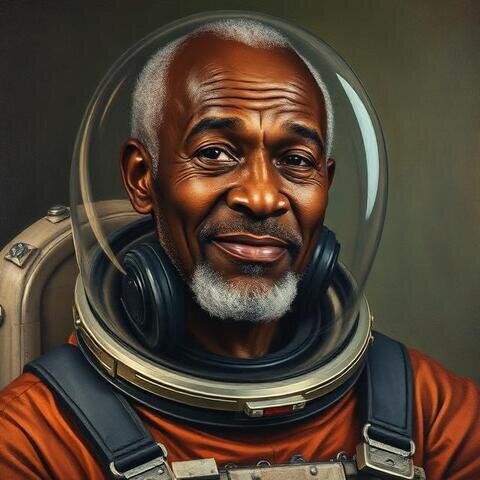
Dr. Greer Tamsin57 • Exobiologist39 years with Veyran Dynamics (since she was 18). The most experienced scientist on the mission and second-longest serving member of the Versus-7 crew. Has been on the Versus-7 team for 15 years (since she was ~42) after the ship found itself in need of a new crew.
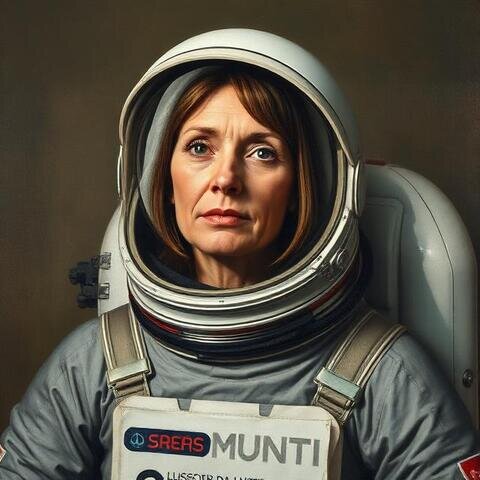
Dr. Lark Whitmore35 • Biologist (formerly forensic biologist)Newest member of the crew. Formerly worked in the stationary lab at Veyran HQ before being promoted to her first external mission.

Dr. Kellan Vire37 • Physicist (ex-Mercenary)With the Versus-7 crew for five years (since he was ~32). A reliable worker and de facto co-pilot, but emotionally distant. Previously worked as a mercenary following the Third Galactic War (~15 years ago when he was ~22) - a topic he refuses to discuss.

Profiles for Dr. Selene Orin, Mira Solen, and Tavik Rael will appear after Chapter 2.
💙 Supporting the Story
This is my first time posting a story on Inkitt, so thank you so much for reading it and hope you enjoy!
⋆ ✦ ⋆







