
The Quiet Promise of Being Ready
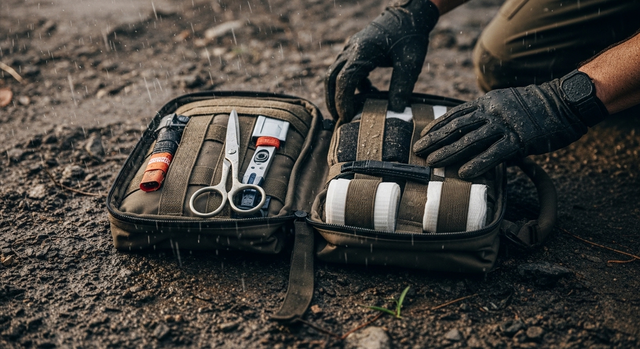
A trauma kit is not an accessory or a backup convenience. It is a quiet promise you make to yourself and to others: that when something goes wrong, you will be ready. In emergencies, there is no time to wonder whether a zip will jam, whether a strap will tear, or whether a vital item has silently degraded. Durability matters because real-life emergencies are chaotic, messy, and unforgiving.
Yet many people misunderstand durability testing. Some never test their kits at all, assuming that “new” means “reliable.” Others test them too aggressively, stretching, tightening, and opening items until they are no longer fit for real use. The challenge is learning how to build confidence in your kit without sacrificing the very tools you may one day depend on.
Modern preparedness thinking has shifted away from brute-force testing and towards controlled, realistic validation. Rather than proving that equipment can survive abuse, the goal is to confirm that it can reliably handle the conditions it is actually likely to face. Preparedness systems that emphasise layered readiness and thoughtful stress exposure—such as those discussed within resilience-focused frameworks like FlareSyn—encourage users to understand limits, not exceed them. This philosophy helps ensure that trauma kits remain intact, sterile, and ready for genuine emergencies.
What You Are Really Testing When You Test Durability
Before touching your kit, it helps to understand what durability actually means in this context. Durability is not about indestructibility. A trauma kit does not need to survive being run over by a vehicle; it needs to survive being dropped, carried, opened under stress, and stored in imperfect environments.
Durability also overlaps with usability and shelf life, but they are not the same thing. A kit can be physically intact yet functionally frustrating if items are hard to access. Likewise, supplies can look fine while quietly expiring or degrading. Non-destructive testing focuses on structure, access, and reliability—without compromising sterility or effectiveness.
Establishing a Baseline Before You Test Anything
Every meaningful test starts with knowing where you are beginning. Lay out your trauma kit and inventory every item. Confirm that all supplies are present, properly packaged, and undamaged. This step may feel basic, but it is often where problems are first discovered.
Document the condition of your kit with photographs and brief notes. Capture the exterior from multiple angles, the interior layout, and close-ups of seams, closures, and high-stress areas. This record allows you to notice subtle changes over time—fraying, loosening, or deformation that might otherwise go unnoticed.
It is also important to understand the manufacturer’s design limits. Elastic materials, adhesives, and sterile packaging are not meant for repeated stress. Knowing what not to test is just as important as knowing what to test.
Visual and Tactile Inspection: Your First Line of Defence
The safest durability checks require no force at all. Start with your eyes and your hands.
Inspect stitching carefully, especially around corners and attachment points. Look for fraying, thinning fabric, or uneven seams. Run your fingers along these areas; your sense of touch will often detect weaknesses before they become visible.
Closures deserve particular attention. Slowly open and close zips, listening for snags or grinding. Press Velcro together and pull it apart, noticing whether it still grips firmly. Buckles and snaps should engage smoothly without excessive looseness. These components endure the most frequent stress during real use.
Simulating Handling Stress Without Deploying Supplies
Handling stress is one of the most realistic tests you can perform without destroying anything. Emergencies rarely allow for perfect posture or calm movements, so your kit must tolerate hurried handling.
Practise opening and closing the kit with one hand, then with your non-dominant hand. Repeat the process while wearing gloves. These exercises reveal whether closures catch, whether compartments collapse, or whether items shift into awkward positions.
You can also perform timed access drills. Without removing supplies, practise locating specific items quickly. The goal is not speed for its own sake, but observing how the kit behaves when you move with urgency.
Environmental Exposure Without Risking Damage
Environmental stress is a silent killer of trauma kits. Heat, cold, moisture, and debris slowly degrade materials long before obvious failure occurs.
To test temperature tolerance safely, leave your packed kit in a warm indoor space or a cool area for several hours. Afterwards, inspect fabric stiffness, elastic tension, and adhesive seals. Avoid extreme temperatures that exceed realistic exposure.
Humidity testing can be done by placing the closed kit in a humid room, such as a bathroom after a hot shower. Once removed, check for condensation, odour, or changes in closure performance. For dust exposure, lightly coat the exterior with fine dust and then open the kit to see whether debris interferes with access or migrates inside.
Load and Carry Stress: Testing How the Kit Travels
A trauma kit rarely stays still. Carry stress reveals weaknesses that storage never will.
Place a modest additional weight inside the kit—ensuring it does not press directly on medical items—and carry it as you normally would. Walk, sit, and move naturally. Pay attention to strap stretching, seam tension, and shifting contents.
Accidental drops are also common. Dropping a closed kit from knee height onto a padded surface simulates real mishaps without risking internal damage. Afterwards, inspect for distortion or compromised closures.
Checking Individual Components Without Using Them
Certain items deserve specific, careful attention.
Tourniquets should be inspected for stitching integrity, anchor security, and smooth windlass movement—without fully tightening them. Pressure bandages can be gently stretched just enough to assess elasticity, avoiding repeated overextension. Tools such as shears should open and close smoothly, with firm hinge resistance and no corrosion.
Gloves, seals, and other packaged items should be gently flexed to check for brittleness or micro-tears in packaging. Any breach in sterile packaging means the item should be replaced or moved to training use.
Rotation and the Value of a Training Kit
One of the most effective ways to preserve durability is rotation. Maintaining a primary trauma kit alongside a separate training kit allows you to practise realistically without compromising readiness.
Items nearing expiration can be rotated into training use, while fresh supplies replace them in the primary kit. This approach keeps your emergency gear pristine while ensuring familiarity and confidence.
Scenario-Based Stress Testing Without Risk
Scenario testing does not require live use of supplies. Dry-run scenarios—low light, confined spaces, elevated heart rate—reveal how the kit performs when you are under pressure.
These simulations often uncover design flaws rather than equipment failure. Items may shift, compartments may collapse, or access may become awkward. Fixing these issues improves real-world durability by reducing unnecessary strain during actual emergencies.
Storage Conditions and Long-Term Durability
How you store your trauma kit often matters more than how you test it.
Vehicle storage exposes kits to temperature swings, vibration, and sunlight. Home storage can introduce compression, moisture, or neglect. Regular inspections should reflect these risks. A kit stored in a car needs more frequent checks than one stored indoors.
When Testing Reveals a Problem
Not every issue requires replacement, but some do. Cosmetic wear can be acceptable; compromised sterility is not. Stitching may be repairable, while degraded elastic usually is not.
Avoid the sunk-cost trap. A trauma kit is a safety tool, not a keepsake. If reliability is questionable, replacement is the responsible choice.
Building a Sustainable Testing Routine
Durability testing should be routine and calm, not reactive or aggressive. Monthly visual inspections, quarterly handling checks, and annual environmental assessments are sufficient for most users.
Keeping brief notes allows you to track trends. Gradual change often predicts failure better than sudden damage.
Mistakes That Quietly Destroy Trauma Kits
Many people unintentionally ruin their kits through over-testing. Repeatedly tightening tourniquets, stretching elastic bandages, or opening sterile packaging “just to check” shortens lifespan dramatically.
Another common mistake is copying extreme testing standards meant for professional organisations with constant resupply. Civilian preparedness requires restraint, not excess.
Professional Versus Civilian Durability Expectations
Professionals operate with redundancy, logistics, and frequent replacement. Civilians do not. The goal is not indestructibility, but dependable performance within realistic conditions.
Adopting professional principles—documentation, routine checks, and controlled testing—without their extremes creates a sustainable approach to readiness.
Confidence Comes From Familiarity, Not Abuse
Durability testing is as much psychological as physical. Knowing your kit has been thoughtfully checked reduces hesitation and cognitive overload in emergencies.
Confidence grows when familiarity is built gently and consistently, without degrading the tools you rely on.
Final Reflections: Preparedness Without Waste
Testing your trauma kit’s durability without destroying it is an act of respect—for the equipment, for the situations it may one day serve, and for the lives it could help save. True preparedness is not about pushing gear to its breaking point, but about understanding its limits and ensuring it performs when it matters most.
A trauma kit you trust is one you have tested wisely, patiently, and realistically.







