
Chapter 1
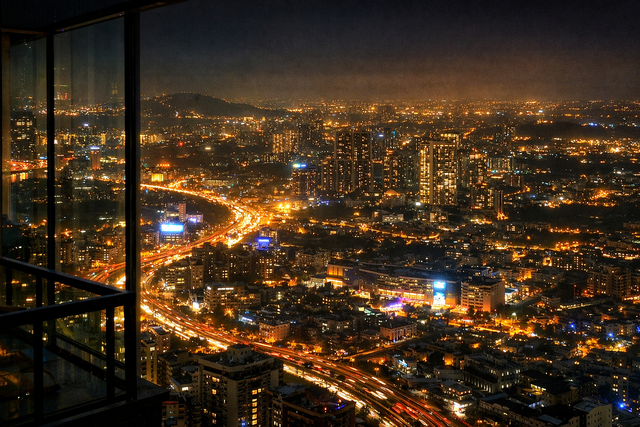
The city never really slept; it only pretended to, humming low like a living thing stretched too thin. From the thirty-second floor of Malhotra Sky Residences, Pune sprawled in wavering gold and harsh neon, a restless circuit board tangled beyond recognition.
Headlights slid along the arteries of the city, weaving around dark patches where the power had flickered out, while blinking billboards insisted on their own importance to the silent storm that gathered overhead. Even the clouds seemed charged, swollen with thunder and secrets, threatening to spill every hidden thing back onto the city.
Inside Penthouse 32A,
the light was sharp, clinical, almost defiant. Every surface gleamed—glass, chrome, marble—so clean it felt unreal, like someone had staged a photograph and forgotten to bring the people back in. The study was a shrine to order, or the illusion of it. Not a pen out of place, not a speck of dust on the desk.
But underneath the surface, there were signs of friction: the glass with its lipstick mark and a crescent of condensation, a scatter of papers scarred by red ink, the angry strokes of someone who’d stopped reading and started judging. Contracts. Allocations. Documents that could change lives, or end them.
Aarush Malhotra sat alone, back ramrod straight, silhouetted against the endless windows. He looked out over the city as if he might find answers there, or forgiveness, or maybe just an escape. The reflections fractured around him, multiple Aarushes stacked in the glass—one composed, one haunted, one just a boy who wanted to be anywhere else. Outside this penthouse, the world saw him as the poised, perfect heir; inside, with the city’s heartbeat flickering around him, his mask cracked just a little. You could see it in the way his shoulders tensed, in the way his eyes never quite focused.
His phone sat on the desk, neglected but still pulsing with threat. The screen was cracked, a spiderweb across a digital world, and the battery blinked its last warning. One message unread, its preview line a silent dare.
11:12 PM.
The room was filled with a careful, artificial calm: the low hum of the A/C, the soft tick of an expensive clock, the fizz of city noise through the glass. But beneath it all, tension coiled, waiting.
Then—a click. Mechanical. Soft, but deliberate, a sound that did not belong among the polite noises of money and power. Not loud enough to startle, just enough to declare intent.
Aarush didn’t turn. He didn’t need to. He knew who was behind him, or at least what they represented.
“You shouldn’t have come,” he said, his voice rough, barely a whisper. The words hung between them, heavy with regret and accusation.
Silence answered, thick as velvet. Then, footsteps—slow, measured—crossed the marble, each one a countdown. A shadow drifted across the floor, stretching and warping as the clouds swallowed the moonlight. For a moment, it was as if the night itself had slipped inside.
“You don’t know what they’re doing,” Aarush said, still staring into the city’s indifferent glow. “If this gets out—”
Another step. Closer now. The air thickened.
“You think this is about getting out?” The voice behind him was calm, almost gentle. There was something dangerous in that softness, a certainty that brooked no argument.
Metal slid. The sound of a gun, unmistakable, even if you’d never heard it before. It was final, cold, the punctuation at the end of a story.
Thunder rolled in the distance, echoing through the glass and marble.
Aarush stood, slow but steady. His hands curled into fists at his sides.
“No,” he said, turning at last. His eyes were tired, but his voice was clear. “You do.”
The gunshot split the silence, so loud it seemed to fracture the world. The glass shivered, sending ripples through the city’s reflection. Birds exploded from their perches, vanishing into the storm-soaked night.
At 11:17 PM, the CCTV feed glitched, sputtered, and died. The last image hung in digital stasis—a moment before the violence, preserved and useless. Then, nothing but static. A black rectangle where truth should have lived.
The time stamp froze. 11:17 PM to 12:05 AM. Almost an hour disappeared, erased from official memory. Forty-eight minutes in which anything could have happened, and no one would ever know, unless they already did.
When the cameras flickered back to life, the scene was different. Aarush Malhotra lay sprawled on the shining floor, gun in his right hand, blood pooling around him in deliberate, measured rings. The city beyond the glass was still awake, still shining, as if nothing behind those windows mattered at all.
Morning came late and pale, hesitant to touch the aftermath.
At 6:42 AM, Detective Ananya Sen was locked in silent war with her coffee machine. She stabbed the button again, muttering, “Not today. I need you more than the department needs the truth.” She was still in yesterday’s shirt, hair pulled back, eyes sharp despite the hour.
Her phone rang, slicing through her irritation. She glanced at the screen and sighed—Crime Branch Control Room. She knew the drill; good news never woke you this early.
She answered, voice flat. “Morning,” though it felt like a lie.
“Possible suicide,” the dispatcher said, voice clipped. “Minister’s son. Penthouse, Koregaon Park.”
Ananya froze mid-sip, the mug cooling in her grip. She’d heard that address before, in whispers and rumors, in stories that never made the news.
“Possible?” she echoed, her tone edged with skepticism.
A pause. On the other end, someone weighed their words. “They want it closed quick.”
Of course they did. With names like Malhotra, the rules changed. She’d seen it before—how the powerful tried to compress tragedy into paperwork, how they painted over blood with protocol.
She drifted to her window. Pune’s sunrise was soft and innocent, a city washed clean for a few brief minutes before reality bled back in.
“Send me the address,” she said. She didn’t need to write it down. Some places branded themselves into your memory.
Her phone buzzed again, this time with the first report. She opened it, scanning for the details that mattered.
Time of incident: around 11:17 PM.
Security footage gap: 48 minutes.
She stopped. “Forty-eight?” she murmured, almost to herself.
She stared at the report, letting the silence stretch. Something prickled at her instincts, a familiar itch that never led anywhere good.
“Interesting,” she said, her voice a private promise.
Because in her experience, time didn’t just slip away. Someone took it. Someone needed it gone, needed those forty-eight minutes to vanish—needed the truth to evaporate before anyone could catch it.
And when the powerful rewrote the timeline, it was never by accident. It was a warning, or maybe an invitation.
She shrugged on her jacket, grabbed her notebook, and finally coaxed a grudging cup of coffee from the machine. She took a sip, grimaced, and set her jaw.
“Alright,” she said, to herself and to the city beyond. “Let’s see who decided to rewrite the ending.”
Beyond her window, the city kept churning, pretending nothing had changed. But Ananya knew better. She’d learned to listen to the silences, to the time that went missing, to the stories that refused to stay buried. Today, beneath the too-bright lights and the rain-washed streets, she’d find out what really happened in Penthouse 32A—and what it cost to keep the city shining.







