
Chapter 1
I first encountered the woman who would become my wife over a decade ago, and we’ve been married for seven years. When we married, I not only gained a wife but also a stepdaughter. Initially, it was challenging. The little girl missed her father, feared I was taking her mother away, and struggled to accept discipline from me—typical step-parent issues. But over time, we grew closer. Friends with daughters had warned me about phases where kids gravitate towards one parent more than the other, perhaps needing a different role model or simply preferring one parent’s communication style. I didn’t delve into psychological research, but I knew it happened.
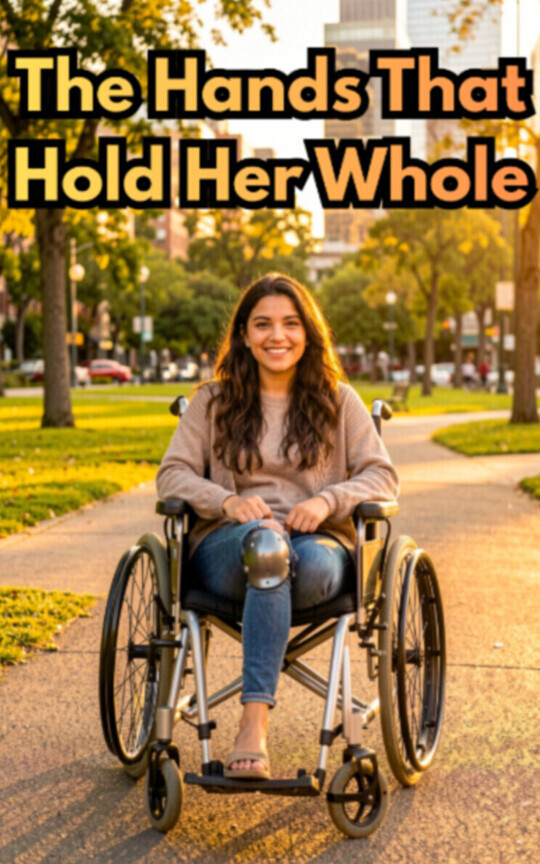
Eventually, we bonded over shared interests; surprisingly, she developed a passion for cricket, and I finally felt like a real parent. Then tragedy struck. One day, she was an ordinary girl walking to the store with friends; the next, she lay in a hospital bed, the victim of a reckless driver. She lost her left leg below the knee, and her right leg was severely broken. Months of physical and mental therapy followed, but my beautiful stepdaughter would never be the same. The compensation we received ensured a comfortable lifestyle, but as she grew older, she became increasingly aware of the limitations her disability imposed. Simple activities like walking, dancing, going into town, and sports were now challenging, despite her electric wheelchair, and she resented it, especially when it came to boyfriends.
“You try it,” she once told her mom. “Most guys aren’t interested in anything beyond the obvious. Who wants a girlfriend who’s always waist-high? Who needs help getting into an ordinary chair? Who can’t get over the step at their front door? Who’s going to be non-stop hard work? Sure, some show interest, but they’re usually perverts. Did you know some guys get turned on by amputees? I’ve had them ask to see my stump. I hate that term, and I don’t want to show it. All my friends go off with their wonderful boyfriends, and I get left with a pity date or a pervert. Forget it. I’d rather go without.”
I had been listening at the door and decided to leave as my wife tried to console her. I was determined not to pity Emma; she hated pity and refused to play the victim. While it was tempting to feel sorry for her, I was determined not to. This strengthened our relationship, and I was desperate not to mess things up.
Emma wanted to go to university and had the grades, but she was reluctant to leave home. She could have easily managed, but she decided to do her degree at home, where everything was adapted to her needs. We grew closer as she got older, perhaps because I was ten years younger than her mom, or maybe because my degree was in psychology, the subject she was studying to become a counsellor for people facing similar challenges. We spent a lot of time discussing her course, our shared love for eighties rock, and cricket, which she continued to adore.
With her mother, she had long, ‘girly’ chats about emotions, relationships, periods, diets—all the typical mother-daughter topics. I preferred to avoid such subjects, not out of embarrassment, but because her mother handled them well, providing a good balance to our respective relationships.
Emma also discussed sex with her mother in hushed tones behind closed doors. As a couple, my wife and I enjoyed a very active and creative sex life, often exploring new boundaries with silk scarves knotted around wrists, the sharp crack of palm against flesh that left pink handprints blooming across skin, vibrators that hummed against sensitive spots, and whispered fantasies in the dark. My wife, despite being forty-five, was gorgeous, with laugh lines that framed green eyes, high cheekbones dusted with freckles, and a body kept in amazing shape through punishing morning runs and a disciplined Mediterranean diet.
We had briefly tried swinging before Emma’s accident, attending parties in discreet suburban homes where we’d watch my wife’s lips press against another woman’s neck while I learned the contours of unfamiliar bodies. That was when Emma’s dad used to take her for weekends. But he lost interest, and after the accident, he disappeared like morning mist. Our sex life, however, remained a solace, vigorous despite the tragedy and the pressures of being caregivers. We loved being naked together, skin against skin in the blue light of 2 AM, indulging ourselves in muffled ecstasy.
Emma must have been aware; her room was next to ours, separated only by a thin wall of plaster and wooden beams that did little to muffle sounds. Sometimes in the mornings, I’d catch her gaze sliding away from mine, a slight flush colouring her cheeks when her mother and I had been particularly vocal the night before. Her mother’s frank discussions about everything from menstruation to orgasms—conducted over steaming mugs of tea at the kitchen table or while folding laundry together on Emma’s bed—had cultivated in Emma an unflinching attitude toward human sexuality that mirrored her mother’s own.
I discovered this while searching through our bedside drawer one evening, the mahogany wood sliding open with a familiar squeak that always reminded me of our first apartment together.
“Have you seen the purple silicone one?” I asked, rifling through the tangle of charging cables, half-empty bottles of lubricant, and the leather restraints we’d purchased on our anniversary. “The one with the curved tip? I could’ve sworn it was right here.”
My wife glanced up from her dog-eared paperback, the bedside lamp casting a warm glow across her face. “Oh, that.” She hesitated, marking her page with her slender finger, a thin gold band catching the light. “Emma has it.”
I froze, drawer half-closed, the scent of sandalwood from our massage oil suddenly cloying. “Emma has our—”
“She asked me,” my wife explained, her voice matter-of-fact despite the slight flush that crept from her neck to her freckled cheeks. “She’s been exploring her sexuality for months now. Started with the smaller toys, but she wanted to try something more... substantial.” She tucked a strand of hair behind her ear, her eyes meeting mine steadily. “And she’s not interested in navigating the complications of dating right now.”
At first, I was shocked, but it made sense. Disability often involves indignity—doctors prodding and poking, nurses treating private functions casually. Emma’s accident meant she had to get used to constant examination and talking about sensations and feelings, both physical and emotional. The fears of spinal damage or internal injury, along with psychological probing, meant Emma was desensitised to embarrassment, and her mom was her confidante.
Julia’s open-mindedness encouraged Emma to talk and explore her body in ways unthinkable to most sixteen-year-olds, awakening sexual feelings she might have otherwise suppressed.
Once I knew what was happening, Julia was open about sharing sex toys, explaining which ones Emma preferred with the same casual tone she might use to discuss favourite breakfast cereals. I saw Emma in a new light—no longer a delicate disabled girl but a beautiful woman who occupied space differently. She had inherited her mother’s looks, but with a sharper edge: those almond-shaped eyes weren’t just deep brown but nearly black in certain light, framed by lashes so thick they cast tiny shadows on her high cheekbones. Her full lips, always slightly chapped from her habit of biting them when concentrating, curved into a knowing smile whenever our eyes met after one of her mother’s frank discussions. Her flowing dark hair fell in waves that caught copper highlights when she sat by the window, physiotherapy having sculpted her upper body into a testament of determination—slim with firm, rounded curves that strained against her favorite worn band t-shirts, a flat, toned stomach that occasionally peeked out when she stretched, and hips that widened with a gentle slope beneath the cotton shorts she wore around the house.
I rarely saw her bottom, as it was usually planted in her wheelchair, but I suspected it was toned from her daily exercises. Her legs, however, were another matter—one ended above the knee, and the other was wasted from the accident. I tended to overlook them, focusing on her upper body.
Late one night, I caught myself staring at Emma’s closed bedroom door, a small ribbon of amber light visible underneath, pulsing slightly with movement within. The faint, rhythmic hum of the vibrator—that distinctive mechanical purr I knew so intimately from my own bedroom—carried through the midnight silence of our narrow hallway. I froze mid-step on the creaking floorboard, suddenly aware of my own thundering heartbeat and the cool sweat beading at my temples. My cheeks burned hot as coals as I hurried past on tiptoe, embarrassed not by her actions but by the realisation that I’d unconsciously categorised her as somehow separate from such desires. The next morning at breakfast, watching her laugh with her mother over buttered toast and steaming coffee, her eyes bright as polished obsidian and complexion glowing with a rosy flush that crept up her neck, I saw something I’d been blind to before—not Emma the patient, not Emma the disabled, just Emma, a young woman navigating the same primal hungers and electric pleasures as anyone else, her fingers curled delicately around her mug in the same hands that had, hours earlier, been occupied with altogether different pursuits.