CHAPTER ONE: First Contact
Stardate 746.2291. Earth date: Monday.
Location: Sol System, third planet, local designation Earth.
LOG ENTRY: VEX, SCIENTIFIC OBSERVER
“Mission commenced at 04:22 Galactic Standard Time. Transit time: 3.2 cycles. Margin of error: negligible.
Planetary scan complete. The third planet exhibits advanced biosphere imbalance, widespread technological pollution, unstable climate markers, and population oversaturation. Viability index: low. Subject interest: unexpectedly high.
Dominant species: carbon-based bipedal organisms, self-designated humans.
Primary objective: observation. Catalogue behavioral patterns. Extract philosophical frameworks. Determine whether the species is meaningfully adaptive or merely persistent.
Mission timeline: open-ended, until comprehension is achieved or the species self-terminates.”
The vessel exited warp beyond the Kuiper Belt, and the system opened before Vex in a clean, orderly sequence. Ice. Rock. Gas. Distance. Repetition. A star doing what stars do.
Then Earth.
At first glance, it was blue and green. Only after that came the rest: the long grey insistence of industry, the bruised atmosphere holding light unevenly, the feeling of a planet radiating activity without grace. It wore no halo. Only residue.
No alert followed their arrival. No scramble. No recognition pattern. They came in cloaked, silent, unanswered.
It was not caution that protected Earth. It was prioritization. The planet’s systems did not classify them as urgent. The species did not know another intelligence had entered its sky, and if some corner of it did know, the knowledge had apparently failed to rise through the layers of bureaucracy and noise required to become action.
The Zorthian High Council had debated the mission for three hundred and twelve cycles, modeling reverence, aggression, panic — every rational extreme.
They had failed to model the default.
Indifference, but fragmented. Delayed. Monetized.
Vex chose a rural descent zone, low population, no strategic value. The vessel set down without difficulty. Grass flattened, then rose again. A single pulse was transmitted, calibrated, measured, non-hostile.
The weather tower short-circuited immediately.
Several Earth hours later, a lone human arrived in a service vehicle with one failing headlamp. He parked crooked, killed the engine, sat for eleven seconds as if negotiating with his own life, then emerged in heavy boots and a jacket that had known too much weather. He looked at the vessel for twelve seconds. Vex counted.
The human removed a rectangular device, took one photograph, lowered it, produced a paper cylinder labeled Marlboro, lit it, inhaled, and stood there in silence. He did not run. He did not call for help in any tone suggesting urgency. He did not attempt violence, diplomacy, prayer, or heroism. He stood in a field, smoking combusted plant matter, looking at the largest event in recorded human history with the face of a man who had already worked too many Mondays.
The image entered human networks.
What followed was neither consensus nor panic. It was multiplication. The image was copied, cropped, enhanced, denied, mocked, worshipped, branded, politicized, and sold back to itself. Interpretations diverged immediately — saviors, invaders, fabricated footage, a beverage campaign. One financial market dipped, recovered, then surged when three corporations filed for extraterrestrial likeness merchandising.
Monetization arrived before verification. By the end of the planetary day, the vessel’s silhouette had appeared on shirts, mugs, dietary supplements, and a caffeinated beverage called Alien Energy: Taste the Arrival.
A political leader addressed the event before any scientific body had produced a stable explanatory statement.
“We love winners,” he said, looking directly into the primary camera as though it might interrupt its analysis of a civilization to applaud him. “And you look like winners.”
Approval ratings rose briefly. They fell again when he tried to fold the event into commerce, beginning with a fragrance called Victory Among the Stars.
Humanity processed the impossible the way it processed everything else: first with posture, then with commerce, then with fatigue.
With no meaningful resistance, Phase Two advanced ahead of schedule. Official clearance came from the United Human Governance Committee, exhausted in different accents, with terms concise enough to fit on one page.
No interference with military infrastructure. No genetic experimentation. Observational access permitted, provided public transportation etiquette was respected. All merchandise bearing Zorthian likenesses was to be officially licensed.
Humans attempted to regulate what they did not understand. This appeared to soothe them.
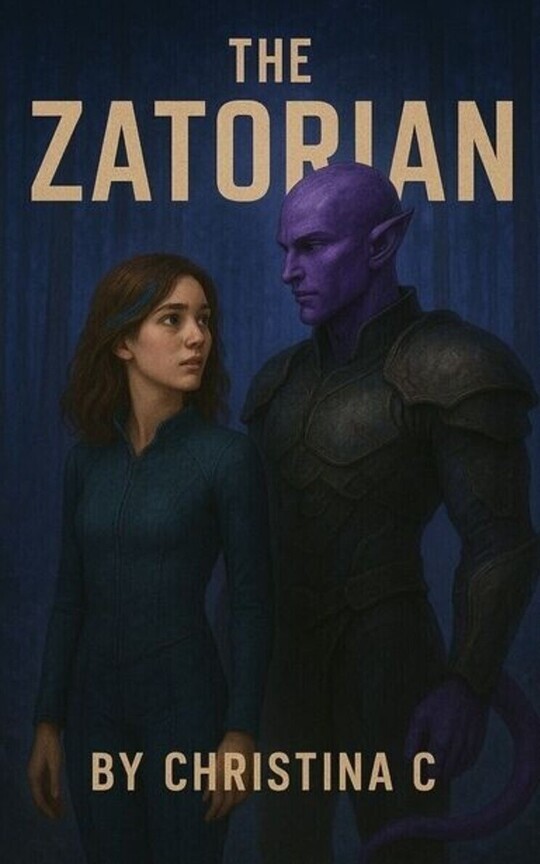
For terrestrial movement, Vex adopted a humanoid form calibrated to median male proportions and broad recognizability. Tall. Approximate age: twenty Earth years. Dark hair. Blue eyes. Pale skin. No weapons. No combat protocol. He reviewed the final render twice and adjusted the symmetry downward once. He did not adjust the coloring. It would take him considerably longer than one day to understand why that particular calibration had been a mistake.
He entered a town sector at 14:12 local time.
No alarm sounded.
A woman in an apron offered him fried food from a paper tray before asking his name. Several individuals looked at him, concluded he was some variant of influencer, actor, or imported nuisance, and continued with their purchases.
They looked at him, categorized him badly, and kept buying bread.
At a coffee counter, a barista looked him over, wrote VEX on a paper cup in handwriting that suggested impatience, and handed him a dark liquid.
“You look tired, babe.”
They had not previously met.
He considered the term. He was not an infant. He was not, by any reasonable classification, an incipient life form of any kind. The word appeared to have detached itself from its original referent and now functioned as something else entirely — a sound offered rather than a fact stated. He filed the discrepancy and did not correct her.
The beverage was bitter, overheated, structurally unpleasant. Within moments his pulse increased, focus sharpened, and a low interior heaviness he had not identified as fatigue lifted slightly. This, he concluded, might be how humans kept civilization from lying down.
Children approached him more directly than adults. There was something faintly wrong about him that most adults had already trained themselves not to see — a symmetry held a fraction too long, a stillness in the wrong places, the sense of a face arrived at rather than grown. Adults filed it under intense, or foreign, or online, and moved on. Children did not have that filter yet. Two asked if he was an alien. One declared he was obviously not, because “real aliens would be taller and slimmer.” Most children recovered from uncertainty faster than their parents. They did not need ontology. They only needed a working category.
At a nearby intersection, several humans stood holding signs. ALIENS ARE BAD. REPENT. THE END IS NIGH. Their fear did not seem freshly generated. It felt preassembled, waiting only for an available target.
No violence followed. Traffic continued. A man argued into his phone about roofing materials ten meters from a protest concerning the collapse of the species hierarchy.
There was awe. A little fear. A measurable quantity of opportunism, but not enough to stop them performing the thousand small rituals by which they held themselves together — buying coffee, walking dogs, complaining about the weather, living as if normality were not a condition but a decision repeated every few minutes.
Not denial. Not courage.
Continuation.
Last, and longest, Vex remembered this:
One small girl approached, holding a half-melted confection on a wooden stick. Her face was sticky. One sock had fallen down inside her shoe. Her expression suggested impatience with the entire adult species.
She held the confection toward him.
Vex looked down at it. She frowned. He accepted.
The sweet coating adhered immediately to his fingers. He adjusted his grip incorrectly. It slid, rotated, and left a streak across the side of his borrowed hand. The girl laughed. Bright. Clean. No agenda. No calculation. No fear. Just delight at his failure to perform a simple task correctly.
This appeared to satisfy her completely. She left without saying anything further. Vex stood holding the ruined confection for longer than the moment required.
The species seemed built around continuation.
He was no longer certain that was all it was built around.
FINAL LOG
“Initial contact phase completed. Human subjects exhibit unusually high tolerance for existential disruption. Arrival of extraterrestrial intelligence fails to produce sustained rupture or durable interruption of routine. Daily functions persist.
Passive data collection has reached useful limits. Proximity-based immersion is now required.
Unexpected variable encountered: juvenile female, approximately six Earth years of age, offered food without negotiation, then laughed when I failed to hold it correctly. No observable agenda.”