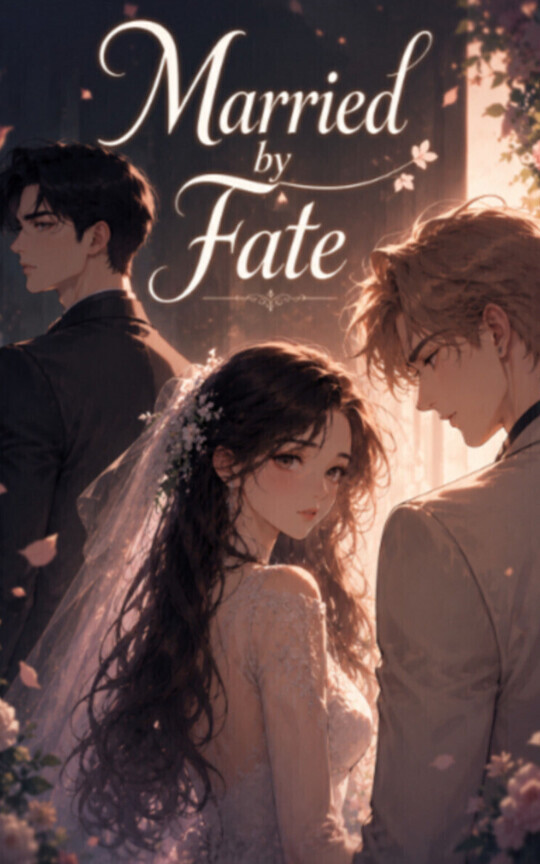
Chapter 1 — The Red Umbrella Arrives
The package arrived on a Thursday afternoon, three hours before Lena Zhao learned her grandmother was dead.
It sat outside her apartment door in a square of winter light, wrapped in brown paper so old-fashioned it looked as if it had been mailed from another century. No shipping label. No barcode. No neat white sticker from customs. Only her name written across the front in black ink.
LENA ZHAO.
Beneath it, in smaller Chinese characters she had not used since childhood:
赵莲.
Zhao Lian.
Lena stood in the hallway with her keys still between her fingers, staring at those two characters until the fluorescent light above her began to hum.
Her Chinese name always felt like someone else’s coat—something given to her, something that never quite fit. Her grandmother had used it. Her mother had used it, before she disappeared. Everyone else called her Lena.
The handwriting was thin and elegant, but something about it made her throat tighten. Each stroke ended too sharply, as if the writer had pressed the brush down with anger.
Across the hall, Mrs. Alvarez opened her door just wide enough for one eye and half a pink bathrobe.
“Everything okay, honey?”
Lena blinked, looked up, and made herself smile. “Yeah. Just a package.”
“No label?”
“I guess my family sent it.”
Mrs. Alvarez gave the box a suspicious look. “From China?”
“Probably.”
“You want me to watch you open it? In case it’s a head?”
Lena laughed because Mrs. Alvarez meant it as a joke. The sound came out smaller than she expected.
“I’m good,” she said.
Inside her apartment, the package seemed even more out of place. Lena’s living room was all glass, pale wood, and half-finished work: a laptop open on the coffee table, headphones curled beside it, a paused documentary timeline on the screen. She edited other people’s stories for a living—travel films, cultural shorts, one particularly dull series about luxury tea farms. She liked cutting chaos into meaning. She liked deciding what belonged and what didn’t.
The package did not belong.
It smelled faintly of smoke.
Lena set it on the kitchen counter and photographed it from three angles before opening it, an old habit from work. Her producer once told her she had the eye of a crime scene investigator. Lena had taken it as a compliment.
The brown paper came away with a dry whisper.
Inside was a long wooden box.
Not cardboard. Not plastic. Wood. Dark, polished, and cold under her fingers. A brass latch sealed the front. There were no screws, no branding, no note taped to the lid. Only a red thread tied around it three times.
The thread had been knotted with care.
Lena touched it and felt, absurdly, as if something touched her back.
She pulled her hand away.
“Get a grip,” she muttered.
Her phone buzzed on the counter.
The screen showed a number she did not recognize. International. Country code China.
For a second, Lena simply watched it vibrate.
The last time anyone from China had called her directly, she had been nine years old, sitting on the carpet in her pajamas while her father talked in a low voice in the kitchen. Her mother had been missing for three days. Lena remembered the smell of burnt toast. She remembered her father saying, “No, don’t tell my daughter that.” She remembered deciding, with the merciless certainty of a child, that whatever the grown-ups refused to say must be the truth.
The phone stopped.
Then immediately started again.
Lena answered on the fourth ring.
“Hello?”
There was a hiss of distance. Then a man’s voice, formal and careful.
“Is this Zhao Lian?”
Lena’s stomach tightened. “This is Lena Zhao.”
A pause.
“Yes. Zhao Lian.” He said her Chinese name as if correcting her. “I am Ren Wenhai. You may call me Uncle Ren. I am from Blackwater Village.”
The English name struck her first. Blackwater. Her grandmother had never called it that. In Mandarin, it was Hei Shui Cun. A village Lena had heard about but never visited, a place her father described as “old” in the tone people used for mold.
“What is this about?” Lena asked.
Another pause. She heard wind on the other end, or static pretending to be wind.
“I am sorry,” the man said. “Your grandmother passed away this morning.”
The apartment seemed to lose depth. The counter, the wooden box, the phone in her hand—all of it flattened, becoming part of the same silent image.
“My grandmother,” Lena said.
“Madam Zhao. Your mother’s mother.”
Lena did not need the clarification. She had only one grandmother left.
“How?”
“She was old.”
“That’s not an answer.”
“She went peacefully,” Uncle Ren said.
People always said that when they wanted death to sound obedient.
Lena looked at the wooden box.
“Did she send me something?” she asked.
Uncle Ren did not answer immediately.
“Did you receive it already?”
“Yes.”
Another silence.
“Do not open it tonight.”
The words were so sudden, so firm, that Lena almost laughed.
“What?”
“Please. It is better if you bring it back unopened.”
“Bring it back where?”
“To Blackwater Village. The funeral is in three days. Your grandmother requested that you come.”
“My grandmother and I haven’t spoken in two years.”
“She requested that you come,” he repeated.
Lena pressed her fingers against her eyes. Her grandmother had been many things—stubborn, secretive, impossible to impress—but sentimental was not one of them. The last time they spoke, Madam Zhao had told her that Americans spoke too loudly because they were not afraid of ghosts. Lena had said ghosts were not real. Her grandmother had gone quiet and replied, “That is why they like you.”
Now she was dead.
And a stranger was telling Lena not to open a package she had apparently sent before dying.
“What’s inside?” Lena asked.
“Family things.”
“Then why shouldn’t I open it?”
His breath crackled through the line.
“Because some family things are not meant to be woken up outside the house.”
Lena almost hung up.
Instead, because grief often disguises itself as irritation, she said, “That sounds like something people say when they don’t want questions.”
“Yes,” Uncle Ren said softly. “That is true.”
The honesty unsettled her more than any lie could have.
He gave her the funeral details. A town name she recognized only because she had once searched it after finding an old photo of her mother by a river. A bus route. A driver who would meet her. Instructions not to arrive after sunset.
At the end, he said, “Your grandmother kept a room for you.”
“I never visited.”
“Yes,” he said. “Still, she kept it.”
After the call ended, Lena stood in the kitchen listening to the refrigerator hum.
Her grandmother was dead. Her mother was still missing. Her father would not want her to go.
That last thought made the decision easier than it should have.
Lena called him anyway.
He answered on the second ring, sounding tired before she even spoke. “Lena?”
“She’s dead,” Lena said.
Silence.
Then, carefully, “Who called you?”
“Uncle Ren. From the village.”
Her father cursed under his breath. Not loudly. Not dramatically. Just one short word, old and bitter.
“You’re not going,” he said.
There it was.
No Are you okay? No I’m sorry. No your grandmother loved you in her own way. Just the locked door, lowered into place.
“I haven’t even told you the funeral date.”
“You’re not going to that village.”
“She was my grandmother.”
“She was the reason your mother—”
He stopped.
Lena’s fingers went cold around the phone.
“The reason my mother what?”
“Nothing.”
“No. Finish the sentence.”
“Lena, listen to me. That place is not normal.”
She looked at the wooden box. The red thread seemed brighter under the kitchen light.
“What does that mean?”
“It means your grandmother believed things. The whole village believes things. Old things. Cruel things.”
“Ghost stories?”
“Family stories,” her father said, and somehow that was worse.
Lena leaned against the counter. “Did Mom go there before she disappeared?”
Her father said nothing.
The silence answered.
Lena’s chest tightened with a familiar anger, one she had carried so long it felt almost ancestral. Her mother, Mei Zhao, had vanished when Lena was six. The official story shifted depending on who told it: stress, depression, a breakdown, a woman who walked away from her husband and child. But Lena remembered her mother cutting her own hair over the bathroom sink. She remembered red thread around her mother’s wrist. She remembered waking one night to Mei kneeling beside her bed, whispering in Mandarin, “If they ever call your name from water, do not answer.”
At six years old, Lena thought it was a nightmare.
At twenty-five, she had built an entire life pretending she still thought so.
“I’m going,” Lena said.
Her father exhaled sharply. “Your grandmother wanted you there for a reason.”
“Good. Then maybe I’ll finally get one.”
“Lena.”
“What?”
His voice dropped. “Did they send you anything?”
She did not answer fast enough.
“Do not open it,” he said.
That made two people.
“Why?”
“Promise me.”
“No.”
“Lena, for once in your life, do not turn every warning into a dare.”
She smiled without humor. “Maybe stop giving me warnings instead of explanations.”
She hung up before he could say her name again.
For a while, the apartment was quiet.
Outside the window, traffic moved along the wet street in silver lines. Somewhere downstairs, a dog barked twice. The city carried on, indifferent and bright and alive.
The wooden box waited.
Lena told herself she would not open it.
Then she took a knife from the drawer.
The red thread resisted the blade. It was only thread, but the knife dragged through it as if cutting wet hair. When it finally snapped, the loose ends curled away from each other.
The brass latch opened with a sound like a tooth cracking.
Inside, the box was lined with faded red silk.
On top lay a folded piece of paper, yellowed at the edges. Lena picked it up carefully. The paper was thin but strong, covered in vertical columns of Chinese calligraphy. Her reading was slow, childhood-level, but she recognized enough to understand it was some kind of formal notice.
A wedding notice.
She frowned and set it aside.
Beneath it was an umbrella.
Not a modern umbrella with metal ribs and nylon fabric. This one was old, handmade, its handle blackened bamboo, its canopy folded tight and bound with another red thread. The paper surface was a deep, dark red—the color of dried roses, old lacquer, blood in low light.
A smell rose from it.
Rainwater. Incense. River mud.
Lena touched the handle.
The kitchen light flickered.
She froze.
The refrigerator hummed on. The city breathed outside. Nothing moved.
“Great,” she said to the empty apartment. “Haunted umbrella. Very original.”
She lifted it from the box.
Something shifted underneath.
A small round object rolled against the silk lining.
A coin.
It was larger than a quarter, dark with age, with a square hole in the middle. Around the hole were worn Chinese characters Lena could not read. One side had been stained black, as if held over flame. The other side had a single red thread tied through it, cut short at both ends.
When Lena picked it up, the coin was warm.
Not room temperature. Warm.
Like it had been held in someone’s mouth.
She dropped it.
It landed without ringing.
The wedding paper slipped from the counter and fell open on the floor.
Lena crouched to retrieve it.
This time she noticed the English written at the bottom.
Not printed. Scratched in pencil, faint but legible.
Lena.
Her grandmother had written her name.
The rest of the note was squeezed beneath the formal Chinese characters, as if added in a hurry.
Do not come if the red umbrella opens by itself.
Lena stared at the sentence.
A sound came from behind her.
A soft click.
Then another.
Paper unfolding.
Slowly, Lena turned.
The red umbrella stood upright on the kitchen counter.
No hand held it.
The thread binding it had fallen away.
The bamboo ribs stretched open one by one, delicate and patient, until the canopy bloomed fully beneath the light.
Red filled the room.
For one impossible second, Lena saw the underside of it ripple like skin.
Then a breath came from beneath the umbrella.
A woman’s breath.
Slow.
Close.
Waiting.
Lena backed into the cabinet hard enough to rattle the dishes.
The umbrella did not move again.
The wedding notice lay in her hand. Her thumb had smeared a line of ink near the bottom. She forced herself to look at the Chinese text, to stop seeing it as decoration, to actually read.
Her grandmother had made her practice old characters one summer, insisting that simplified things were easier to hide behind. Lena remembered only fragments, but fragments were enough.
Auspicious union.
Ghost month.
Bride price received.
Zhao family bloodline.
She swallowed.
The groom’s name had been left blank.
The bride’s name had not.
Written in black ink, formal and unmistakable, were two characters:
赵莲.
Zhao Lian.
Lena’s Chinese name.
Below it, in smaller red writing that looked newer than the rest, someone had added one final line.
The seventh bride has been found.