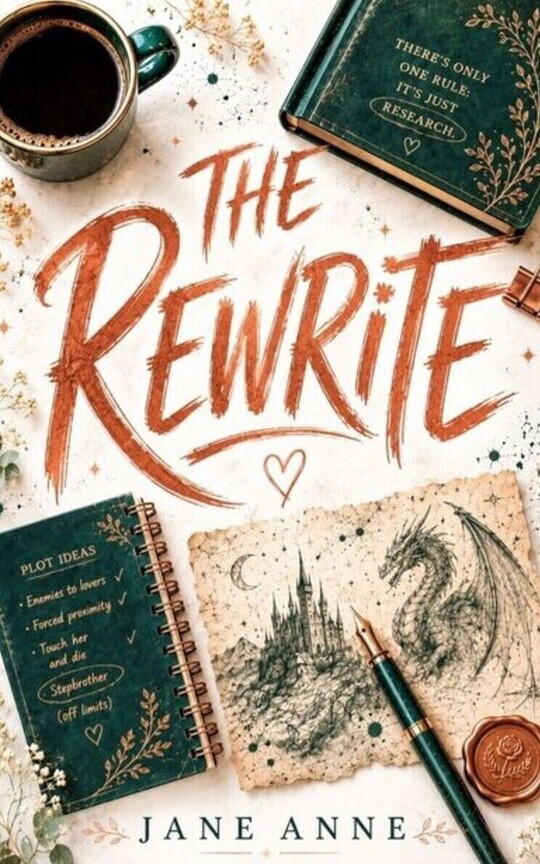
Chapter One — Arrival
The taxi stopped a hundred feet short of the gate and would not be argued with.
“End of the line,” the driver said, like the words tasted bad. He hadn’t said much since the last town, since the last gas station, actually, a flickering Sunoco where he’d topped off the tank and looked at Elara in the rearview mirror the way people look at something they’ve decided not to ask about. Now he kept both hands on the wheel, engine idling, and didn’t turn around.
“The sign says the school’s another quarter mile.”
“The sign’s right. I’m not driving it.” He said it flatly, the way you’d state a fact about weather. “No local takes a fare past this gate after four. You want, I’ll wait while you walk it.”
She didn’t ask why. She’d learned, growing up the way she had, that why was a question you spent on things that would actually answer you. Some things just told you what they were, and you were supposed to be smart enough to listen.
Elara paid him with the crumpled bills her mother had pressed into her palm at the bus station, got out, and dragged her suitcase onto the gravel shoulder, heavier than it should have been, packed with someone else’s leftover life. The taxi executed a three-point turn with more urgency than the empty road required and was gone before she’d gotten both hands around the handle.
That left her alone with the gate.
It was iron, black with age rather than paint, twelve feet of scrollwork bent into shapes that might have been ivy once and had long since stopped pretending. Beyond it, the drive curved up through a stand of red maples already going the color of old wounds, and beyond that, cresting the hill like something surfacing, was Blackwood Academy.
She had seen the brochure photo. It had lied by omission: it had shown her stone and slate and a lake glinting picturesquely in the background, and it had not shown her the way the whole building seemed to lean very slightly forward, the way a person leans forward to hear something said too quietly. It did not move. She was certain, later, that it hadn’t moved. But standing there with gravel dust settling around her ankles and dusk coming down blue and fast, Elara had the distinct, skin-prickling sense that the school had noticed her before she’d finished noticing it: that whatever old attention lived in those windows had already turned, unhurried, toward the gate.
She pushed it open herself. It wasn’t locked. It didn’t need to be, she thought, with a taxi driver’s whole body refusing to cross the line.
The walk up gave her time to rehearse the name that wasn’t hers.
Elara Voss. A lie, technically, though a careful one: her mother’s maiden name, dug up from an old marriage certificate and handed to the scholarship office along with a story about a father who’d never bothered to claim her legally, a story just plausible enough to survive a clerk’s cursory glance. Calder was the name she’d grown up answering to, the name still bolted to a memory she couldn’t risk anyone here matching to a face. Iris Calder. Two years gone, and still the one detail dangerous enough to build a disguise around. So she’d buried her own name quietly, put on her mother’s instead, and told herself that was a small enough thing to trade.
She found her way to Wraithmoor House by process of elimination and one terse upperclassman with a lantern, who looked at Elara’s scuffed suitcase and her scuffed shoes and did the math instantly, the way rich kids always did, and said nothing about it, which was somehow worse than if she had.
Her room was on the third floor, at the end of a corridor lit by sconces that seemed decorative rather than functional, casting more shadow than light. The door was already open. A girl was sitting cross-legged on the bed nearer the window, surrounded by a moat of open books, her fingers stained the particular blue-black of cheap fountain pen ink, her hair a defiant copper-red that the sconce light turned the color of a struck match.
“You’re either my new roommate,” the girl said without looking up, “or you’re lost, in which case, bad news, everyone gets lost here the first week, it’s basically hazing by architecture.”
“Roommate.” Elara set her suitcase down carefully, the way you set down something you don’t quite trust the floor with. “Elara.”
“Ros.” She looked up then, sharp and quick, cataloguing in one pass: the suitcase, the coat a size too big, the watch that wasn’t a typical Blackwood watch. “Kane. I’d shake your hand but I’m covered in ink and also mild despair, this reading is insane, first week and they’ve already got us on primary sources.” She waved a hand at the books like they’d personally wronged her. “You want the desk by the window or do you want to fight me for it, because full disclosure I will fight you for it, I’ve been dreaming about that desk since orientation packet.”
“Take it.” Elara almost (almost) smiled. It surprised her how close it came.
“Excellent. I like you already, this is going great.” Ros swung her legs off the bed, suddenly all motion, and helped haul the second suitcase up onto the spare mattress without being asked, which was its own kind of kindness, the unglamorous kind, the kind that didn’t require Elara to explain anything about herself yet. “Fair warning, I talk a lot when I’m nervous, and it’s the first week of school at a place that looks like it eats freshmen, so. Prepare accordingly.”
Elara laughed, actually laughed, a short surprised sound she hadn’t planned on. For one clean, uncomplicated minute, Blackwood was just a school. Old buildings, a stranger’s kindness, a desk by a window. She let herself have the minute.
Then Ros went back to her books, already muttering about a translation, and Elara turned to unpack, and the moment ended the way most good ones did, without her permission.
The suitcase had been Iris’s.
Their mother hadn’t offered it; Elara had taken it from the hall closet the morning she left, because her own bag had a broken zipper and because some small, unexamined part of her had wanted to carry something of her sister’s into the place where she had last been seen. It still smelled faintly of a perfume Iris used to wear senior year, something warm and citrus-sweet gone stale in the lining, and Elara had spent the whole bus ride trying not to notice that.
She unpacked in the practiced, efficient way of someone who’d moved often (folded, stacked, done) until she reached the lining of the front pocket, where her fingers caught on something that shouldn’t have been there. A seam, restitched. Not factory work. Hand stitches, small and deliberate, the kind you’d only notice if you were looking for a place to hide something, or if your fingers happened to snag on the one flaw in an otherwise ordinary bag.
She picked the stitches loose with her thumbnail, heart doing something quick and unhelpful in her chest, and drew out a scrap of paper folded into quarters, gone soft and gray at the creases from having been folded and unfolded, she guessed, more than once.
Ros was still talking, something about a professor, a reading assignment, the terrible acoustics of the dining hall, and none of it reached Elara at all.
The handwriting was Iris’s. She’d have known it anywhere, that particular slant, the way her sister crossed her sevens like their grandmother had taught her. Six words, pressed hard enough into the paper that they’d almost torn through on the downstrokes, like whoever wrote them hadn’t had much time, or hadn’t been steady, or both.
Don’t trust the lake.
Outside the window, past Ros’s shoulder, past the dark shapes of the maples, Elara could just make out a flat black gleam at the bottom of the hill: motionless, moonless, waiting the patient way old water waits.
She folded the note back along its worn creases and said nothing at all.