The Boy Who Hated Smallness


ACT I — THE HUNGER
St. Louis looked peaceful from the outside.
Tree-lined streets. Lawns trimmed with suburban precision. Quiet evenings where television light spilled through windows like tiny artificial moons.
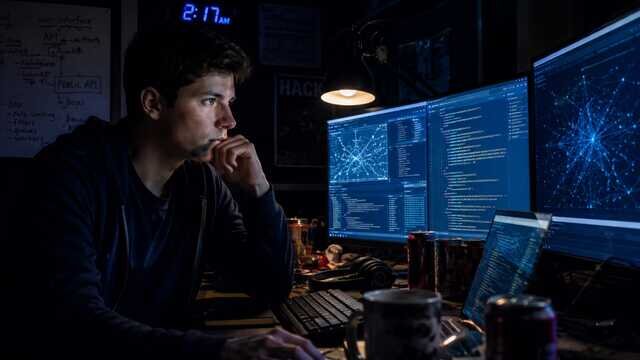
But inside one particular house, a boy sat awake long after midnight, staring at the soft green glow of a computer screen.
Young Sam hated silence.
Not because it was loud.
Because it made him feel ordinary.
At school, teachers called him intelligent in the careful tone adults reserved for children they didn’t fully understand. He wasn’t athletic. Wasn’t loud. Wasn’t popular in the way movies taught boys to become popular.
But he noticed things.
He noticed how adults lied politely. How successful people controlled rooms without raising their voices. How everyone pretended to know what they were doing.
And somewhere deep inside him, a frightening thought had already begun growing roots:
Maybe the whole world is being improvised by people pretending to be certain.
That idea changed him.
While other kids chased approval, Sam chased systems. He wanted to understand the machinery underneath life itself.
Computers made sense in a way humans didn’t.
Humans were emotional. Contradictory. Fragile.
Computers were honest.
A command either worked or failed. No hidden resentment. No fake smiles. No politics.
One winter evening, while snow pressed softly against the windows, Sam sat cross-legged in front of his machine, typing lines of code with the concentration of someone building a secret doorway.
His mother walked past the room and paused.
“You should sleep,” she said gently.
“I will.”
“You said that two hours ago.”
“I’m close.”
“Close to what?”
Sam looked back at the glowing screen.
He didn’t know how to explain it yet.
Not even to himself.
So he simply said:
“Something important.”
His mother smiled politely and walked away.
But Sam stayed there for hours.
Because something inside him already understood what nobody else could see:
The future belonged to the people willing to disappear into obsession before the world noticed them.
And obsession had already found him.
At school, the world felt painfully slow.
Teachers explained ideas. Sam had already Googled three nights earlier. Conversations felt repetitive. Predictable.
Even friendship exhausted him sometimes.
He liked people. He just couldn’t understand why most of them accepted limits so easily.
Why did adults settle? Why did intelligent people stop dreaming? Why did ambition shrink with age?
The older he grew, the more terrified he became of becoming average.
Not poor.
Not unsuccessful.
Average.
There was something horrifying about waking up at forty and realizing your life had quietly become routine.
That fear followed him everywhere.
At restaurants. At birthday parties. At family gatherings.
Especially family gatherings.
Adults always asked the same questions.
“What do you want to become someday?”
Doctors. Lawyers. Engineers.
Normal answers.
Expected answers.
But Sam never answered immediately.
Because he already sensed that the future would belong to people who built things nobody had words for yet.
And he wanted to be one of them.
Even if it cost him something.
Especially if it cost him something.
Late one night, he sat alone again in the dark.
The computer fan hummed softly like distant machinery inside a spaceship.
Outside, the neighborhood slept peacefully.
Inside the screen, infinite possibilities flickered.
Sam leaned closer.
The glow reflected in his eyes.
And for the first time in his life, he felt something dangerous.
Not confidence.
Not happiness.
Permission.
The realization that maybe the rules governing ordinary people did not apply to the people willing to rewrite the future.
That thought should have frightened him.
Instead, it felt intoxicating.
Years later, powerful investors would describe him as calm. Measured. Almost emotionally unreadable.
They would mistake composure for certainty.
But the truth began here.
With a lonely boy staring into a machine, trying desperately to outrun the terrifying possibility of becoming forgettable.
And somewhere beyond the dark glass of that screen, the future was already staring back.


![Werewolf Hollow [GALATEA DATE TBA]](https://cdn-gcs.inkitt.com/vertical_storycovers/ipad_76bbf380fa2e8dc2f70694197487ab81.jpg)