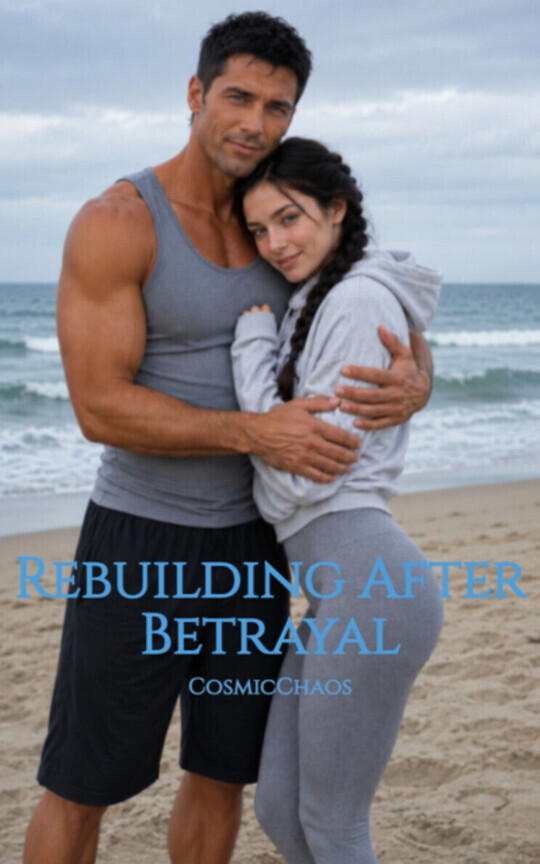
CHAPTER ONE
The Storm That Wasn’t Loud
The stone was colder than she expected.
Not sharp. Not biting. Just steady—the kind of cold that settled into bone if you knelt long enough, if you stayed longer than you meant to, as though the earth itself had all the patience grief did not.
Her fingers traced the carved letters slowly, as if reading them differently might somehow change them.
They never did.
Her fingertips had gone numb against the stone.
She kept tracing the letters anyway.
Time had softened the grooves. Months of restless visits had worn down what was once precise, turning edges smooth beneath repeated touch. Even loss, it seemed, became gentler to look at than to carry.
Beloved. Devoted. Gone.
Wind moved quietly through the cemetery, stirring coats, leaves, and the flowers left for people who would never see them. Somewhere behind her, gravel shifted under cautious footsteps—a family gathered several graves away, their mourning quieter than hers, more contained. A child asked something too loudly and was gently hushed.
She heard it.
She did not turn.
A thin silver chain rested against her collarbone. The small knight hanging from it caught what little light the sky allowed—dull, stubborn, unyielding.
Her fingers closed around it.
Still cold.
Always cold.
It had never warmed.
Not against skin.
Not with time.
She used to think it was unnecessary—the weight of it, the meaning behind it. Something sentimental. Something excessive.
Now it felt like the only honest thing left.
Rain gathered lightly in her dark hair, one loose strand clinging to her cheek. She noticed.
Chose not to move.
The bruises along her collarbone had long since faded.
She could still map them.
Not the pain…The pattern.
Where fingers had pressed. Where silence had followed. Where apologies came too late to matter.
She had mistaken cruelty for confidence once.
Mistaken possession for love.
The man she chose instead had left fingerprints on her skin and silence where her voice used to be.
And the man she did not choose—
had forgiven her before she finished apologising.
He had stood between her and every sharp thing life offered as if protecting her had never required thought. As if it had been decided long before she ever understood what he was doing.
She had called it too much.
Too intense. Too loyal. Too impossible.
She wanted something easier to understand.
Something simpler.
Something human.
She had been wrong.
A child’s voice drifted again from the neighbouring grave.
“Why is it raining?”
The mother answered softly.
“Sometimes it just does.”
She looked down at the stone.
The sky was not heavy. The rain was gentle—honest. It fell without violence, without spectacle, without needing to be noticed.
She thought devotion looked like weakness once.
Standing here now, she could no longer remember what strength was supposed to feel like.
Her grip tightened around the necklace.
He would have healed from that.
He always did.
Except—
the last time.
Something moved painfully through her chest at the memory. Not quite thought. Not quite feeling. Something too broken to become either.
She lowered herself fully to her knees, the fabric of her coat drinking in the damp earth. The knight slipped free from beneath her collar.
Silver against black.
Visible now.
“Who knew,” she whispered, voice already breaking, “an immortal lover would die of a broken heart.”
The words vanished into the rain.
For a moment she thought she might say more.
Immortal.
The word felt childish now. Too clean for what had happened. Too simple for the cost of it.
Her hand tightened harder around the chain.
Not enough to break it.
Enough to hurt.
She welcomed that.
Cold water had already soaked through one knee of her coat.
She barely felt it anymore.
Then she closed her eyes, breathing through the fracture of herself.
When she opened them again, the world had continued without permission.
Nothing paused for love.
Four years earlier—
before she understood what love could keep alive,
and what losing it could kill—
The Meeting
Blackwood Books was closing in fifteen minutes when the rain began.
Not with thunder. Not dramatically. Just a subtle dimming of the light outside, as though the evening had exhaled and taken something warm with it.
A single drop touched the tall front window.
Then another.
Then a scattered tapping like fingertips testing glass.
Inside, warmth held steady.
The air carried layers of old paper, polished wood, dust warmed by aging bulbs, and faint vanilla from a candle near the register. Through the shared brick wall came the bitterness of roasted coffee from the café next door.
Shelves leaned slightly beneath uneven weight, their spines bowed from years of being chosen and returned. A rolling ladder rested along the far wall, its rail worn smooth by repetition.
Low jazz murmured behind the counter.
Somewhere deeper in the store, a page turned softly.
A chair scraped once against wooden floorboards near the reading corner before settling again.
The storm outside muted the city into something softer and more distant, leaving Blackwood wrapped in its own quiet rhythm.
Near the register, an older man argued mildly about late fees while the owner pretended not to hear him.
Someone laughed quietly from the philosophy aisle.
A woman carrying three paperbacks paused near the door to rearrange them against her chest before stepping back into the rain.
The bell chimed once more behind her.
Then the quiet folded back into place.
“Fifteen minutes,” the owner called, warm but firm.
Near the window, a man stood still.
He was not browsing.
He was not pretending to.
He had chosen the position deliberately—the one place that offered a clear view of the sky.
Tall enough to make the shelves feel shorter around him. Broad without seeming heavy. His dark coat was structured, faintly damp at the shoulders. He carried himself without wasted movement, as if stillness itself were something practiced rather than natural.
His hair was neatly cut, dark brown, untouched by disorder. A short, well-kept stubble framed a jaw too deliberate to be careless.
His eyes were darker than the weather outside.
A faint scar crossed one knuckle.
Another drop struck the glass.
His gaze followed it downward.
Rain like this never arrived all at once. It gathered first—quiet, patient—before committing fully.
He preferred it like this.
Predictable. Measured.
The rain moved like something following rules he already understood.
The bell above the door chimed.
Cool air slipped inside.
He did not turn immediately.
But his attention shifted.
He noticed the room change before he understood why —the pause that comes when someone crosses a threshold, the subtle rearrangement of movement around a new presence, the brief hesitation before footsteps choose direction.
Habit.
Not curiosity.
A woman stepped inside, brushing rain from her sleeves. She paused just past the entrance, allowing her eyes to adjust to the warmer light.
He noticed the pause.
Then something else.
Not her movement.
Not even her presence.
Something in the way the room shifted around her, as if the moment had altered and he had registered it a fraction too late.
His gaze held there one second longer than it should have.
Long enough for him to notice it.
Long enough that he looked away a fraction too late.
It wasn’t enough to feel rude.
Only precise enough that she became aware of being observed.
Most people looked at things casually. Briefly. Without thought.
His attention did not feel careless.
The rest then followed.
Dark hair had slipped loose from the tie at the back of her head, strands resting lightly against one cheek. The rest fell in smooth lines down her back, catching light where it found it. She pushed one strand away absently.
Ink smudged faintly along her index finger.
His attention landed there before he decided it should not.
Blue-black.
Slightly dried near the edge of her finger.
Fountain pen, not disposable.
Left-handed smudge pattern despite holding the book in her right hand.
He noticed all of it before he realized he was still looking.
Her eyes moved across the shelves—hazel, alert, curious without hurry.
She moved like bookstores were rituals rather than errands.
She moved through the shelves with quiet certainty, as though bookstores were places you arrived in rather than searched through.
Most people entered bookstores already knowing what they wanted.
She didn’t.
She moved slowly instead, reading shelves the way some people listened to conversations—patiently, attentively, as though discovery mattered more than efficiency.
He did not miss that.
He should have dismissed it.
Instead, he found himself still watching.
She passed him without noticing him and headed directly for the cooking section.
Somehow, the cooking section suited her immediately.
A child darted across the aisle in front of her. She stepped aside instinctively, laughing softly.
The laugh escaped before she seemed aware of it.
Rare enough that he noticed its absence when it faded.
She climbed the rolling ladder to reach a cookbook just beyond easy reach.
The rain thickened outside.
Her fingers brushed the spine.
The book slipped.
His hand caught it instantly.
Too quickly for the distance between them.
The movement was immediate—certain.
“You’re going to fall.”
The words came out faster than intended.
His expression shifted almost imperceptibly afterward, as though annoyed at himself for reacting before thinking.
He realized a second too late how close she suddenly was.
She looked first at the book.
Then at him.
He was not standing the way most people did after helping someone. No awkward smile. No self-congratulation. No need to turn kindness into performance.
Just steady.
As though catching it had been the only possible outcome.
She noticed that before she realized she was noticing him at all.
Up close, his eyes were darker than she expected.
His eyes revealed very little.
Calm, measured, difficult to read.
“I had it.”
“You didn’t.”
No smirk.
No edge.
Only fact.
He placed the book carefully back into her hands, making certain she had it this time.
The light dimmed another shade.
She glanced toward the window. Headlights blurred into streaks now, the rain heavier than before.
Neither of them had noticed it worsening.
No umbrella.
He checked his coat pocket.
Nothing.
For a moment, neither spoke.
Only the sound of rain gathering against glass.
She exhaled.
“Of course it gets worse now.”
He measured the street outside with one glance.
“We’re not walking through that without committing to it.”
A quiet laugh escaped her.
“Commitment feels like a lot for the weather.”
Something unspoken passed quietly between them.
Neither of them treated it like awkwardness.
Only recognition.
“There’s a café next door,” he said.
Not offered.
Placed.
“Before the rain decides for us.”
She tilted her head, studying him properly now.
“You always wait until closing time to ask strangers out for coffee?”
There was nothing performative about him.
That should have made him easier to understand.
Somehow, it did the opposite.
“Only when they look like they’re about to argue with gravity.”
That caught her.
A smile surfaced despite herself.
“And how often does that happen?”
“Not often.”
Rain struck harder against the window.
Her hesitation had nothing to do with refusing him.
If anything, that was the problem.
Then she nodded.
“Alright.”
He stepped aside and held the door without turning it into a theater.
They walked into the rain together.
The café was brighter than the bookstore.
Warmer too.
Steam fogged the windows. Milk hissed beneath metal wands. Cups clinked. Conversation hummed low and content.
The café was busy enough that neither of them stood out.
Still, the noise inside the café felt softer than the city outside.
Rain against glass blurred the city into something distant while warmth and conversation softened everything else.
Someone laughed quietly near the back wall. A spoon stirred against ceramic. The espresso machine hissed again beneath low conversation while droplets slid slowly down the windows beside them, distorting headlights into streaks of gold and amber.
She loosened her scarf slightly as warmth settled properly into her skin for the first time since entering the rain.
He noticed that too.
Not intentionally.
That was becoming a problem.
He stepped toward the counter.
“I’ll get this.”
She glanced at him.
“You don’t even know what I want.”
“You nearly fell for a cookbook,” he replied evenly. “I’m guessing it’s not triple-shot caramel.”
A quick laugh escaped her before she could stop it.
“Flat white. No sugar.”
The barista repeated the order back incorrectly the first time.
“Triple-shot vanilla?”
She looked horrified.
“Do I seem emotionally stable enough for triple-shot vanilla?”
The barista glanced at her once.
“No.”
He answered so seriously that she laughed instantly.
“One flat white. No sugar,” Aurelian told the barista. “And a black.”
“You always answer questions like that?” she asked as they moved toward the window seats.
“Accurately?”
“Like a man filing a report.”
“That sounds inefficient for casual conversation.”
They sat near the window while rain softened the city into streaks of gold and grey.
He removed his coat and folded it neatly over the chair.
She noticed that.
Not the gesture.
The precision of it.
Everything about him felt deliberate.
Controlled, but not artificial.
Like even small actions passed through some internal filter before reaching the world.
Most people carried traces of distraction without realising it. Restless movement. Half-finished gestures. Constant adjustment.
He didn’t.
And somehow, his calm unsettled her more than it should have.
“You’re not normal,” she said after a moment.
“That’s subjective.”
She waited for more.
None came.
Her mouth curved.
“Alright, mysterious weather observer. You have a name?”
He paused briefly before answering.
Choosing rather than searching.
“Aurelian.”
She repeated it slowly.
“Aurelian.”
Then narrowed her eyes.
“Your parents hate you?”
Something almost like amusement touched his expression.
“I survived it.”
That earned him a longer look.
“And you?”
“Saphira.”
He said her name once, quietly.
“Saphira.”
The way he said it unsettled her slightly.
Not because it sounded intimate.
Because it sounded careful.
Most strangers used names casually after hearing them once. Thoughtlessly. Like placeholders.
He didn’t.
Neither of them looked away immediately.
Nor did they acknowledge it.
She wrapped her hands around the cup when it arrived, warmth soaking into her fingers.
Conversation came easily after that.
Neither of them seemed interested in forcing it.
They spoke of cooking, unfinished books, rainstorms that asked too much attention, people who filled silence because they feared it. She liked recipes because they made sense. She admitted she once ruined an expensive pan trying to impress someone.
He said that sounded statistically predictable.
“Patterns hold until something disrupts them.”
“You sound like someone who plays chess,” she said.
“I do.”
“Of course you do.”
“And what does that mean?”
“It means you think five moves ahead and pretend you’re spontaneous.”
“That’s inaccurate.”
“Is it?”
A pause.
“Four moves.”
“That’s deeply annoying.”
“I’ve heard worse.”
She laughed properly this time.
It arrived easily this time.
Unrestrained enough that nearby conversation briefly disappeared beneath it.
He felt the shift immediately.
Not because he noticed it.
Because he wanted to hear it again.
He ignored that thought immediately.
Or tried to.
At some point she stopped checking the time.
She only noticed when the barista wiped the counter for the second time.
“That’s unusual,” she said.
“What is?”
“I usually know what time it is.”
“And now?”
She looked at the window.
The rain had softened to a quiet drizzle.
Then back at him.
“I forgot.”
Something thoughtful passed briefly through his expression.
Because he tracked time too.
Always.
And somehow,
he had missed it as well.
For someone who measured life through sequence, timing, and predictability, losing track of an hour should have felt impossible.
Instead, the realization should have bothered him more than it did.
She watched him for a moment longer, sensing something shift behind his expression without fully understanding what she was seeing.
It wasn’t discomfort.
Or distance.
Something closer to hesitation.
As though he had reached a conclusion he wasn’t entirely prepared to examine.
“It stopped,” she said.
He stood.
“I’ll walk you home.”
“Normally I wouldn’t.”
“Why not?”
She hesitated.
“I don’t usually trust this easily.”
He did not step closer.
Did not persuade.
As though forcing trust from someone would diminish it.
“I understand.”
That made it worse.
Somehow, it made it better too.
She hated how quickly she believed him.
She rose.
“Okay.”
Outside, the air was cool and clean.
Streetlights stretched gold across wet pavement. Water gathered in shallow dips where footsteps had disturbed it.
They walked side by side.
They walked close enough to feel intentional without quite touching.
Their pace matched without either acknowledging it.
A passing car cut too quickly through a shallow puddle beside the curb.
Saphira stepped back instinctively.
Aurelian caught her elbow before the water reached her coat.
“The city is hostile tonight.”
“You noticed that quickly.”
“I adapt efficiently.”
“That’s somehow worse.”
The city felt quieter after the rain. Cleaner somehow.
Streetlights reflected across wet pavement in fractured ribbons while distant traffic softened into a low, shapeless hum somewhere beyond the buildings around them.
Saphira tucked her hands deeper into her coat pockets as cold air brushed against lingering café warmth still trapped beneath the fabric.
Beside her, Aurelian walked with the same measured calm he seemed to carry everywhere, though without the sharp distance she had first noticed inside Blackwood.
He felt different now.
More accessible somehow.
Not open exactly—but no longer impossible to reach.
And somehow that felt far more dangerous.
“You measure everything?” she asked.
“Most things.”
“And me?”
He glanced at her.
Briefly.
Not long enough to fully answer the question.
“Still calculating.”
“That’s a terrible answer.”
“Probably.”
“Old habit?”
“Something like that.”
She studied him.
“You don’t react,” she said. “You wait. Like you’re deciding whether something deserves the move.”
He took a moment before answering.
Because suddenly,
he wasn’t certain that applied here.
“I prefer not to waste them.”
They turned onto her street.
Quieter now. Residential. Familiar.
They reached her building slower than expected.
Or perhaps it only felt that way.
Old brick. A dim hallway light behind frosted glass.
She adjusted the strap of her bag though it had not slipped.
“So…”
Neither moved immediately.
“Goodnight, Saphira.”
The way he said it was not casual.
Not final either.
Intentional.
She felt that.
“Goodnight… Aurelian.”
The name felt strange leaving her mouth now.
Not unfamiliar.
The name felt heavier now.
Like the evening had given it weight too quickly.
She stepped inside before she could examine that thought too closely.
Even then, she remained aware of him standing outside the building through the glass behind her.
Waiting.
Not impatiently.
Simply making certain she reached the door safely before allowing himself to leave.
She stepped inside.
He remained where he was until the door clicked shut.
Only then did he turn away.
Yet walking away still felt strangely unfinished.
That unsettled him more than expected.
Upstairs, she reached into her bag for her keys.
Nothing.
Front pocket.
Side pocket.
Inner pouch.
Her pulse climbed.
“That’s not funny.”
She tried the handle.
Unlocked.
Lights on.
“Saph?”
Lena stepped into view from the living room, arms folded. Not angry.
Relieved.
Curly brunette hair tied loosely back. A blanket on the couch. Two wine glasses waiting. A paused movie glowing blue in the background.
“Where were you? I’ve been calling.”
Saphira exhaled hard.
“You nearly killed me.”
“You nearly ignored me.”
Lena gestured toward the couch.
“We had a sleepover planned. Remember?”
Saphira pulled out her phone.
Six missed calls.
Four messages.
“Oh.”
Lena’s head tilted.
“Oh?”
“I lost track of time.”
That landed.
“With?”
A small hesitation.
“…Aurelian.”
Lena studied her carefully.
“Who is he?”
“I don’t know everything.”
“You let a man you barely know walk you home.”
Lena’s tone carried concern rather than accusation.
“He’s careful,” Saphira said quietly. “He pays attention. He doesn’t feel… unpredictable.”
“Careful and safe aren’t the same thing.”
“I know.”
Lena stepped closer.
“Did he try anything?”
“No.”
“Push anything?”
“No.”
That answer came faster.
Certain.
Lena noticed.
“Remember second year?” she asked softly.
The room changed quietly after that.
Not dramatically.
Just enough for the warmth between them to thin beneath something older.
Saphira’s hand tightened slightly around the stem of her wine glass before she looked down at it instead of Lena.
The movement was small.
Lena noticed it anyway.
Of course she did.
Rain pressed softly against the apartment windows while muted city lights shifted across the kitchen counter between them. A few seconds earlier the conversation had felt easy.
Now it felt careful.
Saphira exhaled once through her nose.
“You said we weren’t bringing that up anymore.”
“You said a lot of things that year.”
No accusation.
That somehow made it worse.
“You promised you wouldn’t do this again.”
Lena leaned back slightly afterward, though the concern remained written clearly across her face now beneath the sarcasm she usually hid behind.
“That’s not fair,” Saphira said quietly.
“No,” Lena agreed. “It’s not.”
She reached for humor automatically after that.
Not because she believed the tension had passed.
Lena watched her quietly for a second longer before exhaling into her drink.
“There it is,” she muttered.
Lena stole Saphira’s wine glass long enough to take a sip from it herself before handing it back.
“You do this every time something matters.”
Saphira frowned slightly.
“What?”
“The disappearing act.”
“I’m literally standing here.”
“You know that’s not what I mean.”
Quiet stretched between them briefly.
Not hostile.
A little worse.
Annoyingly familiar.
Neither of them rushed to fill the silence this time.
Saphira stared into the dark surface of the wine for a second longer than necessary, watching the reflection distort whenever her fingers shifted against the glass.
Second year.
Even hearing it mentioned still tightened something low in her chest.
It wasn’t missing that year that unsettled her.
It was remembering who she had become afterward.
Saphira went still.
“It wasn’t like that.”
“People always say that,” Lena said gently.
Neither of them spoke for a moment.
Then Saphira spoke, quieter than before.
“It didn’t feel wrong.”
Lena’s expression softened into something closer to understanding.
“Okay,” she said at last. “We’re not doing this standing in the kitchen.”
She pointed toward the hallway.
“You still owe me a movie night.”
A faint smile returned.
“Right.”
“Go change. I already chose something terrible.”
“Of course you did.”
“Criticism builds character.”
Later, wrapped in a blanket beside Lena, wine half-finished and some dreadful film playing unnoticed, Saphira found herself answering dialogue she had not heard and laughing a beat too late.
“You’re not even watching,” Lena said.
“I am.”
“You just defended the villain.”
“Maybe I’m distracted.”
Lena glanced at her.
“…Yeah.”
Much later, Saphira stood by the window.
The pavement below still shimmered beneath the streetlights.
She found herself searching the street without meaning to.
He was not there.
Normally, she would have measured everything.
The timing. The decisions. The risk.
Tonight, she had done none of it.
She stepped into the rain.
Forgot the hour.
Let a stranger walk her home.
And none of it felt wrong.
Her fingers touched the cool glass.
She tried to decide whether that comfort came from trust…
or from wanting to trust him too quickly.
Instead, it followed her home.