
Prequel: "pulled away with wish."
Bailey Dillon lived alone in the small two-story house on Maple Street, the same house that had once been filled with the ordinary sounds of a family. Two years earlier, a rain-slicked highway and a truck that never saw the red light had taken both of his parents in a single, irreversible moment. The funeral had been quiet. The relatives had come, offered the usual careful words, and then left. The house stayed. The silence stayed longer.
He was twenty now. Tall enough that the old doorframes no longer felt quite so high, thin in the way people become when they forget to eat more often than they remember. Autism had shaped the edges of his world for as long as he could recall—certain lights too sharp, certain textures unbearable, conversations that always seemed to arrive a half-step out of rhythm. He had learned to navigate it the way other people learned to drive: carefully, with practiced routes, and with the quiet knowledge that some roads would always remain closed. Memory was another matter. The past arrived in fragments, bright and incomplete. He could remember the exact shade of blue his mother had painted the kitchen cabinets, but not the sound of her voice saying good night. He could remember the way his father’s hands looked when they fixed the porch railing, but not the words of the last conversation they ever had. The gaps never closed. They simply became part of the architecture of his mind.
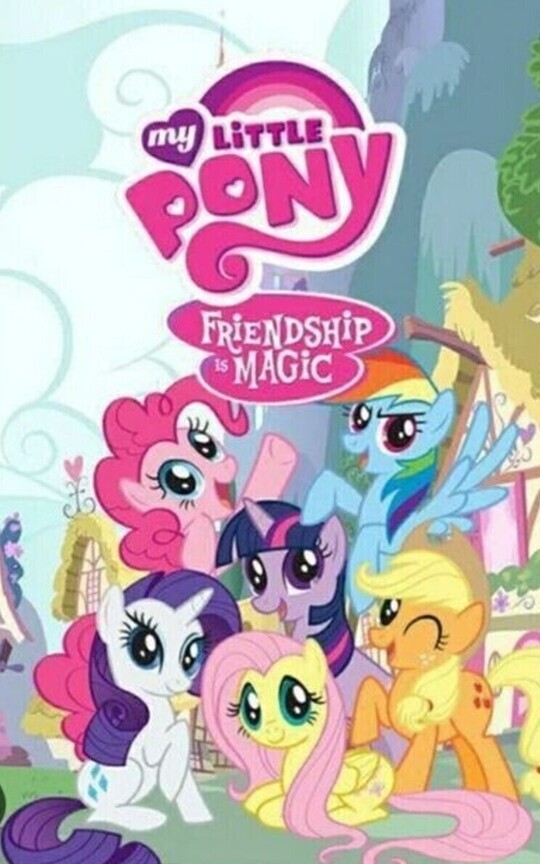
What remained sharp and whole was the part of him that created. When Bailey sat at the desk in the corner of his bedroom with a sketchbook open and pencils arranged in careful order, the world narrowed to something he could hold. Lines became form. Color became feeling. He could spend hours rendering the curve of a wing or the fall of light across a pony’s mane, and in those hours the silence of the house felt less like absence and more like space to work. Friendship Is Magic had become the quiet constant through the years after the accident. The bright colors, the clear moral shapes, the way every episode ended with the promise that no one had to stay alone forever—those things settled into the places memory left empty. He watched them the way other people might pray: not expecting miracles, only the small, steady reassurance that somewhere kindness was still the default setting of the universe.
Tonight the house was darker than usual. The streetlight outside his window had burned out two weeks earlier and no one had come to replace it. Bailey lay half-asleep in his own bed, the soft blue glow of his phone the only light in the room. He had been scrolling without really seeing anything—old messages that no longer received replies, a half-finished playlist he kept meaning to clean, random clips that played for three seconds before he flicked them away. The usual late-night drift. Nothing special. Nothing that should have mattered.
His body felt heavy in the way it did when sleep hovered close but refused to settle. The blanket was the softest one he owned, the one that didn’t scrape against his skin. The pillow still carried the faint scent of the detergent he always used because any other brand made his nose itch for hours. Outside, the city murmured at a distance. Inside, the only sound was the quiet click of his thumb against the screen.
He stopped scrolling when the familiar thumbnail appeared.
One of the older episodes. The one he always returned to when the house felt too large. He had watched it so many times the dialogue lived in the back of his mind like a second language. Tonight, for reasons he could not name, he decided it would be the last time. Not because he was finished with the show, but because something in him had grown tired of wishing from the outside. All he had ever wanted, beneath the careful routines and the careful silences, was to be cherished with the kind of steady love and care the ponies offered one another without calculation. He was twenty years old, autistic, living alone with a mind that forgot some things and created others with startling clarity, and he was tired of waiting for the world to notice he was still here.
Bailey pressed play.
The opening chords filled the quiet room through the phone’s small speaker. The animation bloomed across the screen in its familiar bright palette. He let his eyes half-close, the blue light painting the ceiling, and for a moment the house felt almost soft again. The episode moved forward. Characters spoke. Music swelled. He drifted in that thin border between waking and dreaming, the phone loose in his hand, the story unfolding the way it always had.
Then the air changed.
It began as a low pressure behind his eyes, the same dense, electric feeling that came before a storm. Bailey frowned without opening his eyes fully. The phone screen flickered once, hard. The blue light stretched sideways, warping as if the glass had turned liquid. The stretch became a bloom, and the bloom opened outward into a perfect circle of white-hot fire that hung in the middle of his bedroom as though the air itself had been cut open.
Heat slammed into him. Not ordinary heat. Something denser. Heavier. Threaded with a force that felt older than the walls around him, older than the city outside, older than the quiet life he had built from the pieces left after the accident. The circle pulsed. The pressure behind his eyes became a spike. Bailey tried to sit up. His body would not listen. The blanket felt suddenly enormous. The mattress seemed to tilt beneath him.
Magic that was not his—raw, uncontrolled, and hungry—reached through the tear in the air.
There was no gentle invitation. It was a violent seizure.
One moment he was in bed, the episode still playing somewhere far away, the soft blue light of a world that had never quite been enough. The next, the world inverted. Sound vanished as if a lid had been slammed over everything. Sight vanished into pure white that seared the inside of his skull. There was only the crushing sensation of being dragged sideways through something that was not space—something thick and resistant, like wet concrete that burned and froze at the same time. His limbs flailed uselessly. The phone tore free from his fingers and vanished into the nothing. His lungs locked. Every nerve screamed. In the stretched non-time of the passage he felt every bone threatened with dislocation, every careful routine of his solitary life stripped away, every half-remembered fragment of his parents’ faces spinning past like leaves in a hurricane. Something vast and indifferent brushed the edges of his mind—curiosity mixed with hunger, or perhaps only the blind mechanics of a spell that had gone wrong somewhere far from Maple Street.
The resistance broke.
On the other side, the portal tore open above the cobblestone courtyard behind Twilight’s castle, and Bailey Dillon—twenty years old, autistic, alone since the accident, still half-carrying the last wish he had made while watching an episode one final time—was thrown hard onto the stones of a world that had never expected him.