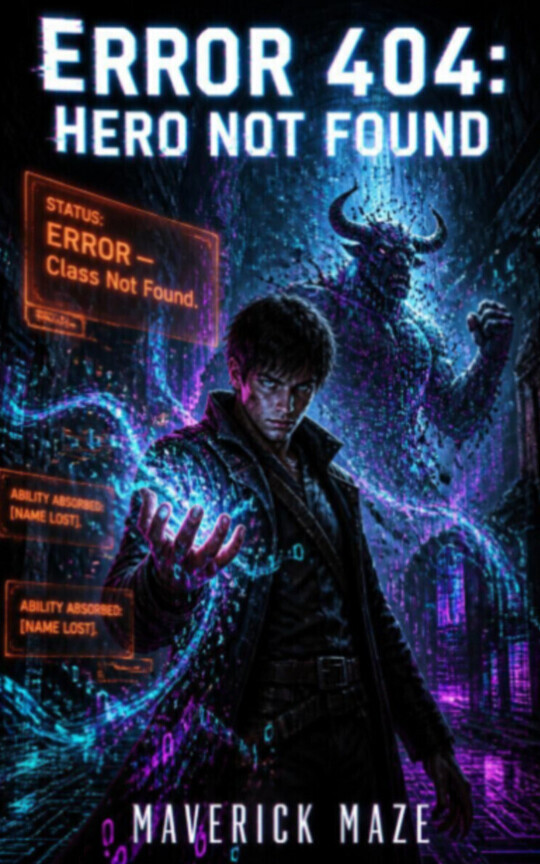

Chapter 1: The Descent
The scanner jammed at 2:14 p.m. on a Tuesday, and Kai did not swear. He never swore anymore. Fourteen months in the Hargrove University sub-basement archive had sanded that particular reflex down to nothing, the way the concrete floor had worn a pale groove beneath his chair where his left foot dragged its fixed, stubborn arc every time he shifted weight.
He pried the feed tray open. A census page from 1937 crinkled between his fingers, brittle as a dead leaf, edges foxed to rust. He smoothed it. Fed it back. The machine swallowed, whirred, spat a green standby light. Another PDF. Another name. Another dead taxpayer fed into the university’s digital maw.
His left knee sat at its permanent angle. Ninety-one degrees. The orthopedist had called it progressive ankylosing change—cartilage calcifying, joint fusing, the body slowly welding itself shut from the inside. Kai called it the reason he’d dropped out of his history degree halfway through sophomore year. Couldn’t manage the lecture-hall stairs. Couldn’t stand for the seminar presentations. Couldn’t afford the second surgery, the one that wasn’t covered, the one Dr. Vasquez had mentioned once and then never mentioned again.
So: the basement. No stairs. A freight elevator that groaned like a dying animal. Fluorescent tubes that buzzed at a frequency just below conscious hearing, the kind that burrowed into the base of the skull by hour six and nested there. The smell of toner and mildew and the particular dry rot of paper left too long in unventilated dark.
He fed another page. The scanner chewed. Repeat.
The freight elevator clanged at 2:31. The gate rattled open, and Gideon Voss stepped into the archive with the particular confidence of a man who had never once been told no and expected the universe to keep it that way.
Varsity jacket. Letterman patch catching the sickly fluorescent glow. A phone pressed to his ear, thumb scrolling something else simultaneously. He didn’t look at Kai. Not yet. He walked between the shelving units—thud, thud, thud, expensive sneakers on concrete—and stopped at the far wall where the 1940 property tax ledgers lived.
“Yeah, Coach said Thursday, but I told him—hold on.” Gideon lowered the phone. Turned. His gaze swept the room the way someone checks a parking lot for their car. Found Kai. Lingered on the plastic chair, the locked leg, the ink-stained fingers. Something behind his expression recalibrated. Settled into a pleasant, empty smile.
“Hey. Basement guy.” He snapped his fingers once. Quick. The sound you’d make for a dog. “You got the Whitmore deed scans? Registrar’s office needs ’em by four.”
“They’re in queue,” Kai said. His voice came out rough. He hadn’t spoken in three hours. “Batch processes at three-fifteen.”
Gideon checked his watch. Made a small, theatrical sound with his tongue. “Cool. Cool cool cool.” He tucked the phone back against his ear. “Gotta run. Hey—” He pointed at Kai with his free hand. Two fingers. Casual. Like pointing out a stain. “You’re, what, a zero? Like, absolute zero? No class, no team, no—” He waved vaguely at the basement, the shelves, the scanner, all of it. “—this? Wild. Couldn’t do it. Couldn’t do the whole... sitting-still thing.” He laughed. Short. Bright. Already turning back toward the elevator. “Three-fifteen, yeah. Don’t be late.”
The gate slammed. The elevator groaned upward. The fluorescent tubes buzzed.
Kai stared at the scanner. His jaw worked. The copper taste of a bitten cheek. He fed another page.
At 2:47 p.m., the buzzing stopped.
Not faded. Stopped. As if someone had reached into the wall and pinched the electrical current between two fingers. The lights died mid-cycle. The scanner’s green LED winked out. The HVAC unit three rooms over shuddered, coughed, went silent.
Darkness. Total. The kind that pressed against the eyeballs like thumbs.
Kai’s hands froze on the feed tray. His breath hung in his chest, unspent.
Then the floor moved.
Not shook. Moved. A deep, subsonic groan rolled up through the concrete slab, through the plastic chair, through the fused architecture of his knee joint and into his spine. The sound was below hearing—felt in the molars, in the sternum, in the wet meat of the inner ear. The shelving units rattled. A box of 1923 voter registrations slid off a top shelf and hit the floor with a flat, dead whump. Dust puffed upward in the dark, choking, mineral.
Kai gripped the desk edge. His knuckles locked. The vibration intensified—not an earthquake, nothing lateral or rolling. This was vertical. As though the planet were a struck bell and the tone was still ringing through the metal. The concrete floor hummed against his palms. His teeth ached. The fillings in his back molars went hot.
And then reality stuttered.
There was no other word. The darkness skipped. Like a scratched disc, like a corrupted video frame—the blackness jumped, repeated, jumped again. For half a second, Kai could see the shelving units. Then he couldn’t. Then he could. Then the image tore, a horizontal rip of wrongness slicing through his vision, and the shelves were there but offset, displaced three inches to the left of where they should have been.
His stomach lurched. Bile climbed his throat. The air pressure dropped so fast his ears popped, both at once, sharp and wet.
He tried to stand. His knee refused. He stayed seated, gripping the desk, breathing through his nose while the world glitched around him in staccato bursts of dark and wrong-light.
The hum peaked. Held. A single, sustained note that vibrated the fluid in his eyes.
Then it cut.
Silence. True silence. No HVAC. No fluorescent buzz. No distant traffic from the street above. Nothing. A silence so complete it had texture, pressing inward against his eardrums like deep water.
And in that silence, the air in front of him split.
Not opened. Split. A seam appeared in the dark, roughly two feet from his face, running vertically from floor to ceiling. It glowed. Not warmly. The light was surgical, antisectic, the green of a heart monitor in a hospital ward at 3 a.m. It bled outward, painting the shelving units, the scattered census pages, Kai’s ink-stained hands in that cold, flat radiance.
The seam widened. And inside it, text assembled itself. Letter by letter. Blinking. Patient. Indifferent.
The words hung in the air with no depth, no shadow, no source. They simply occupied the space between his retinas and the torn-open dark, sharp-edged, absolute, industrial. Like something stamped onto the world by a machine that did not care whether the world wanted the stamp.
⚡ [NEON GREEN SYSTEM INTERFACE] ⚡
[NOTIFICATION: Global System Integration Initiated.]
[ALERT: Calibrating Earth Core... 100% Complete.]
=========================================
Kai stopped breathing. The text pulsed once—a slow, arterial throb—and beneath it, smaller characters began to cascade. Too fast to read. Columns of data. Numbers. Coordinates. Something that looked like a census count, ticking upward, each digit clicking into place with a faint, wet sound like knuckles popping.
Vessel count. The words surfaced in his mind unbidden. He didn’t know why. The text hadn’t said vessel. But the number climbing in that green cascade wasn’t counting people. It was counting containers.
The seam in the air widened further. The green deepened, sharpened, until it hurt to look at directly—until Kai’s eyes watered and the afterimage burned itself into the dark behind his lids.
Above him, through three floors of concrete and tile and linoleum, something screamed. Not a person. The building. The building screamed, a long metallic shriek of rebar and stressed cinder block, and the floor beneath Kai’s chair shuddered once, twice, and went still.
The cascade of numbers stopped.
The small text dissolved.
And in the space where it had been, a new window assembled itself. Larger. The green brighter, harder, casting Kai’s shadow long and black against the far wall. The letters stamped themselves into existence one at a time, each one landing with a faint percussive tick, like a typewriter striking paper, like a nail being driven into wood.
His hands shook on the desk edge. His knee throbbed. The taste of copper and ozone sat thick on his tongue.
The window filled his vision. Filled the room. Filled the world. There was nothing else. No archive. No scanner. No 1937 census pages. Just the green. Just the text. Just the cold, patient machinery of something vast turning its attention, finally, to him.
⚡ [NEON GREEN SYSTEM INTERFACE] ⚡
[NOTIFICATION: Class Assignments Commencing. Prepare for Designation.]
=========================================