
The House On Hemlock Lane.
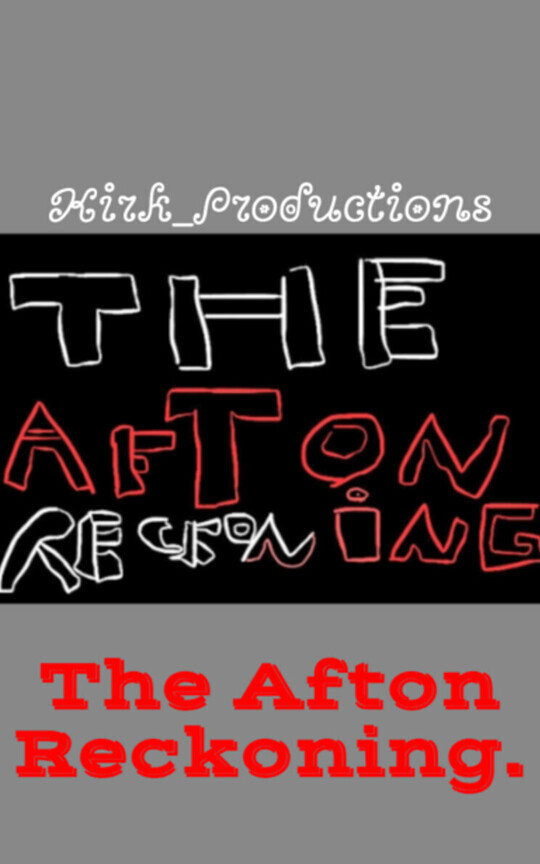
THE AFTON RECKONING
Chapter 1 – The House on Hemlock lane.
The Afton house on Hemlock Lane was the kind of place that looked like it had been plucked from a postcard and set down gently on the best plot of land in Hurricane, Utah. Three stories of pale yellow siding and white trim, a wraparound porch that caught the evening sun just so, a backyard that stretched to a creek where the kids caught tadpoles in mason jars and declared themselves explorers of uncharted territory. There was a turret on the east side of the house — an actual turret, with a pointed roof and a round window that looked out over the whole neighborhood — and inside that turret was a spiral staircase that the children were not supposed to play on but played on anyway.
William Afton had bought the house in 1971, the year Fredbear’s Family Diner expanded to its third location, and he’d paid in cash. The realtor had blinked three times when he’d said it. The house had cost more than most people in Hurricane made in a decade, and William had simply written a check, torn it from the book, and handed it over like he was paying for groceries.
That was the year everything was still golden.
The year Michael Afton was six years old and believed, with absolute certainty, that his father was the most important man in the world.
Mornings on Hemlock Lane started early, not because they had to, but because the house itself seemed to wake up eager. Sunlight poured through the tall windows in the east-facing kitchen, catching the dust motes that floated lazily through the air and turning them into something that looked like magic. The smell of coffee and pancakes drifted through the downstairs, pulling the children from their beds one by one.
William Afton made the pancakes himself. Every morning. It was a tradition he’d started when Michael was old enough to eat solid food, and he’d kept it going through every new addition to the family. He stood at the stove in his shirtsleeves, sleeves rolled up to his elbows, flipping pancakes with a precision that came from years of practice. He had a special spatula — a metal one with a worn wooden handle that he’d bought at a flea market years ago — and he refused to use anything else.
“This spatula,” he told Michael, who sat on the counter watching, “has flipped approximately four thousand pancakes. Maybe five thousand. I’ve lost count.”
“That’s a lot,” Michael said, swinging his legs against the cabinet.
“It is. And every single one of them was perfect.”
“The one last Tuesday was burned.”
“That was your mother’s fault. She distracted me.”
Catherine, sitting at the kitchen table with a cup of decaf tea cradled in her hands, raised an eyebrow. She was six months pregnant, her belly just beginning to round beneath the soft cotton of her dress. “I asked you about the grocery list. That’s hardly a distraction.”
“You asked me in the middle of a critical flip.” William pointed the spatula at her accusingly. “Timing is everything, Catherine. Pancake artistry waits for no one.”
Michael giggled. He loved it when his dad talked like that — all serious about silly things. It made the whole world feel like a game.
Luna padded into the kitchen, still in her pajamas, her hair a wild tangle of brown curls that had not been brushed yet. She was five years old and moved through the world like a small, serious ghost, always watching, always cataloguing. She climbed into the chair next to her mother and immediately picked up a crayon that had been left on the table from the night before.
“Pancakes?” she asked, her voice still sleepy.
“Pancakes,” William confirmed. “With blueberries, if you want them.”
“Yes please.”
Luna began drawing on the paper placemat in front of her — a careful, precise sketch of what looked like a dragon, though it might have been a very angry horse. She’d been drawing dragons for weeks now, ever since Michael had told her a story about one that lived in the creek behind their house. Luna didn’t believe in the dragon — she was far too practical for that — but she liked the idea of it. Something big and powerful and untouchable, living just out of sight.
Carol arrived last, as she always did, because Carol had learned at the age of three that making an entrance was worth the wait. She came thumping down the spiral staircase on her bottom — bump, bump, bump — her pajama shirt on backwards, one sock missing entirely.
“Daddy! Pancake!”
“That’s right. Pancake.”
Carol reached up with both hands, making grabbing motions toward the stove. “Me flip?”
“No, sweetheart. Remember last time? The ceiling?”
Carol looked up at the ceiling. There was no pancake there now. She seemed genuinely confused about what her father was referencing.
“Me want!” she insisted, her voice climbing into a whine.
William scooped her up with his free arm, settling her on his hip. “How about you watch? You can be my taste-tester.”
“Taste?”
“You get the first bite. Before everyone.”
Carol’s face lit up like a sunrise. “First bite! First bite!” She twisted in his arms to announce this to the room. “I get first bite!”
“That’s not fair,” Michael said, but he was grinning.
Carol nodded solemnly. “Is fair. I’m the taste.”
“The taste-tester,” Luna corrected, not looking up from her dragon.
“That what I said.”
William set Carol on the counter beside Michael, passing her a small piece of pancake from an already-cooled batch. She shoved the entire thing into her mouth with both hands, cheeks puffing out.
“Good?” William asked.
Carol nodded vigorously, syrup already smeared across her chin. “More.”
“After breakfast. We have to wait for everyone.”
“Why?”
“Because that’s what families do. We eat together.”
Carol considered this. “Okay,” she said finally, with the magnanimous air of a queen granting a favor. “I wait.”
Catherine watched the scene with her hand resting on the curve of her belly. The baby moved inside her — a flutter, barely perceptible, like butterfly wings against her palm. This pregnancy had been easier than the others, thank God. With Carol, she’d been sick for months, nauseous and exhausted and convinced she’d never feel human again. But this one was different. Calmer. She felt him move and thought, for no particular reason, that this child would be a boy.
“You’re quiet this morning,” William said, noticing her expression.
“Just thinking.”
“About?”
“The baby. Names.”
“Ah.” He flipped another pancake with practiced ease. “Any frontrunners?”
“I was thinking Oliver. If it’s a boy.”
“Oliver.” William tested the name, rolling it around. “Oliver Afton. I like it.”
“You’re not just saying that?”
“I never just say things. You know that.”
Catherine smiled. It was true. William was many things — brilliant, driven, occasionally oblivious — but he was never insincere. When he said something, he meant it. When he made a promise, he kept it.
“Oliver it is, then,” she said. “Assuming you’re right about it being a boy.”
“I’m always right.”
“You thought Carol was going to be a boy.”
“I’m usually right.”
Michael had been listening to this exchange with the intense curiosity of a six-year-old who was just beginning to understand where babies came from. “So the baby has a name now? Before it’s even born?”
“Tentatively,” Catherine said.
“What’s tent... tent-a-tive?”
“It means we might change our minds.”
“But probably not,” William added. “Oliver Afton. It sounds distinguished.”
“What’s dis... disting... that word?” Michael asked.
“It means important,” Luna supplied, still coloring. “Like a king.”
“That’s right,” William said, surprised. “Where did you learn that?”
“I read it.”
“You’re five.”
“I read a lot.”
William exchanged a look with Catherine — one of those parental glances that communicated an entire conversation in a single second. This ones special.
Three months later, Oliver Afton was born on a Tuesday afternoon, all seven pounds and three ounces of him. The labor was quick, easier than any of Catherine’s previous deliveries. William held her hand through the whole thing, whispering encouragement, making terrible jokes that she laughed at even when she wanted to strangle him.
And then, suddenly, there he was. A tiny, squalling person with a shock of dark hair and eyes that hadn’t decided what color they were going to be. The nurse placed him on Catherine’s chest, and she looked down at her son — her fourth child, her second son — and felt the world narrow to the space of his small, breathing body.
“Oliver,” she whispered. “Hello, Oliver.”
William leaned over them both, his hand resting gently on the baby’s back. He didn’t speak. He didn’t need to. The tears in his eyes said everything.
At home, the older children were waiting with a neighbor who’d agreed to watch them during the delivery. When William called the house — using the wall phone in the hospital hallway, the cord stretched taut — Michael grabbed the receiver with such enthusiasm he nearly dropped it.
“It’s a boy! It’s really a boy? I have a brother?”
“You have a brother,” William confirmed. “Oliver.”
“Oliver.” Michael tested the name the same way his father had, months ago. “Can we come see him? Can we see him right now?”
“Tomorrow. Your mother needs to rest.”
“But Dad—”
“Tomorrow, Michael. I promise.”
There was a pause. Then Michael said, in a smaller voice: “Is he okay? The baby?”
“He’s perfect. He’s absolutely perfect.”
They brought Oliver home on a Friday morning, the sun bright and the sky cloudless, as if the weather itself was celebrating. The older children gathered around the car seat like it contained treasure, which, in a way, it did.
“He’s so tiny,” Michael breathed, reaching out a finger to touch Oliver’s cheek. The baby stirred, turning his head slightly, and Michael yanked his hand back as if burned. “I didn’t hurt him, did I?”
“You didn’t hurt him,” Catherine assured him, exhausted but smiling. “He’s just saying hello.”
“He doesn’t talk.”
“No, he doesn’t. Not yet.”
“When will he talk?”
“Not for a while, sweetheart.”
Michael absorbed this information with a frown. “How will I know what he wants?”
“You’ll figure it out. You’re his big brother. You’ll know.”
Luna approached more cautiously, peering into the car seat with the analytical gaze she gave everything. “His fingers are very small,” she observed.
“All of him is very small.”
“Was I that small?”
“You were even smaller.”
Luna considered this, then nodded. She reached out and gently touched Oliver’s hand with one fingertip. The baby’s fingers curled reflexively around hers, and Luna’s eyes went very wide.
“He grabbed me.”
“That’s what babies do.”
“Why?”
“Because they want to hold onto the people they love.”
Luna didn’t respond, but she didn’t pull her finger away either. She stood there for a long time, her finger wrapped in Oliver’s tiny fist, her expression unreadable.
Carol was the last to approach. She’d been hanging back, uncharacteristically quiet, watching the proceedings with suspicion. When Catherine beckoned her over, she came reluctantly, her steps slow and dragging.
“Baby,” she said, peering into the car seat. It wasn’t a question.
“That’s right. Your new brother. His name is Oliver.”
“Oliver,” Carol repeated. The word sounded foreign in her mouth, like she was trying out a new food she wasn’t sure she liked. She stared at the baby for a long moment, her brow furrowed. Then she looked up at Catherine with an expression of deep concern.
“Mama?”
“What is it, sweetheart?”
Carol pointed at Oliver. “He’s too little. He can’t play.”
“He’ll get bigger. Then he can play with you.”
“When?”
“Soon. You’ll see. He’ll grow every day.”
Carol seemed unsatisfied with this answer. She leaned closer to the car seat, her face inches from Oliver’s, and said, very seriously: “Grow faster.”
Oliver, predictably, did not respond.
“He’s not listening,” Carol informed Catherine.
“He’s a baby. He doesn’t understand words yet.”
Carol looked appalled. “No words?”
“No words.”
This was apparently the worst news Carol had ever received. She stared at Oliver with something approaching pity. “I’ll teach you,” she told him. “I’ll teach you all the words. You’ll see.”
It was the first promise Carol Afton ever made to her youngest brother. She would break many promises in her life — to herself, to her siblings, to the memory of people she loved — but this one, at least, she kept. Oliver would learn words. So many words. And he would use them, eventually, to yell at arcade machines when he lost and argue with his siblings and say things that made his mother pretend to be scandalized. But that was all years away.
For now, there was only this: a family of six gathered in the living room of a beautiful house on Hemlock Lane, sunlight streaming through the windows, a newborn baby blinking at the world with unfocused eyes.
For now, there was only happiness.
The years that followed were good ones. Not perfect — no family is perfect — but good. The kind of good that you don’t appreciate until it’s gone.
Oliver grew, as babies do, into a toddler, then a small boy. He learned to walk on the same hardwood floors his siblings had learned on, taking his first wobbly steps toward a cheering audience of parents and siblings. Carol, now five, had appointed herself his official guardian, following him around the house like a small, bossy shadow.
“Oliver, no,” she would say, pulling him away from the electrical outlet. “Oliver, don’t touch.” “Oliver, come here.” “Oliver, share.”
Oliver, for his part, worshipped Carol with the unquestioning adoration of a younger sibling. He followed her everywhere, mimicked her gestures, laughed at things she said even when he didn’t understand them. Carol pretended to be annoyed by this attention, but Catherine caught her more than once sneaking her little brother extra cookies or letting him climb into her bed during thunderstorms.
Michael was nine now, long-limbed and full of energy, playing Little League baseball in the spring and soccer in the fall. He wasn’t the best player on any team, but he was the loudest, cheering on his teammates with a ferocity that made up for his mediocre skills. William never missed a game. He stood on the sidelines in his suit, straight from work, shouting encouragement until his voice went hoarse.
Luna was eight, and the library had become her second home. She’d read every book in the children’s section and was working her way through the young adult novels, undeterred by words she didn’t know, looking them up in the dictionary with methodical patience. Her teachers said she was gifted. William and Catherine talked about private schools, about gifted programs, about all the opportunities they could give her.
“We’re lucky,” Catherine said one night, lying in bed beside William, both of them exhausted from a day of parenting and working and living. “You know that, right? We’re so lucky.”
“I know.” William reached for her hand in the dark. “I think about it every day.”
“Promise me something?”
“Anything.”
“Promise me we won’t forget this. When things get hard. When the kids are older and things get complicated. Promise me we’ll remember how good it was.”
William was quiet for a moment. “Why do you sound like you’re expecting things to go wrong?”
“I’m not. I just... I see other families. People who lose each other. Couples who stop talking. Parents who stop showing up. I don’t want that to be us.”
“It won’t be,” William said, with the absolute confidence of a man who had never failed at anything important. “I promise.”
Catherine believed him. She had no reason not to.
Oliver’s first word was “Carol.” Not “Mama,” not “Dada” — Carol. He said it one morning at breakfast, pointing a chubby finger at his sister, and Carol’s face went through such a rapid series of emotions — shock, delight, fierce pride, and an immediate attempt to look unimpressed — that Catherine nearly choked on her coffee.
“Did you hear that?” Carol demanded of the table at large. “He said my name. My name. Before anyone else’s.”
“He probably just likes the sound,” Michael said, but he was grinning.
“He likes me,” Carol corrected. “Because I’m his favorite.”
“You’re not his favorite. He’s a baby. He doesn’t have favorites.”
“I’m his favorite,” Carol repeated, with the absolute certainty of a five-year-old who had never been wrong about anything.
From that day forward, Oliver followed Carol everywhere. If she was in the living room, he was in the living room. If she was in the backyard, he was in the backyard, toddling after her on unsteady legs. He wanted to do everything she did, eat everything she ate, play with every toy she played with. It drove Carol crazy, but she never actually sent him away.
“He’s my shadow,” she complained to Catherine one afternoon. “He won’t leave me alone.”
“That’s because he loves you.”
“But I want to play by myself sometimes.”
“You can play by yourself later. Right now, your brother wants to be with you. That won’t last forever.”
Carol looked at Oliver, who was sitting on the floor a few feet away, trying to fit a square block into a round hole. He looked up at her and grinned, a wide, gap-toothed smile, and held up the block like an offering.
“Fine,” Carol sighed, with all the suffering of a martyr. “You can play with me. But you have to do what I say.”
Oliver, who couldn’t understand half of what she was saying, smiled even wider.
Part Two: The Slow Cracks
The twins were born on a stormy night in late October, 1975.
Catherine’s pregnancy had been difficult this time — twins always were, the doctor said, especially when you already had four children at home. She’d been on bed rest for the final month, which meant William had to step up at home while simultaneously managing the diner’s growing problems. The third location was struggling. Health code violations, a lawsuit from a former employee, declining sales. William spent hours on the phone with lawyers and accountants, his voice strained, his patience thinning.
But when the labor started, he dropped everything. He held Catherine’s hand through seventeen hours of contractions. He didn’t make jokes this time. He just held on.
Evan came first, small and quiet, his cry barely more than a whimper. Grace followed seven minutes later, even smaller, utterly silent. The doctors had to suction fluid from her lungs before she let out her first thin wail, and in that brief, terrifying silence, William felt his entire world stop.
“Both healthy,” the nurse said, and Catherine, exhausted and sweat-soaked and radiant, laughed with relief.
They named them Evan and Grace. Evan, because Catherine had always liked the name. Grace, because William had suggested it during the pregnancy — a strong name, he said, for a child he somehow knew would need strength. They were tiny things, barely six pounds each, with matching tufts of dark hair and eyes that hadn’t decided what color they were going to be.
The older children met them the next day.
Michael, now ten, held Evan with the careful intensity of someone handling explosive material. He’d done this before with Oliver, but Oliver was four now, a real person who ran and shouted and played with toy cars. Holding a newborn again reminded Michael how fragile life was at its beginning.
“He’s so small,” he whispered. “I forgot how small they are.”
“They grow,” Catherine said, from her hospital bed. “They always grow.”
Luna, nine, was drawn to Grace the way she was drawn to everything quiet. She sat beside the bassinet, watching the baby sleep, her expression thoughtful. “She doesn’t cry,” Luna observed. “Is that normal?”
“She’s just calm,” Catherine said. “Some babies are calm.”
“I was calm,” Luna said. It wasn’t a question.
“You were. You’re still calm.”
Luna nodded and went back to her vigil.
Carol, now seven, was less impressed. She’d been the baby of the family — or one of them — for four years, and now there were two new babies, which seemed excessive. She examined each twin with a critical eye, her arms crossed.
“There’s two,” she said.
“Yes,” William agreed. “Twins.”
“Why two?”
“That’s just how it happened.”
Carol frowned. This answer was clearly unsatisfying. “Oliver’s the baby. Now there’s more babies. That’s too many babies.”
“Are you jealous?” Michael asked, grinning.
“No.” Carol’s voice was sharp. Too sharp for a seven-year-old. “I’m not jealous. I just think it’s... it’s...”
She couldn’t find the word. Her face scrunched up with the effort of trying.
“Dumb,” she finished. “It’s dumb.”
“Carol,” Catherine said gently. “Come here.”
Carol came, dragging her feet. Catherine pulled her onto the hospital bed, wrapping an arm around her. “You’re still my girl,” she said quietly. “You know that, right? Having more babies doesn’t make me love you less.”
Carol didn’t answer. She pressed her face against her mother’s shoulder and said nothing, and Catherine held her, and after a long moment, Carol’s small shoulders began to shake.
“I’m still your girl?” she whispered, her voice muffled against Catherine’s hospital gown.
“You will always be my girl. Always.”
And that was enough. For now, it was enough.
The lawsuits came faster after the twins were born.
It was 1976 when the first major one hit. A child had been injured at the original Fredbear’s location — nothing life-threatening, a broken arm from a fall off the stage where the animatronics performed. The parents were suing for medical costs and emotional damages. William’s lawyers assured him it would be settled quickly.
Then came the second lawsuit. A teenager working the night shift had been caught tampering with the animatronics, and when he was fired, he sued for wrongful termination. The case dragged on for months, draining resources, making the local papers. Then a health inspector found violations at the second location — minor things, easily fixed, but the news picked up the story and suddenly people were looking at Fredbear’s differently. Sales dropped. Then dropped again.
The third location closed in 1977.
William threw himself into damage control. He spent more time at the office, more time on the phone with lawyers and PR consultants and insurance adjusters. The pancakes stopped. The days off became a distant memory. He would leave before the children woke up and come home after they were in bed, and sometimes he didn’t come home at all, sleeping on the couch in his office at the diner.
“It’s temporary,” he told Catherine, when she managed to corner him in the kitchen one night. “Just a rough patch. We’ll get through it.”
“William, the kids are asking where you are. Michael thinks you’re angry at him. Evan doesn’t recognize your face.”
“That’s not fair.”
“Neither is this.” Catherine’s voice was tight, controlled, the voice of a woman who was holding herself together by sheer force of will. “You promised, William. You promised things wouldn’t change.”
“Things change. That’s life.”
“That’s not—” She stopped, pressed her fingers to her temples. “I can’t do this alone. I’m working, I’m taking care of the kids, I’m trying to keep this house from falling apart, and you’re never here.”
“I’m trying to save the business. Everything I’m doing is for this family.”
“Is it? Because right now it feels like everything you’re doing is for yourself.”
The words hung in the air between them. William’s expression flickered — hurt, then anger, then something that looked almost like guilt. But it was gone before Catherine could name it.
“I have to go,” he said. “There’s a meeting in the morning.”
“What meeting?”
“With the lawyers. I’ll be home tomorrow.”
He wasn’t.
The second location closed in 1978. The original Fredbear’s Family Diner, the one that had started it all, was still operating, but just barely. The money that had once seemed endless was gone — drained by lawyers, by settlements, by the simple, crushing weight of keeping a failing business alive.
The house on Hemlock Lane was sold that same year.
The children didn’t understand. Michael, twelve, stood in the empty living room and said, “But this is our house. We’ve always lived here.”
“We can’t afford it anymore,” Catherine told him. Her voice was steady, but her eyes were red. “We’re moving somewhere smaller.”
“Because of Dad?”
Catherine didn’t answer. She didn’t have to.
The new house was on the edge of town, a cramped two-story with peeling paint and a refrigerator that hummed like a dying animal and floorboards that creaked no matter how carefully you stepped. The children’s bedrooms were small, the walls were thin, and the basement was damp and dark and smelled like mildew.
William claimed the basement immediately. He set up a workshop down there — a place to work on new animatronic designs, he said. A way to save the business. He spent hours down there, days sometimes, emerging only to eat and sleep and disappear again.
The pancakes were a distant memory now. So were the family outings, the park visits, the ice cream after school. So was the father who had once carried his children on his shoulders, who had flipped four thousand perfect pancakes, who had promised, with absolute confidence, that things would never change.
Catherine went back to work in 1979. The job at the diner — not Fredbear’s, but a generic family restaurant on the other side of town — didn’t pay much, but it paid something. She left early in the morning and came home late at night, and on her days off, she was too exhausted to do anything but sit on the couch and stare at the television without really seeing it.
Michael, now thirteen, became the default babysitter. He learned to change diapers and warm bottles and mediate arguments between his siblings. He learned to put the younger kids to bed and wake them up for school and check their homework and pack their lunches. He learned to be a parent before he’d finished being a child.
Luna, twelve, withdrew. She’d always been quiet, but this was different — a retreat, a flinch at loud noises, a tendency to disappear into her room for hours at a time. She started reading obsessively, losing herself in books about dragons and faraway kingdoms where problems could be solved with magic and parents never disappeared and houses were never sold.
Carol, ten, grew teeth. Her gap-toothed grin became a smirk. Her questions became challenges. She pushed boundaries and picked fights and learned, somewhere along the way, that negative attention was better than no attention at all. She was cruel, but her cruelty came from somewhere broken — a well of self-loathing so deep she couldn’t see the bottom, a desperate need to make everyone else feel as small as she felt.
Oliver was seven now. He’d discovered two things: arcade machines and board games.
The arcade was a dim, loud, wonderful place on Main Street, full of blinking lights and electronic beeps and the smell of popcorn and sweat. Oliver begged to go there every chance he got, spending whatever pocket money he could scrounge on games like Space Invaders and Asteroids and Pac-Man. He wasn’t the best player — his hand-eye coordination was still developing — but he was dedicated. He would stand at a machine for hours if he had enough quarters, his eyes fixed on the screen, his tongue poking out slightly in concentration.
“One day,” he told Michael, as they walked home from the arcade one evening, “they’re going to make games you can carry with you. Like a little arcade machine in your pocket.”
“That’s impossible,” Michael said.
“People said going to the moon was impossible. And we did that.”
“That’s... actually not a bad point.”
“I’m full of good points,” Oliver said. “I just don’t say them out loud usually.”
When he couldn’t get to the arcade, Oliver played board games. The family had a collection of them — Monopoly, Clue, Risk, checkers, chess — and Oliver had become something of a strategist. He played against Luna when she could be coaxed out of her room, against Michael when Michael wasn’t too busy with the younger kids, against himself when no one else was available. He set up elaborate scenarios, playing both sides, and he always won and he always lost.
“Doesn’t that get boring?” Carol asked him once, watching him move pieces across a chess board with no opponent.
“No,” Oliver said, not looking up. “It’s practice. For when I play real people.”
“You could just ask someone to play with you.”
“I did. Everyone said no.”
Carol was quiet for a moment. Then she sat down across from him. “Fine. I’ll play. But I’m going to beat you.”
“Probably,” Oliver said. “You’re older.”
“I am. But don’t let me win. I hate it when people let me win.”
“I won’t.”
She beat him in fourteen moves. Oliver didn’t complain. He just reset the board and asked for a rematch.
Evan and Grace were four now. They were quiet children, both of them, but in different ways. Evan’s quiet was observant — he watched everything, took in everything, processed the world through careful, deliberate thought. Grace’s quiet was protective — a wall she’d built around herself, a refusal to engage with a world that was too loud and too chaotic and too much.
Grace had stopped talking almost entirely when she was three. She communicated in gestures, in facial expressions, in the way she would tug on Evan’s sleeve when she wanted something. Evan, somehow, always understood what she meant. He’d learned sign language from a book at the library, and he taught her, and together they built a private language that no one else could understand.
They were each other’s whole world. Two small planets orbiting each other while the rest of the family spun apart.
Elizabeth was born in 1977, in the middle of the worst of it.
Catherine had been exhausted, stretched thin, barely holding herself together. The pregnancy was an accident — a surprise neither she nor William had planned for — and when she found out, she sat on the bathroom floor and cried for an hour. Not because she didn’t want the baby. Because she didn’t know how she was going to survive it.
But Elizabeth, when she arrived, was a bright spot in a dark year. She was loud from the moment she was born, screaming with a ferocity that belied her small size, and she didn’t stop. She demanded attention, demanded love, demanded everything the world had to offer, and somehow, impossibly, the family rallied around her.
Michael, fourteen, held her in the hospital room and felt something crack open in his chest. “She’s so loud,” he said, but he was smiling.
“She’s an Afton,” Catherine said. “We’re all loud.”
“I’m not loud,” Luna murmured from the corner, but no one heard her.
Carol, eleven, looked at the baby with something complicated. “Another one,” she said.
“Another one,” William agreed. He was holding Elizabeth carefully, with the practiced ease of a man who had done this six times before. “Your new sister. Elizabeth.”
“I’m not teaching this one words,” Carol said. “Oliver was enough.”
But she did. Of course she did. When Elizabeth was old enough to babble, Carol was the one who sat with her, pointing at objects and naming them. “Chair. Table. Dog.” She didn’t know why she was doing it. She just knew that no one else was.
The summer of 1978 was the hottest on record in Hurricane, Utah. The air sat heavy and still over the town, baking the sidewalks and wilting the grass and driving everyone indoors where they huddled in front of fans that did nothing but push the heat around.
The Afton house had no air conditioning. The windows were open, and a dozen cheap fans were scattered through the rooms, their blades spinning uselessly. The children moved slowly, stripped down to shorts and tank tops, their skin sticky with sweat.
Catherine had picked up extra shifts at the diner — summer was always busy, and they needed the money more than ever. Michael was fourteen now, old enough to watch the younger kids on his own, and he’d become efficient at it. Not enthusiastic, but efficient. He knew how to make sandwiches and pour juice and break up fights. He knew which of his siblings needed space and which needed attention. He knew how to keep them alive.
It was on one of those hot, endless afternoons that Freddy arrived.
The knock on the front door was unexpected. Michael opened it to find a woman he didn’t recognize — middle-aged, tired-looking, with a clipboard in one hand and a boy standing behind her. The boy was about ten years old, with messy brown hair and eyes that looked like they’d seen too much. He was holding a small duffel bag and staring at the ground.
“Mrs. Afton?” the woman asked.
“She’s at work,” Michael said.
“Are you her son?”
“Yeah.”
The woman consulted her clipboard. “I’m Mrs. Dempsey, from Child Protective Services. We spoke with your mother on the phone last week. About the foster placement?”
Michael blinked. “Foster placement?”
“She didn’t tell you?”
No, Michael thought. She didn’t tell me. Out loud, he said: “She must’ve forgotten.”
Mrs. Dempsey sighed. It was the sigh of a woman who had dealt with many forgetful parents. “Well, this is Freddy. He’ll be staying with you for a while. Is there an adult home?”
“My dad’s in the basement. But he doesn’t really... he’s busy.”
“I see.” She didn’t see. But she also didn’t seem to want to push. She looked down at the boy. “Freddy, this is going to be your home for now. Be good.”
The boy — Freddy — nodded without looking up. He didn’t say anything.
Mrs. Dempsey handed Michael a folder of paperwork and was gone before he could think of any more questions. The door closed. The heat rushed back in. And Michael Afton found himself standing in the front hallway, staring at a strange boy with a duffel bag and a face that was trying very hard not to show how scared he was.
“Okay,” Michael said, after a long pause. “Okay. Well. Come in, I guess.”
Freddy stepped inside. He moved carefully, the way people do when they’re not sure they’re welcome.
“What’s in the bag?” Michael asked.
“Clothes,” Freddy said. His voice was quiet. “Some books. A toothbrush.”
“That’s it?”
“That’s it.”
Michael didn’t know what to say to that. He didn’t know what to say to any of this. So he fell back on what he always fell back on: practicality.
“You hungry? We’ve got sandwiches.”
Freddy hesitated. “I don’t want to be a bother.”
“You’re not a bother. You’re...” Michael paused, searching for the right word. “You’re here. So you might as well eat.”
The younger children were curious about the new arrival. Oliver, eight years old and always eager for a new opponent, immediately challenged Freddy to a game of checkers. Freddy won. Oliver demanded a rematch. Freddy won that too.
“You’re good,” Oliver said, genuinely impressed.
“My dad taught me,” Freddy said. Then his face closed off, and he didn’t say anything else about his dad.
Luna, thirteen, watched Freddy from across the room but didn’t approach. She’d always been wary of strangers, and this stranger was living in their house now, sleeping on the pull-out couch in the living room, using their bathroom, eating their food. It felt invasive. It felt wrong.
But she also noticed the way Freddy flinched at loud noises, the way he always said “please” and “thank you” like he was afraid of what would happen if he didn’t, the way he looked at the Afton children with something that might have been envy.
He was like her, she realized. Quiet. Careful. Trying to be invisible.
She still didn’t talk to him. But she stopped glaring at him from across the room.
Carol, eleven, tested him. She was like that with everyone new — poking, prodding, looking for weak spots. She hid his toothbrush. She put salt in his juice. She made comments about his clothes, which were worn and secondhand and didn’t quite fit.
Freddy didn’t react. He found his toothbrush, poured out the juice, and said nothing about the comments. When Carol called him “foster boy” in front of everyone at dinner, he just kept eating.
“Doesn’t that bother you?” Carol demanded, frustrated by his lack of response.
“Does what bother me?”
“The name. Foster boy.”
Freddy considered this. “It’s just a word.”
“Words have power.”
“No they don’t. People have power. Words are just sounds.”
Carol stared at him. She’d never met anyone who could deflect her attacks so calmly. It was infuriating. It was also, she had to admit, a little bit impressive.
“You’re weird,” she said.
“Okay.”
“I’m going to figure you out.”
“Okay.”
“Stop saying okay.”
“Alright.”
Carol threw her hands up and walked away. Freddy went back to his dinner.
Evan and Grace were five now, still quiet, still inseparable. They approached Freddy together, the way they did everything, standing side by side and staring at him with matching expressions of curiosity.
“Hello,” Evan said.
“Hello,” Freddy said back.
Grace signed something. Evan translated: “She wants to know if you’re staying.”
“I don’t know,” Freddy said honestly. “I think so. For a while.”
Grace signed again.
“She wants to know if you’re nice.”
Freddy looked at Grace — at her big, watchful eyes, at the way she was half-hidden behind Evan’s shoulder. He understood, somehow, what it was like to be that careful.
“I try to be,” he said.
Grace considered this. Then she nodded, just once, and tugged on Evan’s sleeve. The twins retreated to their room, their inspection complete.
Freddy watched them go. He didn’t know what he’d done to pass their test, but he was glad he had.
Elizabeth, barely a year old, was the only one who didn’t seem to notice that anything had changed. She was still a baby, still loud and demanding and full of joy. She would crawl up to Freddy and grab at his pant leg and babble at him in her incomprehensible baby language, and Freddy, who had never spent much time around babies, would look panicked and try to figure out what she wanted.
“She wants you to pick her up,” Michael told him one afternoon, watching Freddy stare helplessly at the baby at his feet.
“How do you know?”
“Because she’s holding her arms up. That’s the universal sign for ‘pick me up.’”
Freddy bent down and lifted Elizabeth awkwardly, holding her at arm’s length like she might explode. Elizabeth giggled and grabbed his nose.
“She’s got your nose,” Michael observed.
“I noticed.”
“You’re doing fine.”
“I’m really not.”
But he was. He was doing fine. Better than fine, actually. Within a week, he’d learned the household rhythms — who needed help with homework, who needed to be left alone, who would eat what foods and which cups belonged to which child. He helped Michael with the dishes without being asked. He played checkers with Oliver and let him win exactly half the time. He gave Luna space but smiled at her when she entered a room. He answered Carol’s probing questions with calm, honest responses that left her nothing to attack.
And he was good with the twins. He didn’t try to make Grace talk, the way some adults did. He just sat near them while they colored, offering crayons when they needed them, and if he needed to communicate with Grace, he asked Evan to translate.
“You’re good at this,” Michael said one night, after the younger kids were in bed. They were sitting on the front steps, watching the sun go down, the heat finally starting to ease.
“At what?”
“Being here. Fitting in.”
Freddy shrugged. “I’ve been a lot of places. You learn to fit in fast.”
“How many places?”
“Five foster homes. In three years.”
Michael didn’t know what to say to that. He thought about his own life — the house on Hemlock Lane, the pancakes, the father who used to carry him on his shoulders. He’d lost a lot, but he’d never lost everything. He’d never been passed from house to house like something unwanted.
“That sucks,” he said finally.
“Yeah,” Freddy agreed. “It does.”
They sat in silence for a while. The sun sank lower, painting the sky in shades of orange and pink.
“You can stay here,” Michael said. “As long as you need to. I’ll talk to my mom.”
“Your mom might not want me.”
“She will. She’s... she’s tired, and she’s busy, and she doesn’t always notice things. But she’s not cruel. She won’t send you away.”
Freddy looked at him. His eyes were dark and unreadable. “How do you know?”
Michael thought about it. “Because she kept us,” he said. “All of us. Even when things got hard. Even when Dad disappeared and the money ran out and everything fell apart. She kept us. She’ll keep you too.”
And Freddy, who had learned not to trust promises, who had learned that home was a temporary thing and family was a word that didn’t mean what it was supposed to mean, nodded.
“Okay,” he said.
“Okay,” Michael said.
They sat together on the steps until the stars came out, two boys who had both lost things they couldn’t name, trying to figure out how to hold onto what was left.
[End of Chapter 1]