
Prologue
POV • ETHAN
Silence has weight. No one tells you that until you’ve lived inside it for a year.
It doesn’t press down all at once — at first it just feels like an absence of sound, a familiar pause between yesterday and tomorrow. But a week passes, then a month, then three, and you realize: it isn’t a pause. It’s a form of punishment you chose for yourself.
I chose it that day, in the white hallway of the hospital, when the doctor came out and said the word “amnesia” as casually as if he were naming a prescription. Then Ava opened her eyes — and didn’t recognize me. Not “forgot for a second.” Not “took a moment to place me.”
Didn’t recognize me at all. She looked at me the way you look at a stranger who’s gotten too close to a hospital bed by accident. Polite. Wary. Empty.
And somewhere behind that emptiness, I heard the only thing she said, looking straight at me.
“Do I know you?”
Four words. And my life split cleanly in two — before and after — the way you’d cut an apple in half.
Ethan Blake.
Official since the day I signed the papers at the notary’s office, took back my mother’s maiden name, and buried the name I was born with as completely as you bury someone you never want to think of again.
Blake. The name of a woman who stayed silent for twenty-five years while her husband methodically destroyed everything alive in her and in her son.
I took her name — not because I needed a new identity for business, the way investors like to explain my “clever rebrand.” But because Ethan Cole was the one who turned out too weak.
There’s a second reason. Colder. More calculated.
If Ava’s memory ever comes back, Ethan Cole comes back with it. Not the CEO. Not the man I became. The boy who stood there in silence while his father tore apart someone else’s life. The one who couldn’t protect the girl he loved.
I didn’t want the first thing she encountered at my company to be a name that carried everything she’d had to survive before the accident.
I wanted her to meet someone new.
Even if underneath, he’s still the same obsessed bastard who can’t stop loving her.
I really did try to let her go once. Not in words. Not as another promise to myself on a sleepless night. For real — the way you let go of something you’ve decided to bury for good.
I flew to Tokyo with one suitcase and an open-ended ticket. Told my mother it was temporary, for the branch office. Lied to myself that it was temporary, for my own sanity.
For the first three months I didn’t even let Marta send me those three lines a week. Deleted her number from my favorites — deliberately, almost theatrically, as if the gesture itself could be an act of will.
I worked eighteen-hour days. Learned Japanese, because my brain needed something to do besides remember. Every evening I went to the gym until my muscles burned, then to boxing, where I could at least drown out what was happening in my head for a while. Within a few months my body had noticeably changed — bigger, stronger. People kept telling me I looked great. None of them understood I wasn’t getting stronger. I was just trying to exhaust myself enough to stop thinking about her.
I slept four hours a night and told myself that was called “building a business,” not “running from the ghost of a woman who was alive and simply didn’t know I existed.”
I really believed, back then, that I could do it.
That seven thousand miles and a thirteen-hour time difference could accomplish what her own request for me to leave hadn’t — erase her from me the way the accident had erased me from her.
They couldn’t.
In the fourth month, I texted Marta again. Not because I’d made a decision — because I couldn’t stop myself from sending it. Three lines back tore down three months of walls in a single second:
“Miss Bennett moved into a new apartment today. Everything’s fine.”
A new apartment. I hadn’t known she was moving. Didn’t know the street name, the floor number, the color of her new curtains.
That night I understood what I should have understood from the start: letting go doesn’t mean you stop knowing. Letting go means you keep knowing — and never let yourself show up again.
I stayed in Tokyo eight more months. No longer pretending to myself that I was running from her — just honestly admitting that I couldn’t be in a city where every street was signed with her name, without having the right to say that name out loud.
That’s how I spent almost a year in Tokyo.
Then I started coming back. Short trips at first — two weeks in New York, then Tokyo again. Then a little longer. But never more than two weeks at a stretch. That city remembered her too well.
The bookstore where she could spend an hour choosing a single book.
The little bakery where she always promised herself she’d try something new and always ordered the almond croissant anyway.
And my apartment. I could never bring myself to sell it. Not because it was expensive. Because every time I walked through the door, the air still seemed to hold her perfume, the couch still remembered her falling asleep against my shoulder, the kitchen island still bore the ring marks from where she always set her mug down in exactly the same spot.
It was stupid. I knew that.
But some things stop being just things once someone you never managed to fall out of love with has lived in them long enough.
Tokyo didn’t heal anything.
Tokyo just gave me enough distance to breathe.
Three years passed like that.
Eleven months ago.
The bookstore on the corner of Fifty-Third.
I recognized her from behind. The way she tilted her head, scanning the spines. She always did that.
Funny. Memory had been cruel enough to erase me from her life, but not strong enough to take away the habits I’d once memorized by heart.
I stood at the entrance for almost four minutes.
Didn’t walk over. Watched her pull a book off the shelf — the one in the worn paperback cover, the corner soft with use — open it at random, read a paragraph, smile at some private thought, and put it back.
Then leave with a different book in her hands. Not that one.
I bought the one she’d set down two hours after she left.
The clerk gave me a strange look when I asked him not to wrap it.
It’s been sitting at my place ever since. On a shelf no one but me ever touches.
Sometimes I open it at random and think about the possibility that these are the exact pages her fingers once touched.
People think obsession is loud. Screaming, surveillance, phones smashed at four in the morning.
It isn’t.
Real obsession is discipline.
It’s being able to buy the book she didn’t choose and just walk away. Not text her. Not call. Not approach. Just knowing she’s okay — and letting that be enough to get through to tomorrow.
I never watched her myself. I know myself too well — if I’d let myself see her every day with my own eyes, I wouldn’t have lasted a week.
So I built a system around her that she has no idea exists.
David — the driver who “happens” to be on her street the moment it starts raining, who never offers her a ride unless she raises her hand for one herself.
Marta — the doorwoman at the building where Ava rented her first apartment after the hospital. Once a week she sends me three short lines.
“Smiled today.” “Got home late from work.” “Might be coming down with something.”
Nothing more. That’s supposed to be enough.
It’s never enough.
Nine months ago.
She got sick. A high fever.
Marta told me about it before Ava had even made it to the nearest pharmacy.
That evening I had a board meeting with the Tokyo office — months of work riding on it. I canceled it without explanation.
Instead I stood at my office window for forty minutes while my assistant, on the other end of the line, kept repeating, bewildered: “Mr. Blake, are you sure? The board’s already assembled—”
I barely heard her. I was staring at my phone, where a message from Marta had just come through:
“A courier just went up to her place.”
I hadn’t sent the courier myself. Just a standing delivery arrangement with a pharmacy the company had a longstanding corporate account with. One more order. Nothing that could ever be traced back to me.
I imagined Ava telling a friend the next day how lucky she’d gotten — medicine delivered in under half an hour.
She would never know that the board had been kept waiting that evening not because I was busy with work.
But because first, I needed to know she was all right.
The board was not pleased.
I didn’t care.
Six months ago.
The museum of modern art.
I’d come for the opening of a new exhibition — for work, of course. I had a list of contacts for the evening, a gallerist I needed to convince to sell three pieces to my foundation.
I didn’t know she’d be there too. I swear — that time, I really didn’t know.
The coincidence was real. The first real one in three years.
And when I saw her by the far wall, studying a canvas where the light fell in strange, slanted strokes — something in me nearly broke. Because for the first time in three years, I was near her not because I’d engineered it, but because the world itself had decided to put us in the same room again.
I didn’t approach her that time either. But I stood in the next room for forty minutes, staring at a painting I wasn’t seeing — because out of the corner of my eye, all I could see was her.
Present day.
I suppose it all really started with the gallery.
Not our story. My attempt to stop running from it.
I’d spent almost a year building it. I wanted to create a place where talent would never lose out to a name — where an artist would be chosen for their ability to make someone stop in front of a canvas for even a minute, not for who they knew.
The irony was that at the very end of the exhibition hung a painting in front of which I was the first one to stop.
The one piece I never intended to show anyone.
Mine.
It was her.
I hadn’t meant to paint her. Not at all. The first sketches were something else entirely. But the longer the brush moved across the canvas, the less it listened to me.
A faint silhouette came first. Then the pale hair — soft, unruly, as if caught again by that same summer wind she always tried to hold back with one hand.
Then the curve of her neck. The line of her shoulders. Half turned away.
She never liked looking straight into a camera. Always turned at the very last moment, as if real life didn’t begin when someone looked at her, but a second before.
The soft curve of her mouth, no smile on it yet, but one already living somewhere underneath.
The faint flush that rose to her cheeks faster from the wind than from embarrassment.
A small mark on her left cheek. So tiny it was almost impossible to notice. But it was always where my eyes started.
I wasn’t painting her face.
I was painting the calm I used to feel next to her. The light she always seemed to carry with her, even on the grayest days. The feeling of home I never managed to find in any other city since.
The last brushstroke came unexpectedly easily. I stepped back. Just stood there, facing it.
She looked back at me from the canvas as if the last three years had never happened. As if she might smile wider any second, roll her eyes at some stupid joke of mine, and ask why I was staring at her like that again.
That alone was enough to make something in me clench painfully.
I grabbed the jar of black paint without thinking. I don’t even remember deciding to do it.
The dark paint tore off the edge and landed across the canvas in one wide motion. It didn’t cover her. Didn’t destroy her. It only cut across her outline, scattering into dozens of chaotic lines and drips, turning the carefully finished portrait into something else.
I could still make her out.
But something now stood permanently between us — something impossible to cross. That’s probably why I never fixed it. The painting had finally become honest.
Three months later, the gallery opened its doors. The painting stayed exactly where it was. In the last room. Right where I wanted it. Because I was certain — if she came, she would reach it eventually.
She did. I noticed Ava the moment she stepped through the door.
I spent the whole evening watching her from the second floor, staying where she couldn’t see me. She wasn’t in any hurry. She stopped at almost every piece, sometimes lingering for minutes, as if trying to hear not the artist, but herself.
But I was only waiting for one moment — when she’d walk into the last room.
She stopped in front of the painting.
I watched her frown, almost imperceptibly. Watched her gaze return again and again to the face on the canvas. Watched her whisper something too quiet to hear, and slowly lift her hand, stopping it just inches from the painting.
I couldn’t stay back after that. I went downstairs and walked over to her.
Everything after that played out exactly the way I’ve replayed it in my head a hundred times since.
She asked quietly if we’d met before.
I made a joke. She smiled. I introduced myself.
She put her hand in mine. And before she left, I handed her my card and asked her to think over my offer.
I told myself it was just a business card. Just a piece of stiff paper with a name, a title, a phone number. But the truth was something else. It was the first time in three years I had consciously broken the promise I’d made her in that hospital room.
I’d taken one step toward her. A small one. Small enough that she could still walk away.
And large enough that we could never be strangers again.








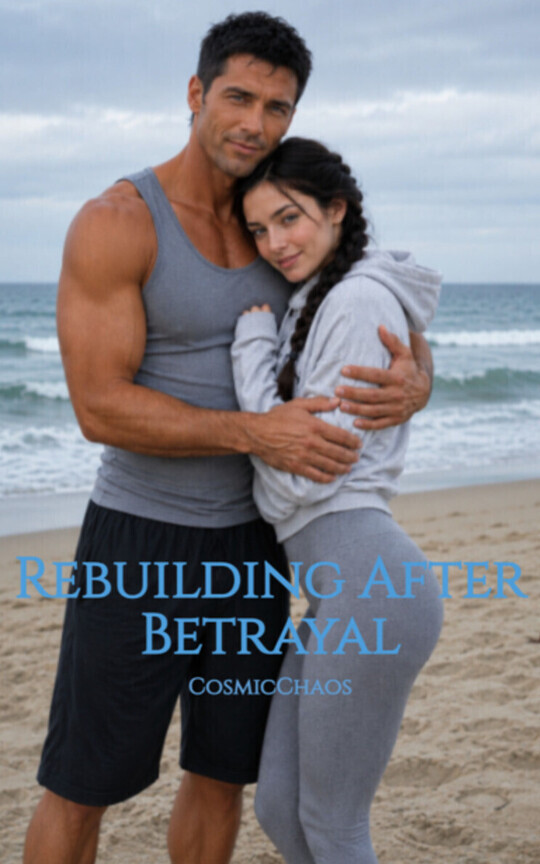










What an incredible way to start Book 2
So he’s been quietly watching over her this whole time... my heart can’t handle this 🥹