
The Wolf's Call
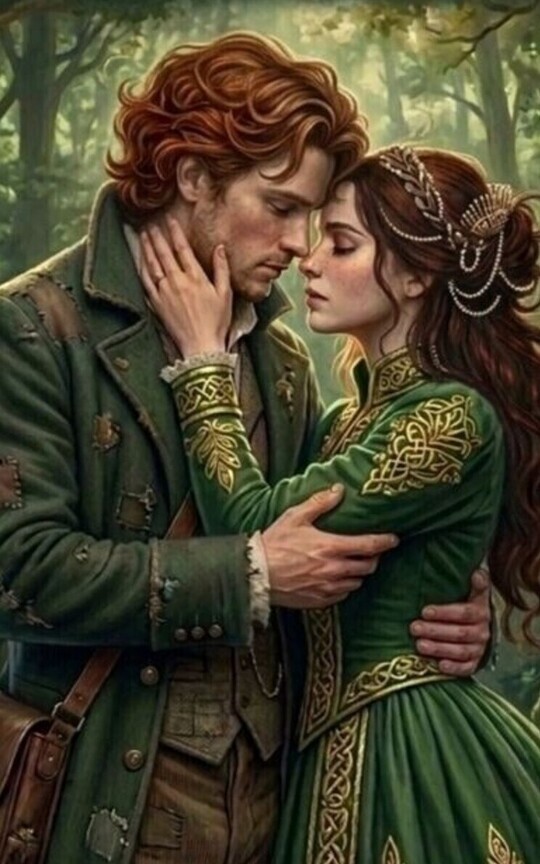
Cairo McKenzie stood at the edge of the world, or what felt like it—a high ridge above Glen Affric where the summer mist clung to the pines like woodsmoke and the sun was just beginning to burn through. He was fourteen now, long-limbed and sun-freckled across his nose, with a shock of ginger curls that caught the light like copper wire. His eyes, a startling amber flecked with gold, were the thing people remembered. The old women in the village called them wolf eyes and
He lifted two fingers to his lips and whistled—a low, looping call that slid down the scale and ended on a note just above silence. For a breath, nothing. Then the bracken shivered and a great grey wolf trotted out of the treeline, ears forward, tongue lolling in what could only be called a grin. The wolf was called Soot, though his coat held no trace of the name anymore. Four years ago he’d been a singed, trembling cub buried in ash; now he moved like smoke made flesh.
Cairo knelt and let Soot push his muzzle into the hollow of his shoulder. The wolf’s amber eyes met his own, and in the quiet of the ridge, boy and beast might have been cut from the same ancient cloth.
“Come on, then,” Cairo murmured, giving the ruff a scratch. “Gran’ll have the bannocks on, and she’ll skelp the both of us if we’re late again.”
The cottage sat in a fold of green below the ridge, its whitewashed walls gone grey with age and weather. Smoke rose from the chimney in a tidy column, and through the open door came the scent of baking bread and the low murmur of an old woman singing in Gaelic. Soot peeled off to doze in the sun-warmed grass outside the garden gate. Wolves, Cairo had learned, respected thresholds even when they didn’t understand them.
Inside, his grandmother Fiona stood at the blackened stove, a smudge of flour on her chin and her iron-grey hair pinned back with a thistle clip. His great-grandmother, Eilidh, was folded into her usual chair by the hearth, a plaid blanket draped over her knees despite the summer warmth. She was ninety-six and made mostly of memories and stubbornness, but her eyes were bright as berries.
“You’ve been up with the beasties again,” Gran said without turning around. “I can smell the heather on you.”
“Soot wanted a run.”
“Aye, and I want a palace in Paris. Sit down and put some food in that hollow frame.”
Cairo slid into his chair at the scarred wooden table, the same chair he’d sat in every summer since he was ten, when his parents had first bundled him onto the train at Waverley Station with a duffel bag and a warning to mind his elders. His father, a big red-bearded Scot with a firefighter’s quiet calm, had clasped his shoulder and said, They need a man about the place. His mother, soft-spoken and graceful, her Bahamian accent rounding the edges of every word, had kissed his forehead and packed three extra jars of guava jam from their Edinburgh bakery, as if sweetness could ward off loneliness.
Edinburgh felt like a lifetime ago. The flat above Mackenzie’s Patisserie, with its perpetual scent of vanilla and the clatter of trays, his father’s turnout gear hanging by the door for when the call came and he vanished into the hills to fight wildland blazes. That life was cobblestones and school ties and Leah.
Leah Ashford.
The name surfaced unbidden, and with it came the familiar tug of the pendant at his throat—a silver disc no bigger than a ten-pence piece, engraved with a wolf facing left, encircled by thistles. He’d worn it so long it felt like part of his skin. He didn’t know where it came from originally; Gran had pressed it into his palm the day of his first communion and told him it was a Mackenzie thing, that he should keep it close and keep it secret. He’d never shown it to anyone except Leah, and only because she’d shown him hers first.
Lord Richard Ashford’s Edinburgh mansion had been a palace of echoing marble and stern portraits. Cairo had been seven years old the night his mother catered an Ashford Foundation gala—tiered stands of petit fours and cranachan tartlets, and Cairo himself in his best waistcoat and clip-on tie, solemnly ferrying a tray of jammy dodgers through a forest of adult legs. That was where he’d met Leah: a girl in a sapphire dress who’d caught him sneaking a leftover macaron and demanded to know if he’d stolen it.
“I’m delivering it to a very important client,” he’d said, cheeks full.
“You’re eating it.”
“Quality control.”
She’d laughed, and something in the sound had snagged on his ribs and stayed there.
After that, the summers before the Highlands were woven through with Leah. They played in the Ashford gardens, a walled paradise of yew hedges and rose bowers, where Lord Ashford’s security men lurked at a discreet distance and every game felt faintly like a heist. Leah was quick and sharp-tongued, hopelessly bored by her tutors, and utterly unfettered by the manners her station demanded. She called him Mac and he called her Your Ladyship until she threw a scone at his head. Their banter was a thing of joy—half bickering, half code—and their friendship was the first real secret Cairo had ever kept.
He still remembered the afternoon she’d shown him the pendant. They’d been nine, crouched behind the box hedges, breathless from running. She’d fished the chain from beneath her collar, the silver disc catching the light. It’s a wolf, she’d said, facing right. Surrounded by thistles. Father says it’s the Ashford seal, but he won’t say what it means.
Cairo had pulled out his own, and they’d held them side by side. Wolves in mirror image, thistles weaving an almost unbroken circle. Pressed together, the two halves formed a whole. For a long moment they’d just stared.
What do you think it means? Leah had whispered.
Probably that we’re secretly royalty and nobody told us.
Or cursed.
Definitely cursed.
Lord Ashford had found them like that, pendants touching, and Cairo had never seen a grown man go so pale with such speed. The pendants were confiscated for the rest of the day, and Leah was summoned to her father’s study. The next week a new security gate appeared on the garden’s east wall, and the Ashford staff started calling Cairo “the Mackenzie boy” with a strange, weighty emphasis, as if the name itself were a warning. He didn’t understand it then. He was ten years old, and all he knew was that his best friend was being walled away from him.
The last day before his first Highland summer, Leah had found him in the bakery kitchen, helping his mother box lemon tarts. She’d slipped past her minders and pressed something into his hand—a dried thistle bloom, its purple gone to silver-grey.
Don’t forget to come back, she’d said, fierce and bright-eyed.
I won’t.
Promise?
On the wolf.
That summer, the hills around his grandmother’s cottage caught fire.
It was a wildfire born of a dry spring and a lightning strike, and it ate through the gorse and heather with a roar that sounded alive. His father had come north with the volunteer brigade, face grim with soot, and Cairo had been told to stay inside, stay safe, stay put. But the smoke had called to him the way the sea calls a sailor, and he’d slipped out past the garden gate and into the burning world.
That was how he’d found Soot—a ragged, keening ball of grey fur trapped in a hollow beneath a fallen pine, the flames licking closer. Cairo had wrapped the cub in his jumper and run, his lungs full of cinders and his eyes streaming. The wolves had watched from the ridge, a line of shadows against the orange sky. They hadn’t attacked. They’d waited. And when he’d laid the cub on the cool grass by the stream and poured water over its burned paw, the pack had melted down from the rocks and circled him, not as a threat but as a judgment. The alpha, a scarred old male with one milky eye, had stepped forward and sniffed Cairo’s hair, his cheek, the pendant at his throat. Then he’d turned and walked away, and the pack had followed, leaving Soot behind.
The Mackenzie bond, Gran had said later, when he stumbled home reeking of smoke and wolf. She hadn’t scolded him. She’d looked at the cub in his arms and the singed jumper and the pendant swinging free, and her face had gone soft with something that looked like grief. It’s still alive, then. God help us.
After the fire, Gran and Great-Gran began to teach him what they knew. How to read the weather in the curve of a cloud. How to find water by the shape of the land. How to move through the woods without sound, how to splint a leg with bracken and cord, how to follow a trail by the press of a paw in moss. And the whistle—a two-note call that sat on the edge of human hearing and spoke directly to something older. Only a Mackenzie can blow it, Eilidh said, and only a Mackenzie the wolves will answer. It was the sound of an ancient pact, and Cairo practiced it until his lips ached, until Soot and the pack came at a run from miles away, until the call and the response became a language of their own.
But it was the stories that hooked into him deepest. Stories of Callum Mackenzie, the ancestor whose name was spoken in the cottage like a prayer and a caution both. Callum the warrior, Callum the fool, Callum the lost. They said he’d been the greatest of their line, a man who could speak to wolves as if they were brothers, who had loved so fiercely that he’d undone everything. The Mackenzie lands had once stretched across half the glen; now they had the cottage, a few stony acres, and a name that the old families of Edinburgh remembered with something between pity and disdain.
“What happened to him?” Cairo had asked, many times. And always the answer was a version of the same: He loved where he shouldn’t have, and the land paid the price.
But on this morning, with the bannocks steaming on the table and the morning light pouring through the window, Great-Gran Eilidh set down her tea and looked at him with an intensity that stilled the air. Her hand, thin as paper, reached out and touched the pendant where it lay against his chest.
“You’ll be wanting the whole of it now, I think.”
Cairo’s pulse quickened. “You said I wasn’t old enough.”
“You weren’t. But the wolf’s chosen you, and that changes things.” She settled back in her chair, eyes fixed on something far beyond the cottage walls. “Callum Mackenzie was betrothed, Cairo. To an Ashford.”
The name hit him like cold water. “Ashford? As in—”
“Isla Ashford. The heiress of the Ashford fortune, aye. Lord Richard’s line, four generations back. The match was meant to end a feud and join two great houses together. He loved her, and she him, and the wolves approved—which was no small thing. But when the time came for the wedding, there was a betrayal. A broken promise, a stolen inheritance, a death that should never have happened. The details are buried with the dead, but the result was the same: the Ashfords withdrew, the Mackenzies were blamed, and Callum disappeared into the hills, never to be found. His final resting place remains a mystery, and without him, the bond between our families shattered. The land was forfeited. We’ve been nothing but bakers and fire-watchers ever since.”
Cairo’s hand had closed around the pendant so tightly the silver grew warm. The wolf facing left. Leah’s facing right. Surrounded by thistles. Two halves of a whole.
“The pendants,” he breathed. “They were betrothal tokens.”
“Callum’s and Isla’s. Made by the same hand, meant to be joined on their wedding day and never separated. When they were parted, the wolves turned their backs on the Ashfords, and the Mackenzies lost their protector. But the blood remembers what the land forgets. That wee wolf cub you pulled from the fire? The pack trusted you because they smelled Callum’s pledge around your neck. You’ve woken something, laddie. Something that’s been sleeping a long time.”
The kitchen fell into a deep, humming silence. Gran stood frozen at the stove, her back to them both, her shoulders rigid. Outside, Soot lifted his head and howled—a long, mournful sound that was answered by another, and another, until the whole ridge was alive with wolf-song.
Cairo stared at the pendant, at the wolf frozen mid-step, and felt the truth of it settle into his bones. Leah Ashford, the richest girl in Edinburgh, the girl who threw scones and pressed dried thistles into his palm—she wore the other half of a centuries-old promise. And her father, the man who had gone sheet-white at the sight of two pendants touching, knew exactly what it meant.
The wolves sang on, and Cairo thought of Edinburgh, of marble halls and security gates, of a girl with a wolf around her neck and a father who would do anything to keep her safe from the past.
The summer was only beginning. And for the first time in four years, he was certain of one thing: he would find his way back to her.