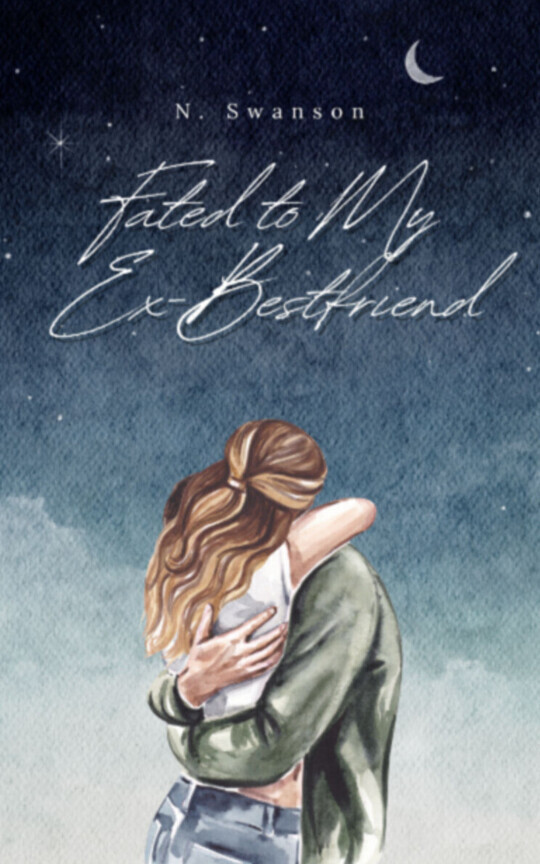
Full Novel
Aria Voss had always lived for the stage. From the time she could walk, her feet sought rhythm. By sixteen she was the star of her city’s youth ballet company; by twenty-two she headlined contemporary dance festivals across Europe. Critics called her “the girl who made gravity optional.” Audiences rose to their feet the moment the lights found her. She was popular, luminous, and certain that the only future waiting for her was more applause.
Then the night of the gala arrived.
It was supposed to be a simple outdoor performance in the old industrial quarter—an artistic collaboration between the dance company and a tech firm that had sponsored the event. The stage had been built on temporary platforms over a shallow excavation. Aria was midway through her signature solo when the left support beam gave way with a sickening crack. The platform tilted. She fell eight feet onto concrete and rebar. The pain was immediate and absolute. Both legs shattered. Ligaments tore. The surgeons worked for hours. When she woke, the doctor’s face told her everything before he spoke.
“You will walk again,” he said carefully. “But dancing… the kind you did… that is no longer possible.”
The words hollowed her out.
Months of hospitals followed, then months of physiotherapy that felt like punishment. Friends from the dance world visited at first, then less often. Invitations stopped coming. The spotlight that had once followed her everywhere simply moved on. Aria learned to walk with a cane, then without one, but every step carried a reminder of what she had lost. The joy that used to live in her body had gone quiet.
At twenty-five she needed a job. Her savings were thinning and pride would not let her lean on her parents forever. A former classmate who now worked in corporate recruitment sent her a listing: junior project coordinator at Helix Dynamics, a mid-sized technology and infrastructure firm. No dance required. Just organization, communication, and the ability to show up.
She showed up.
The first weeks were gray. Aria sat at a desk on the third floor and answered emails, scheduled meetings, and tried not to notice how still her legs felt under the table. The people around her were kind in the ordinary way of office colleagues—smiles in the kitchen, offers of coffee—but none of them knew the girl who used to fly across stages. She kept that version of herself locked away.
Then the small healings began.
Maya from accounting noticed Aria rubbing her right knee one rainy afternoon and quietly left a heating pad on her chair the next morning. No questions asked. Tomás in design started walking with her to the subway after late meetings, matching her slower pace without comment. Lena, the office manager with silver streaks in her hair, brought homemade soup when Aria came down with a cold and stayed to talk about her own daughter who had once dreamed of being a gymnast. These people did not try to fix her. They simply treated her as someone still capable of living. Slowly, the tight knot in Aria’s chest loosened.
The real change arrived the day the new director of operations walked onto the floor.
His name was Elias Thorne. Tall, dark-haired, early thirties, with the quiet authority of someone used to carrying responsibility. He had been brought in from the company’s European division to restructure several underperforming departments. Aria was assigned to support his transition. The first time he looked at her properly—really looked—she felt an unexpected flicker of something she had not felt in years: being seen.
Elias was precise but never cold. He asked questions and listened to the answers. When Aria prepared briefing documents he actually read them. When she suggested a better way to schedule cross-team reviews he tried it. One evening, after everyone else had gone, he found her still at her desk massaging her calf.
“Does it still hurt much?” he asked.
She almost lied. Instead she said, “Some days more than others.”
He nodded as if he understood pain that did not show on the surface. “I used to run. Long distances. A car accident three years ago ended that. The body remembers what it can no longer do.”
Something in Aria’s throat tightened. They spoke a little longer that night. The next week he invited her for coffee after a difficult client call. Then walks in the park near the office when the weather was mild. He never pushed. He simply made space.
They fell into each other the way rain finds low ground—gradually, then all at once. First shared lunches, then dinners that lasted past midnight. He told her about growing up in a family that valued results over rest. She told him about the stage lights and the way music used to live under her skin. When he finally kissed her, it was outside a quiet bookstore on a Thursday evening, and Aria felt something inside her unclench for the first time since the fall.
They kept the relationship private at first. Office romances carried risks, and Elias was careful with boundaries. But the feelings grew too large to hide. He brought her to a small jazz club one Saturday and watched her foot tap under the table even though she could no longer leap. She cooked for him in her tiny apartment and laughed when he burned the toast. On quiet nights he would rest his hand on her knee and simply stay.
Six months after she started at Helix, the past returned.
It began with a routine audit of old project files. Aria was helping Elias prepare documentation for an external review of the company’s previous infrastructure contracts. One folder contained reports from a cultural partnership initiative two years earlier—the same initiative that had sponsored the outdoor gala where she fell. The name of the staging contractor jumped out at her. So did the signature on the final safety clearance: E. Thorne, then still a senior project lead in the European office.
Her hands went cold.
That night she confronted him in his apartment. The papers lay between them on the table.
“You signed off on the stage,” she said. Her voice was steady only because she forced it to be. “You were part of the team that approved the temporary platform.”
Elias stared at the documents as if seeing them for the first time in a new light. The color drained from his face.
“I did,” he said quietly. “I was the liaison between Helix and the local contractor. The structural report they submitted looked complete. I reviewed the paperwork, not the physical build. I was in another city the week of the performance. When the accident happened I was told it was a failure of materials under unexpected load. I never knew the dancer’s name. I never connected it to you.”
Aria’s breath came short. “Technical issues.”
“Yes. An independent investigation later found that the contractor had substituted cheaper supports without updating the plans. Two people were fired. Helix paid settlements. I was cleared of negligence because my role was administrative oversight, not on-site engineering. But that doesn’t change what happened to you.”
The silence that followed was heavy. Aria walked to the window and looked out at the city lights. All the old grief rose up—the hospital, the end of her career, the long empty months. And now the man she had begun to love stood on the other side of that history.
“I need time,” she said.
He did not argue. He only nodded, eyes dark with regret.
The following weeks were strained. At the office they were professional and distant. Outside it they barely spoke. Aria spent evenings walking the long way home, replaying every conversation they had ever had, searching for signs she had missed. Maya and Lena noticed the change and offered quiet support without prying. Tomás brought her coffee and sat with her in silence when she needed it.
One rainy Thursday Elias found her in the small courtyard behind the building. He held an envelope.
“I requested the full investigation file,” he said. “Everything. Including the photos of the failed supports and the contractor’s internal emails. I want you to see it. Not because I expect forgiveness, but because you deserve the whole truth.”
Aria took the envelope home. She read late into the night. The evidence was clear: the failure had been caused by deliberate cost-cutting by the staging company. Elias’s signature appeared only on the administrative approval of the submitted plans. His emails from that period showed him repeatedly asking for confirmation that on-site inspections had been completed. The answers he received had been false.
It did not erase the accident. Nothing could. But it shifted the shape of the blame.
The next evening she went to his apartment. He opened the door looking as if he had not slept.
“I read everything,” she said. “It wasn’t your fault.”
He closed his eyes briefly. “I still signed the paper. I still worked for the company that hired the people who cut corners. That connects me to what happened to you.”
“Yes,” Aria said. “It does. And it hurts. But I also know the man you are now. The one who walks at my pace. The one who never pretends my pain is inconvenient. That man is not the same as a signature on an old form.”
They stood in the doorway for a long moment. Then Elias stepped aside and she walked in.
The tension did not vanish overnight. There were difficult conversations, nights when Aria woke from dreams of falling and needed space, days when Elias’s guilt made him too careful with her. But they stayed. They chose each other again and again.
Months later, on a clear spring morning, Elias took Aria to an empty warehouse that Helix was converting into community space. The floor was wide and polished. Soft music played from a small speaker. He held out his hand.
“I can’t give you the stage back,” he said. “But if you want to move—any way that feels possible—I’m here.”
Aria looked at the open floor, at the man waiting, at the body that no longer leaped but still remembered rhythm. She took his hand. They swayed together, slow and imperfect. Her legs ached after a while, but the ache no longer felt like an ending.
Outside the warehouse the city continued its ordinary noise. Inside, two people who had been broken by the same distant event held each other and began, carefully, to build something new.
Aria never danced the way she once had. That chapter was closed. But she learned that a life could still hold music, and that love—when it was honest enough to survive the truth—could become a different kind of stage. One where two people stood together, steady, and kept moving forward.
They became a couple in the quiet way that lasts: mornings of shared coffee, evenings of honest talk, years of choosing the same direction even when the path was uneven. The accident remained part of their story. It no longer defined it.
And on nights when the rain fell soft against the windows, Aria would rest her head on Elias’s shoulder and feel, for the first time in a long time, that she was exactly where she was meant to be.