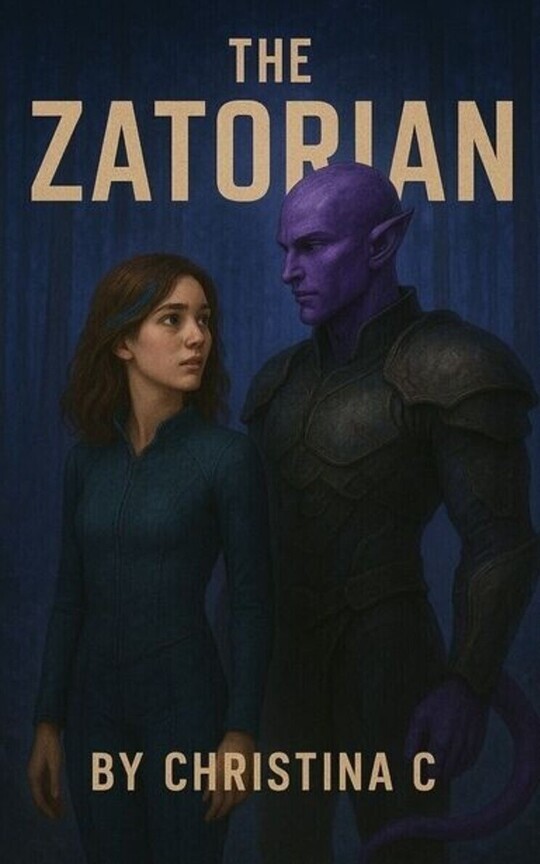
PROLOGUE: THE OFFER



The sea. Vast beyond measure. To some, it represents perfect calm; to others, a place filled with mysteries. To me, it is where poor bastards go to meet their end.
As soon as the thought leaves my mind, memories of the 2020 Games come flooding back.
The first death.
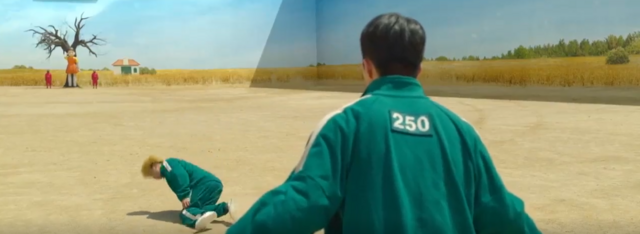
The hunger that ended in slaughter.
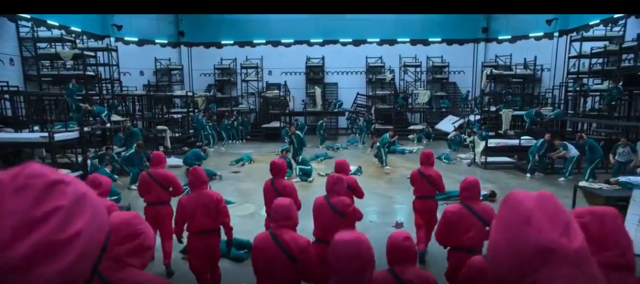
The betrayal born of desperation.
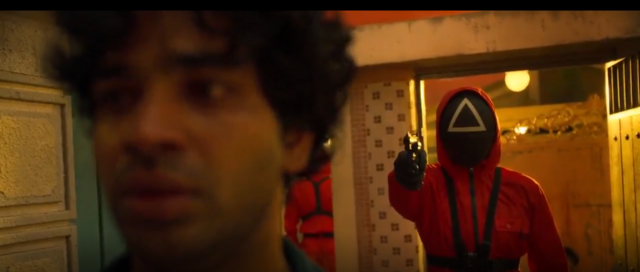
The fall that carried so many to their deaths.
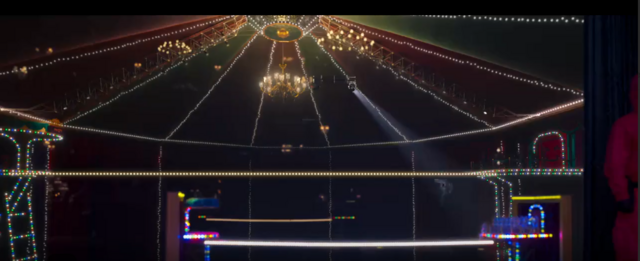
And, at last, the victory of a single man.
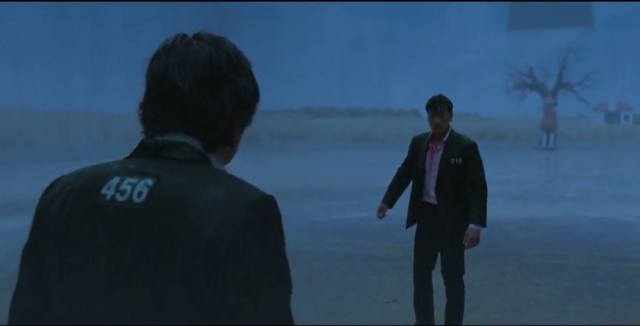
That last memory stirred something in me. Something I could only describe as unease.
“I was there. My duty was to make sure the game ended without incident.”
I was one of the masked staff: a pink uniform some might mistake for red, and a dark mask marked with a square.
“There was nothing complicated about the job. I had seen it often enough. Two or more finalists fought, and only one walked away with the prize.”
The memories strike again. Two men fighting. Former friends who, by then, cared about nothing except killing each other.
An ordinary person would have been horrified by the sight. But once you enter this pyramid, you learn one thing quickly: whatever humanity you have left becomes a ghost beside the violence inside this place.
I had watched players beat and stab one another. I had even seen them tear flesh from their opponents with their teeth.
One blow.
Another.
And then—
One final strike echoed across the arena.
At last, only one man remained standing. He stared down at the person who had once been his friend, then limped toward the head of the squid.
“Once I knew Player 456 had won, I aimed my weapon at Player 218. He only looked back at me, his expression already resigned to what was about to happen.”
My finger tightened on the trigger. It would end the way it always did. Or so we thought. Footsteps approaching from behind interrupted me.
“I turned and saw 456 limping toward us. When he finally found his voice, he said:”
“Clause Three. The Games may be terminated if the majority agrees.”
The spectators could not see it, but beneath my mask, boredom gave way to absolute disbelief.
“I contacted the control room where the VIPs were watching and reported 456′s request over the radio.”
The channel erupted in outrage and disbelief. The VIPs were furious about what might happen. Player 456 slowly approached Player 218 and held out his hand.
“I could not hear much of what they said. But after what happened next, I knew 218 had refused to let the Games end that way.”
Player 218 pulled the knife from his side and drove it into his neck. Player 456 threw himself over him and began to sob without restraint.
“As soon as the winner was announced, I was ordered to return 456 to the dormitory. It was not easy. He kicked and screamed the entire way. That was new to me. Winners usually stayed silent. Sometimes they celebrated.”
The memory distorts. Player 456, dressed once more in the clothes he had worn upon arrival, is blindfolded and escorted by the Front Man into a limousine bound for Seoul.
As the vehicle disappeared into the distance, the soldiers assembled in three rows, divided by rank.
The silence was suffocating. It was always the same. Nothing changed. We followed orders like pieces on a board.
Then the man everyone revered arrived: Mr. Oh Il-nam.
He studied every employee in silence, taking in our masks, our posture, even the rhythm of our breathing. With each passing second, the tension grew.
He stopped before us and stared without blinking. The silence lasted until he spoke, as he did after every edition: cold, measured, and without a trace of empathy.
“A new year, and another successful edition. Not a single mistake. Is that right?”
Silence ruled the room. Speaking without permission from a superior was forbidden. Oh Il-nam broke the silence again.
“Come now. You may answer.”
The guards responded in unison, like a military detachment answering its commander.
“No, sir!”
Oh Il-nam began to clap slowly. His smile could have unsettled the happiest person alive. Then he laughed. It was not the sound of amusement. It was the kind of laugh that told you someone had made a terrible mistake.
“I am glad to hear it. Unfortunately, I know you are lying.” The old man slipped a hand into his pocket and drew a revolver.
“I was recently informed,” he said as he loaded the cylinder, “that an unauthorized person entered my island. Am I mistaken?” Oh Il-nam inspected each soldier in turn.
No one spoke to confirm or deny it.
“No one intends to answer?” Oh Il-nam asked as he finished loading the revolver. “Then we will play a little game. Let us see... you.”
His finger pointed at me.
“Step forward. Come on, do not be shy.” With no other choice, I approached him in slow, steady steps. He placed the revolver in my hand.
“I am going to list the mistakes committed by several members of this staff. For every mistake, one of you will take a bullet to the skull.” The old man turned his gaze toward my companions. “Let us see who the lucky ones will be.”
Not one of them moved, despite the death sentence hanging over us. What looked barbaric from the outside was routine whenever something went wrong during the Games. Oh Il-nam gave me my first order.
“Kill him.” He pointed to a circle guard. I did not hesitate. I fired. Blood spread across the floor as the body collapsed. “That shot was for allowing a detective onto the island.”
When he finished, he pointed at another colleague, this time a guard wearing a triangle. As before, I did not blink. I shot him in the head.
His offense was failing to prevent the detective from killing four soldiers.
It continued for some time. Employees were executed without distinction, each punished for someone else’s mistake. It was like school: one person broke the rules, and everyone paid.
The charges were:
The death of a waiter.
An assault on a VIP.
The theft of an air tank.
Giving preferential treatment to a player.
Allowing a player to rebel.
The introduction of an unauthorized tool.
Authorizing the nighttime fight.
Failing to inspect the bodies.
And finally, the gravest offense: a conspiracy inside the Games.
What can I say? After living through so much death and blood, killing a colleague did not trouble me. It felt no different from killing a player inside the facility.
The moment the cylinder was empty, the leader ordered me back into line with the remaining soldiers.
“I hope I have made myself clear. You are dismissed.” At his command, we filed back toward our quarters. The island always felt heavy. From the first Games onward, it had been stained by the blood and suffering we inflicted with our own hands.
The routine never changed. Circle guards dismantled the sets. Triangle guards cleaned the grounds. Square guards like me supervised the work or returned to our quarters. Once everything was finished, we received our final pay and went back to our lives.
Normal lives.
For me, it was another monotonous year. The Games had become part of my daily routine. They were almost a hobby.
At that moment, I only wanted to sleep. I had never cared for the company of my coworkers. The coldness with which I had killed twelve of them should have made that obvious.
Before I could think much further, I reached my room. I unlocked the door, stepped inside, and shut it behind me. I did not remove my mask or even my uniform. I wanted only one thing: sleep.
I pulled the sheets over myself despite the heat. I did not care. I wanted to sleep and let the year finally end. My eyes closed, and I sank into darkness.
* * *
NUMBER SIX’S SUBCONSCIOUS
A small park, green and full of life. Parents watch their children play. Couples walk hand in hand. Old men feed the pigeons. The sort of place people call pleasant.
The image lurches without warning. A tall man who looks as though he has not slept in weeks is shouting. He swings a belt and strikes you again and again. Then the world changes.
Now you are in a cramped room with holes in the ceiling. Stars glitter through them. Your small hands reach toward the bright moon, but the image shifts again as you are thrown to the floor. The same man glares down at you and forces a small field hoe into your hands.
At the far end of the room, a woman sits with tears in her eyes and her face buried in her hands. Someone has beaten her.
The world changes again, this time into a happier memory. Those same small hands play patty-cake with the woman. She is happy. Her smile reaches straight into your soul and quiets everything inside you. She lifts you into her arms, carries you back to your room, and kisses your forehead.
* * *
The next place is not so kind.
You run home with a check clutched in one hand and a job offer in the other. You race toward the front door, smiling.
When you open it, the sight inside is grotesque.
The woman lies on the floor, eyes wide and blood pouring from her chest. Beside her, the same man smiles at you, a blood-soaked knife in his hand. Your gaze darts to an ax hanging on the wall. You do not stop to think. You want only to hurt him as badly as you can.
One blow.
Two.
Three.
And finally, a fourth.
The man lies on the floor, terror frozen on his face, but you know he is dead. You stare at the blood on your hands. Your body trembles. In the mirror, you barely recognize yourself. You collapse into uncontrollable sobs while both bodies and the job offer remain scattered across the floor.
The scene changes. You are older now, hiding beneath a bridge with a gun in your hand and emptiness in your eyes. A shadow rises nearby. You aim at whatever is watching you and see a smiling man in a suit, carrying a briefcase. You do not lower the weapon. He begins to speak.
“Number Six.”
“Number Six.”
“Number Six.”
“Number Six, wake up.”
The world turns black as everything around you dissolves. Your body drops into an endless void while the voice repeats the same words.
BACK IN REALITY
I woke in a cold sweat and looked toward the door. Another square guard stood there, staring at me. I sat up and waited for him to explain.
“The Front Man wants to see you.”
Silence settled over the room. What had he said? The Front Man wanted to see me? I checked my phone. It was 2:30 in the morning. That was unusual. He never summoned a soldier unless there had been an incident, like the 2015 Games, when one player killed every other finalist before the final game could begin.
I was so lost in thought that my companion’s voice startled me. From his tone, I could tell he was frightened, or at least nervous about making the Front Man wait.
“HURRY UP!” he shouted without taking his eyes off me. He did not have to repeat himself. I rose, left my quarters, and headed toward the man most of us feared provoking: the Front Man.
Among the staff, his identity existed only in rumors. All we knew was that he had appeared one day and taken command. From the beginning, it was clear that he did not tolerate excuses. Any failure or attempt to cheat the system earned a punishment worse than most people could imagine.
Still lost in thought, I continued down the deserted corridor. The facility always felt oppressive. Thousands of people had died on that island, each arriving with the hope of leaving as a millionaire.
One guard had once lost his temper and shot a player before the first game. Panic spread through the dormitory before the competition had even begun. That edition continued without further trouble, but the guard’s punishment was inhuman. They tore out his tongue.
I entered the pastel-colored corridors the players had crossed only days earlier, unaware of what awaited them in the six games ahead.
I did not know what to think. The Front Man was unpredictable. Perhaps I had done something wrong, though I could not imagine what. The only incident I had witnessed was when we cornered the guards involved in selling organs.
The more I considered it, the tighter every muscle in my body became. The thought of facing the Front Man chilled me, especially when I imagined what he might do. The control room was close now. From there, an elevator led directly to his office.
Maybe I was only working myself up. I had committed no offenses during this edition. After the last time, I had sworn never, never, ever to make another mistake.
I looked down at my left arm and gripped it tightly. At last, I reached the elevator. I stepped inside and pressed the button that would take me to the Front Man.
The elevator began its slow ascent, and my thoughts struck harder with every passing floor.
“Hmm. Heh. If my time has come, I hope he makes it slow. Nothing matters anymore.”
Before another thought could form, the elevator stopped. The doors slid apart, revealing the place we all feared: the Front Man’s office.
I had to admit, the room was comfortable, if you were the pretentious sort. Dark furnishings. Gold light. A landline telephone, a leather armchair, a minibar, and a screen from which the Front Man could watch the Games in comfort.
I approached the minibar. Beside it stood a miniature theater filled with robotic figures, designed to resemble a bar from the 1920s. I ran my fingers over the little machine while I waited.
“I suggest you leave that alone.”
My entire body stiffened. Slowly, I turned toward the source of the deep voice.
A section of wall had opened into a narrow passage. At the far end stood the Front Man and a second figure I did not recognize. Judging by his appearance, I would have sworn he was a VIP.
“I am sorry, sir.”
I moved carefully into the room where the two men waited. The atmosphere grew tighter with every step. I had no idea why they needed me, and one question frightened me most: who was the masked stranger?
Standing before them, I no longer knew what to think.
Only a table separated us. A small silver briefcase rested at its center. The silence lasted nearly five minutes before the Front Man finally broke it.
“Do you know why you were summoned?” he asked without hesitation.
“No, sir,” I answered as calmly as I could.
The stranger raised his left hand. The Front Man understood at once.
“Number Six, allow me to introduce the Kephalē.” The instant he spoke the name, my mind went still. I had heard the rumors but never believed they were true. The man everyone feared stood before me.
The World Leader.
I could not describe what I felt. Was I supposed to kneel?
Before I could decide, the Kephalē broke the silence.
“Let us dispense with the formalities and turn to the matter at hand.” He drew a slim folder from beneath the table and began to read. The entire situation felt unreal.
The silence became funereal. I watched the Kephalē, unable to speak. His title was not an empty honorific. He stood at the very peak of the organization. No one knew his face or his real name. Some guards believed he was an American tycoon; others said he was a politician who had become a global puppet master. Only one fact was certain: his authority recognized neither borders nor limits. Yet there he sat, only a few feet away, reviewing documents with the ease of an accountant checking invoices.
I remained standing with my arms pressed to my sides. Then I noticed something that chilled my blood. The Front Man was utterly silent, his head slightly bowed. In all my years of service, I had never seen him assume that posture. Submission. The man who had terrorized hundreds of soldiers for five years looked no more important than an assistant in the Kephalē’s presence.
“So, you are Number Six.” The World Leader spoke without looking up from the papers. His voice was calm, almost gentle, like an old grandfather’s. Yet each word carried an invisible weight that seemed to drain the air from the room.
“Yes, sir,” I replied, hating the faint tremor that betrayed me.
The Kephalē set the papers on the table and looked up. His eyes... God, there was something unnatural about them. They seemed like two black wells with no bottom. No hatred, joy, or grief lived there. He regarded me as if I were an insect. Perhaps a cockroach.
“I have read your file, Number Six. Recruited eleven years ago. Twenty-three editions of the Games. No serious violations since the 2015 incident, when your unit allowed a player armed with a knife to murder every other finalist before the final game could begin. Was that when your arm was permanently damaged?”
A shiver ran down my spine. The memory struck like a fist to the stomach. As punishment, the Front Man had cut into my arm again and again, forcing me to watch without turning away. Since then, I had obeyed every order with precision.
“That is correct, sir.”
The Kephalē formed what might have been a smile, though his eyes remained fathomless.
“I value efficiency. But you are not here because of your spotless record. You are here because today is your lucky day. A few hours ago, when Oh Il-nam selected you to execute your colleagues, he could have chosen any square guard. You could have refused. Yet you did not hesitate, and I must say your performance was remarkable. Twelve shots. Twelve bodies.” He paused and drummed his fingers on the table. “Did you feel anything when you pulled the trigger?”
The question hung in the air. I knew better than to lie. Not to him.
“No, sir. I do not feel anything anymore.”
The Kephalē nodded slowly, as if confirming a theory.
“Excellent. That will be useful.”
He turned toward the Front Man and made a barely perceptible gesture with his right hand. The Front Man stepped forward, lifted the silver briefcase from the table, and placed it before me. His fingers rested on the metal clasps for a moment before he opened them. The dry click echoed through the room and into the corridor.
The interior was lined with black velvet. At its center, displayed like a jewel, lay a mask. But this was unlike any mask I had seen. Its shape was geometric, similar to the one I wore, yet the material was entirely different. One half was a black so deep it swallowed the light; the other was stark white. A thin gold line divided them.
Beside the mask lay a stack of documents sealed with red wax. Their title stopped my heart for an instant: PROJECT WORLD.
“What... what is this?” I asked before I could stop myself, forgetting the rule against speaking without permission.
The Front Man moved to reprimand me, but the Kephalē stopped him with a gesture. Then he leaned forward, resting his elbows on the table.
“This, Number Six, is your future.”
I stood motionless, unable to look away from the mask. The Kephalē rose, crossed to a curtain that concealed an enormous wall display, and tore it aside. Hidden lights flooded the office. Behind the curtain was an immense map of the world, studded with unlit red markers across dozens of countries.
“The Games have operated on this island for nearly a decade,” the Kephalē began, his back still turned to me. “Every year, hundreds of desperate people compete for a prize only one of them can enjoy. We have perfected the system: recruitment, trials, logistics, elimination. Everything. But there is a problem, Number Six. One that has kept me awake for the past five years.” He turned slowly, and for the first time I saw an emotion in his eyes: pure ambition. “We are wasting too much potential.”
“Potential, sir?”
“Look around you.” The Kephalē gestured across the room. “This island can hold 456 players per edition. One wins; the rest die. It is entertaining, certainly, but it has become tedious. The same sort of people, year after year.” The World Leader spoke without enthusiasm. “There are billions of people in the world. Billions of broken, desperate souls willing to do anything for a chance. Why settle for 456?”
I swallowed. I was beginning to understand where this was going, and the scale of it terrified me as much as it fascinated me.
“Project World,” the World Leader continued, spreading the documents across the table, “is the next evolution of what we have built on this island. Next year, we will not stage another local edition in some isolated country. Why limit ourselves to one nation? Imagine an edition that gathers seven hundred players from around the world, all pursuing the same prize, all competing in a global final. It will be broadcast to the right audience, of course. No leaks. No mistakes. Absolute control.”
I studied the documents. Diagrams, lists of countries, and coded names of potential sponsors covered the pages. Every detail had been planned.
“It is... ambitious,” I managed.
“It is the future,” the Kephalē corrected me. “And you, Number Six, will make it real.”
The silence that followed was so dense I felt I could chew it. None of this made sense. I was an ordinary soldier, a pawn in a pink uniform and a square mask. I was no one.
“Sir, with all due respect... why me? The Front Man and Mr. Oh Il-nam have overseen the Games for years. They have the experience, the contacts—”
I did not finish. The Kephalē raised one hand, and the room fell silent. With an almost imperceptible motion, he indicated the Front Man. For the first time since the meeting began, the Front Man stepped forward and spoke.
“I will not be serving as Front Man for the next edition, Number Six,” he said, and for the first time that night, his voice changed. “The doctors have given Mr. Oh Il-nam six months, perhaps eight. His tumor has worsened. He will die soon. When that happens, I will assume his position and resolve whatever problems follow.”
The revelation hit me like ice water. Oh Il-nam was dying? The man who had seemed immortal, who ruled that organized nightmare with an iron hand? I thought back to the signs I had ignored: skin paler than usual, deep shadows beneath his eyes, breath that sometimes came too quickly. The great Oh Il-nam was under a death sentence of his own.
“But, sir... I cannot do something like this,” I stammered, every trace of pride forgotten. “I am a common soldier, not a strategist. I have never organized anything larger than a guard shift.”
The Kephalē sat down again. His presence filled the room until breathing felt difficult.
“That is precisely why you are the ideal candidate.” The World Leader lifted the mask from the briefcase and held it before me. “You are different. You are... malleable. And you have demonstrated something I value more than experience: absolute obedience and the absence of remorse.”
He extended the mask. I looked at it as though it were cursed.
“This mask belonged to the first Front Man, before Oh Il-nam assumed control, even before the current Front Man wore his own. It represents authority over every soldier and absolute control over the Games. If you accept it, you will become the Front Man of the first world edition. You will command resources beyond anything you can imagine, and you will work directly under me.” The Kephalē paused, his black eyes gleaming. “If you succeed, if Project World becomes what I expect, your reward will be beyond measure.”
“And if I fail?” I asked, barely above a whisper.
The Kephalē smiled. This time the smile was genuine, which made it even more terrifying.
“You do not want to know.”
I lowered my eyes to the mask. It was beautiful and terrible in equal measure. I sensed that taking it would break something inside me for good. Yet another feeling stirred beneath the fear, a spark that had been dead for years. Ambition? The chance to stop being a nameless pawn and become the man who made the decisions? Or merely the instinct to survive, and the certainty that refusal meant immediate execution?
I reached out. My fingertips brushed the polished surface. It was cold. Terribly cold.
“There is something else you must understand,” the Front Man said, his damaged voice still struggling to carry authority. “Project World is more than a geographic expansion. It will involve experiments. New game dynamics. New rules. The Kephalē wants to learn how far human nature can be pushed before it breaks completely. This first world edition will be the initial trial. If the players break too quickly, if the Games become unsustainable, the failure will be yours. Yours alone.”
I tightened my grip on the mask.
“I understand,” I said. This time, my voice did not shake.
The Kephalē nodded his approval and rose. He crossed the room and placed a hand on my shoulder. The gesture might have looked paternal, but I felt it for what it was: an invisible chain closing around my neck.
“You have eleven months to prepare. The Front Man will train you throughout that time. You will learn everything you need from him: contacts, protocols, codes, suppliers, recruitment methods. Everything. When the time comes, you will be ready. Am I wrong?”
“No, sir,” I replied, surprised to realize that I no longer doubted it.
The World Leader walked toward the office door, then stopped before leaving.
“One last thing, Number Six.” He turned slightly. “From this moment forward, you are no longer a number. You are the Front Man. Think carefully about the name you will carry.” He paused. “And congratulations. Few men receive the chance to accomplish something like this. You have. Do not waste it.”
The door closed behind him with a metallic snap. I remained in the center of the office with the mask in my hands and a storm of thoughts battering my mind. The former Front Man watched from the edge of the table, wearing an expression I could not read.
“Welcome, kid,” he said, the words echoing off every wall.
I raised the mask to eye level. For eleven years, I had worn a square, the symbol of obedience and cold authority. Now I held the face of absolute command. I wondered whether I would still recognize myself once I put it on. I wondered whether the woman in my memories, the one who sang to me and kissed my forehead, would weep if she saw what I had become.
But such thoughts were a luxury I could no longer afford. I pushed them into a dark corner of my mind, as I had done with every other feeling over the years.
“When do we begin?”
The former Front Man pointed toward the Project World documents still spread across the table.
“Right now.”
I could not know it yet, but accepting that mask would become the greatest regret of my life. Those Games would force me to see the world, and myself, in ways I could never have imagined.