
Prologue
We all know some vampire legend. The most famous is the story written by an Irishman a little over two centuries ago, which speaks of a count living in the Balkans who buys land in England to escape his confinement and falls in love with a young woman who reminds him of the love he lost more than five hundred years ago.
In this novel, we are told of beings infected by vampirism, of supernatural powers, of hunters determined to destroy the monster, and of names that became immortal: Jonathan Harker, Doctor Van Helsing… and, of course, Dracula.
Perhaps not everyone has read the complete novel. Still, its impact was so profound in the late 19th century that, upon mentioning the word vampire, we all imagine the same thing: an elegant count, with a magnetic presence, wrapped in mystery and darkness.
Dracula gave us a mythology—one that, over time, was adopted by writers, filmmakers, and storytellers of all kinds. Thanks to them, we learned that vampires cannot withstand sunlight, fear religion, live hidden in castles, and only come out at night.
But the question we should ask ourselves is simple: how true are all those beliefs?
As is the case with every legend, some truth usually hides within the fiction. Maybe vampires exist. Maybe they have spent centuries—or even millennia—living among us, feeding on humans, and sharing the same world without us knowing.
In most stories, they are portrayed as solitary, dark creatures, condemned to evil. Until, many years later, other tales appeared offering a different vision: beautiful, romantic vampires, capable of love, attempting to lead a normal life and suffering for not being able to be with the person they desire without endangering them.
Once again, the image repeated itself: the immortal being, attractive and melancholic, trapped in an impossible love.
These stories took the classic elements and transformed them. The sun no longer destroyed them, although it could give them away. Religions ceased to be a threat. Some even refused to kill humans to survive.
And although these versions came a little closer to the truth, they still did not tell it completely.
To avoid boring the reader with a long analysis of myths, tales, and lies disguised as legend, I will get straight to the point:
Vampires exist.
They live among us. They sleep, walk down the street in broad daylight, and lead apparently normal lives… at least within the parameters of their own nature.
Some resemble the romantic vampires described in well-known novels. Others remind us more of the count created by Bram Stoker: ancient beings, marked by centuries of history, witnesses to wars, revolutions, and tragedies that humans only know through books.
They also love. They also suffer. And, like any living being, they seek happiness… especially for their family.
Literature and cinema have built mythologies around themselves. Some theories were not entirely wrong; many others were. Throughout this story, the reader will discover what is true and what is not about these creatures that have fascinated the world for centuries.
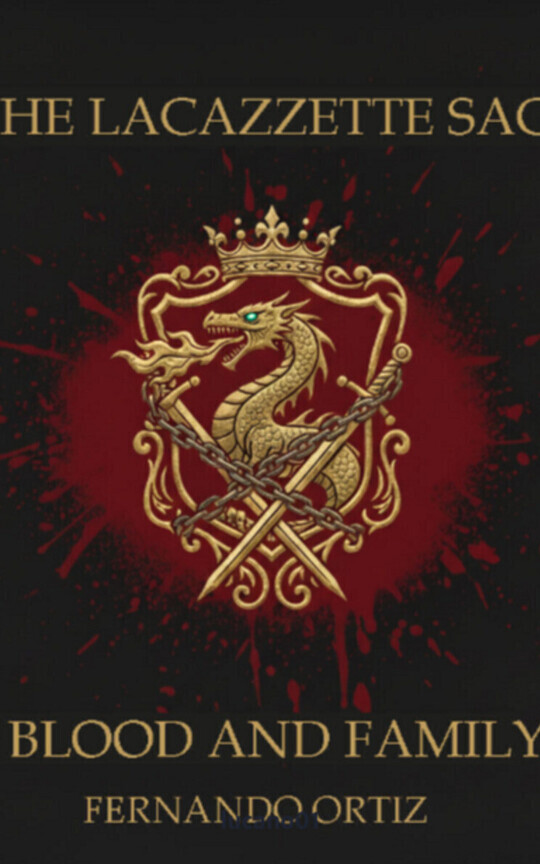
Because this is not the story of a monster. It is the story of a family. The story of the Lacazzette family.