Chapter 1
Seven years ago, in the summer of 1899, I lived in a small village hidden deep within the mountains of Japan.
Even now, as I sit beside my window in the capital, surrounded by the noise of passing carriages and the unfamiliar voices of strangers, I sometimes find myself remembering that place. Not the warmth of summer, nor the smell of freshly harvested rice, nor even the little wooden house where I spent the earliest years of my life.
I remember the silence.
And I remember the woman.
It was late summer, I believe. The days had begun to shorten, and the nights arrived with a coldness that did not belong to the season. The mountains surrounding our village were perpetually shrouded in mist, their dark silhouettes resembling enormous sleeping creatures beneath the pale sky. Cedar trees crowded the hillsides, their branches twisting together until the sunlight could barely penetrate them. Even at noon, the forest floor remained damp and shadowed, covered with fallen leaves, tangled roots, and patches of moss that glistened like something freshly awakened.
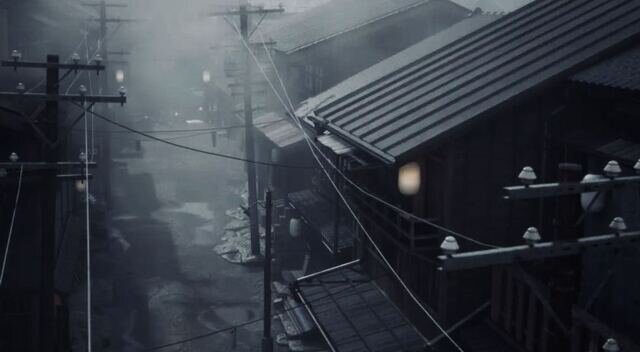
Our village was small enough that everyone knew everyone else’s business. Wooden houses stood close together along narrow dirt roads, their tiled roofs darkened by years of rain. Paper lanterns hung beneath the eaves, and small Shinto shrines stood at crossroads where villagers occasionally left offerings of rice, flowers, or sake.
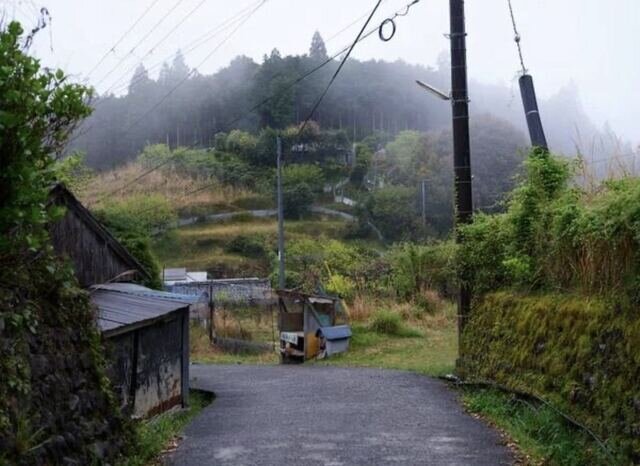


Beyond the last row of houses lay the rice fields.
Beyond the rice fields lay the forest.
And beyond the forest were the mountains, where the mist gathered so thickly that no one could see what waited on the other side.
The elderly villagers had a saying about those mountains.
What enters the forest does not always return as the same thing.
I had heard those words since I was old enough to understand speech. My grandmother repeated them whenever I wandered too far from the house. The old men who gathered outside the village shrine muttered them over cups of tea. Even the women who washed clothes beside the stream would lower their voices whenever children approached, as though the trees themselves might be listening.
According to the elders, there were paths in the mountains that should never be followed after sunset. There were names that should never be spoken near an open window, and sounds that should never be answered, no matter how familiar the voice might seem.
Some stories concerned spirits of the dead. Others spoke of things that wore the appearance of human beings but possessed none of the warmth that made a person human.
The villagers called these stories kaidan, tales of the strange and supernatural. They were passed from grandparents to grandchildren, whispered beside hearths during long winter nights and repeated whenever a traveler arrived with news of some misfortune along the mountain roads.
I used to sit among the adults and listen with a mixture of fascination and irritation.
Whenever one of the elders finished a particularly frightening tale, I would ask the same question.
“If these things are real, why has nobody brought one back to the village?”
The adults would exchange glances.
Some would laugh uneasily. Others would tell me that a foolish boy could not understand matters that had frightened wiser people for generations.
My grandfather was different. He never laughed when I challenged the stories. He would simply look at me with his tired, dull eyes and say, “You may doubt a warning, child. But do not mistake your disbelief for protection.”
I thought it was an old man’s way of frightening children into obedience.
I was young, stubborn, and far too curious for my own good. I believed that the world could be understood if one were brave enough to look closely. Ghosts, curses, wandering spirits, and all the other things described in those stories were merely inventions, I thought, created by frightened people who could not explain the darkness around them.
I had never seen anything supernatural.
Therefore, I believed there was nothing to see.
My parents never shared my confidence.
They worked in a settlement several hours away, where merchants traded silk, charcoal, and rice. During certain seasons, they would leave before sunrise and return only when their work allowed. I stayed with my grandparents in the village, where life moved according to the rhythm of the fields and the changing weather.
Whenever my parents visited, they repeated the same instructions.
Return before sunset.
Stay away from the forest.
Never follow a stranger along the mountain paths.
And, above all, if I heard someone calling my name after dark, I was not to answer until I could see who was calling.
I once asked my mother why a voice should be dangerous.
She was folding my clothes at the time. Her hands stopped moving, and for several moments she seemed to have forgotten what she was doing.
“Because,” she finally said, “not everything that knows your name knows you.”
I laughed.
She did not.
That summer, my parents warned me more often than usual. They had heard stories of travelers disappearing along the northern mountain road, and there had been several nights when the village dogs barked until dawn. One elderly woman claimed she had seen a tall figure standing among the trees behind her house. Another swore that someone had walked around her home for an entire night, leaving no footprints in the wet earth.
The village headman dismissed the accounts as rumors.
Nevertheless, he ordered the shrine lanterns to remain lit after sundown.
The elders began gathering more frequently at the old shrine, where they burned incense and spoke in voices too quiet for children to hear. Whenever someone approached, their conversation stopped.
I noticed these things, of course.
But I did not consider them reasons to be afraid.
I should have.
The day I saw her began like any other.
The afternoon air was heavy with the smell of damp soil and cedar bark. Clouds drifted over the mountains, turning the sunlight a dull, sickly gray. A thin breeze passed through the rice fields, bending the stalks in slow waves that resembled the movement of something crawling beneath the surface.
My friends and I had spent most of the day playing near the edge of the forest.
We were supposed to return home before sunset. Our parents had made that perfectly clear, and the village bells would soon announce the closing of the day.
But we were having too much fun to care.
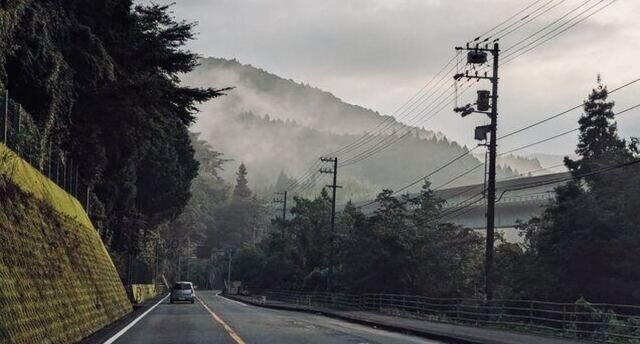
We chased one another along the narrow paths, threw pebbles into the stream, and climbed over the old wooden fence that separated the fields from the first line of trees. Every so often, one of my friends would glance toward the village and announce that we ought to leave.
I ignored him.
“Just a little longer, come on” I said.
The others eventually grew tired of arguing with me. One by one, they collected their belongings and started toward the houses.
“Your grandfather will come looking for you,” one of them warned.
“Then I’ll tell him I was busy.”
“He won’t believe you.”
“That’s his problem.”
They stared at me as if I had said something particularly foolish.
Perhaps I had.
The last of my friends hesitated at the bend in the path. Behind him, the village roofs were beginning to disappear beneath the gathering mist.
“Come back before the bells,” he said.
I waved him away.
He did not wave back.
I watched him hurry after the others, their figures growing smaller until the trees swallowed them from view. For a little while, I could still hear their voices drifting between the houses.
Then even those sounds disappeared.
I was alone.
At first, I enjoyed the quiet.
The forest had always fascinated me. Its trees seemed ancient enough to have witnessed the birth of the mountains, and their twisted branches formed strange shapes against the sky. Small insects hummed among the undergrowth, while somewhere in the distance, water trickled over stones.
I wandered farther along the fence, searching for a particular beetle I had seen earlier that afternoon.
I remember crouching beside a moss-covered stump when I first noticed that the insects had stopped making noise.
It was such a small thing that I barely paid attention.
The breeze had also disappeared.
The leaves above me hung motionless, and the thin grass beside the path no longer stirred. Even the distant stream seemed strangely quiet.
I straightened and looked toward the mountains.
The clouds had grown darker.
I decided I had stayed long enough.
As I turned toward the village, something moved between the trees.
I saw it only from the corner of my eye: a pale shape slipping behind a cedar trunk.
I stopped.
For several seconds, I stared at the place where I thought I had seen it.
Nothing moved.
I told myself it had been a deer, perhaps a stray dog, or simply a patch of sunlight reflected from something pale among the leaves.
There were plenty of ordinary explanations.
I preferred them.
I began walking again.
That was when I heard the dragging.
Scrape.
A pause.
Scrape.
The sound seemed to come from somewhere behind me, slow and uneven, as though someone were pulling a heavy object across the dry ground.
I turned.
The path behind me was empty.
I listened carefully.
Nothing.
“Who’s there?” I called.
My voice sounded embarrassingly small beneath the trees.
No one answered.
I waited, then let out an irritated breath. Perhaps one of my friends had returned to frighten me. The thought made me feel better, and I called out again, this time with more confidence.
“If you’re trying to scare me, just know that it won’t work!”
A faint rustling came from the undergrowth.
I took a few steps toward it.
Then I noticed something strange.
The fallen leaves on the path were moving.
Not all of them. Only a narrow trail running between the trees, as though something had passed over them moments earlier.
I crouched to examine them.
The earth beneath was damp, yet there were no footprints.
I remember frowning at the ground, trying to understand how anything could have crossed the path without leaving a mark. Before I could think of an explanation, a gust of cold air passed over the back of my neck.
It smelled of wet wood.
And something else.
Something faintly sweet and rotten, like flowers left too long inside a closed room.
I stood immediately.
That was when I heard the sound again.
Scrape.
Scrape.
Scrape.
This time, it was closer.
I turned toward the trees, my irritation giving way to a discomfort I could no longer dismiss. The forest seemed darker than before. The trunks stood close together, their shadows merging into a single black mass beyond the path.
I could not see very far.
Yet I had the distinct impression that something was standing there, just beyond the reach of my sight.
Watching.
I wanted to call out again, but my throat felt strangely tight.
Instead, I took a step backward.
The sound stopped.
I waited.
Nothing.
I took another step.
Somewhere among the trees, a branch snapped.
I ran.
I did not think about it. I simply turned and hurried toward the village, my sandals slipping against the damp earth. I was angry with myself for being frightened, and that anger made me walk faster.
The sky was growing darker by the minute.
I could already imagine my grandmother waiting at the house, arms folded, ready to scold me for returning late. The thought of her familiar voice comforted me, and I concentrated on reaching the village as quickly as possible.
Then I heard something that made me stop so abruptly that my foot caught against a root.
A voice.
A woman’s voice.
It came from somewhere behind me, soft enough that I almost mistook it for the wind moving through the branches.
“Po…”
I froze.
The sound was followed by a long silence.
I looked back at the forest.
There was nothing visible along the path.
Then the voice came again.
“Po… po…”
It was not a word I recognized. It sounded almost playful, like someone quietly amusing herself. Yet there was something wrong with the rhythm, something so deliberate and unnatural that the sound seemed to crawl beneath my skin.
I stood motionless, trying to decide whether I had actually heard it.
Perhaps someone was calling to a child.
Perhaps a woman from a neighboring village had lost her way.
Perhaps the sound was nothing more than the wind.
I clung to those explanations because the alternative was ridiculous.
Then I heard the faintest sound of footsteps.
Not approaching.
Retreating.
Slowly, steadily, the steps moved farther down the path that ran alongside the forest.
I should have continued toward home.
Instead, I turned toward the sound.
There was something deeply embarrassing about being frightened by an unseen person. I was certain that if I could simply identify whoever was making the noise, my fear would disappear.
I took a few cautious steps forward.
The path curved around a cluster of cedar trees before disappearing behind a low stone wall. Beyond the wall stood an abandoned wooden storehouse, its roof sagging beneath years of rain. An old stone lantern stood beside the entrance, half-covered in moss.
I knew the place.
Children were forbidden from playing there because the structure was unstable.
I had never paid much attention to that warning either.
As I approached the bend, the dragging sound returned.
Scrape.
Scrape.
Scrape.
It seemed to come from the other side of the wall.
I leaned forward.
Nothing.
I was beginning to feel foolish when I noticed the old bronze mirror hanging beneath the eaves of a nearby house. Several families in the village kept mirrors near their entrances, sometimes placing them beneath the roofline or beside doorways. My grandmother said they were meant to discourage misfortune and turn away unwelcome influences.
I had always thought the custom was ridiculous.
Now, as I glanced at the mirror, I saw something reflected in its darkened surface.
A woman stood behind me.
My first thought was that one of the village women had followed me to make certain I returned home.
I began turning around, already preparing an excuse.
But the reflection did not make sense.
The woman was impossibly tall.
Her head rose above the stone wall, and her body seemed to extend far beyond the height of an ordinary person. She wore a long white garment that hung loosely around her legs, its fabric so pale that it looked almost luminous against the dark forest.
A broad white straw hat rested upon her head.
Long black hair spilled from beneath its brim, covering her face completely.
She stood so still that, for one absurd moment, I wondered whether someone had placed a wooden figure along the path.
Then I noticed where she was standing.
The mirror showed her directly behind me.
I could see the path between us.
I could see the old stone lantern.
I could see the empty space where I should have been standing.
But I could not see her feet.
My stomach tightened.
Slowly, with the desperate hope that the reflection was distorted, I turned my head.
The path behind me was empty.
I looked back at the mirror.
She was still there.
My breath caught in my throat.
I turned around again, faster this time, staring into the darkness behind me.
Nothing.
When I looked at the mirror once more, the woman had moved.
She was closer.
I had not heard a footstep.
I had not heard the rustle of her clothes.
She had simply moved closer, as though the space between us had ceased to matter.
And then her head tilted.
Not to one side, as a person might when trying to understand something.
It tilted at an angle that made my body instinctively recoil.
The brim of her hat dipped toward one shoulder.
Her long black hair shifted slightly.
For a fraction of a second, I thought I could see a narrow strip of darkness beneath the hat, where her face should have been.
There were no visible eyes.
No nose.
No mouth.
Only a shadow where a face ought to have existed.
My fingers went numb.
I turned so quickly that I nearly fell.
This time, she was there.
Standing at the far end of the path.
I could see her without the mirror now, and somehow that made everything worse.
She towered above the stone wall, her white clothing hanging motionlessly around her body. The forest behind her had become so dark that her figure seemed to have been cut out of the night itself.
I could not understand how I had failed to notice her.
There was nowhere for her to hide.
No tree large enough to conceal her height.
No bend in the road between us.
She had simply appeared.
I tried to speak.
Nothing came out.
The woman remained still.
I could not tell whether she was facing me. Her hat concealed the upper half of her head, while her hair hung straight down like a curtain.
Then the sound came again.
“Po… po… po…”
It came from beneath the hat.
I could not see her mouth moving.
I could not even tell whether she possessed one.
Yet I knew, with a certainty that made my skin turn cold, that the sound was coming from her.
The final note lingered in the air.
Then she took a step forward.
Her movement was wrong.
Not quick.
Not slow.
Wrong.
Her body seemed to glide forward without the ordinary motion of walking. The hem of her dress shifted across the ground, but I heard no footsteps.
I stumbled backward.
She stopped.
I took another step.
She tilted her head again.
“Po… po… po…”
I ran.
I ran without thinking, without looking for the proper path, without caring that branches tore at my sleeves and roots caught beneath my sandals. I could hear my own breathing, harsh and uneven, and the frantic pounding of my heart seemed louder than anything else in the forest.
I did not look behind me.
I was terrified that if I turned around, I would see her standing directly over me.
Or worse, that I would find her face only inches from my own.
The path twisted beneath my feet. I nearly fell against a tree, caught myself, and continued running. My lungs burned, and cold sweat gathered beneath my collar despite the damp heat of the evening.
Then I heard it.
“Po… po… po…”
The voice came from somewhere behind me.
I ran faster.
The sound followed.
Not louder.
Not farther away.
In old tales, they say the farther away the voice sounds, the closer the unseen thing is. The nearer the voice sounds, the farther away it is.
Exactly the same distance behind me, as though whatever made it was keeping pace without needing to run.
I burst through the final line of trees and stumbled into the rice fields.
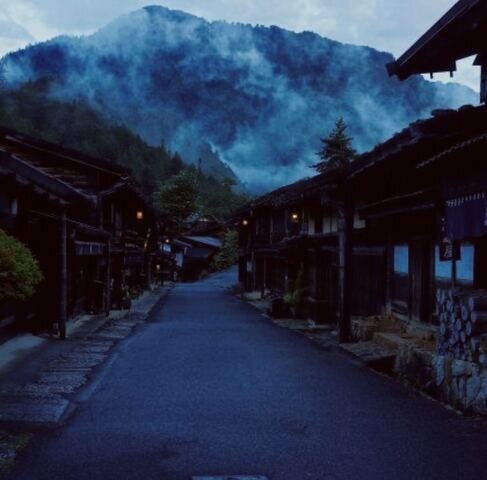
The village lay ahead, its houses barely visible beneath the deepening twilight. A few paper lanterns had been lit, their weak orange glow trembling in the mist. Somewhere near the shrine, a bell began to ring.
I had never been so grateful to hear an ordinary sound.
I ran toward the houses.
At the edge of the village, I passed the old well and the stone marker that stood beside the northern road. I passed a woman carrying a basket of vegetables, who shouted after me when I nearly collided with her.
I did not stop.
I reached my grandparents’ house with my chest aching and my legs trembling so badly that I could barely climb the steps.
The front door was closed.
I struck it with both hands.
“Grandma!”
No answer.
I pounded again.
“Grandpa! Open the door!”
Footsteps sounded inside.
The door slid open, revealing my grandmother with an oil lamp in her hand. She looked irritated at first, prepared to ask why I was making such a noise.
Then she saw my face.
The lamp trembled.
“What happenend? You’re late again.”
I tried to answer, but my words came out in broken fragments. I told her about the forest, the dragging sounds, the mirror, and the woman in white. I told her how tall the figure had been and how she had moved without making a sound.
My grandmother listened without interrupting.
The longer I spoke, the more frightened she became.
When I reached the part about the voice, she seized my wrist.
“What did she say?”
I stared at her.
“She didn’t say anything. She kept making this sound.”
My grandmother’s fingers tightened.
“What sound?”
I swallowed.
“Po… po… po…”
The oil lamp slipped from her hand.
It struck the wooden floor, spilling a little oil, but the flame remained alive.
My grandmother did not look down.
She stared at me as though I had returned from somewhere no living person was supposed to visit.
Then she pulled me inside and slammed the door shut.
“Do not say it again.”
Her voice was so sharp that I fell silent.
She hurried toward the back of the house, calling for my grandfather. I heard a door slide open, followed by the hurried sound of footsteps.
My grandfather appeared a moment later, his gray hair untidy and his expression unusually tense.
My grandmother spoke to him in a whisper.
I could not hear every word.
But I heard enough.
“…the northern path…”
“…the mirror…”
“…the sound…”
My grandfather looked at me.
For a long moment, he said nothing.
Then he asked the question that I would remember for the rest of my life.
“Did she see your face?”
I stared at him.
“What?”
“Answer me. When you saw her, did she turn toward you? Did you see her face? Did she make that sound while looking at you?”
“I don’t know!” I shouted. “I couldn’t see her face! Why are you asking me that?”
My grandfather closed his eyes.
My grandmother covered her mouth.
Neither of them looked relieved.
That frightened me more than the woman herself.
“What is wrong with you?” I demanded. “Who was she? Why are you both acting like this?”
My grandfather turned toward the front door.
“Stay here.”
He did not wait for an answer.
He pulled on his sandals, stepped outside, and hurried toward the neighboring houses.
My grandmother locked the door behind him.
Then she turned to me.
“Listen carefully,” she said. “You are not to leave this house tonight.”
I stared at her.
“Grandma, please tell me what is happening.”
She took my face between her hands and examined me, looking at my eyes, my forehead, and the sides of my head as though searching for something I could not see.
“Did she touch you?”
“No!”
“Did you answer her?”
“No!”
“Did you follow her when she moved?”
“I didn’t follow her! She was standing there, and then I ran!”
My grandmother closed her eyes again.
Her lips moved silently.
I thought she was praying.
Then, from somewhere beyond the front door, I heard my grandfather shouting for the neighbors.
It was the first time I had ever heard him raise his voice.
Within minutes, the village began to stir.
Doors opened.
Footsteps crossed the dirt road.
Men arrived carrying lanterns, and elderly women hurried toward the house with their shawls pulled tightly around their shoulders. My grandfather returned with several relatives, including my parents, who had arrived from the settlement earlier than expected.
My mother rushed through the door and embraced me so tightly that I could barely breathe.
She was crying.
My father stood behind her, his face pale and his jaw clenched. He looked from me to my grandparents, then toward the window facing the northern road.
Nobody asked whether I was telling the truth.
Nobody laughed.
Nobody suggested that I had mistaken a stranger for a ghost.
Instead, every adult in the room seemed to be listening for something outside.
My grandfather closed the shutters.
One of my uncles pushed a wooden chest against the front door. Another relative carried a bundle of old papers into the house, their edges yellowed and brittle with age.
I recognized some of the symbols written across them.
I had seen similar markings at the shrine, though I had never been allowed to touch them.
“What are those for?” I asked.
Nobody answered.
My grandmother took my hand and led me toward the smallest room at the back of the house.
I had slept there many times as a child. It was normally used to store bedding and household objects, but that evening it had been cleared almost completely.
The room smelled of incense, damp wood, and something sharp that reminded me of the water used to clean the shrine.
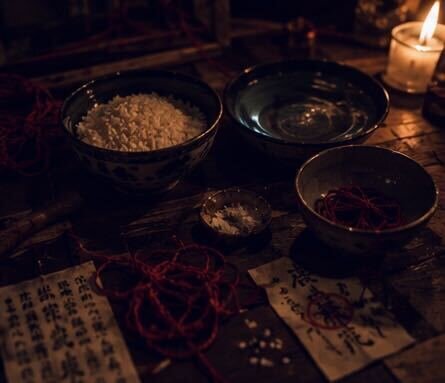
A shallow bowl of water sat near the entrance.
Beside it lay a handful of uncooked rice, arranged in a neat circle around a small ceramic dish.
Three additional bowls had been placed along the walls.
One contained rice.
Another held water.
The third was empty except for a few strands of red thread.
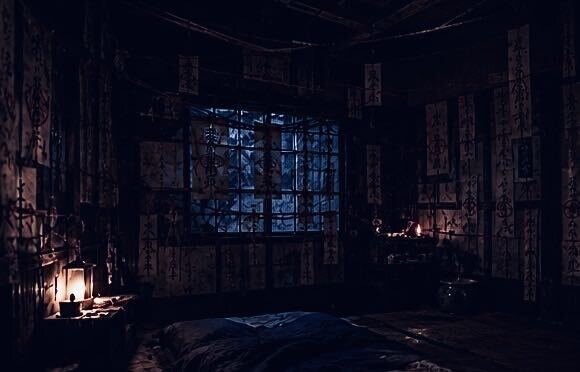
Paper charms had been pasted over the window frames, their edges pressed firmly against the wood. More papers covered the narrow gaps around the door. Strange characters ran across their surfaces in dark ink, written in strokes so old and faded that I could not distinguish one symbol from another.
Red strings had been tied between small wooden pegs in the corners of the room. They crossed above the floor in an uneven pattern, creating a barrier that I could not understand.
At the far end, beside a folded blanket, stood a small covered ceramic vessel.
I pointed toward it.
“What is that?”
My grandmother followed my gaze.
For the first time that evening, she looked genuinely uncertain.
“Do not touch it,” she said.
“But what is it?”
“Do not touch anything in this room unless I tell you to.”
She knelt beside the water bowl and began whispering words I had never heard her speak before.
Outside, the adults were still moving through the house.
I heard my father speaking urgently to my grandfather. Someone was hammering wooden boards across the front windows. A relative hurried past the room carrying another lantern.
Then my grandmother stood and turned toward me.
Her expression had changed.
Whatever fear I had seen on her face before was still there, but now it was accompanied by something harder.
A kind of terrible determination.
“You will remain here until morning,” she said. “You must follow everything I tell you, no matter how strange it seems.”
I nodded.
She took my shoulders.
“If you hear footsteps outside, do not approach the door. If you hear someone calling your name, do not answer. If you hear your mother or father asking you to let them inside, you must not open the door.”
I stared at her.
“But they’re here.”
“I know.”
“Then why would they be outside?”
My grandmother’s hands tightened around my shoulders.
“Because you cannot always trust what you hear in the dark.”
She turned toward the window.
The paper charms fluttered slightly, although the shutters were closed and the air in the room was still.
My grandmother noticed.
Her face went white.
She immediately pressed the corners of the papers against the wood, murmuring something under her breath. Then she drew a length of red thread from her sleeve and tied it around the latch.
“Grandma?”
She did not look at me.
“Whatever happens tonight,” she whispered, “do not open the door or the window.”
A bell rang somewhere in the village.
Once.
Twice.
On the third ring, every voice in the house fell silent.
And from beyond the northern road, faintly carried through the darkness, came a sound I recognized immediately.
“Po… po… po…”
My grandmother stopped breathing.
Then she extinguished the lamp.
The room fell into darkness.
And someone began walking toward our house.
The footsteps were slow.
They came from the northern road, where the trees stood thickest and the mist gathered even in the middle of summer. I could not see the road from where I sat, but I imagined the narrow path winding between the cedar trunks, its damp earth swallowing each step.
One foot.
Then the other.
The sound grew clearer as the footsteps approached, though I could not understand how. There was no crunch of gravel, no rustle of leaves, no sound of clothing brushing against branches.
Only the steady, deliberate rhythm of someone walking toward our house.
My grandfather stood beside the front door with a kitchen knife in his hand. He had never carried a weapon inside the house before. My father stood behind him, holding a wooden staff, while my uncle crouched beside the window with his eyes fixed on the papers covering the shutters.
Nobody spoke.
I looked at my grandmother.
She was staring at the little ceramic vessel in the center of the room.
Her lips moved soundlessly.
The footsteps stopped.
For several seconds, the house was so quiet that I could hear the beating of my own heart.
Then came a knock.
Three times.
My grandfather raised one finger to his lips.
A voice followed.
“Excuse me.”
It was a woman’s voice, soft and polite.
“I seem to have lost my way.”
Nobody answered.
“I have been walking for a very long time.”
The voice sounded distant, as though it came from the far end of the village.
I remembered the old tale.
When a voice sounds far away, the thing calling may already be close.
My stomach tightened.
The woman continued speaking.
“Could someone please tell me where I am?”
My father shut his eyes.
The voice came again, still distant.
“I cannot find the road.”
A floorboard creaked outside.
Then another.
My grandfather tightened his grip on the knife.
The woman was moving.
But the footsteps did not retreat toward the road. They circled the house, passing the front wall and moving slowly toward the eastern side, where my room faced the forest.
I wanted to run to the window.
I wanted to tear away the paper and look outside.
Instead, I sat perfectly still, remembering the shape I had seen in the bronze mirror.
The white dress.
The impossibly tall figure.
The long black hair hanging over a face I had never truly seen.
Then the voice came from the other side of the wall.
“Little boy?”
My breath caught.
Nobody in the room moved.
“Little boy, are you there?”
I looked at my grandmother.
She had gone pale.
The voice was gentle, almost playful, as if someone were calling a child who had wandered too far from home.
“I saw you earlier.”
My fingers curled against the floor.
“You were playing near the trees.”
The room seemed to shrink around me.
My grandfather turned his head very slowly.
His eyes found mine.
He did not need to speak. I understood what he was asking.
Did you tell anyone?
I shook my head.
The voice outside gave a quiet laugh.
“You looked at me.”
A pause.
“Didn’t you?”
I pressed my lips together.
“I only want to speak with you.”
The voice sounded nearer now.
Much nearer.
I could almost imagine a mouth resting against the wooden wall, speaking through the narrow spaces between the planks.
“Come outside.”
My grandmother reached for my hand.
Her palm was damp and trembling.
“Please,” the woman whispered. “I have been looking for you.”
Then she said my name.
Not loudly.
Not angrily.
She spoke it with such familiarity that, for one terrible instant, I felt as though I had known her my entire life.
I nearly answered.
My tongue had already begun to move when my grandmother squeezed my hand hard enough to bring me back to myself.
The woman waited.
When I did not reply, she sighed.
“What a rude child.”
The footsteps resumed.
They moved away from my room, passed the eastern wall, and continued toward the back of the house.
I listened until they disappeared.
Then, from the front of the house, came another knock.
Three times.
My grandfather’s face changed.
Because the footsteps had gone toward the back.
Whatever had knocked at the front door was not the same thing.
“Don’t move,” he whispered.
My father slowly raised the wooden staff.
My uncle backed away from the window.
And my grandmother began reciting a prayer I had never heard before.
A voice spoke from outside the front door.
This time, it was my grandfather’s voice.
“Open the door.”
The real grandfather stood beside us, pale and motionless.
The voice outside repeated itself.
“Open the door. It’s cold out here.”
My grandfather’s knife slipped in his hand.
I stared at him, unable to breathe.
Then the voice outside began to laugh.
It laughed in my grandfather’s voice, with his familiar roughness and his little cough at the end, until the sound became so convincing that I could no longer tell whether the man beside me was real.
My grandmother pulled me into her arms.
“Whatever happens,” she whispered against my hair, “do not look into the mirror.”
I had forgotten the bronze mirror beneath the eaves.
I had forgotten it until that moment.
Because from somewhere outside, beneath the sound of the false grandfather laughing, I heard a faint metallic scrape.
As though someone were lifting the mirror from its hook.
And then came the voice of the woman in white.
“Found you.”
The little ceramic vessel rattled against the floor.
Its lid shifted.
Just once.
My grandmother let out a strangled cry and lunged toward it, pressing both hands against the lid.
My grandfather shouted something in a language I did not understand.
The red strings stretched tight across the room.
And every paper seal covering the windows began to flutter, although the air inside the house was perfectly still.
From the other side of the wall, the woman whispered:
“You shouldn’t have kept it.”
For a long time, nobody dared move.
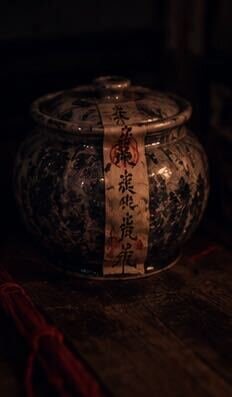
The little ceramic vessel had stopped rattling, but my grandmother still knelt beside it, her hands pressed firmly against its lid. My grandfather stood near the front door, staring at the wooden planks as though he expected them to split apart at any moment.
Then, quite suddenly, the sounds outside ceased.
No footsteps.
No knocking.
No strange voice calling from beyond the walls.
Even the wind seemed to have abandoned the village.
The silence was so complete that I could hear my father breathing beside me.
“Has it gone?” I whispered.
Nobody answered.
My grandmother slowly lifted her hands from the ceramic vessel. She examined the lid, then looked toward the windows. The old paper seals remained in place, their yellowed surfaces covered in symbols that seemed almost black beneath the dying lamplight.
At last, my grandfather lowered his knife.
“Not gone,” he said. “Only waiting.”
Those words stayed with me.
Only waiting.
As though the thing outside had merely stepped away to gather its patience.
My mother returned shortly before midnight.
She was not alone.
An elderly woman and her followers followed her through the front door, carrying a wooden case in one hand and a bundle of dried branches in the other. Her hair was silver, her face deeply lined, and her back bent with age. She wore a plain dark kimono, and a string of small wooden charms hung around her neck.
I had seen her once before at a funeral in a neighboring settlement. The villagers called her miko-sama, although she was not a shrine maiden in the ordinary sense. She was a woman who knew the old rites, the forgotten prayers, and the names of things that respectable people preferred never to mention.
Some called her a healer.
Others called her a witch.
Nobody ever called her a liar.
She did not greet us.
Instead, she placed her wooden case on the floor and examined the paper seals covering the windows.
Her expression darkened.
“Who placed these?”
“My mother,” my grandfather answered.
The old woman shook her head.
“These are old protections. Good ones, but old protections are only as strong as the hands that maintain them.”
She opened her case.
Inside were folded papers, a small wooden mirror, several lengths of red and white cord, a brush, and a bottle of black ink. She also carried a bundle of narrow wooden tablets marked with characters I could not read.
She worked quickly.
At each window, she removed the old paper seal and replaced it with another, writing fresh characters with her brush. She tied red cord across the frames, pressed small wooden charms into the corners, and scattered a thin line of salt along the inner thresholds.
At the front door, she stopped for a long time.
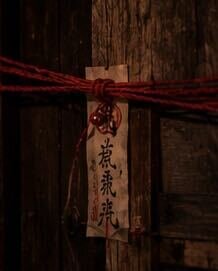
Then she took a narrow strip of paper from her case and wrote a final symbol upon it.
“This one must not be touched,” she said. “Not by anyone.”
My grandfather nodded.
The woman turned toward the room where I sat.
“And the boy?”
My mother came to kneel beside me.
Her eyes were swollen, and she looked as though she had not slept in days.
“He saw her,” she whispered. “He heard her voice. She knows his face.”
The old woman studied me.
“Did you answer her?”
“No.”
“Did you invite her inside?”
“No.”
“Did you look into a mirror after she called you?”
I hesitated.
That hesitation was enough.
My mother’s hand tightened around mine.
The old woman closed her eyes briefly.
“Then she has noticed him.”
My father stepped forward. “Can you protect him?”
“I can keep her outside.”
“That is not what I asked.”
The old woman looked at him.
“Then you are asking me for something no living person can promise.”
Nobody spoke after that.
She returned to her wooden case and took out a final sheet of paper. Unlike the others, this one was pale and almost translucent, with a complicated symbol drawn in red ink.
She placed it above the inner doorway of my room.
Then she turned to me.
“You will remain here until the seventh hour of the morning.”
I stared at her.
“Alone?”
“Alone.”
My mother immediately protested.
“He is only a child.”
“And that is why he must learn to obey.”
The old woman crouched before me. Her eyes were dark and sharp beneath her wrinkled brows.
“Listen carefully. These protections are strong, but they cannot protect you from your own foolishness. You must do exactly as I tell you.”
I nodded.
“First, you will not open the door. Not for anyone.”
“Even my parents?”
“Even your parents.”
“Even if they call my name?”
“Especially if they call your name.”
She waited until I looked directly at her.
“Second, you will not remove the paper seals, touch the red strings, or move anything I have placed in this room.”
I nodded again.
“Third, you will not answer any voice that speaks to you from outside. It may sound like your mother. It may sound like your grandfather. It may sound like someone you have loved and lost.”
She leaned closer.
“Do not trust a voice merely because your heart recognizes it.”
I thought of the thing that had spoken in my mother’s voice.
I thought of the hand that had touched my shoulder.
My stomach twisted.
“Fourth, do not look outside after the midnight bell. If you hear footsteps, ignore them. If you hear knocking, ignore it. If you hear crying, ignore it.”
“What if someone is hurt?”
The old woman did not answer immediately.
Then she said, “Whatever you hear, you must remember that the thing outside wants you to believe you are the only person who can help.”
She rose to her feet.
“Finally, do not uncover your head if you feel something watching you. Cover yourself completely and remain still until the feeling passes.”
I glanced at the thin blanket folded at the end of my bedding.
“How long will I have to stay here?”
“Until seven in the morning.”
“And you will come back?”
My mother reached for me.
“We will come back for you. I promise.”
I wanted to believe her.
I wanted to believe that the woman with the wooden case could protect me, that the strange symbols would hold, that dawn would arrive and everything would return to the way it had been before I saw the woman in white.
But the old woman was looking at the window.
“One more thing,” she said.
Her voice had become so quiet that everyone leaned toward her.
“If you hear a voice coming from very far away, remember that distance is a lie. And if it sounds close enough to whisper beside your ear, do not assume it has found you.”
She looked at me.
“Sometimes, the safest thing you can do is nothing.”
Then she gathered her things.
Before leaving, she placed a small chamber pot beside my bedding.
“For the night,” she explained. “You will not leave this room, no matter what happens.”
I stared at it, humiliated.
My mother brushed my hair away from my forehead.
“I’m sorry,” she whispered.
I wanted to ask her not to leave me.
I wanted to cling to her sleeve and beg her to stay until morning.
But the adults were already preparing to go.
My father embraced me tightly. My grandfather placed a hand on my head. My grandmother kissed my forehead and whispered a prayer against my skin.
Then the old woman stepped through the doorway.
My mother was the last to leave.
She looked back at me once.
“Remember what we told you.”
I nodded.
The door closed.
I heard the wooden bar slide into place.
Then the red cord was tightened across the latch.
Their footsteps faded into the other rooms.
And I was alone.
For the first hour, I tried to be brave.
I sat upright on my bedding, watching the lamp flicker against the walls. The shadows of the wooden beams stretched across the ceiling, changing shape whenever the flame trembled.
I counted my breaths.
I recited multiplication tables.
I repeated the names of every village elder I could remember.
Anything to keep my thoughts from wandering toward the woman in white.
The clock on the wall ticked steadily.
Ten minutes passed.
Then twenty.
Then thirty.
Nothing happened.
I began to feel foolish.
Perhaps the old woman was right about the protections. Perhaps the strange symbols truly could keep the spirit away. Perhaps, by morning, I would be able to laugh at my fear and return to playing with the other boys.
I was beginning to relax when the clock struck midnight.
The first knock came immediately afterward.
It sounded from the front door.
Three slow knocks.
Then silence.
I sat up.
Another three knocks followed.
This time, the sound came from the eastern wall.
I stared at the paper seal above my window.
It did not move.
Then a voice spoke outside.
“Little boy?”
My mouth went dry.
It was the same gentle voice I had heard near the forest.
“I know you are awake.”
I pulled the blanket over my knees.
“Your family has left you alone.”
I pressed my hands against my ears.
“How cruel of them.”
The voice sounded distant.
Terribly distant.
And I knew what that meant.
The thing was close.
Something scraped against the outer wall.
Slowly, it dragged along the wooden planks, passing the window and continuing toward the corner of the room.
I watched the paper seal.
The black characters seemed to grow darker as the lamplight flickered.
A faint tapping began beneath the window.
Tap.
Tap.
Tap.
Then the voice spoke again.
“Let me see your face.”
I squeezed my eyes shut.
“I only want to look at you.”
The tapping stopped.
A long silence followed.
Then something struck the window.
The entire frame shuddered.
I screamed before I could stop myself.
The paper seal fluttered, but it held.
Another impact followed.
Harder.
The wooden shutters groaned inward.
I scrambled backward until my shoulders struck the wall.
Outside, something laughed.
The sound began as a soft, breathy chuckle and slowly rose into a series of strange, broken notes.
“Po… po… po…”
The voice came from the opposite side of the house.
I turned toward the door.
A shadow passed beneath it.
It was impossibly tall.
Its silhouette stretched across the narrow strip of light beneath the door, rising far beyond the height of any ordinary person.
I could see the shape of its head.
And above it, the wide brim of a hat.
The shadow stopped.
Then it bent down.
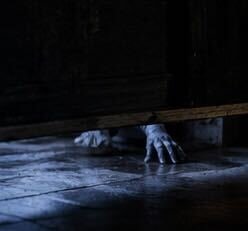
Something pale appeared in the gap beneath the door.
A face.
Not a whole face. Only the lower portion of it, tilted at an unnatural angle.
“Are you hiding?”
I threw the blanket over my head.
The room disappeared into darkness.
I pressed my knees against my chest and covered every part of myself, leaving no gap through which I could see.
I could barely breathe beneath the thick cloth.
Outside, the thing began walking around the house again.
The footsteps grew louder.
Then fainter.
Then louder once more.
The old stories were right.
The sound was never where the thing truly stood.
I heard something dragging across the roof.
A heavy scrape moved from one end of the house to the other.
Dust fell from the ceiling.
Then came three sharp knocks directly above my head.
I bit down on the blanket to keep myself from screaming.
“Little boy.”
The voice was no longer gentle.
“Come outside.”
The paper seals began to rattle.
Something struck the shutters again and again, each impact shaking the wooden frame. The red strings stretched across the room hummed faintly, pulled tight by forces I could not see.
I wanted my mother.
I wanted my grandmother.
I wanted to be anywhere except that room.
The clock continued ticking.
I tried to count the seconds, but I kept losing track.
At some point, I realized I had wet myself.
The warmth beneath me made the truth impossible to ignore.
I stared into the darkness beneath the blanket, burning with shame even though nobody could see me.
I had been so frightened that I could not control my own body.
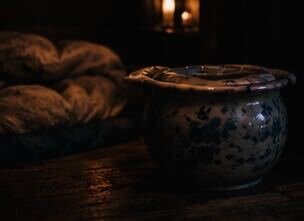
I reached blindly toward the chamber pot my grandmother had left beside the bedding, knocking it slightly with my fingers.
Its ceramic surface made a small, hollow sound.
I froze.
Outside, everything stopped.
The footsteps.
The scratching.
The strange breathing against the wall.
Silence descended upon the house.
Then the woman whispered directly beside my head.
“Found you.”
I clamped both hands over my mouth.
The blanket shifted.
Something had touched it from the outside.
A long, slow pressure moved across the fabric, as though a hand were searching for the edge.
I pulled the blanket tighter around myself.
The pressure stopped above my forehead.
For several seconds, I felt the unmistakable weight of something leaning over me.
Then it began to hum.
A tune my mother used to sing when I was very small.
I had not heard it in years.
My eyes filled with tears.
The melody continued, soft and familiar, until the voice changed.
“Come out, my little boy.”
It was my mother.
Not the woman’s voice imitating her.
My mother’s exact voice, with the slight tremble she always had when she was tired.
“Please. I’m frightened.”
I nearly moved.
I nearly threw the blanket aside and ran toward the door.
Then I remembered the old woman’s warning.
It may sound like your mother.
I buried my face in my knees.
The voice began to cry.
“Please don’t leave me out here.”
I could hear her sobbing.
I could hear her calling my name.
And somewhere beneath the fear, a terrible thought took root.
What if it really was her?
What if the protections had failed?
What if my mother was standing outside, waiting for me to save her?
I lifted one hand toward the blanket’s edge.
Then I stopped.
My grandmother’s voice returned to me.
Do not mistake a familiar voice for a familiar person.
I pulled my hand back.
The crying ceased instantly.
A moment later, something slammed against the door.
The wooden bar groaned.
Another blow followed.
The latch rattled violently.
The thing outside began pounding against the door with such force that the entire room trembled.
I heard the red cord tightening.
I heard the paper seal crackle.
I heard a sound like fingernails dragging down the wood.
And through it all, the voice screamed in my mother’s voice.
“OPEN THE DOOR!”
I pressed myself into the corner of the bedding and did not move.
The assault continued until I could no longer distinguish one impact from another.
Then, suddenly, it stopped.
I remained beneath the blanket.
I did not uncover my head.
I did not look toward the door.
I did not even dare to cry.
Time became something I could no longer understand.
Minutes stretched into hours. My legs cramped, my throat became dry, and the fear that had kept me alert began to dissolve into a heavy, uncontrollable exhaustion.
I was still listening when the clock struck three.
The sound seemed louder than it had at midnight.
One.
Two.
Three.
After the final chime, something began to move inside the walls.
I heard a faint scratching behind the wooden panels, first near the floor, then higher up, then directly above me.
The sound traveled through the house as though something were crawling through spaces that had never existed before.
The paper seals fluttered.
A cold draft brushed across my face.
Then a voice whispered from beneath the floorboards.
“He’s here.”
Another voice answered from the ceiling.
“I know.”
A third spoke from somewhere inside the wall.
“He’s hiding.”
I could not tell whether the voices belonged to different things or whether the same thing had learned to speak from several places at once.
I curled tighter beneath the blanket.
The scratching became frantic.
Something ran across the roof.
The shutters shook so violently that I thought they would break apart.
The door shuddered in its frame.
Then the woman began laughing.
It was no longer a human laugh.
It rose and fell in strange bursts, sometimes high and thin, sometimes so deep that the floor seemed to vibrate beneath me.
I could hear her moving around the room.
Not outside.
Inside.
A footstep sounded beside my bedding.
Then another.
The blanket sagged slightly above my feet.
I held my breath.
Something cold pressed against the fabric.
A finger traced a line along my ankle.
I nearly screamed.
The pressure moved slowly upward, searching.
I pulled my feet beneath my body and curled into the smallest shape I could manage.
The finger withdrew.
A long silence followed.
Then something whispered beside my ear.
“You cannot hide forever.”
I shut my eyes.
“Morning will come.”
A pause.
“But will you?”
I had no answer.
I was no longer capable of thinking clearly. I could only cling to the blanket and wait for the night to end.
Eventually, exhaustion overwhelmed fear.
My eyes closed.
And I fell asleep.
In my dream, I was standing outside my house.
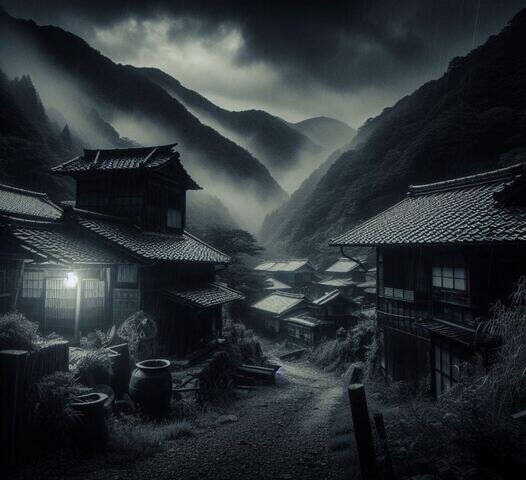
The village lay beneath a pale moon. Mist covered the road, and the cedar trees leaned over the rooftops like silent spectators.
I was barefoot.
My clothes were damp, and the ground beneath me was cold.
The front door stood open.
Warm lamplight spilled across the threshold.
Inside, my family sat around the dinner table.
My mother was serving rice.
My grandfather was laughing at something my uncle had said.
My grandmother looked up and smiled.
“There you are,” she said.
I ran toward them.
But when I reached the doorway, nobody looked at me.
They continued eating, speaking, laughing as though I did not exist.
“Mother?”
She lifted her head.
Her smile widened.
“Come inside.”
I stepped across the threshold.
The room smelled of rice, woodsmoke, and the familiar incense my grandmother burned at the family shrine.
For one moment, I felt safe.
Then I noticed the table.
Every bowl was empty.
Every pair of chopsticks rested untouched beside the plates.
And every member of my family had their face turned slightly toward the same corner.
I followed their gaze.
A woman in white stood beside the window.
Her dress hung straight to the floor.
Her black hair covered her face.
A wide-brimmed white hat rested upon her head.
Nobody seemed to notice her.
My grandmother continued smiling.
“Come closer,” she said.
I stepped backward.
The woman in white lifted her head.
Beneath the brim of her hat, there was no face.
Only darkness.
My mother reached for me.
“Why are you standing there?”
I turned toward her.
Her smile had not changed, but her eyes were completely black.
“Come inside,” she repeated.
Behind me, the woman in white began to speak.
“Po… po… po…”
The sound came from far away.
I knew what it meant.
She was close.
I tried to run, but the floor stretched endlessly beneath my feet. The doorway moved farther away with every step.
My grandfather stood up.
“Open the door,” he commanded.
I looked toward the entrance.
Beyond it, I saw my real bedroom.
My bedding.
The paper seals.
The red strings.
And beneath the blanket, a small figure curled tightly against the wall.
My own body.
I was standing inside my dream, watching myself sleep.
The woman in white moved behind me.
I could hear her breathing.
“Wake up,” she whispered.
I tried to scream.
Nothing came out.
“Wake up.”
Her fingers touched my shoulder.
“Open the door.”
I shook my head.
The woman leaned closer.
Her voice became my mother’s.
“Please, sweetheart.”
Then my grandmother’s.
“Let me in.”
Then my own.
“Wake up.”
The room dissolved into darkness.
And from somewhere beyond the darkness came a final whisper.
“Seven o’clock is too late.”
I woke beneath the blanket with a gasp.
For several seconds, I did not know where I was.
My heart pounded so violently that I thought I might be sick. Sweat clung to my neck, and my clothes were damp against my skin.
Then I heard the clock.
Tick.
Tick.
Tick.
I slowly pulled the blanket away from my face.
The room was dark.
The lamp had gone out.
I could barely see the outlines of the furniture, but the paper seals remained visible against the windows, pale rectangles against the blackness.
I turned toward the clock.
The hands pointed to six.
Six in the morning.
Only one hour remained.
I nearly cried with relief.
I had survived the night.
The thought had barely formed when something struck the door.
The entire frame shook.
I recoiled.
Another blow followed, so hard that the wooden bar cracked down the middle.
The red cord snapped taut.
The paper seal above the door fluttered violently.
Outside, the woman screamed.
It was a terrible sound, high and furious, filled with a rage I had never imagined a human voice could contain.
The door shuddered again.
I scrambled backward, dragging the blanket with me.
The woman struck the door repeatedly.
The latch rattled.
The frame splintered.
But the paper seal held.
Its black characters seemed to deepen beneath the faint gray light filtering through the windows. The red strings stretched across the doorway, trembling like the strings of an instrument being played by invisible hands.
I watched them, unable to breathe.
Then the woman stopped.
Her silence was worse than her screaming.
A moment later, she spoke in my grandfather’s voice.
“Boy.”
I covered my mouth.
“Come here.”
I shook my head, though nobody could see me.
The voice grew louder.
“I said, come here.”
Then it changed.
My father’s voice.
My mother’s voice.
My grandmother’s voice.
Each called me by name, each sounding more desperate than the last.
They told me the others were dead.
They told me the old woman had abandoned me.
They told me the house was burning.
They told me the only way to survive was to open the door.
I stayed where I was.
The clock ticked.
Six fifteen.
Six twenty.
Six thirty.
The woman began striking the door again.
This time, the blows were accompanied by a sound like wood being torn apart. The wall shook, and dust drifted from the ceiling.
I could not understand why the protections were holding. The door looked ready to collapse, yet the paper seal remained intact.
Then I remembered the old woman’s words.
These protections are strong, but they cannot protect you from your own foolishness.
She had not promised the door would never break.
She had only told me what I must do.
Nothing.
I had to do nothing.
So I sat in the corner, covered my head, and waited.
At six forty-five, the woman began to sob.
At six fifty, she started laughing.
At six fifty-five, the entire house fell silent.
I watched the clock.
Six fifty-six.
Six fifty-seven.
Six fifty-eight.
Six fifty-nine.
The minute hand moved.
Seven.
For a moment, nothing happened.
Then I heard my father’s voice outside.
“My son!”
I nearly collapsed with relief.
“Open the door! We’re here!”
My mother’s voice followed.
“Sweetheart, it’s morning!”
I crawled toward the door.
My hands trembled as I reached for the wooden bar.
Then I stopped.
I remembered the old woman’s warning.
Even if it sounds like your mother.
I stood there, staring at the latch.
My father called again.
“Come on! We have to leave!”
The voice sounded impatient now, exactly as it did whenever my father was in a hurry.
I backed away.
“Please!” my mother cried. “Open the door!”
I closed my eyes.
“No,” I whispered.
Silence.
Then, from directly behind the door, the woman in white spoke in her own voice.
“Very well.”
Something scratched across the wood.
Slowly.
Deliberately.
Then the footsteps moved away.
I did not move until I heard my grandfather shouting from the front room.
“Stand back!”
The wooden bar was lifted from the outside. The door opened, and morning light spilled across the floor.
My mother rushed inside.
I ran to her so quickly that I nearly knocked her over.
She wrapped her arms around me and held me against her chest.
For the first time in what felt like a lifetime, I allowed myself to cry.
My father checked the windows. My grandfather examined the seals. My uncle stood at the entrance, looking toward the road.
The old woman entered last.
She walked around the room, inspecting each paper, each string, each wooden charm.
When she reached the door, she stopped.
The paper seal was still intact.
But the wooden frame around it was deeply cracked.
She touched one of the splintered edges.
Then she looked at me.
“You did not open it?”
I shook my head.
“Not even when you heard your family calling?”
“No.”
She studied me for a long moment.
Then she nodded.
“Good.”
My grandmother pulled me into another embrace, weeping openly now. My grandfather placed both hands on my shoulders and looked into my face as though he needed to convince himself that I was truly there.
But there was no time to celebrate.
My father ordered everyone to prepare the van.
We were leaving the village.
Not tomorrow.
Not after another night’s rest.
Immediately.
The van was waiting beside the house, its engine already running.
It was an old, dark vehicle used by one of my relatives to transport goods between settlements. Its windows had been covered with narrow strips of paper bearing protective characters, and red cords had been tied around the door handles and mirrors.
My mother helped me climb inside.
The van was crowded with my father, my grandfather, my uncles, and several male cousins. They sat shoulder to shoulder, their dark clothing blending together in the dim interior.
I did not understand why they had all come.
Then the old woman explained.
“The thing has seen the boy’s face. It may recognize him even from a distance. Today, we will not give it an easy way to distinguish him from the others.”
She instructed every man in the van to cover his head with a dark cloth.
My grandfather changed places with me twice before we left. My uncles exchanged seats. My cousins pulled their collars up and lowered their heads.
I sat between two older relatives, wrapped in a plain dark coat that belonged to my uncle.
Nobody spoke my name.
Nobody looked directly at me.
When the van doors closed, the old woman pressed one final paper seal against the inside of the rear door.
She whispered a prayer.
Then she stepped away.
“Do not stop,” she told my father. “Whatever you see, whatever you hear, do not stop until you reach the city.”
My father nodded.
The van began to move.
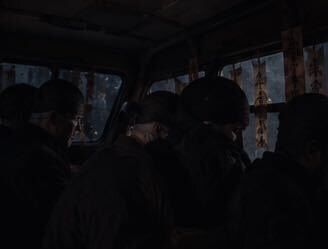
I looked through a narrow gap between the paper strips covering the window.
Our house receded behind us.
The familiar wooden roofs passed by, one after another. The shrine stood beside the road, its stone steps dark with morning dew. Beyond it lay the rice fields, the narrow bridge, and the forest where I had first seen the woman in white.
The village looked exactly as it always had.
That was the cruelest part.
Nothing in the landscape suggested that anything terrible had happened. The sun shone over the mountains, birds called from the trees, and thin trails of smoke rose from the chimneys of houses where people were beginning their morning chores.
Then I saw her.
She stood at the northern end of the road.
Tall.
Motionless.
White against the dark green forest.
Her wide-brimmed hat concealed her face, and her long black hair hung over the front of her dress.
Even from that distance, I recognized her.
The van continued forward.
The woman did not move.
I held my breath as we passed the first row of trees.
Then her head turned.
Slowly.
Far too slowly.
It followed the van as we drove away.
A faint sound reached us through the closed windows.
“Po…”
My grandfather seized my hand.
“Do not look at her.”
But I had already seen her move.
She began walking.
At first, she followed the road at an ordinary pace. Then her steps grew longer, carrying her across the ground with an unnatural smoothness.
The distance between her and the van remained the same.
No matter how quickly we drove, she seemed to keep pace.
My father pressed harder on the accelerator.
The engine roared.
The village disappeared behind a bend in the road, but the woman was still visible through the rear window.
She was no longer walking.
She was gliding.
Her white dress barely moved, and her feet seemed to skim the road without touching it.
Then she stopped.
The van continued toward the mountains.
I watched her become smaller and smaller until she was only a pale shape between the trees.
For one moment, I thought we had escaped.
Then the rear window fogged.
A single line appeared across the misted glass.
As though someone had drawn it with a fingertip from the outside.
My grandfather covered the window with his coat.
Nobody spoke for the rest of the journey.
We reached the city before noon.
My parents took me to a house belonging to a distant relative, far from the mountains and the forests of my childhood. I was told that I would live there for the time being, attend a different school, and never return to the village.
I asked about my friends.
My grandmother told me they were safe.
I asked about our house.
My father said we would speak of it another day.
I asked about the old woman.
Nobody answered.
Eventually, I stopped asking.
Years passed.
I grew taller. My voice changed. The nightmares became less frequent, and the memories of that night faded into the distant corners of my mind.
I learned to live in the city.
I learned to sleep with the windows open.
I learned not to turn around whenever I heard someone walking behind me.
But I never forgot the sound.
“Po… po… po…”
Even now, whenever I hear a distant voice calling from somewhere I cannot see, I remember the old tales.
The farther away the voice sounds, the closer the unseen thing may be.
And the closer the voice sounds, the farther away it may truly stand.
I have never returned to that village.
I never will.
Three days ago, a letter arrived from one of my cousins.
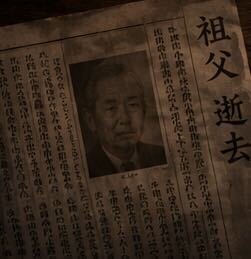
My grandfather had died.
He had lived in the city for several years before returning to the village in his old age. According to the letter, he had passed peacefully in his sleep.
I read the words several times.
I wanted to cry.
I wanted to see him one last time, to stand beside his grave, to thank him for holding my hand inside that van while the woman in white watched us disappear.
But I could not bring myself to go.
I sat beside the window for a long time, holding the letter between my fingers.
Outside, the city moved as it always did. People hurried along the streets, vendors called to their customers, and distant traffic murmured beneath the afternoon sky.
Then, somewhere far beyond the buildings, a voice drifted through the air.
Soft.
Faint.
Almost swallowed by the wind.
“Po…”
I dropped the letter.
For several seconds, I could not breathe.
Then I remembered where I was.
The city.
The crowds.
The distance between me and that forgotten village.
I told myself it was nothing.
A bird.
A child.
A sound carried by the wind.
Anything but what I feared.
Still, I closed the window.
And that night, for the first time in many years, I slept with a blanket pulled over my head.
I never learned whether my grandfather had died peacefully.
Because the letter contained one final sentence, written in my cousin’s unsteady hand.
Before he died, Grandfather kept asking us to lock the doors before sunset.
He said someone tall had been standing outside the house.
Someone wearing white.