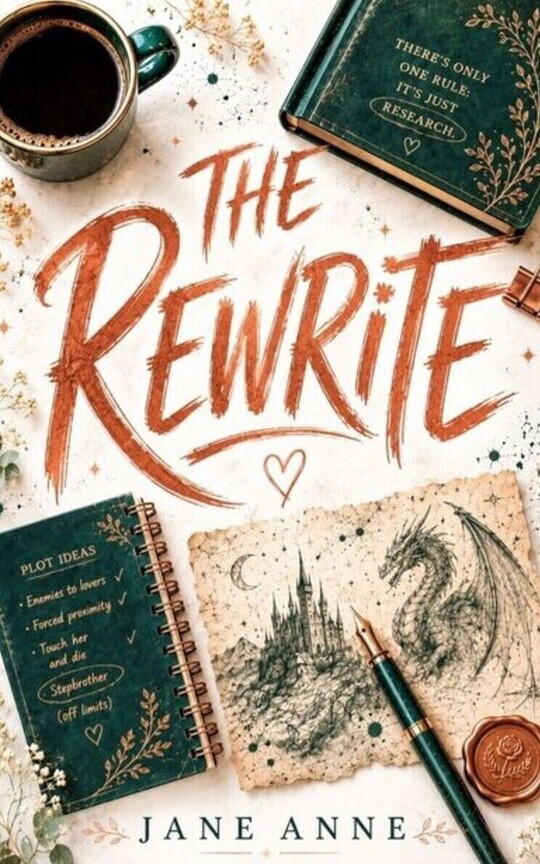
Chapter 1

There were exactly seventeen shades of pink sitting on the reception desk in front of me, and I was beginning to suspect that the difference between dusty rose and muted mauve was something only I cared enough to notice.
I held the two pens beneath the warm glow of my desk lamp, turning them slowly between my fingers as I compared their translucent barrels. The first was a soft, almost powdery pink with a faint gray undertone, while the second leaned toward purple, although the difference was subtle enough that someone less invested in the organization of their stationery might have considered them identical. I had already arranged the remaining fifteen pens in a neat line across the polished marble countertop, beginning with a deep raspberry shade and gradually transitioning through magenta, rose, blush, and several variations of pink so pale they were practically white.
I had purchased the entire collection three weeks ago after convincing myself that having different colors for different tasks would somehow make my workday more productive. So far, the only thing the pens had accomplished was making me ridiculously happy whenever I opened my desk drawer, which, in my opinion, was a perfectly acceptable return on a twenty-eight-dollar investment.
After another moment of deliberation, I placed the dusty rose pen before the mauve one, adjusted the spacing between them, and leaned back to admire my work.
Perfect.
Well, almost perfect.
The raspberry pen was slightly crooked.
I reached forward to straighten it.
“Brynn, I swear to God, if I have to listen to one more millionaire complain about the price of a twelve-dollar bottle of water, I’m going to lose my damn mind.”
My hand jerked, sending the raspberry pen rolling across the counter and directly into the little brass bell I kept beside my computer.
The resulting ding echoed through the reception area.
I closed my eyes.
“Naomi.”
“What?”
“You scared me.”
“Girl, you’ve been sitting here organizing those damn pens for the last ten minutes. I could’ve walked in with a marching band, and you wouldn’t have noticed.”
I looked up to find Naomi Brooks leaning against the opposite side of my desk, her elbows planted on the marble and her expression carrying the unmistakable irritation of someone who had spent the better part of her afternoon dealing with people who believed money exempted them from basic human decency.
Which, considering where we worked, was probably exactly what had happened.
Naomi was twenty-seven, a year older than me, and one of the prettiest women I knew. Her mother was Black, her father was white, and she’d inherited a beautiful combination of their features: warm golden-beige skin, light hazel eyes, a small scattering of freckles across her nose, and thick, dark brown curls that she usually wore pulled into a high ponytail while working. Today, several curls had escaped around her temples, and her glossy lips were pressed into a displeased pout that made it difficult for me to take her irritation as seriously as she wanted.
She wore the standard uniform required of the bartenders at The Veyne, consisting of tailored black trousers, a fitted white button-down shirt, and a black waistcoat embroidered with the club’s gold insignia. A slim black bow tie rested beneath her collar, although she’d loosened it considerably since the beginning of her shift.
I glanced toward the discreet clock positioned above the entrance to the private elevators.
“You know you’re not supposed to be over here while you’re working.”
“And you know you’re not supposed to be sitting at the desk after you’ve clocked out, but here we both are, committing crimes against the Veyne establishment.”
I couldn’t help smiling.
“I clocked out seven minutes ago.”
“Congratulations. Would you like a certificate?”
“No, but I would like you to stop leaning on my pens.”
Naomi looked down, discovered that her elbow was dangerously close to my carefully arranged collection, and deliberately moved it another inch toward them.
I gasped.
“Naomi!”
She burst out laughing, the sound loud enough that I immediately glanced toward the entrance.
“You’re so easy to mess with.”
“Because you’re mean.”
“Because you’re dramatic.”
I shook my head, fighting another smile as I gathered my pens and began returning them to their designated compartment inside the drawer. I had already finished my eight-hour shift, balanced the appointment records for the following morning, and prepared the evening receptionist’s paperwork, but I wasn’t particularly eager to leave. My apartment was only a short subway ride away, and aside from a load of laundry waiting to be folded and a half-finished novel sitting on my nightstand, I didn’t have anything especially exciting planned for the evening.
That was something I had been thinking about more frequently lately.
Not the laundry, although I really did need to stop pretending the clothes in my dryer were going to fold themselves.
My life.
At twenty-six, I had a steady job, a small but comfortable apartment, enough money to cover my bills, and a handful of people who genuinely cared about me. There was nothing particularly wrong with any of it, and I knew how fortunate I was to have the stability I’d worked so hard to achieve. Still, every once in a while, usually when I was lying in bed scrolling through photographs of places I’d never visited, I couldn’t help wondering whether I was supposed to be doing something more.
Something exciting.
Something that would make me look back at my twenties and feel as though I’d actually experienced them rather than simply worked my way through them.
Unfortunately, excitement tended to require either money or courage, and I wasn’t exactly overflowing with either.
“Anyway,” Naomi continued, apparently deciding that my attention had wandered long enough, “as I was saying before you started having an emotional breakdown over a ballpoint pen, I need more money.”
I slid the last pen into its compartment.
“Didn’t you pick up an extra shift on Saturday?”
“Yes, and apparently that was just enough to cover the privilege of existing in New York City.”
I laughed softly.
“I’m serious, Brynn. My landlord raised my rent again, my car insurance went up, and Con Edison sent me a bill that made me wonder whether I’ve been secretly powering the entire Upper East Side.”
“Have you been leaving your air conditioner running?”
“It’s April.”
“That wasn’t a no.”
She narrowed her eyes.
“Whose side are you on?”
“Yours, obviously.”
“Then stop asking reasonable questions while I’m trying to complain.”
I pressed my lips together to contain my laughter.
Naomi sighed dramatically before pushing herself upright and smoothing a hand over the front of her waistcoat.
“I think I’m going to have to start picking up doubles. Maybe Thursdays and Saturdays, because those are usually the busiest nights, and the tips are decent when people aren’t acting like they’re personally financing my retirement.”
“You already work so much.”
“And yet, somehow, my bills keep showing up every month. It’s almost like they don’t care about my mental health.”
“Have you thought about talking to Marcus? Maybe he could give you a few more evening shifts without making you work doubles.”
“Marcus is the problem. That man schedules me like he personally hates me, and then has the nerve to ask why I look tired.”
“He’s not that bad.”
“Brynn.”
“What?”
“That man told me yesterday that smiling is part of the uniform.”
I winced.
“Okay, that’s a little ridiculous.”
“A little? I had just finished serving a table of six grown men who spent forty minutes arguing over a bottle of wine that costs more than my rent, and apparently I was supposed to be smiling like I’d just won the lottery.”
“Maybe he was having a bad day.”
Naomi stared at me.
I stared back.
Her eyebrows slowly rose.
“See, this is exactly what I’m talking about.”
“What?”
“You always do that.”
“Do what?”
“Find a reason to excuse somebody else’s nonsense.”
I opened my mouth, then closed it again.
She pointed at me triumphantly.
“Exactly.”
I knew she wasn’t entirely wrong.
I’d been told more than once that I gave people too many chances, that I was too quick to assume their intentions were good, and that I sometimes confused understanding someone’s behavior with accepting it. It wasn’t something I did deliberately. I simply found it difficult to look at a person and decide they were awful without first considering what might have made them that way.
People had bad days. They experienced stress, disappointment, grief, and a hundred other things that weren’t always visible to the strangers they encountered.
I knew that didn’t excuse treating people poorly.
I just couldn’t help wondering what someone might be carrying before deciding how I felt about them.
Naomi, on the other hand, believed that if someone behaved like an asshole, they should be treated accordingly, regardless of whatever personal tragedy had inspired the behavior.
Sometimes I wished I could borrow a little of her confidence.
“All I’m saying,” she continued, lowering her voice only slightly, “is that it’s insane how much money these people spend in one night while the rest of us are trying to figure out whether groceries or electricity are more important.”
“Naomi,” I whispered, glancing toward the security cameras positioned discreetly above the reception area. “Please keep your voice down.”
“Why? It’s true.”
“I know, but someone could hear you.”
“Good. Maybe they’ll give me a raise.”
“Or fire you.”
She considered that.
“Okay, fair point.”
I smiled as she leaned closer, apparently determined to continue her complaints at a volume only marginally quieter than before.
Working at The Veyne had taught me several things over the last three years, but perhaps the most important was that wealthy people did not particularly enjoy being reminded that the rest of the world existed outside their beautifully maintained little bubble.
And The Veyne was a bubble unlike any other.
Occupying an imposing twelve-story limestone building on Manhattan’s Upper East Side, the private members’ club was one of the most exclusive establishments in New York City. Its exterior was an architectural masterpiece of old-world elegance, with tall arched windows, intricate stone carvings, wrought-iron balconies, and enormous double doors framed by polished brass. During the spring, flowering trees lined the sidewalk, their pale pink blossoms drifting across the pavement whenever the wind picked up, while enormous arrangements of white roses decorated the entrance beneath the club’s discreet gold lettering.
There were no flashing signs, no advertisements, and certainly no crowds of tourists waiting outside for photographs.
The Veyne didn’t need to announce itself.
The people who belonged here already knew exactly where to find it.
Inside, the building was even more breathtaking.
The main lobby, where I spent most of my working hours, featured towering ceilings adorned with intricate plasterwork, enormous crystal chandeliers, and cream-colored marble floors polished so thoroughly that they reflected the golden light overhead. Dark walnut paneling covered portions of the walls, while deep burgundy velvet seating areas offered members somewhere to wait without compromising the room’s carefully cultivated elegance.
Behind my reception desk stood an enormous arrangement of fresh white roses, replaced every morning by a florist who arrived before sunrise. Their delicate fragrance mingled with the faint scent of expensive perfume, polished wood, and the signature sandalwood candles that burned throughout the building.
The entire place smelled like money.
Not that money had an actual smell, obviously, but if it did, I was convinced it would resemble whatever fragrance the Veyne family had commissioned specifically for their club.
The first three floors housed the grand reception areas, formal dining rooms, and several lounges where members could entertain guests beneath the watchful attention of impeccably trained staff. The fourth and fifth floors contained private dining suites, conference rooms, and event spaces used for everything from corporate negotiations to elaborate charity galas.
The sixth floor housed the club’s renowned bar and entertainment lounge, which was where Naomi spent most of her evenings serving cocktails to people who sometimes tipped more generously than they spoke.
Above that were wellness facilities, a private fitness center, several luxurious guest suites, and additional members-only lounges. The eleventh floor contained exclusive executive meeting rooms, while the twelfth was reserved for the family’s private penthouse and a rooftop terrace overlooking Manhattan.
Not every member could access every floor.
In fact, some areas required additional authorization, and certain elevators would refuse to move without the appropriate membership credentials.
I’d learned that particular lesson during my first month of employment when a rather irritated gentleman demanded access to the twelfth floor despite possessing a membership that only permitted him entry through the tenth.
He’d threatened to have me fired.
I’d apologized approximately eleven times before my supervisor intervened.
Looking back, I probably should have stopped after the first apology.
Membership itself was notoriously difficult to obtain.
Prospective members needed recommendations from existing members, extensive background reviews, and approval from a committee that apparently took its responsibility very seriously. Even after paying an initiation fee that could rival the price of a small house, applicants weren’t guaranteed acceptance.
Some people remained on the waiting list for years.
Others never received an invitation at all.
The club catered to an extraordinary collection of individuals: billionaires, professional athletes, influential executives, prominent attorneys, celebrities, international investors, and families whose wealth had been accumulating for generations.
I’d checked in people whose faces appeared on billboards throughout Times Square, welcomed actors whose movies I’d watched in theaters, and once spent an entire afternoon pretending not to recognize a Grammy-winning singer who had specifically requested privacy.
It was an unusual place to work.
Sometimes intimidating.
Occasionally exhausting.
But I loved it.
There was something strangely fascinating about watching so many different lives pass through the same revolving doors, especially when most of those people existed in a world I could only imagine.
And at the center of that world stood the Veyne family.
If New York City had royalty, I was reasonably certain the Veynes would be among the closest things to it.
Their fortune extended far beyond the walls of the club. Veyne Holdings maintained interests in luxury hotels, commercial real estate, private investment firms, restaurants, resorts, and enough additional businesses that I had stopped trying to keep track of them all.
Their surname appeared on buildings throughout Manhattan, their charitable foundation sponsored some of the city’s most prestigious events, and their influence extended into boardrooms and social circles that most people would never come close to entering.
The family didn’t literally own New York, of course.
But sometimes it certainly felt that way.
And of the three Veyne brothers, there was one in particular who had an unfortunate habit of making my brain forget how to function.
Alexander Veyne.
Even thinking his name made something embarrassingly fluttery happen inside my stomach.
Which was ridiculous.
Completely ridiculous.
I was twenty-six years old, not sixteen, and I had absolutely no business getting butterflies over a man who probably couldn’t identify me in a lineup of his own employees.
But apparently, my common sense had decided to take an extended vacation where Alexander Veyne was concerned.
I’d first seen him during my second week at the club.
I remembered the moment with an amount of detail that would have been deeply concerning if I allowed myself to think about it for too long.
He’d entered through the main doors shortly after seven in the evening, dressed in a charcoal-gray suit that looked as though someone had personally sewn it onto his body. His blonde hair had been slightly disheveled, several loose waves falling across his forehead, and his expression had suggested that the entire world was inconveniencing him simply by continuing to exist.
He’d been speaking into his phone.
Something about a contract.
Or a merger.
Or possibly someone getting fired.
I couldn’t remember the conversation itself because I’d been far too distracted by the fact that he was easily the most beautiful man I’d ever seen.
And I meant beautiful.
Not handsome in the ordinary sense, although he certainly qualified for that description. Alexander possessed the kind of striking facial features that seemed almost unfair when combined with the rest of him.
At six feet five inches, he towered over nearly everyone who entered the lobby. His build was lean but broad through the shoulders, his jawline looked sharp enough to cut glass, and his straight, perfectly proportioned nose sat above a pair of full lips that rarely appeared interested in smiling.
Then there were his eyes.
Goodness gracious.
His eyes.
A pale, almost delicate shade of baby blue that contrasted beautifully with his blonde hair and somehow managed to look permanently unimpressed.
I’d never been particularly interested in men with light eyes before meeting Alexander Veyne.
Apparently, I’d simply never encountered the correct pair.
The first time he’d looked directly at me, I’d forgotten how to operate the computer sitting three inches from my face.
He’d asked whether a particular meeting room was available.
A perfectly ordinary question.
One I answered approximately twenty times a day.
And instead of responding like a competent adult woman who had successfully completed several weeks of employee training, I’d stared at him for an uncomfortable amount of time before blurting out that the weather was lovely.
The weather.
He’d asked about a meeting room.
I’d told him about the weather.
I still wanted to crawl underneath my desk whenever I remembered it.
Alexander had looked at me for another second, his expression entirely unreadable, before repeating his question.
I’d eventually managed to answer.
He’d walked away.
And I’d spent the remainder of my shift contemplating whether changing my name and moving to another country would be an appropriate response to the humiliation.
Unfortunately, things hadn’t improved much since then.
Over the years, I’d become familiar with his schedule, although not because I was deliberately keeping track of him.
That would have been strange.
I simply happened to notice that he usually arrived on Tuesday and Thursday afternoons, occasionally appeared for private dinners on Fridays, and almost never stayed longer than necessary unless he was attending a family event.
I knew he preferred the private elevators.
I knew he rarely stopped to make conversation.
And I knew that when he was particularly irritated, he had a habit of adjusting the cuff of his watch before delivering a remark that usually left someone looking as though they’d just been slapped.
Not that I found his rudeness attractive.
I didn’t.
Well.
Not exactly.
There was something undeniably compelling about a man who carried himself with that much confidence, but I wasn’t foolish enough to mistake arrogance for kindness.
Alexander Veyne had a reputation, and it wasn’t a particularly warm one.
He was notoriously difficult to please, brutally direct, impatient with people he considered incompetent, and apparently incapable of pretending to enjoy a conversation that bored him.
I’d witnessed him dismiss an entire group of executives with nothing more than a bored glance and a curt instruction to reschedule when they had something worth discussing.
I’d also watched him walk straight past a woman who had spent nearly five minutes attempting to flirt with him.
He hadn’t even acknowledged her.
The poor woman had looked devastated.
I’d felt terrible for her.
Then I’d privately thanked the universe that my own embarrassing attraction had never progressed beyond the occasional greeting.
Because the truth was, I knew absolutely nothing about Alexander Veyne beyond what I’d observed and what people whispered about him.
He was wealthy.
He was beautiful.
He was frequently unpleasant.
And he was so far outside my world that the idea of anything happening between us was almost laughable.
That didn’t stop my imagination from occasionally wandering, though.
Sometimes, while lying in bed after a particularly long shift, I’d find myself wondering what he would look like without one of those expensive suits. Whether his blonde hair was as soft as it appeared. Whether those permanently unimpressed eyes ever warmed when he looked at someone he genuinely cared about.
I’d wondered what his voice would sound like if he spoke softly instead of issuing instructions.
What it might feel like to have his enormous hand resting against my waist.
Whether a man who looked that annoyed with the world could actually kiss someone gently.
The last thought usually made me bury my face in my pillow and question every decision that had led me to becoming a grown woman with a crush on her employer.
It was harmless.
A private little fantasy that belonged entirely to me.
And that was where I intended to keep it.
Besides, I was fairly certain Alexander Veyne didn’t even know my name.
“Brynn.”
I blinked.
“Sorry, what?”
Naomi stared at me from across the desk.
“Girl, where did you just go?”
“Nowhere.”
“You’ve been smiling at that drawer for like thirty seconds.”
I immediately stopped smiling.
“I wasn’t.”
“You absolutely were.”
“I was thinking.”
“About?”
“Nothing important.”
She tilted her head, studying me with the kind of suspicion that only someone who knew me extremely well could manage.
Then her mouth slowly curved.
“Oh, I know that look.”
My stomach dropped.
“What look?”
“That little dreamy look you get when you’re thinking about somebody.”
“I don’t have a dreamy look.”
“Brynn, please. Your whole face changes.”
I felt warmth creep into my cheeks.
“Naomi.”
“Is it a man?”
“No.”
“That was too fast.”
“Because the answer is no.”
“Is he cute?”
I reached for my water bottle.
“Can we please talk about something else?”
She gasped dramatically.
“Oh, my God. There is somebody!”
“You’re going to get us both in trouble.”
“Who is he?”
“Naomi.”
“Do I know him?”
I took a long drink of water, hoping she would interpret my silence as a refusal to participate rather than the very obvious avoidance tactic it was.
Unfortunately, Naomi Brooks had never been particularly respectful of my attempts to avoid uncomfortable conversations.
“Wait a minute,” she murmured, leaning closer. “Is it somebody who works here?”
I nearly choked.
She slapped a hand over her mouth.
“Brynn!”
“Would you please stop saying my name so loudly?”
“You’re blushing!”
“I am not.”
“Your ears are literally turning red.”
I pressed my palms against my cheeks.
They were warm.
Traitors.
“Can you please go back to complaining about your bills?”
“Oh, now you want to hear about my bills.”
“Very much.”
Naomi opened her mouth, presumably preparing to interrogate me further, when a soft chime sounded from the entrance.
The enormous double doors had opened.
And with them came a woman who seemed to carry the entire atmosphere of the building around her.
Eleanor Veyne.
I straightened instinctively.
Mrs. Veyne was one of those women who made elegance appear effortless. She was in her late fifties, although I never would have guessed it from her appearance, with beautifully maintained blonde hair styled into a smooth, shoulder-length blowout and a complexion that seemed almost luminous beneath the chandeliers.
Today, she wore a cream-colored Chanel tweed jacket over a matching silk blouse, tailored trousers, and a pair of nude heels that clicked delicately against the marble floor. A structured handbag hung from her forearm, while a single strand of pearls rested against her collarbone.
Her jewelry was understated.
Her posture was impeccable.
And the faint scent of expensive floral perfume followed her as she approached.
I’d seen Mrs. Veyne countless times throughout my employment, usually arriving for charity meetings, private lunches, or events she personally oversaw at the club. Unlike some of the members, she always acknowledged the staff, and she had an extraordinary ability to remember names despite the number of people who worked throughout the building.
I’d once watched her spend nearly ten minutes speaking with one of our housekeepers about the woman’s daughter’s college acceptance.
She’d seemed genuinely delighted.
It was one of the reasons I’d always liked her.
“Good afternoon, ladies.”
Her voice was warm and beautifully composed.
Naomi immediately pushed herself away from the desk, straightening her waistcoat so quickly that I almost laughed.
“Good afternoon, Mrs. Veyne.”
I smiled.
“Good afternoon, ma’am. How are you today?”
“Quite well, thank you, sweetheart. Although I must say, this weather has been terribly unpredictable.”
I glanced toward the windows.
Beyond the glass, Manhattan was enjoying one of those lovely spring afternoons that made the city feel almost romantic. Sunlight filtered through the flowering trees lining the sidewalk, illuminating the pale blossoms scattered across the pavement, while pedestrians moved along the street in light jackets and sunglasses.
It had rained earlier that morning, leaving the pavement slightly damp, but the clouds had gradually parted around lunchtime.
“At least the sun finally came out,” I offered.
Mrs. Veyne smiled.
“Yes, thank goodness. I was beginning to think we’d forgotten what it looked like.”
Naomi chuckled politely.
I had to bite the inside of my cheek.
It was remarkable how quickly her entire personality changed in the presence of someone who could potentially influence her employment.
“Is there anything we can assist you with today?” I asked.
“Oh, no, darling. I’m only stopping by for a meeting upstairs. My husband has apparently decided that a perfectly reasonable discussion requires three separate presentations and an entire afternoon.”
She sighed, although there was unmistakable affection beneath her exasperation.
“Men do have a talent for complicating things, don’t they?”
Naomi nodded enthusiastically.
“They certainly do.”
I looked down before my expression could betray me.
Mrs. Veyne laughed softly.
“Well, I won’t keep you girls. Enjoy the rest of your afternoon.”
“You too, Mrs. Veyne,” I replied.
She continued toward the private elevators, her heels clicking softly against the marble as she passed the enormous arrangement of white roses positioned beside the seating area.
I was just reaching for my handbag when something slipped from beneath her arm.
A small, cream-colored leather wallet.
It struck the floor with a muted sound, skidding several inches across the polished marble before coming to rest near the edge of the reception desk.
Mrs. Veyne didn’t seem to notice.
She was already several steps away.
“Oh!” I exclaimed, rising from my chair. “Mrs. Veyne!”
She continued walking.
I hurried around the desk, my heels tapping against the floor as I bent to retrieve the wallet.
It was beautiful, made from soft cream leather with a delicate gold clasp and an embossed designer logo on the front. The kind of wallet I would probably spend several months saving for before eventually deciding that my current one worked perfectly fine.
“Mrs. Veyne!”
This time, she turned.
I approached her with the wallet held carefully between my fingers.
“You dropped this.”
Her eyes widened.
“Oh, goodness.”
She glanced down at the wallet before looking back at me.
“I didn’t even realize.”
I smiled and extended it toward her.
“It fell when you were walking past the desk.”
“Well, thank you, sweetheart.”
She accepted it, briefly checking that everything was still inside before returning her attention to me.
“That was very kind of you.”
“Of course.”
“And such a beautiful young lady, too.”
The compliment caught me off guard.
I felt my cheeks warm almost immediately.
“Oh, thank you, ma’am.”
“No need to look so bashful. Surely you hear that quite often.”
I laughed softly, tucking a loose copper-brown curl behind my ear.
“I suppose, sometimes.”
“Well, whoever tells you certainly isn’t exaggerating.”
Her gaze moved over my face with an appreciation that made me suddenly aware of the fact that I’d spent the last several hours sitting beneath unforgiving reception lighting.
I’d worn my hair down today, allowing the long copper-brown curls to fall freely over my shoulders and down my back. I’d kept my makeup relatively simple, with a little concealer, mascara, blush, and a soft pink gloss that had probably disappeared sometime around lunch.
My eyes tended to attract attention regardless of how much makeup I wore.
The right was green, while the left was a warm milk-chocolate brown, and the difference had inspired more questions from strangers than I could count.
Some people thought I wore colored contacts.
Others asked whether I’d been born that way.
A surprising number seemed convinced that having two different eye colors meant I possessed some sort of unusual genetic ability.
I didn’t.
Unless organizing stationery by color qualified.
Mrs. Veyne smiled again before glancing at the wallet in her hand.
“You know, not everyone would have returned this.”
I blinked.
“I’m sorry?”
“The wallet,” she clarified. “There are plenty of people who would have taken it, particularly without anyone noticing.”
I glanced toward the security camera above the elevator.
Technically, someone probably would have noticed.
Eventually.
But that wasn’t really the point.
“Oh, I couldn’t do that.”
“Couldn’t?”
I shook my head.
“No, ma’am. It doesn’t belong to me.”
She studied me for a moment.
“That doesn’t seem to stop everyone.”
I considered her words, remembering something I’d read several months earlier in a novel I’d borrowed from the library.
It had been one of those books that stayed with me long after I’d finished it, not necessarily because the story itself had been extraordinary, but because several passages had made me stop and think about the kind of person I wanted to be.
“There’s a line I remember from a book,” I said, smiling a little. “It said something along the lines of, ’Just because something is within your reach doesn’t mean it belongs in your hands.’”
I couldn’t remember the exact wording, and I wasn’t about to pretend otherwise, but the sentiment had stayed with me.
Mrs. Veyne’s expression shifted.
Not dramatically.
Just enough that I noticed.
“That’s a lovely thought.”
“I think so.”
“And one you seem to live by.”
I glanced down at my hands, suddenly unsure what to say.
“I just think people should be able to trust that if they lose something, whoever finds it will try to give it back.”
For a moment, she didn’t respond.
Her gaze lingered on me with a quiet attentiveness that made me wonder whether I’d said something strange.
I hoped not.
I had a habit of talking more than necessary whenever I became nervous, which was unfortunate considering how frequently I became nervous.
Then she smiled.
A genuine, thoughtful smile.
“What’s your name, sweetheart?”
I blinked.
“Brynn.”
“Brynn,” she repeated.
“Brynn Carter.”
“Well, Brynn Carter, it was a pleasure speaking with you.”
My smile widened.
“The pleasure was mine, Mrs. Veyne.”
She gave my arm a gentle pat.
“And thank you again for returning my wallet.”
“You’re very welcome.”
The elevator chimed behind her.
Its polished brass doors slid open, revealing the softly illuminated interior.
Mrs. Veyne stepped inside, then turned toward me once more.
“Have a wonderful evening, Brynn.”
“You too, ma’am.”
The doors began closing.
And just before they met, I caught one final glimpse of Eleanor Veyne watching me with an expression I couldn’t quite interpret.
It wasn’t displeasure.
Nor was it simple politeness.
She looked almost... curious.
Then the doors closed completely, leaving me standing in the quiet reception area with absolutely no idea why my brief conversation with the owner’s wife had suddenly made me feel as though I’d been interviewed for something.
I stared at the elevator for another second.
Then I turned around.
Naomi was waiting behind my desk.
Her arms were crossed.
Her expression was completely serious.
And somehow, before she even opened her mouth, I knew she was about to say something ridiculous.
“I would’ve stolen it.”
I stopped walking.
“Naomi!”
“What?”
I glanced toward the elevator, horrified.
“Would you please lower your voice?”
“Girl, she’s gone.”
“That doesn’t mean you should say things like that.”
Naomi shrugged.
“Did you see that wallet? That thing probably costs more than my car payment.”
“That doesn’t make it yours.”
“I didn’t say it did.”
“You literally just said you would’ve stolen it.”
“And I stand by that statement.”
I stared at her.
She stared back.
Then she tilted her head.
“Okay, maybe not stolen it. But I definitely would’ve opened it to see what was inside.”
“Naomi.”
“What? Curiosity is natural.”
“So is minding your business.”
She gasped.
“Look at you getting sassy!”
I laughed despite myself, shaking my head as I returned to my chair.
Naomi leaned across the desk again, lowering her voice conspiratorially.
“Seriously, though. Mrs. Veyne was looking at you kind of funny.”
I paused.
“You noticed that?”
“Of course I noticed. She looked like she was trying to figure something out.”
“Maybe she was just surprised.”
“By what?”
“I don’t know. The wallet?”
Naomi gave me a long, unimpressed look.
“Brynn, baby, sometimes I really worry about you.”
“Why?”
“Because you could have a whole billionaire standing in front of you offering to change your life, and you’d probably ask if he needed directions.”
I laughed, pulling my handbag onto my lap.
“That’s ridiculous.”
“Is it?”
“Yes.”
She shook her head, smiling.
“You’re too sweet for this place.”
I looked around the lobby, taking in the towering chandeliers, the immaculate marble, the fresh roses, and the quiet elegance that had become so familiar to me over the last three years.
Maybe she was right.
Maybe I was a little too trusting.
A little too eager to believe people meant well.
And maybe I spent too much time daydreaming about things that would probably never happen.
But I didn’t think there was anything wrong with being kind.
The world already had enough people who believed cruelty made them powerful.
I didn’t see why I needed to become another one.
“Well,” I said, slipping the strap of my handbag over my shoulder, “somebody has to balance out your terrible personality.”
Naomi’s mouth fell open.
“Oh, you little—”
I burst into laughter.
She pointed a perfectly manicured finger at me.
“See? That’s why I like you. You act all innocent, but every now and then, you remember you have a mouth.”
“Only when necessary.”
“Apparently.”
I rose from my chair, smoothing the front of my cream blouse and checking that my belongings were tucked safely inside my bag.
Naomi glanced toward the elevators before straightening.
“Anyway, I better get back upstairs before Marcus sends out a search party.”
“Please don’t get yourself fired.”
“No promises.”
“Naomi.”
“I’m kidding!”
I gave her a skeptical look.
She leaned across the counter and squeezed my hand.
“Text me when you get home, okay?”
“I will.”
“And don’t forget we’re supposed to go shopping this weekend.”
“I haven’t forgotten.”
“Good. Because I need somebody to talk me out of buying things I can’t afford.”
I smiled.
“That’s usually what I do.”
“Exactly. You’re my financially responsible friend.”
“You’re literally the one who just told me you needed more money.”
“And that’s why I need you.”
We both laughed.
Then Naomi rounded the desk, gave me a quick hug, and hurried toward the elevators, already adjusting her bow tie as though she hadn’t spent the last fifteen minutes complaining about the very establishment that employed her.
I watched her disappear before turning back toward my workstation.
My evening replacement would arrive shortly, and everything was already prepared for her.
The appointment records were organized.
The guest registration forms were stacked neatly.
My computer was logged out.
And my seventeen pink pens were arranged perfectly inside their drawer.
I gave the desk one final inspection before reaching for my coat.
Outside, the late-afternoon sunlight was beginning to soften, casting a warm golden glow through the enormous windows and illuminating the white roses near the entrance.
Another ordinary day at The Veyne.
Another afternoon spent greeting people whose lives were vastly different from mine.
And another evening waiting for me in my little apartment, where I would probably make pasta, read a few chapters of my book, and fall asleep with the television playing quietly in the background.
There was comfort in that routine.
I liked knowing what to expect.
I liked the little life I’d built for myself, even if it wasn’t particularly extraordinary.
And as I slipped my arms into my coat, I found myself thinking about something Naomi had said.
You’re too sweet for this place.
Perhaps I was.
But I hoped that wouldn’t ever change.
Because whatever life eventually had in store for me, I wanted to believe that kindness would always be worth holding on to.
Even in a city where almost everything seemed to have a price.
And especially in a place like The Veyne.
By the time I finished showering, eating dinner, and convincing myself that the dishes sitting in my sink could survive until tomorrow morning, it was nearly nine o’clock.
Outside my bedroom window, New York City had settled into the familiar rhythm of an early spring evening, although settled was probably an inaccurate description for a place that never seemed particularly interested in slowing down. The occasional blare of a car horn drifted up from the street below, mingling with the distant rumble of traffic and the muffled conversations of pedestrians making their way along the sidewalk. Somewhere nearby, a siren wailed before gradually fading into the distance, leaving behind the steady hum of a city that continued moving regardless of whether the people living inside it were ready to rest.
I loved New York, even when it exhausted me.
There was something comforting about knowing that thousands of lives were unfolding around me at any given moment, each person carrying their own collection of worries, ambitions, heartbreaks, and little victories. Sometimes, when I couldn’t sleep, I liked sitting beside my window and watching the illuminated apartment buildings across the street, wondering about the people behind those glowing squares of glass. I wondered whether they were happy, whether they’d eaten dinner, whether someone had called to ask about their day, or whether they were sitting alone wishing they had someone to talk to.
I supposed that was a strange thing to think about.
Naomi would probably tell me I needed a hobby that didn’t involve emotionally investing myself in complete strangers.
She wouldn’t necessarily be wrong.
My apartment was small, occupying the fourth floor of an older brick building that had probably been considered charming long before the landlord discovered he could charge an unreasonable amount of money for its square footage. It had one bedroom, one bathroom, a narrow kitchen, and a living room that was barely large enough to accommodate my cream-colored loveseat and the little round coffee table I’d purchased secondhand shortly after moving in.
Still, it was mine.
Well, technically, it belonged to my landlord, and I paid him a rather depressing amount of money every month for the privilege of pretending otherwise, but I’d done my best to make it feel like home.
The walls were painted a warm shade of ivory, and most of my furniture came in soft neutrals, pale pinks, and natural wood tones. A collection of framed photographs occupied the narrow bookshelf beside my television, along with several candles, a small ceramic vase filled with artificial peonies, and enough novels to make the shelves bow slightly beneath their weight. My mother had crocheted the cream throw blanket draped across my loveseat, while Brielle had given me the little pink ceramic jewelry dish sitting on my nightstand for my twenty-fifth birthday.
None of it was particularly expensive.
Most of it had been collected slowly, one paycheck at a time.
But I loved every little piece.
I’d spent the first half hour after getting home preparing dinner, which consisted of garlic butter pasta, roasted broccoli, and the leftover chicken I’d cooked two nights earlier. I’d eaten while watching an episode of a cooking competition, silently rooting for a woman who had somehow managed to burn her caramel three separate times without losing her determination to finish the challenge.
Afterward, I’d taken a long shower, washed away the remnants of my makeup, and worked a generous amount of leave-in conditioner through my curls before loosely gathering them into a pineapple atop my head. I was currently wearing an oversized pink T-shirt that had survived approximately six years of regular use and a pair of matching cotton shorts, both of which were far too comfortable for me to consider replacing anytime soon.
My skincare routine was finished, my bedroom smelled faintly of vanilla body lotion, and I’d already turned down the covers on my bed.
All that remained was calling my little sister.
As if summoned by the thought, my phone began vibrating against the nightstand.
I glanced at the screen.
Brielle Carter
A smile spread across my face before I even answered.
I reached for my phone, settled against the pillows arranged behind my back, and accepted the FaceTime call.
Almost immediately, my younger sister’s face filled the screen.
“Brynn!”
I laughed at the volume of her greeting.
“Goodness, Bri. Why are you yelling?”
“Because I’ve been calling you!”
“You called me once.”
“Twice, actually.”
“Well, forgive me for taking a shower.”
She rolled her eyes, although the enormous smile stretching across her face made it impossible for her to look genuinely annoyed.
Brielle was eighteen, eight years younger than me, and currently in the final months of her senior year of high school. We resembled each other enough that strangers frequently recognized us as sisters, although she’d inherited our mother’s dark brown eyes rather than my mismatched pair, and her hair was a deeper shade of brown than my copper-colored curls. Her complexion was a little warmer than mine, and her cheeks were fuller, giving her a youthful appearance she absolutely hated whenever someone pointed it out.
She was beautiful, intelligent, and considerably more outspoken than I’d ever been at her age.
Sometimes I wondered how two people raised in the same household could have such different personalities.
Then I remembered that Brielle had spent most of her childhood watching me apologize to furniture after accidentally bumping into it, and I supposed she’d decided one overly polite daughter was enough for our family.
“Anyway,” she announced, shifting around on what appeared to be her bed, “I have something to tell you.”
I adjusted my pillows.
“Okay.”
“No, like, something really important.”
My smile widened.
“You’re making me nervous.”
“Good.”
“Brielle.”
She giggled, and I watched as she reached for something outside the camera’s view.
“Okay, so remember how I told you I was waiting to hear back from Duke?”
My heart immediately gave a little jump.
“Yes?”
“And remember how I said I probably wasn’t going to get in because their acceptance rate is ridiculously low, and there are literally thousands of people applying who are probably smarter than me?”
“I also remember telling you to stop saying that.”
“Yeah, well, apparently you were right.”
For a moment, I simply stared at her.
Then she lifted a piece of paper toward the camera.
The words at the top were slightly blurry, but I could make out the university’s name and the beginning of what appeared to be an acceptance letter.
My mouth fell open.
“Brielle.”
She grinned.
“Brielle!”
“I GOT IN!”
I screamed.
Actually screamed.
Loud enough that I immediately clapped a hand over my mouth, remembering that my neighbors probably didn’t appreciate hearing a grown woman shrieking at nine o’clock on a weeknight.
“Oh, my goodness!”
My sister burst into laughter.
“Brynn!”
“YOU GOT INTO DUKE?”
“YES!”
“Oh, my goodness, Bri!”
I sat upright so quickly that my pillows slid down behind me.
“Are you serious? Let me see! Hold it closer!”
She pushed the letter toward the camera again, laughing as I attempted to read the words through the slightly distorted image.
There it was.
Her name.
The university’s official letterhead.
And the words welcoming her to the incoming freshman class.
My eyes immediately began burning.
“Oh, sweetheart.”
Brielle’s smile softened.
“Don’t start crying.”
“I’m not crying.”
“Brynn.”
“I’m not!”
A tear slipped down my cheek.
She groaned.
“Oh, my God. You’re literally crying.”
“I can’t help it!”
I laughed through the sudden tightness in my throat, wiping beneath my eyes with the sleeve of my shirt.
“I am so proud of you.”
Her expression changed in that lovely, subtle way it always did whenever she was genuinely touched by something but didn’t want to make a big deal out of it.
“Thank you.”
“No, seriously, Brielle. You worked so hard for this.”
And she had.
For as long as I could remember, Brielle had been the kind of student who approached her education with a determination that sometimes bordered on obsession. She’d spent countless evenings studying at the kitchen table, volunteered at community events, participated in academic programs, and taken advanced courses whenever her school offered them.
She’d sacrificed weekends, skipped parties, and spent entire summers preparing for opportunities that might help her stand out when college applications finally opened.
Duke had been her dream for years.
She’d first mentioned it when she was fourteen, after watching a video about the university’s campus and academic programs. At the time, she’d been sitting cross-legged on my bedroom floor, excitedly showing me photographs of the beautiful stone buildings and sprawling green lawns.
She’d told me she wanted to go somewhere that would challenge her.
Somewhere she could become the person she imagined herself being.
And now, four years later, she’d done exactly what she’d set out to do.
I couldn’t have been prouder.
“Did you tell Mom and Dad?” I asked.
She nodded.
“Yeah. Mom cried, obviously.”
I laughed.
“Of course she did.”
“And Dad kept reading the letter like he thought they might’ve sent it to the wrong person.”
“That sounds like Daddy.”
“He made me pull up the email, too.”
I laughed harder.
“Oh, goodness.”
“He said he just wanted to make sure it was legitimate.”
“Well, you know how he is.”
“Yeah, but then he hugged me for, like, five whole minutes.”
My chest warmed.
I could picture it perfectly.
Our father wasn’t a particularly emotional man, at least not in the way our mother was. He rarely cried, didn’t always know how to express what he was feeling, and sometimes preferred showing his affection through little acts of service rather than words.
But he loved us fiercely.
And I knew how much Brielle’s acceptance would mean to him.
“He’s proud of you,” I said softly.
“I know.”
She smiled.
Then, almost as quickly as it had appeared, the smile began to fade.
I noticed immediately.
“What’s wrong?”
“Nothing.”
“Bri.”
She sighed, lowering the acceptance letter onto her lap.
“It’s just...”
I waited.
She looked away from the camera.
“I don’t think I’m actually going to be able to go.”
My heart sank.
“What do you mean?”
She gave a small shrug.
“You know what I mean.”
I did.
Unfortunately, I knew exactly what she meant.
Money.
It always seemed to come back to money.
Our parents had worked hard for everything we had growing up, but hard work didn’t always translate into financial comfort. My mother worked long hours, and my father had spent years taking whatever additional shifts he could manage to keep our household running. They’d never allowed Brielle or me to go without the things we genuinely needed, although I’d grown old enough to recognize the difference between having everything and having parents who were exceptionally good at making very little stretch.
There had been birthdays when my mother insisted she didn’t want anything because she was perfectly happy watching us open presents.
Christmases when my father claimed he’d already bought himself something earlier in the year.
And countless evenings when I’d overheard hushed conversations about bills after my parents thought Brielle and I had gone to sleep.
They’d done their best to shield us from their financial struggles.
But children noticed things.
Especially children who paid attention to other people’s feelings as much as I did.
I’d learned early on that sometimes my mother’s smile was a little too tired, that my father’s silence at the dinner table usually meant something was bothering him, and that an unexpected expense could change the atmosphere of our entire home.
Things hadn’t gotten much easier since I’d moved out.
If anything, the cost of living had made everything more difficult.
My parents were barely making ends meet, and although they never asked me for money outright, I tried to help whenever I could.
Sometimes that meant sending my mother a little extra money for groceries.
Other times, it meant paying a bill before she had the opportunity to worry about it.
Over the last several months, I’d picked up additional shifts at The Veyne whenever they became available, setting aside what I could to help cover Brielle’s senior-year expenses. Her class trip had been particularly expensive, and although our parents had insisted they would figure something out, I’d quietly contributed enough to make sure she could attend without feeling guilty about the cost.
There had also been graduation fees, school activities, college application expenses, and a seemingly endless collection of little things that added up far more quickly than anyone expected.
I didn’t mind helping.
Not even a little.
Brielle deserved to enjoy her senior year without constantly worrying about whether our family could afford the same experiences as everyone else.
And I knew our parents would have done the same for me.
The problem was that I wasn’t exactly swimming in money myself.
My salary at The Veyne was decent for a front desk position, especially considering the benefits, but living alone in New York consumed a considerable portion of it. Between rent, utilities, groceries, transportation, and the occasional unexpected expense, there were months when I barely managed to add anything to my savings.
I’d gotten pretty good at budgeting.
I packed lunches instead of buying them, rarely ordered takeout, and usually waited until something went on sale before convincing myself I needed it.
Even my little collection of pink pens had required an embarrassing amount of internal negotiation before I finally purchased them.
But Duke University was an entirely different kind of expense.
Tuition alone was enough to make my stomach twist, and that didn’t include housing, meals, textbooks, transportation, or the countless other costs associated with attending a private university.
I knew financial aid existed.
Scholarships, grants, loans, work-study programs.
There were options.
But I also knew that options didn’t necessarily mean affordability.
“Did you get your financial aid information yet?” I asked.
Brielle shook her head.
“Not everything. I’m still waiting on some stuff.”
“Okay, so we don’t even know what the final amount is.”
“Brynn.”
“What?”
“You know Duke is expensive.”
“I know.”
“Like, really expensive.”
“I know, sweetheart.”
She picked at something on her blanket.
“Mom and Dad were trying to act excited, but I could tell they were worried.”
I swallowed.
“They’re probably just thinking about everything.”
“Exactly.”
She sighed.
“And I don’t want them stressing themselves out trying to pay for something we can’t afford.”
I watched her carefully.
There was something especially heartbreaking about seeing someone so young begin making decisions based on what they believed their family could endure rather than what they genuinely wanted.
Brielle had spent years dreaming about Duke.
She’d earned her acceptance.
She deserved to celebrate without immediately feeling responsible for the financial circumstances she’d been born into.
“Maybe I’ll just go to community college for the first two years,” she continued. “I could stay home, save money, and transfer somewhere later.”
“That’s definitely an option.”
“Yeah.”
“But is that what you want?”
She hesitated.
“Not really.”
My chest tightened.
“Then why are you already deciding that’s what you’re going to do?”
“Because I don’t want to be selfish.”
Oh, Brielle.
I pressed my lips together, fighting the sudden urge to reach through the screen and pull her into my arms.
“Sweetheart, wanting to go to the school you’ve worked toward for four years isn’t selfish.”
“I know, but—”
“No, listen to me.”
She went quiet.
I shifted against my pillows, trying to gather my thoughts before speaking again.
“I think community college is a wonderful option for a lot of people, and if that’s where you genuinely wanted to go, I would support you completely. But you’ve talked about Duke since you were fourteen. You’ve worked so hard, you’ve done everything you were supposed to do, and now that you’ve gotten in, I don’t want you giving up before we even know what kind of help you might qualify for.”
Brielle looked down.
“I just don’t want Mom and Dad struggling because of me.”
“They’re not struggling because of you.”
“You know what I mean.”
“I do,” I admitted softly. “But I also know that they would hate the idea of you turning down something you’ve dreamed about because you’re worried about them.”
She was quiet for several seconds.
Then she looked back at the camera.
“What am I supposed to do, Brynn?”
The question was so simple.
And I wished the answer were just as easy.
I wished I could tell her that everything would work out because the world had a habit of rewarding people who worked hard and treated others kindly.
I wished I could reach into my savings account and pull out enough money to cover four years of tuition without worrying about how I’d pay my own rent.
More than anything, I wished my little sister could experience this moment without the shadow of financial uncertainty hanging over her happiness.
But wishing had never paid a bill.
And unfortunately, I knew that better than I wanted to.
I took a breath.
“You’re going to commit to Duke.”
Brielle blinked.
“What?”
“You’re going to accept your place.”
“Brynn.”
“I’m serious.”
“But—”
“And then we’re going to figure out the money.”
She stared at me.
“How?”
I swallowed.
That was an excellent question.
One I didn’t currently have an answer to.
But I couldn’t bring myself to let that uncertainty show on my face.
“We’ll look at your financial aid package when everything comes in. We’ll apply for scholarships, grants, whatever you qualify for. We’ll talk to the financial aid office and see what options they have.”
“That’s not going to cover everything.”
“Maybe not.”
“Brynn.”
“And if it doesn’t, Mom, Dad, and I will figure out what comes next.”
She shook her head.
“You can’t just pay for my college.”
“I didn’t say I was going to pay for the whole thing.”
“But you already help Mom and Dad so much.”
“Because I want to.”
“You have your own bills.”
“I know.”
“And you live in New York.”
I laughed softly.
“Trust me, I’m very aware.”
She didn’t smile.
Instead, her eyes began shining.
“Oh, Bri.”
“I just feel bad.”
“Don’t.”
“But—”
“Please don’t.”
My voice softened as I looked at her through the screen.
“You are not a burden to this family, Brielle. Do you understand me?”
She nodded, although her expression suggested she wasn’t entirely convinced.
“You’ve worked hard for this opportunity, and I don’t want you feeling guilty because the school you love happens to be expensive.”
A tear slipped down her cheek.
I immediately felt my own eyes burn.
Wonderful.
Apparently, we were both going to spend the evening crying.
“You’re going to make me cry again,” she whispered.
I laughed.
“Well, stop being so emotional.”
“Me?”
“Yes, you.”
“You’re literally crying right now!”
“I am not.”
“Brynn!”
I wiped beneath my eye.
“Okay, maybe a little.”
She laughed through her tears.
And just like that, some of the heaviness between us began to lift.
“Promise me something,” I said.
“What?”
“Don’t make any decisions tonight because you’re scared about the money. Celebrate getting accepted. Be proud of yourself. You earned this.”
She sniffled.
“Okay.”
“And we’re going to work everything else out.”
“You promise?”
The words settled somewhere deep inside my chest.
I knew I should have been more careful.
I knew that promises were supposed to be made when you had some reasonable certainty you could keep them, and at that moment, I had absolutely no idea how our family was going to afford sending Brielle to one of the most expensive universities in the country.
But looking at her face, at the hope she was trying so desperately to keep from showing, I couldn’t bring myself to say anything else.
“I promise.”
She smiled.
A small, watery smile.
But a genuine one.
“Thank you, Brynn.”
“You don’t have to thank me.”
“Yes, I do.”
“No, you don’t.”
She rolled her eyes.
“You’re so annoying.”
I laughed.
“I love you, too.”
“I didn’t say that.”
“You didn’t have to.”
She smiled again, and for a moment, I could see the excited girl who’d called me only minutes earlier, waving her acceptance letter around like she’d just won the lottery.
That was the version of Brielle I wanted to remember tonight.
Not the one worrying about whether our parents could afford her future.
“So,” I said, deliberately brightening my voice, “have you told your friends?”
Her entire face lit up.
“Oh, my God, yes! Maya literally screamed in the middle of the hallway when I told her.”
I laughed.
“Of course she did.”
“And then she started talking about visiting me in North Carolina, even though she hasn’t even figured out where she’s going yet.”
“Well, at least she’s planning ahead.”
“She’s ridiculous.”
“She’s your best friend.”
“Unfortunately.”
I smiled as Brielle launched into a lengthy explanation about her friends’ college decisions, the senior activities coming up over the next several weeks, and the graduation dress she’d been looking at online.
I listened to every word.
Occasionally, I asked questions or offered suggestions, but mostly I just enjoyed watching her excitement return.
There was something comforting about hearing her talk about the future as though it belonged to her again.
I wanted her to have that.
The freedom to dream without immediately calculating the cost.
The confidence to pursue something simply because she wanted it.
The opportunity to make mistakes, discover new interests, meet new people, and experience a world larger than the one she’d grown up in.
I’d always wanted those things for myself, too.
Somewhere along the way, though, I’d become so focused on keeping my little life stable that I’d stopped seriously considering what else I might want from it.
I didn’t regret the choices I’d made.
But sometimes I wondered whether there was a difference between being content and being afraid to want more.
“Brynn?”
I blinked.
“Hmm?”
“You’re doing that thing again.”
“What thing?”
“Where you look like you’re thinking about a hundred different things.”
I smiled sheepishly.
“Sorry.”
“What were you thinking about?”
“Nothing important.”
She narrowed her eyes.
“You always say that.”
“Because it’s usually true.”
“Whatever.”
I laughed.
Brielle glanced toward something outside the camera.
“Okay, I should probably go. Mom’s calling me.”
“Tell her I said hi.”
“I will.”
“And tell Daddy I’ll call him tomorrow.”
“Okay.”
“Also, make sure you get some sleep. You still have school in the morning.”
She groaned.
“You’re literally turning into Mom.”
“Someone has to make sure you’re being responsible.”
“I’m eighteen.”
“And?”
“And I’m practically an adult.”
I raised an eyebrow.
“Practically?”
“Goodnight, Brynn.”
I laughed.
“Goodnight, sweetheart.”
She paused.
Then her expression softened.
“Seriously, though. Thank you.”
My heart squeezed.
“Always, Bri.”
“I love you.”
“I love you more.”
“Impossible.”
“Very possible.”
She smiled one final time before ending the call.
The screen went dark.
And suddenly, my bedroom felt considerably quieter.
I lowered my phone into my lap, staring at my reflection in the black screen for several seconds before releasing a long breath.
Duke University.
My baby sister had gotten into Duke University.
I should have been floating on cloud nine.
Part of me was.
I was so unbelievably proud of her that I could hardly contain it.
But beneath that pride sat a growing knot of anxiety that had been quietly tightening throughout our conversation.
Because now that Brielle wasn’t looking at me with those hopeful brown eyes, I could finally acknowledge the question I’d been trying not to think about.
How on earth was I going to keep that promise?
I reached for my phone again, opened the calculator, and stared at the blank screen.
For several seconds, I didn’t type anything.
I wasn’t even sure where to begin.
I’d looked at Duke’s tuition before, mostly out of curiosity whenever Brielle mentioned the school, and I remembered feeling slightly nauseated at the numbers. The published cost of attendance was far beyond anything our family could comfortably manage, although I knew the actual amount would depend on financial aid.
Perhaps she’d qualify for enough assistance to make the remaining balance manageable.
Perhaps there were scholarships we hadn’t considered.
Perhaps the university would offer a financial aid package generous enough that the entire situation would turn out to be far less frightening than I imagined.
I wanted to believe that.
Desperately.
But I also knew better than to build an entire financial plan around the word perhaps.
I opened my banking app.
The balance appeared on the screen.
I stared at it for a moment before closing my eyes.
Well.
That certainly wasn’t going to send anyone to Duke.
I had some savings, but most of the money was set aside for emergencies. My checking account held enough to cover my upcoming expenses, provided nothing unexpected happened between now and my next paycheck.
And I still needed groceries.
And laundry detergent.
And probably a new pair of work shoes, considering the soles of my current ones had begun making an unfortunate squeaking sound whenever I walked across the marble floors at The Veyne.
I sighed.
Maybe I could pick up more shifts.
There were usually opportunities during private events, particularly when the club hosted large gatherings that required additional staff. I could ask my supervisor whether she needed anyone to help with weekend receptions or evening check-ins.
I’d done it before.
It wasn’t always enjoyable working six days a week, but I could manage for a little while.
I was young.
Relatively healthy.
And my social calendar wasn’t exactly overflowing with invitations.
The thought made me smile faintly.
Naomi would probably have something to say about that.
She was constantly telling me I needed to go out more, meet people, and stop spending my Friday evenings curled up with books written by women who apparently had much more exciting romantic lives than I did.
I couldn’t entirely argue with her.
My last date had been several months ago, and it had ended with the gentleman spending forty-five minutes explaining why he believed women should be grateful when men paid for dinner.
I’d offered to split the bill.
He’d gotten offended.
I’d gone home.
And that had been the end of my brief attempt at expanding my romantic horizons.
At least fictional men couldn’t interrupt me while I was eating.
I opened my notes app and created a new page.
Brielle — College Expenses
Underneath, I began typing the things I could think of.
Tuition.
Housing.
Meal plan.
Books.
Transportation.
Personal expenses.
Scholarships.
Financial aid.
I stared at the list.
Then I added another line.
Extra shifts.
My thumb hovered over the screen before I typed one more.
Ask about payment plans.
It wasn’t much.
Certainly not enough to solve anything.
But having something written down made the problem feel a little less enormous.
I had always been that way.
When life became overwhelming, I liked organizing the pieces into smaller, more manageable tasks. It was the same reason I arranged my pens by color, kept separate folders for my bills, and wrote grocery lists even when I only needed three things.
Order made me feel as though I had some control over the things happening around me.
Even when I didn’t.
I spent another twenty minutes looking through general information about financial aid, making notes about questions Brielle could ask once her complete award package arrived. I bookmarked a few scholarship resources and reminded myself to call our parents tomorrow so we could discuss everything without making my sister feel as though her future had become a financial emergency.
By the time I finally set my phone aside, the clock on my nightstand read 10:47 p.m.
I needed to sleep.
My shift started at eight the following morning, and I still had to wake up early enough to make breakfast, pack my lunch, and catch the subway without having to sprint down the sidewalk like a woman fleeing a crime scene.
I plugged my phone into its charger, switched off the bedside lamp, and settled beneath my comforter.
The room fell into darkness, illuminated only by the faint glow of the streetlights filtering through my curtains.
For a little while, I lay on my back, listening to the familiar sounds outside.
A car horn.
Distant laughter.
The low rumble of a truck passing through the intersection.
Somewhere in the building, a door closed, followed by footsteps moving along the hallway.
I turned onto my side and pulled the blanket closer beneath my chin.
I should have felt relaxed.
My body was tired, my bed was warm, and the lavender linen spray I’d used earlier had left my pillows smelling wonderfully fresh.
But my mind refused to settle.
Every time I closed my eyes, I saw Brielle holding up that acceptance letter.
Her enormous smile.
The excitement in her voice.
Then I remembered the way her expression had changed when she started talking about money.
The disappointment she’d tried so hard to hide.
The guilt she’d felt for wanting something our family might not be able to afford.
I hated that.
I hated that she was already learning to measure her dreams against the limitations of our bank accounts.
She was eighteen.
She should have been worrying about graduation pictures, prom dresses, and whether she’d like her college roommate.
Not whether accepting an opportunity she’d earned would place an impossible burden on the people she loved.
I rolled onto my back again.
Maybe I could get a second job.
The thought appeared so suddenly that I almost reached for my phone to write it down.
Something part-time.
A few evenings a week, perhaps.
Or weekends.
I knew it would be exhausting, especially with my schedule at The Veyne, but I could make it work if I needed to.
I’d just have to be careful not to overextend myself.
My mother would be furious if she discovered I was working myself into the ground to help them.
She’d tell me I needed to worry about my own future.
That I was still young.
That I had responsibilities of my own.
And she’d be right.
I knew she’d be right.
But how was I supposed to sit comfortably in my little apartment knowing my sister might have to give up something she’d worked so hard for?
How was I supposed to buy myself something unnecessary or spend money on a weekend outing when that same amount could go toward a textbook, a meal plan, or a train ticket home?
I knew that wasn’t necessarily a healthy way to think.
I knew I couldn’t solve every problem simply because someone I loved was experiencing it.
But knowing something and feeling it were two entirely different things.
And my feelings had always been particularly stubborn.
I reached beneath my pillow, searching for the cool side, and shifted until my cheek rested comfortably against it.
Maybe everything would work out.
Maybe Brielle would receive a wonderful financial aid package, and we’d look back on this conversation in a few months and laugh about how worried we’d been.
Maybe I’d manage to pick up enough additional shifts to contribute something meaningful without sacrificing too much of my own stability.
Maybe our parents would discover options none of us had considered.
There were so many possibilities.
I just wished one of them came with a guarantee.
My eyelids grew heavier.
I thought about calling my mother in the morning.
About congratulating my father again.
About asking Naomi whether she’d heard of any additional shifts becoming available at the club.
Then, for reasons I couldn’t entirely explain, my mind wandered back to Mrs. Veyne.
Her elegant cream-colored outfit.
The wallet she’d dropped.
The curious expression she’d worn just before the elevator doors closed.
I wondered briefly whether she’d made it to her meeting on time.
Then I smiled at myself.
Of all the things to be thinking about.
I was fairly certain Eleanor Veyne had never spent an evening worrying about how to pay for someone’s college tuition. Her family possessed more money than I could reasonably imagine, and the club where I worked was probably only a small portion of their financial empire.
For a fleeting moment, I wondered what that kind of security must feel like.
To make decisions without first checking a bank account.
To buy a plane ticket because you wanted to see somewhere beautiful.
To help someone you loved without having to calculate what you might need to sacrifice in return.
It must have been nice.
Not that I envied the Veynes.
Well, perhaps a little.
But mostly, I just wondered what it would feel like to have that much freedom.
I wanted to see the world someday.
I’d always wanted to visit Italy, especially during the spring when the flowers were blooming and the weather was warm enough to spend entire afternoons wandering through little streets with a camera in my hand. I wanted to see Paris, take photographs beneath the Eiffel Tower, and visit one of those beautiful bookstores with shelves stretching all the way to the ceiling.
I wanted to wear pretty dresses to places that didn’t require me to check the price of everything before agreeing to go.
I wanted to experience things I’d only ever read about.
And maybe, someday, I would.
But right now, my little sister needed help getting to college.
And that mattered more.
I exhaled slowly, letting my eyes close.
Tomorrow, I would make a plan.
I’d speak with my parents, look into scholarships, and find out whether I could pick up a few extra shifts.
I would do whatever I reasonably could to help.
Because Brielle had worked too hard to give up on her dream before she’d even had the opportunity to experience it.
And because I’d made her a promise.
I wasn’t entirely sure how I was going to keep it.
But I was going to try.
As sleep finally began pulling me under, my last coherent thought was of my sister standing on Duke’s beautiful campus, smiling beneath the warm North Carolina sunshine with a backpack slung over her shoulder and an entire future waiting ahead of her.
I held on to that image.
And somewhere between worrying about tuition and silently calculating how many additional shifts I could possibly work, I drifted off to sleep.