
Prologue - The Seventh Son
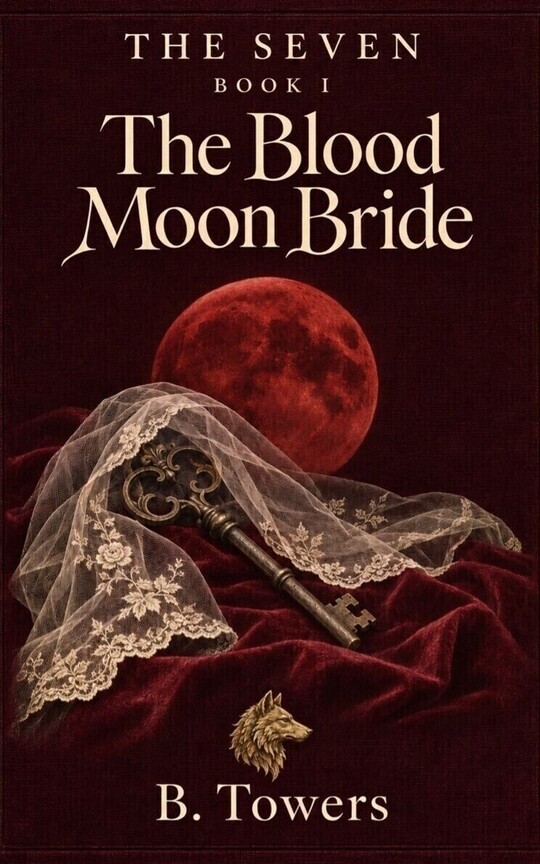
Lucien saw the moon first. He had climbed onto the window seat to watch for the doctor’s carriage, and found a copper coin pressed into the glass.
The rain had stopped, but the wind still dragged the clouds across the stable roofs, and in the tear between two of them the moon hung whole and low, the color of the pan Cook used for jam. Down in the yard the carriage lamps swung. Hollis held the horses by the bridle. They kept pulling their heads toward the forest, and Hollis kept pulling them back.
“Is she going to die?” Sebastian asked.
Lucien climbed down. From their mother’s room came the scrape of a basin dragged across the floor.
“Go and fetch more wood.”
His brother went. It was easier to give orders than to answer.
He was twelve, and the oldest, and Father had said that no one was to go past the nursery door. Father had not said that no one could stand beside it. So Lucien stood there, his back against the wall, between the nursery and the room where his mother had stopped screaming.
Behind him, Martha had dragged the mattresses close to the fire the way she did on thunder nights and had not managed to get anyone to lie on them. Theodore was asleep across the rug with his thumb in his mouth and a tin soldier in his fist. Benedict sat on the top step of the library ladder, watching the corridor. Alistair was walking up and down, moving his lips.
“Seven,” Alistair said, and stopped in the doorway.
“Seven what?”
“Polly. She’s gone past seven times with the basin.” He wrinkled his nose. “The first time the water was clean.”
Polly came down the corridor again, her cap crooked, the basin held against her stomach. She saw them and hurried without looking at either of them. The water slopped, dark, and a drop fell on the carpet.
“Did Mama cut herself?” Benedict asked.
“No.”
“Then where does it come from?”
Lucien didn’t know. He sent them both back to the fire.
At the nursery window Martha held Gabriel, who was two and should have been asleep for hours. He had his face pressed to the glass and was pointing outside with his whole hand.
“Moon,” Gabriel said.
Martha looked where he pointed, said the name of God very quietly, and drew the curtain.
Sebastian came back hugging a log bigger than his chest, cobweb in his hair and his knees black from the cellar under the servants’ stair.
“Polly says we’re not to go down. She says Papa’s shut the wing.”
“Then how did you go down?”
“Servants’ stair.” He let the log fall by the hearth. Theodore opened one eye and closed it again. “Mrs. Rudd was in the kitchen before she came up. She told Cook the moon is wrong.”
“The moon can’t be wrong,” said Alistair.
“She said so.”
“What else did she say?” Lucien asked.
Sebastian looked at Martha before he answered. Martha did not turn around.
“To pray.”
On the landing the long-case clock began to strike. Lucien counted the strokes by folding his fingers into his palms, the way Father did in church when the sermon ran long. At ten both hands were fists. He counted the last two with his eyes shut.
When he opened them, the stables were coming down.
That was what it sounded like. One crash of wood, then another, then a whole row of them — every horse at once, hooves against the stalls. The corridor window rattled in its frame. Theodore woke up screaming. In the yard the dogs, which had been barking at the carriage since it arrived, went silent. Not one by one, the way they did when they tired. All at once.
The hooves stopped too.
Lucien climbed back onto the seat. The carriage was still in the yard, the horses tied to the ring in the wall, their necks stretched toward the trees. Hollis’s lantern sat on the cobbles beside the trough, still lit.
Hollis was nowhere. 
Eleanor stopped screaming because she had no breath left for it.
Mrs. Rudd had been talking to her all night in the same level voice she used for the cows and for the women of Ashcombe. Eleanor had stopped understanding the words hours ago. She held on to the voice instead. Dr. Lowell had arrived soaked to the knees and had not left the head of the bed since, counting her pulse with cold fingers.
Edmund stood at the window.
He had opened the curtain a hand’s width and had not closed it again. Against the dull red light he was all profile, and he was not looking at the bed. Mrs. Rudd looked toward the window too, between pains. The doctor looked once and then made himself stop.
“Close it,” Eleanor said.
Edmund didn’t move.
“Edmund. The curtain.”
“Not now, my lady,” said the midwife. “Now you push.”
She had given birth six times in that bed and had never felt the room so full of people standing still. The others had come in a bustle of hot cloths and running maids, Edmund thrown out into the corridor and coming back without leave. This time he had been inside from the beginning. This time nobody ran.
Out on the landing, the clock began to strike.
When the child came, he came all at once.
She waited for the cry. There was no cry. There was, outside, a crash of wood and then a row of them, and it took her a moment to understand that it was the horses, all of them, in the stables. The window shook in its frame. Edmund took a step back from it.
“What time is it?” he said.
Dr. Lowell drew his watch from his waistcoat and hesitated.
“Midnight,” said Mrs. Rudd, before he could. “I heard the first stroke with his head out and the last with the whole of him in my hands.”
“A minute either way—” the doctor began.
“Midnight.”
The hooves stopped. So did the dogs.
In the silence, the baby cried.
It was an ordinary cry. Loud, furious, full of air. Eleanor knew that cry; she had heard it six times. She held out her arms before she could lift her head from the pillow.
“Give me my son.”
Mrs. Rudd cut the cord and wrapped him and kept him a moment longer than she should have. Eleanor saw it. Saw the old woman tilt the child toward the red light, saw her thumb open the tiny fist and search between the fingers.
“Mrs. Rudd.”
The midwife gave him up.
He was small and heavy and hot, his face crumpled and red from the fight of arriving. Eleanor counted his fingers, then his toes. She ran her fingertip along his smooth gums. She pushed back the dark wet hair and found only the soft place on his skull, beating, the same as all the others. Nothing. There was nothing wrong with him.
She looked up to say so and found the whole room looking at her son.
The doctor with his watch still open in his hand. Polly by the door, the basin pressed to her apron. Mrs. Rudd wiping her hands without taking her eyes off the child. Edmund by the window, colorless. Once, in York, Eleanor had seen a courtroom look at a man that way — a man who had not yet been convicted, and could no longer be acquitted.
She pulled her son against her breast and hid his face in her nightgown.
“He’s perfect.”
No one answered. Mrs. Rudd went to the chest of drawers where she had left her bag and took out a soft-covered notebook, worn at the corners. She licked her pencil and wrote something slowly, the book propped on her knee.
“The moon opened her eye to look at this one,” the old woman said, to no one.
“That’s enough,” said Dr. Lowell.
“I only say what—”
“That is enough, Mrs. Rudd.”
Edmund closed the curtain with both hands, smoothing the folds until no gap was left. When he turned to the room he was the man Eleanor knew from rent days and dictated letters.
“Lowell, you’ll sleep here tonight. Mrs. Rudd too. Polly, you’re not to go down to the kitchen. No one goes into the village until I’ve spoken to each of you myself.”
“The parish register—” the doctor said.
“Stays with me. I’ll take it to the rector myself.”
Mrs. Rudd closed her notebook and put it back in her bag. Edmund didn’t ask to see it.
He came to the bed. Eleanor felt her arm tighten around the baby before she decided to tighten it. Edmund saw. He stopped a step away, looked at her hand, then at the tuft of dark hair above the blanket. He reached out and touched his son’s head with a lightness she hadn’t expected of him. When he took his hand back there was blood on the lace of his cuff.
“I’ll fetch the boys.”
“Now?”
“Now. They need to see him.”

When the crying came, Father came out of the room with a stain on his cuff. He told Martha to bring the boys in, but he kept a hand on Lucien’s shoulder.
The others went past them in the corridor. Sebastian first, barefoot, stopping two steps from their mother’s door. Alistair behind him, holding Benedict’s hand. Martha last, Gabriel on one hip and Theodore on the other, still hiccuping from the fright.
Father’s hand was heavy. The stain on the lace was almost brown, and it spread as it dried.
“Count your brothers.”
Lucien counted. Sebastian. Alistair. Benedict. Theodore. Gabriel.
He got to five before he understood that he was meant to include the baby.
“Six.”
Father let go of his shoulder. He rubbed at the cuff with his thumb, and the stain spread instead of lifting.
The room smelled of iron and tallow, and someone had thrown herbs on the fire to cover both. Mother lay against the pillows with the newborn in the crook of her arm, his face hidden against her nightgown. She called for Father. He went to her and opened his mouth, and she spoke first.
“Douglas,” she said. “Before anyone gives him another name.”
Lucien waited for Father to disagree. Father said nothing. He looked at the closed curtain, then at the baby, then at each of his sons around the bed, one by one, as if he were checking a sum.
At the edge of the forest, something howled. Another voice answered, closer — inside the walls.