Prologue One: Sadako’s Burning Rage
———————Prologue One: Sadako’s Burning Rage
Dr. Sadako Kaida
The lab always smelled faintly of antiseptic. Nauseating to some.
A metallic tang with a hint of lemon that clung to the back of Sadako’s throat like medicine. Even after years in the Kōhangan Defense Corps, she’d never gotten used to it. It burned her already sensitive nose and, at the end of a grueling day, gave her a migraine like the one she had right now. How long had it been since she had been underground—a week and a half? Two? God, she hoped it was two. Her rotation would soon end if that were the case; she would be able to surface and rest for the next six days before returning for another two weeks of never seeing the sun. She tapped her fingers against the thick headset she wore; the hum of the deep-space array was constant, a low vibration she could feel in her molars as the instruments swept the void for anomalies.
On her console, columns of data scrolled in relentless green.
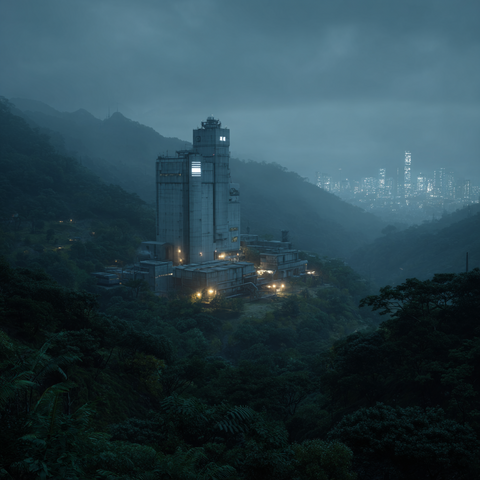
Around her, the subterranean control deck hummed with the constant vibration of generators buried deep beneath the mountain. The recycled air carried the faint sterile scent of machinery, a reminder that nothing here was natural—not the light, not the air, not the time.
Her eyes glazed lazily over the multiple screens, already dry from hours of hovering; this was considered a normal day at the KDC, that was, until the alert tone pulsed in her headset, low and precise, meant for her ears alone. A perimeter breach.
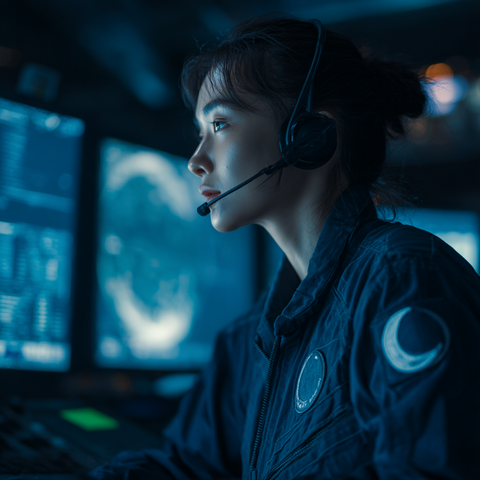


Kaida straightened slightly at her station, eyes scanning the stream of incoming data on her console. Quadrant 8B, deep-space range. Metallic signature. Unnatural velocity.
She adjusted her headset, narrowing her gaze at a cluster of numbers that didn’t belong. It wasn’t an error. Kaida, Sadako didn’t make errors.
Behind her, the control deck carried on as if nothing had happened.
“Two more days and I’m surfacing,” One of the younger techs was saying from the break alcove. His voice carried obnoxiously over the hum of machinery. “First thing I’m doing is finding a woman who isn’t pale from two weeks under fluorescent lights.”
His companion laughed. “Good luck. By now, the only ones left topside are either married or desperate. I’m not picky—two weeks down here, I’ll take either.”
The first one snorted. “Hell, I’d take Kaida if she smiled once in a while. Or ever.”
Kaida didn’t turn. Her screen refreshed, the numbers tightening into a clear trajectory. Multiple objects, tight formation. Not drifting. Not random.
The tone in her headset deepened—a soft, almost melodic thrum beneath the data ping, like a note plucked on a string too deep to hear properly. She adjusted her audio filters, but it was still there, threading under the official signal.
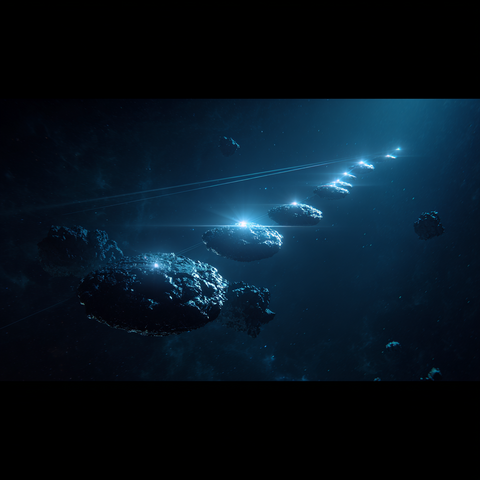
She tapped a key to magnify the object cluster on her primary screen. The image sharpened where jagged silhouettes against the black, arranged too neatly to be debris. The computer spat out a rough trajectory. Intercept course.
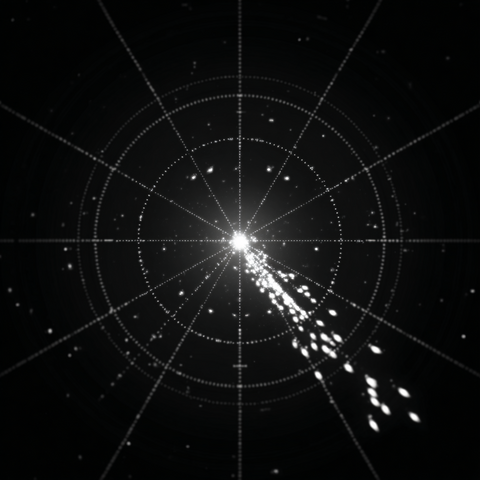
The alarm tone deepened, and under it came something else...a soft, sonorous hum, like the vibration of a temple bell through water. She adjusted her audio filters once more, presuming the thumping headache she acquired earlier to be the fault of this odd sound she was hearing, but the hum remained, slithering beneath the official signal in a way her instruments couldn’t register.
“Two weeks in a box like this...” The second man said. “Surface rotation can’t come fast enough. The air even smells better topside. Plus, the KDC’s finally importing that new whiskey from Sendai—”
“—If you can get a quota ticket for it.”
They both laughed, the sound echoing faintly in the concrete chamber.
Kaida’s gaze flicked to her diagnostic panels. No anomalies in the environmental systems. The sound wasn’t coming from the facility’s machinery. It was coming from the data stream itself—embedded somehow in the sensor feed, clinging like a ghost signal.
The men’s conversation drifted closer.
“You know, I heard the department’s rotations are getting cut shorter. Too many people cracking down here. Or maybe they’re just screening for the ones who can’t handle it.”
“I could handle it if I had her view,” The first man said. “Kaida gets all the good feeds—deep-space scans, military-grade optics, the whole sky on her screen—”
“Yeah, and she still looks like she’d rather be anywhere else.”
She ignored them once more. No matter how close they got, she would not fall for the trick of getting involved in their conversation. What was on her screen was far more important than two subordinates planning their next drunken fest once their break came. Her attention remained on her console, and Sadako’s pulse instantly quickened. The object cluster was resolving into sharper detail. Not rock. Not natural. The spectral analysis showed traces of an alloy she didn’t recognize, reflective at wavelengths no terrestrial metal could match.
And the hum... now it sounded almost like a chord.
The men’s conversation faltered. She could feel their attention shift toward her.
“What’s got you so glued to the screen, Deputy?” The second one asked, stepping closer.
Without looking up, she tilted the display toward them. “Do you see it? The cluster.”
They squinted. “All I’m seeing are a few small rocks. Looks like space junk to me.”
Her jaw tightened. “You don’t see the formation? Here—” She zoomed in, outlining the shapes.
The first man arched his brow before laughing. “You’ve been down here too long. Next, you’ll be telling us the rocks are talking to you.”
A flicker of irritation passed through her. So what if she had been down here too long? She wanted to retort with something snarky, something to remind them of their place and rank in comparison to hers. Those fools didn’t have a trained eye like she did, but how could she explain that without causing a commotion? The persistent thumping beside her temple also did not encourage her to keep pushing the matter. She didn’t want to believe she was overreacting, but if she persisted, they would assume she was an overreacting woman. That was how it went down here. If you caused a stir, you’d better come bearing facts to back it up, or you’d be a laughing stock. She sighed deeply. Maybe all she needed was sleep, to offer herself the opportunity to look at his anomaly with fresh eyes.
But something was pulling her to keep looking, to keep surveying.
Velocity, mass, reflection index... all wrong for any known satellite or natural object. Her fingers moved without thinking, pulling up cross-spectral imaging.
There it was again. Not rock. Not ice. Something denser.Pearlescent.
“Deputy Kaida,” A voice barked from across the control deck. Director Nishida, all iron and suspicion. “We need that report on the Kyoto debris field.”
She didn’t turn around. “I’m seeing something in Quadrant 8B. I think you’ll want to—”
“Quadrant 8B can wait,” He cut in, already turning away. “Orders from the Supreme General.”
Her jaw tightened. Orders always came before discovery here. And in Kōhangan, a woman’s instincts—even when backed by hard data were worth less than protocol. No matter if she was Deputy of Research and Development, a position she worked nearly a decade to achieve, his words came before hers. Sadako was only second to Director Hashida, who oversaw all classified programs, but even he took orders from the Supreme General. She flicked her gaze back to the abnormality on her screen.
The numbers pulsed like a heartbeat.
She told herself it was a trick of the light on the display, a system error even, but the faintest sound crept back into her thoughts—far too soft to be called a voice, too steady to be her own imagination. A single, low note, like something foreign and patient, waiting.
She forced her attention away and compiled the Kyoto debris field report, each keystroke a deliberate act of obedience. Ten minutes later, she crossed the deck and presented the file to Director Hashida.
He took it without looking up, scanning the summary as his eyes moved like a slow, clinical machine. “Good,” He said, voice flat but not harsh. “And...good news for you. We’re cutting the two-week rotation down to about a week and a half. Effective immediately.”
Kaida blinked, caught off guard. “Reason?”
“A couple of section chiefs are starting to... fray around the edges,” He said, choosing his words carefully. “Too much time underground. We’re letting them surface early. You’ll be heading up yourself in a couple of days, so I thought I would let you know.”
She arched a brow. “How many section chiefs are on leave?”
“A couple for now,” Hashida replied, slipping the report into a folder. “Don’t worry about the chiefs. You’ll be back soon enough...and the workload will be spread out when you return. Just enjoy the break.”
Kaida allowed herself a single nod, keeping her satisfaction locked behind a neutral expression. A week and a half rotations meant fewer stretches of staring at the same walls, breathing the same recycled air, listening to the same petty conversations.
“Dismissed,” Hashida said, already shifting his focus to another set of documents layered on his desk.
Back at her station, Kaida settled into her chair and keyed the console awake, only to feel her stomach drop. The strange objects were gone. The cluster readings were normal. No irregular velocity, no strange reflection index, no pearlescent surface. Just a cold scatter of small rocks, unremarkable and inert.
She leaned back, scanning the control deck. The two subordinates from earlier—Hirano and Saito, or was itShiroandHasegawa? Whatever, she thought. They were laughing about something at the far console. She didn’t care enough to remember their names, but she knew one thing: her station auto-locked the moment she stepped away. There was no way they could’ve touched her data.
Maybe it had been a glitch. Or fatigue. Or... whatever this persistent headache was trying to tell her. If she sounded the alarm now, and it turned out to be nothing, she’d never hear the end of it.
Her eyes flicked to the clock in the corner of the console. She was already past the end of her shift.
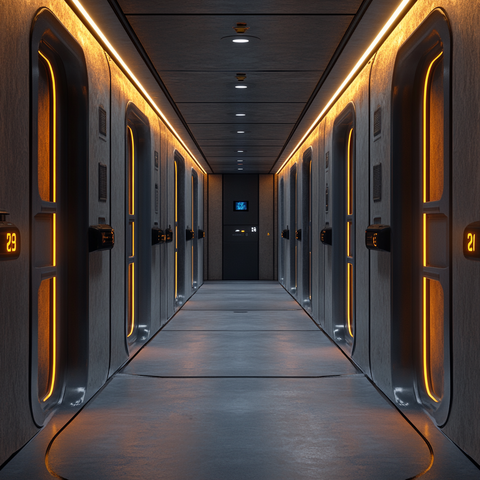
With a quiet exhale, she signed out and made her way through the dim corridors to her quarters; one of the Initiative’s “resting spaces,” a narrow but private cube just large enough for a twin bed, a built-in wardrobe, a compact desk, and a wet bathroom. Spartan, but hers alone.
It was where she could decompress without watchful eyes, a moment of respite between the grueling days of statistical compiling and green screens scanning the abyss of outer space.
Her dark combat boots stomped heavily down the long corridors connecting labs, holding cells, and administrative areas. Occasionally, she’d nod her head towards subordinates passing her, either to start their shift or transition into other portions of the multilevel complexes accessed through secure elevators or tunnels.
“Heading to your quarters, Sadako?” A young intelligence officer who’d been here for about three years or so asked her. Sadako nodded softly, continuing her march, afraid that if she stopped, she’d be held hostage in a chamber of small talk that would never end. The young lady was alarmingly clever, of course, she had to be to make it down here. But she was also quite the conversationalist, a skill Kaida had never grown accustomed to developing.
Sadako’s personality was rather stoic, focused, and blunt. Something that didn’t mix well in a world filled with extroverts. But she knew the analyst—Mio, was it? Told her not to be so formal with her; even once said that they made up the only few women in here, and we should be comfortable enough to go by first names.
Kaida didn’t care either way, whether they went by her family surname or her first. But hierarchy was heavily enforced down here, especially with the ones who loved to pull rank. It was the very reason Kaida was secretly detested by most males. A woman, let alone a woman of her intellect and precision, was a threat to the ones who ruled the Izanami Initiative or II, as it was more naturally referred to. She was tolerated, sure, because her mind produced results that no one else’s could, but her achievement came with resistance: condescension from colleagues, dismissive remarks from her superiors, and the constant, oppressive need to prove herself over and over again.
It didn’t matter how stern she was, how much she reminded them she was only second to the Director of Operations, or even her athletic physique and her ability to keep up with the males during conditioning days—she was a soldier before she was a scientist after all. To the Xeryon Research Complex, she was all but a woman.
A smart one. A fit one. But a woman.
As the door sealed behind her, Kaida sat on the edge of the bed, unzipping her uniform. She told herself she’d stop thinking about Quadrant 8B. But the phantom chord she’d heard earlier still thrummed at the back of her mind.
Trickling like ambient background noise.
Her sleeping area remained the same as she left it. A stark, functional space meticulously designed for efficiency and practicality rather than comfort. It featured a workstation with a sleek chair, a metal desk, and a built-in terminal for classified work. A narrow wardrobe for clothing and uniforms with compartments for personal effects, a lock box for sensitive items, rested beside it.
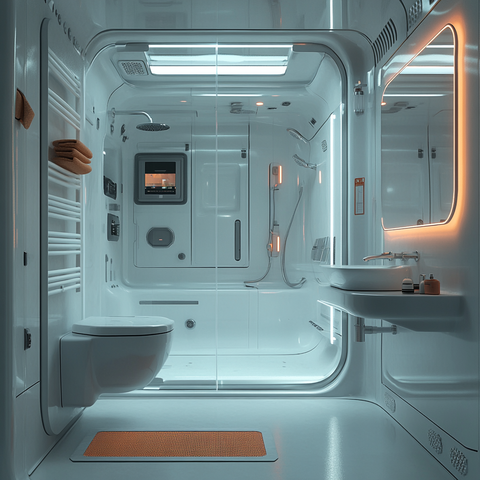
Over by an arm’s length was a compact wet room with a shower, toilet, and sink. Nothing extra, just what was needed, a far cry from the glamorization one might assume was provided, being in such a selective program.
She rushed a tired hand over her short bob, a few ends growing longer than she desired them to be; a few streaks of premature silver over the years had managed to make a home between her obsidian strands. She might have appeared older to some simply because of that, but it served as a constant reminder that sooner or later, questions of her future plans would come circling about again.
She was only in her late thirties. She was young. She was still young. But her mother would never agree with that statement. By her definition, she should have already been packed under a grave while her grandchildren wept for her damned soul.
Sadako’s eyes scanned the small space she’d seen more of than the apartment she paid rent on. The walls were minimalist, a choice of white or gray with no personal decoractions unless authorized, though the window—ha, a window if you could call it that, featured a screen that displayed any kind of scenary one desired; a sunset, a rolling mountainscape, a mystical celestial ocean, all in an attempt to reduce the soldier’s psychological strain.
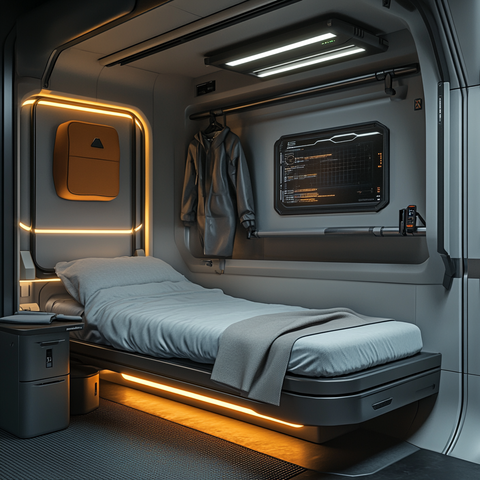
The room’s adjustable lighting was made to mimic one’s natural circadian rhythm to prevent disorientation. Currently, it was dimmed, and Sadako had no intention of brightening the space. This scientific dungeon never received sunlight; naturally, it would drive someone crazy if they stayed here long enough. No amount of highly advanced technology could replace the power of an organic sun.
Sadako stood up, her joints slightly cracking at the sudden movement, head still aching from earlier, she began disrobing the plain midnight blue jumpsuits provided by the II. The ensemble had no identifying insignia beyond a subtle emblem—a crescent moon with a single vertical line piercing through it.
Sadako was once told they it symbolized clarity amid chaos, or the pursuit of truth hidden in the unknown. A naïve version of her would have been intrigued to learn more of what that entailed, but perhaps the more adult version of her realized it was nothing more than a gimmick used to recruit people like her into such a specialized system.
After all, a young lady like her with hopes to achieve something greater than herself...greater than her family was already ambitious. Bright-eyed, willing to work hard, and a mind sharper than a blade was perfect for molding into the perfect soldier—a Kōhangan Defense Corps soldier.
Tossing her clothing to the side, she stopped just shy of her workstation lockbox, which she unlocked with ease, pulling out the simple photograph of her beloved; the only view that could keep her sane every second she remained under.
“I will surface in two days and see that bright smiling face of yours once more.” She pulled the portrait closer to her face, pressing a soft kiss against it, knowing she wouldn’t allow a single moment to go to waste before she’d be forced to come back down here again.
She rested the picture down and prepared for bed as she always did. Two days from now, she would surface.
Quadrant 8B, the phantom chord—whatever it was, would still be there when she came back. Or it wouldn’t. Either way, chasing ghosts wasn’t going to buy her an extra hour of rest, and the headache was already pressing behind her eyes like a vise.
Two days, as predicted, she was free. Albeit temporarily. Free nonetheless. She signed off her logs in the morning, cleared her queue, and handed off her station to the next shift without a hitch. The elevator ride to the surface was slow, the pressure shift making her ears pop as miles of reinforced steel and rock gave way to daylight.
When the doors opened, Kōhangan spilled out before her, or at least the outskirts of it did. The black site where she worked was miles away from the towers of glass and steel climbing toward the sky. Though it was always a sight after being submerged for two weeks at a time, sunlight flashing off chrome rooftops, the low hum of electric mag-trams gliding between districts always felt like she was walking into a city of the future.
That was the beauty of the otherwise inconspicuous country: their ability to advance themselves superficially in comparison to other nations; the internal rot, the traditional values they kept, were still very present to those who looked past the aesthetic of a bustling nation.
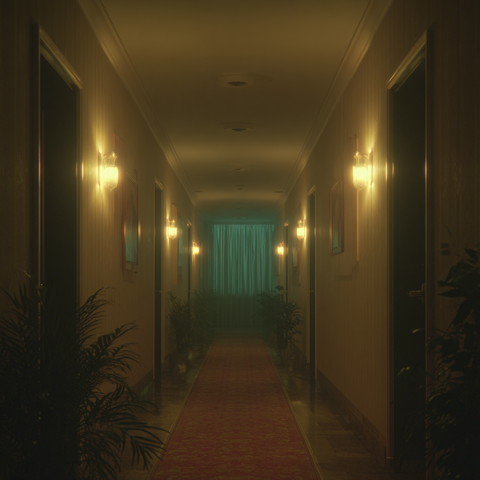
Her apartment was thirty-four floors up in a high-rise along the harbor, all cool concrete, glass, and clean lines. Eagerness peppered her steps as she walked in, the city’s brightness softened into something warmer: the smell of garlic and soy simmering on the stove, the faint bump of music from the kitchen, a row of shopping bags lined neatly by the wall.
Ahn.
Sadako smiled without meaning to. The pay from the Initiative could have gone to her mother, her sick father, her brother, who always had another excuse for not working, but she’d learned that pouring money into that black hole only made the demands grow louder. Better to let it be spent here, on this life, on the woman who brought her peace.
She dropped her bag by the door and slipped off her boots. The apartment was dotted with little artifacts of their years together: a framed photo from a seaside festival, a blown-glass paperweight shaped like a koi, a sun-bleached shell from the first day they met on the beach.
Her phone on the counter buzzed with three unread messages from her mother.
Sadako when are you coming to visit?
Your father’s still sick. Send more money.
Your brother is trying school again, he needs help. And you’re getting older. You need to marry, have children.
Sadako stared at the screen until it dimmed, then tossed it face down. She didn’t need her mother’s voice echoing in her head on her first night home.
“Sadi?” Ahn’s voice floated from the kitchen. “You’re home early! Perfect timing!”
Sadako rounded the corner to find her in an apron, hair pulled back, plating up bowls of steaming noodles. She looked breathtaking. Her twinkling dark eyes, her flowing chestnut hair, and slightly bronzed sand-colored skin never ceased to amaze her. “I thought we could eat and then head to the beach,” Ahn said, glancing over her shoulder with that easy smile. “You’ve only got a few days before they drag you back.”
Sadako felt something in her chest unclench. The beach. Their place. The one patch of the world where no one gave orders, no one cared about protocols, and no one asked her to explain herself.
“Yeah,” She said softly. “Let’s go.”
—
The beach was scattered with late-afternoon visitors, the air heavy with the metallic scent of a storm rolling in. Out on the horizon, the clouds were piling high and black, and the surf was rougher than usual, churning in restless swells.
Sadako and Ahn sat side by side on a weathered blanket, the wind tugging at their hair and the edges of their clothes. Behind them, families packed up beach chairs and coolers; ahead of them, the horizon pulsed with approaching rain.
“How much longer do you think you’ll be with the KDC?” Ahn asked, her eyes fixed on Sadako in that way she did when she wanted a real answer.
Sadako hesitated. Ahn knew she worked for the military; that was never a secret. But that never extended to how deep her branch went, or that the rules weren’t the same as for ordinary service. You didn’t just ask for leave from the Initiative. Not without consequences.
“I don’t know,” Sadako admitted, glancing toward the rocking seashore, the waves rising and collapsing rapidly as if it were catching its breath. “Maybe I’ll try soon. I promised you I’d marry you no matter what.”
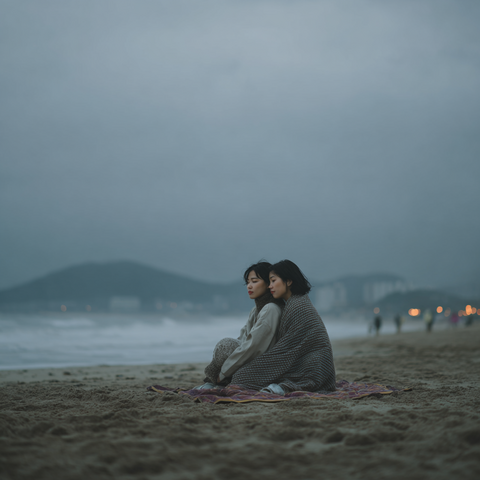
Ahn’s smile faltered. “You know that’s still illegal here. We’d have to leave Kōhangan.”
“I know,” Sadako said softly. She’d thought about it—more than she’d let on.
Ahn pulled her knees up, resting her chin on them. “What about kids? Do you think we’d ever...”
Sadako smirked faintly. “Who’s carrying it? Me or you?”
“Maybe neither of us. Surrogacy,” Ahn suggested.
Sadako shook her head. “I don’t like the idea of someone risking their health for money, for our baby.”
“Then you should carry it,” Ahn said. “I want it to be like you.”
Sadako blinked. “Why me?”
“You’re strong. Smart. Determined.” Her smile brightened, “Anyone would be happy to have a mother as you, a brilliant aerospace engineer, and you have your PhD in it too!” Ahn reached over to wrap one of her hands along Sadako’s muscular bicep, though hidden under her baggy linen shirt, it was still robust from the physical upkeep necessary to remain compliant with the KDC’s stringent demands.
That may be true. Sadako thought. Her accomplishments were exemplary; she worked hard on her by merit, but praise partially had to be awarded to the corps for her success. They had seen how studious she had been in school when recruiting her, and when she flourished during basic training and selective missions, they promised to finance her schooling so she could learn whatever she wanted. She wanted to be like her father, a scientist focused on the elements of the unknown, space.
But unlike her father, who abandoned his work when societal pressure forced him into another career path, Sadako trudged on. She had a knack for that kind of thing, building and studying space anomalies. Before she knew it, the II wanted her expertise. But by then, her father, who had praised her ambition, had begun to resent her for reaching heights he could never. Later on, his sickness and the secretive nature of her work hardly gave way for her to see him often.
Not as if she wanted to, their relationship had frayed the moment she surpassed him.
“You’re the one who gets along with people,” Sadako countered. “I... have an unpleasant personality. Or so I’ve been told.”
Ahn’s lips curved. “If that were true, I wouldn’t be here.”
Sadako felt herself soften, a rare warmth seeping into her chest. Her gaze drifted over the waves, remembering the first time she’d seen Ahn here years ago, after surfacing from a grueling rotation. She’d come to the water just to see it, to remember there was still a world beyond sealed corridors and filtered air.
And there she was, a stranger with sun-warmed skin and salt in her hair, laughing uncontrollably as she and a group of friends tried to outrun the waves breaking onshore. She had looked free in a way Sadako had forgotten was possible. For the first time in years, Sadako had smiled without thinking.
Ahn’s voice pulled her back. “Whatever happens... if we have children, promise me something.”
Sadako tilted her head.
“Promise we’ll love them, no matter what. And support whatever choices they make. No matter the circumstance.”
Sadako’s answer came easily. “I promise.”
It was then Ahn’s attention caught on something behind Sadako. “Is that man—?”
Sadako turned. A couple stood near the shoreline, the man’s voice sharp, his hand striking the woman hard enough to rock her backward. People watched, murmured, but no one moved.
Before Sadako could say anything, Ahn was already on her feet, marching toward them, her voice carrying over the wind. “Hey! What’s wrong with you? You don’t put your hands on her!”
The man sneered. “What I do with my wife is none of your concern. Go find yourself a man to bother with your nagging.”
“You made it everyone’s business the second you put your hands on her,” Ahn shot back.
“Stay out of it, lady,” He spat, stepping toward her. “Women like you talk too much...probably why no one’s come to claim you.”
“You don’t know my life, so don’t comment on it!” Ahn retorted, her hand reaching to grab any part of the victim’s body she could get a grasp on. Her attempt at releasing his firm grip on the woman’s arm was admirable, but compared to her small stature, it would do nothing but tire her out before anything of substance could be done.
Sadako instantly shot up, jaw clenched, and rushed over to her girlfriend’s side, hoping to de-escalate the situation before it got anymore heated than it was; too many eyes were beginning to fall onto them. But before Sadako could even reach the group, the man shoved Ahn.Hard. Ahn stumbled, hitting the sand at an angle, her head smacking against a half-buried stone with a sickening thud.
Something surged up in Sadako before she could think—faster, hotter, sharper than anything she’d ever felt.“You son of a bitch—”In two steps, she was on him, fist connecting with his jaw in a single, bone-jarring blow.
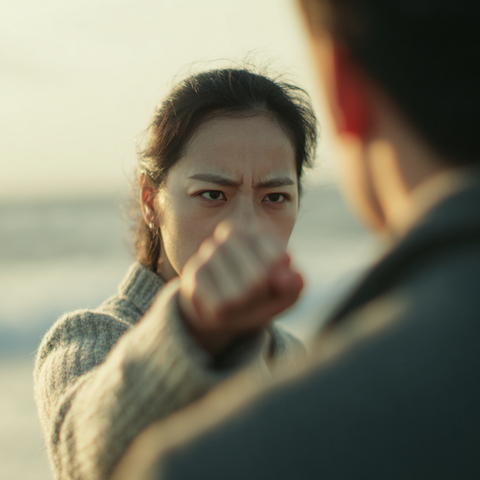
The crowd gasped.
Any other day, Sadako would’ve looked for a rational way... a level path to solve an altercation such as this. She was a KDC soldier; she was trained in matters such as this. But Ahn had gotten hurt because of that jackass, all reasoning seemed to have left her—unnaturally, at that, she had never felt such a surge of rage so great as that.
The punch itself was nothing; she’d hit a dummy harder in training camp, but the man’s face seemed to be reflective of someone two times his size knocking a portion of his jaw in an odd direction; it looked dislocated.
“You fucking brute!” He slurred, ripping his arm away from the victim as he clutched his mouth, a trickle of blood seeping from his inflamed lips.
“YOU HIT ME?!” He roared, gazing up, wiping his mouth. Sadako was far taller than him; it hurt his pride to have to look up at her. “That’s assault, you manly bitch!”
A shrill voice cut through the gathering noise. His mother, Sadako, presumed barreled forward, wedging herself between them. “How dare you lay a hand on my son! He’s a good man, and she—” She jabbed a finger at the trembling wife. “She doesn’t understand her role. That’s the problem with girls these days—no respect for their husbands. And sluts like you.” Her glare burned into Sadako, “Poison the air with your filthy influence! Where is your husband?!” The woman looked about as if searching for the man responsible for Sadako and her actions.
Sadako’s knuckles still tingled, her pulse pounding so loudly she barely heard the crowd murmur. Somewhere under it all, she caught that strange, low vibration again—the same one from Quadrant 8B, threading through her skull like it had been waiting for the right moment to make its presence known again.
Sadako quickly shook out of it, racing over to tend to Ahn, who was slowly getting up, clutching the side of her head, wincing as she used her other hand to brush the sand off her skirt. “Ahn, does it hurt bad?” Sadako inquired, checking for herself with one hand, she noted a splotch of blood remained on her fingertips when she touched the tender spot her lover had fallen.
“I’m okay.” She groaned, her eyes were seemingly glazed over as if she were trying to convince herself that she was.
“Take your brat daughter out of here while you still can!” The raging mother took it upon herself to continue antagonizing both women, her eyes only momentarily glaring over at the shaking victim with animosity. “It’s always like this, everywhere you go, you can’t help but make a scene, can’t you?” The victim flinched, finding solace in hiding behind her husband as he continued to groan out in pain.
Police arrived minutes later. After listening to the accounts, one officer wrote Sadako a citation for striking a civilian; that came along with a fine she was to pay by next month.
The man was not charged. “Family issue,” The officer said flatly. “Can be resolved at home. Next time, don’t get involved.”
“How can you see that Ahn is bleeding and hurt and cite me only and not the man who pushed her?” Sadako argued, feeling that the intense heat of rage began pooling at her core, eagerly clawing its way up her throat, threatening to explode.
The officer scoffed, “You’re KDC, right? You should know better, now, get your sister’s head looked at, I’m sure you’ll be in enough trouble. Don’t cause any more uproars, understand?”
Sadako’s jaw tightened, wanting quickly to correct the officer’s incorrect title he had lazily given to her girlfriend, “She is my—.” Her words caught in her throat as she noted he had already hurried away, patting the shoulder of the violent man who was being tended to by his mother.
Ahn kept apologizing as they walked away, her voice cracking. “I’m sorry, I didn’t mean to—”
Sadako stopped her with a small shake of her head. “Don’t worry about it. You tried your best. I love you. And that’s why I’m here with you. We’ll figure it out.”
They headed for the nearest medical clinic, Ahn pressing a hand to the back of her head. Sadako stayed silent, watching the narrow streets pass through the window, and thinking, for the first time...that maybe Ahn was right. Maybe they would have to leave Kōhangan.
Because here, women bled for nothing, and men walked right on that blood, smiling.
—
The clinic smelled faintly of antiseptic and damp air from the coming storm. Ahn sat on the narrow cot while the medic palpated the back of her skull, checking for swelling. The injury was minor, but the doctor still insisted on disinfecting the abrasion and prescribing painkillers.
Sadako stood at her side the whole time, arms crossed, the sterile light drawing sharp edges across her features. She’d been trained to manage her adrenaline, to compartmentalize, but tonight it clung to her ribs like a parasite. The strange low note she’d felt on the beach still pulsed faintly in her skull, like it had sunk its hooks in.
When they finally stepped out into the humid night, the rain had begun. They took a quiet taxi ride home, the windshield wipers dragging in steady intervals. Neither spoke; the air between them felt fragile, suspended in the sound of the storm.
By the time they reached their apartment, the city lights shimmered across the rain-streaked windows. Inside, the warmth wrapped around them comfort they severely needed.
“Come on,” Sadako murmured, guiding Ahn toward the bathroom.
She ran a bath—not too hot, just warm enough to ease the stiffness. Ahn eased in with a wince, and Sadako knelt beside her, rolling up her sleeves. She took the soft sponge from the edge of the tub, working it gently over Ahn’s shoulders, arms, and back. The smell of lavender bath oil rose in lazy curls with the steam.
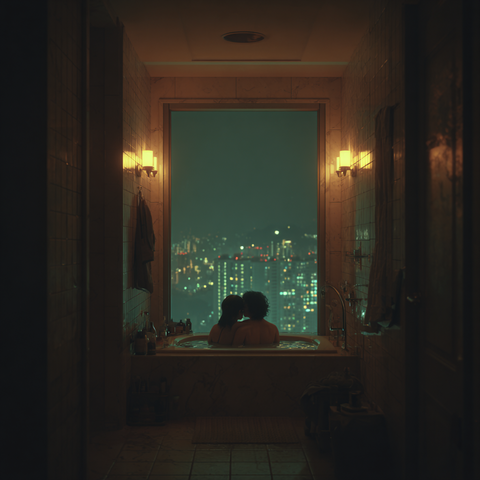
Ahn exhaled slowly. “You shouldn’t have done that,” She scolded her, “You only have a few days before you go back down. Now you’ll spend them worrying about this mess.”
Sadako leaned in, brushing her lips against the back of Ahn’s neck. “You think I could stand there and do nothing?”
“You could’ve... just walked away.”
Sadako shook her head, trailing the sponge down one arm. “Not when it’s you.”
Ahn’s hand reached back to touch hers briefly, then rested in the water. “I’m sorry,” She whispered, bringing her knees to her chest, “Now, your superiors will be mad.” She muttered to herself.
Sadako didn’t answer. She rinsed the sponge, wrung it out, and finished washing her. When Ahn was done, she helped her into bed, tucking the blanket up over her shoulders.
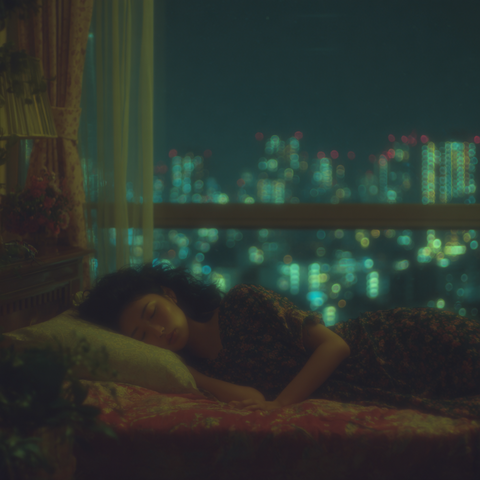
They lay together in the dim room, the city outside muted by the rainfall. Ahn’s breathing evened quickly, sleep claiming her in steady waves.
Sadako didn’t close her eyes. She stayed propped on one elbow, watching her partner’s face in the shifting shadows. Now and then, her gaze drifted to the window—her mind still replaying the man’s face, his words, the shrill condemnation from his mother. The way the beaten woman cowered behind him, with nowhere to run.
Who would help her? She had seen then and there the ones who did step up, get punished while her spouse got off, granted with a misaligned jaw, the kind that would hurt whenever he had the gall to speak to her with indecency, but Sadako worried if she had given that poor woman more problems than solutions.
Such is the way of life for a woman in Kōhangan. But who would care if Sadako disagreed with it? Or any man, for that matter.
Her heartbeat still hadn’t slowed. It wasn’t the lingering anger. It wasn’t even the injustice.
It was that...thing. That low, patient hum that had risen in her when she struck him. The same one from Quadrant 8B.
It was still there, threading through her veins like a current that refused to settle.
Four days later, Sadako’s boots echoed down the steel corridor of the Izanami Initiative’s main hub, her surface days cut short by a summons from Director Hashida.
The air underground always felt heavier when she came back from the surface, as if the recycled oxygen had absorbed everyone’s fatigue and paranoia. Soldiers, both men and women, marched on by; conversations cut off when she walked by. She ignored it.
Director Hashida’s office was sealed behind a biometric door, but his voice carried the moment she stepped inside.
“Deputy Kaida,” He said without looking up from his desk console, “You’ve given me a complication.”
She clasped her hands behind her back. “Sir.”
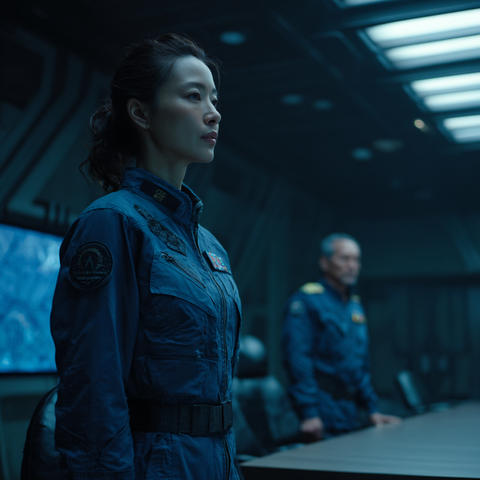
“A citation for civilian assault.” His eyes flicked up, dark and assessing. “I’ve read the incident report. You’re lucky they didn’t press for more than a fine. You’ve never had a blot on your record before—”
“It was in defense of my—my family, Director.”
“That’s not the point,” He cut in, his tone the kind that didn’t rise but carried weight nonetheless. “We’re ghosts down here. We cannot afford our people drawing the wrong kind of attention. If it weren’t for your... consistent performance, we’d be having a very different conversation.”
Her jaw flexed, but she nodded. “Understood.”
“Good. Now, section chiefs are on extended leave. Operational stress.” His mouth twitched like he’d just tasted something sour. “Which means you and Sato are picking up the slack. Try not to get arrested in the meantime.”
She got off with a warning this time; next time, he warned, it wouldn’t be as kind.
Three shifts later, her workstation lit with an alert from Quadrant 8B. She froze, eyes narrowing.
She opened the raw feed...there it was. Still there. Still moving wrong. But it was back.
“Kaida.”
She turned to find Major Kouki Sato leaning against her console, the faint scent of roasted beans drifting from the mug in his hand.
“You see it?” She asked.
“Clear as a sunrise,” He said with a smirk, tilting his head toward the display. “And I’d bet you every credit in my account that we’re the first ones to spot it. Imagine the commendations when Command realizes we’ve got a good find.”
She didn’t bother reminding him she had spotted it first the last time; he didn’t believe her back then, but oddly now, he was seeing it. Sato was the kind of man who treated every assignment like a personal ladder rung to climb.
“This isn’t a trophy hunt, Major,” She said, fingers moving quickly over the console. “Pull the DAQA feed.”
He raised a brow. “The Array? You think it’s worth that?”
“I know it is.”
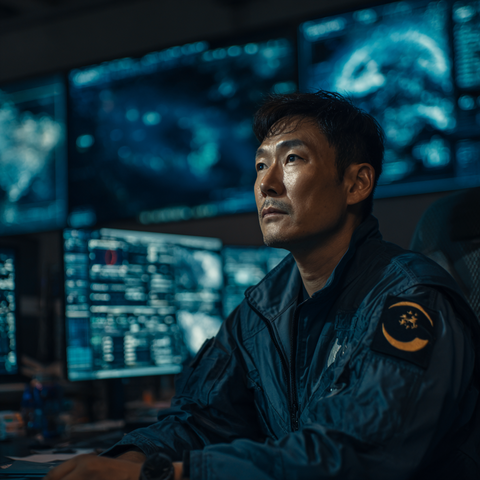
The DAQA feed opened with a soft hum, the telescope’s sensor grid unfolding into raw streams of data. Kaida’s creation—three years of design, engineering, and sleepless troubleshooting... was still the most sensitive deep-space optical system in existence. Not that anyone outside the Izanami Initiative knew it existed.
Sato slid into the seat beside her, his posture loose, like they were about to watch a movie instead of deep-scan anomalies. “Let’s see what the genius cooked up,” He murmured, smirking in a way that made her want to knock the mug out of his hand.
The readings came in fast—infrared, mass spectrometry, gravimetric distortions. Kaida ran the filter suite, isolating the anomaly’s heat signature. It burned faintly against the black, moving against the drift of stellar debris.
Her stomach tightened. “It’s not random. It’s on a vector.”
Sato leaned forward, his smugness briefly eclipsed by focus. “Toward us?”
She didn’t answer... she didn’t have to. The plot trajectory resolved on the main screen, a red line curving across the solar map until it intersected with the pale dot labeledKōhangan.
They both sat back. The quiet was heavier than the air recyclers’ low whine.
Kaida’s fingers worked again, running the calculations twice, then a third time. “Seven to ten years. Depending on drift speed changes and gravitational influences en route.”
Sato let out a low whistle. “Well... that’s not nothing.” He straightened, already rehearsing the line in his head. “Looks like we just saved the damn planet.”
She turned sharply toward him. “We didn’t save anything yet. And this is not a we situation! I saw it first weeks ago, as I recall telling you.”
“Yeah, but you didn’t file a flag,” He said, a shrug in his tone. “Now it’s in the system with my name attached to the initial confirm. Paper trails matter, Kaida.”
Her jaw tightened, but she pushed past it, compiling the visual data, speed metrics, and projection estimates into a classified incident packet. Her report was clinical, every figure sourced, every risk scenario listed without a decimal to be debated.
Sato skimmed over her shoulder, tossing in his own phrasing here and there, dramatic flourishes she would never use. “You’ve got to sell it,” He said when she cut his wording. “Hashida will pay attention if it sounds like we just spotted the Second Coming of Halley’s Comet...but angrier.”
They submitted the packet to Director Hashida. He scanned the abstract, his face unreadable until he reached the impact range prediction. Then his eyes flicked up.
“This...” He tapped the tablet, “... does not leave this room. Not until I brief the Supreme General myself.”
Sato gave the kind of grin that meant he thought his career had just vaulted ten years ahead. Kaida just watched the anomaly’s plotted path on the wall display, the red line creeping closer with every silent rotation of the model.
—
The Supreme General’s war room was a cavern of black steel and soft-glow holo projectors. Strategic maps floated midair, the Kōhangan archipelago rendered in flawless detail. Director Hashida stood at the head of the table, flanked by Kaida and Sato.
The Supreme General, Takayoshi Morita, didn’t waste time. “Tell me why I was pulled from the diplomatic conference in Hyesan.”
Hashida deferred to Kaida. “Deputy Kaida will walk you through it, sir. She’s the architect behind the detection system.”
Sato’s jaw tightened so slightly she almost missed it.
Kaida’s voice was steady, technical. “Seven to ten years out, on current projections. Non-random vector. Formation... translucent. We’re calling it the Ghost Belt for internal purposes.”
A faint flicker of the anomaly’s data lit the holos, the projected path wrapping across the solar map until it crossed Earth’s orbit.
Morita leaned forward, reading through the impact models. “Extinction-level, worst-case?”
“Yes, sir.”
“And your certainty?”
“High,” Kaida said. “With margin for drift. We’re already refining projections.”
Sato jumped in, just a hair too fast. “My team and I confirmed the detection. We can—”
“You,” Morita interrupted, “Will support Deputy Kaida. She’ll lead the Ghost Belt survey. Direct access to all Initiative assets.”
Sato’s smile was professional, but his eyes burned. Kaida didn’t gloat. The truth was, what she was seeing and feeling in her gut was not adding up. Not in the slightest. The data was there, everyone could see it now, but something was simply...wrong.
Regardless, should the Ghost Belt make contact with the earth, wherever anyone was, surely high levels of devastation would occur. Sadako had been the discoverer and first witness to a possible mass extinction event, and every bit of her trembled with fear. What would the world be if a decade from now it would be no more? She instantly thought of Ahn and the many plans she had made with her as they held each other tightly. Would any of that be possible now?
Several weeks passed from then. Surfacing days became rare, almost performative. The Initiative kept her buried in raw telemetry, spectral scans, and gravitational lensing readouts. The Ghost Belt was worse than they thought...not one object, but a slow, shifting cluster of them. Seven, to be exact, their composition still unknown.
Once certainty hit 98 percent, the Prime Minister was informed. A lockdown of information followed. Only the highest tier of KDC command knew. From there, the plan was ruthless in its clarity:
Covert Project PURPLE EYE: subterranean megastructures capable of housing hundreds of thousands, stocked with years’ worth of supplies. Followed by resource hoarding... quiet, surgical extractions of grain, rare earth metals, pharmaceuticals, clean water tech, all masked through black market buys and “lost” shipping manifests.
Of course, the theory in practice, at least what our commands informed Sadako and her team, was a leverage strategy; when the Belt hit, Kōhangan would not just survive; it would own the terms of survival for the rest of the world.
The ethics were clearly immoral, greedy, and simply opportunistic. But Sadako knew better than anyone that II was best at sabotaging international space projects to maintain technological superiority along with a plethora of... classified events that would remain between the eyes and lips of only those involved. There was no room for playing the hero within these walls. From the time she had been scouted and initiated. Sadako knew her brilliance and strength would be used for nothing more than weaponry and deceit.
She was a complacent villain, whether she liked it or not.
And above...the world above kept spinning. No one knew.
Regardless, weeks of minimal sleep blurred into each other. The Ghost Belt filled her screens by day and her thoughts by night. She began catching faint harmonics in the background noise... not static, not mechanical. Voices.
At first, she blamed fatigue. But then came the slips.
During a bathroom break, she wearily splashed some cold water onto her face, looking up only briefly before shock rang through her body. Her eyes focused on the mirror, and the room seemed to slowly thicken with a luminous, viscous liquid. In the reflection, her eyes burned with an unfamiliar firelight... and behind her, two faint, inhuman eyes glowed in the gloom.
She gasped, hands flying to her throat as the world drowned in liquid light. She was underwater, her body lifting, flailing as if the liquid itself had consumed her entire body, dragging her down with it. She clutched her chest tightly—her throat... her lungs screaming—
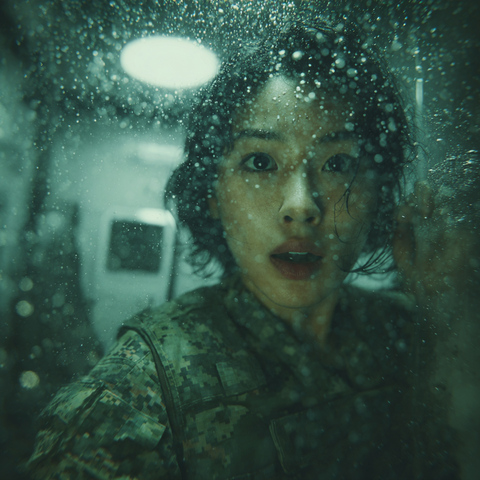
—and then, in a blink, she was gripping the sink, chest heaving, the mirror still, the room dry.
Sadako didn’t sleep well that night. Soon after, the dreams followed.
Always the same forest, dense and foreign; trees high and nearly blocking out the sight of the moon, though glimpses of the bright like crept into the woodlands, aiding in minimally lighting her path. There was always this great structure ahead... wide, towering, shifting like it was alive. The voices that surrounded her, almost guiding her, sang, soft, lilting, coaxing her closer. She reached out, her fingers trembling just before they touched its swirling surface—
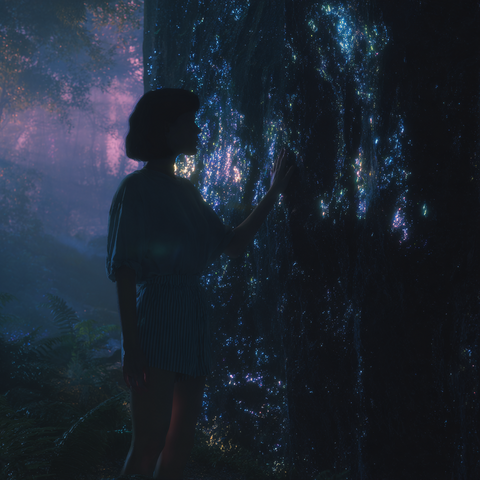
Then she’d wake, heart pounding, the whisper-song still curling through her mind.
She didn’t know it yet, but someone—something was speaking to her.
____
The Ghost Belt had lived in her bones for 730 days.
Two years of tight-lipped briefings, locked terminals, and eyes that never strayed from the blackened holos. Two years of stockpiling under false manifests, of teams failing again and again to find a way to break the Belt or push it from its trajectory.
The rest of the world kept moving — blissfully unaware that a slow-motion guillotine hung above their heads.
Kaida had stopped marking time in weeks. It was all just cycles of down here and up there.
The observation chamber hummed with the constant drone of servers, the air always too dry, the lights always too harsh. Sadako stood at the central console, eyes locked on the newest stream of spectral imaging, fingers moving with an easy precision that came from actually knowing the system’s architecture... because she’d built half of it.
Sato leaned against a nearby workstation, sipping tea like the last man in the room who still had time for it. “You know,” He said in that conversational tone he used when he was about to say something irritating, “When they finally get a handle on this thing, the boss will probably remember my recommendation to push deep-field tracking last year.”
Sadako didn’t look up. “Mm-hm.”
“Not to say your telescope mods weren’t... helpful,” He added, drawing out the pause just enough to make her glance at him. “But at the end of the day, this is about foresight. Strategy. The kind of decisions command-level officers make.”
“And yet,” She said, sliding another data frame into the composite model, “I’m the Deputy and you didn’t know about the Ghost Belt until I found it.”
His smile tightened. “Lucky timing.”
Later that week, during a preliminary status briefing to Hashida, Sato jumped in just as Sadako was about to present the latest velocity projections.
“Actually, sir, that’s our model,” He said smoothly. “I’ve been refining the data sets with Kaida’s input.”
Her jaw flexed, but she said nothing. She’d learned that arguing only made her look petty. Still, the truth was that the “refinement” had been him asking for updates after she’d done the hard work and then rephrasing them in meetings.
In private, he was more obvious.
“You’re not the only one they could have put in charge,” He said one night when the rest of the team had signed out. “The only reason Hashida went with you is because you had a shiny project and the Supreme General likes his pet innovators.”
Sadako, annoyed, looked up from the console. “And because I don’t spend half my shifts leaning on furniture, talking about foresight.”
The corner of his mouth twitched, almost a smile, almost a snarl. “Careful, Kaida. You make a habit of embarrassing people around you; you don’t always get to walk away clean.”
—
When the order came to surface, it barely felt real. Ahn would be waiting. She pictured her partner’s easy smile, the clink of glasses over their too-short days together.
Sato wasn’t at his station when she left. Not unusual, he had a habit of vanishing when the work got heavy. And yet, a prickle crawled down her spine. He knew too much to be removed, but too little to be trusted.
She shook it off. Not her problem.
Kōhangan’s night air was damp and sweet as she keyed into her apartment. She expected the smell of food, the faint hum of music. Instead, the silence was... eerily deaf.
The lights were on.
Her boots barely made a sound on the floor as she stepped in and froze.
Drawers hung open. A vase lay in shards near the kitchen. The couch cushions were gutted.
“Ahn?” Her voice was sharper than she meant it to be.
No answer.
A burst of sound made her turn toward the living room. The TV was on, volume low, a news anchor’s voice clipped with urgency.
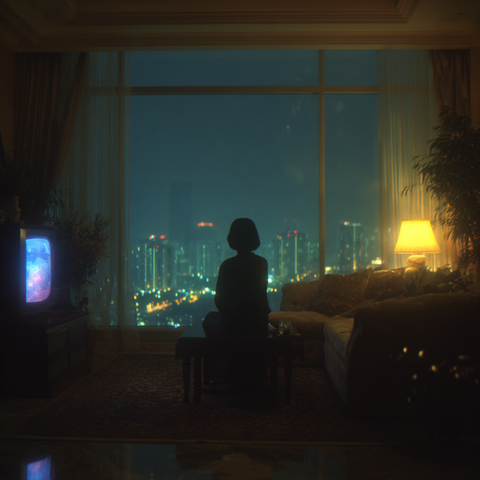
“...breaking news regarding the so-called ‘Ghost Belt,’ a massive cluster of unidentified celestial bodies reportedly on a collision course with Earth...”
Kaida’s blood went cold. This wasn’t cleared. This couldn’t be out.
The segment cut to a blurred-out silhouette, voice altered.
“... Details report from the Archipelago of Kōhangan, the concerned whistleblower quote, could not live with myself if I stayed silent. This is a moral duty. The people must know doom is coming faster than they expect...”
Kaida didn’t need the name. She knew the cadence, the smug edge under feigned altruism.
Sato.
Her first instinct was to storm back to the Initiative’s surface entrance...but she didn’t make it far.
The moment she stepped inside, four Initiative agents were waiting.
“Deputy Kaida,” The lead said. “You’re coming with us.”
No explanation. No resistance on her part. Just the cold weight of inevitability as they walked her into the belly of the II.
The room was all metal edges and cold light. Director Hashida sat across from her, two security guards at his shoulders.
“We have compelling evidence,” He said, sliding a secure tablet across the table.
On the screen: falsified transmissions between her private Initiative account and foreign IP addresses, all time-stamped for moments she was deep in restricted-level work...impossible for her to disprove without direct access to classified system logs. Even her personal terminal ID, somehow cloned, was stamped onto the outgoing files.
Sato’s fingerprints were invisible. Hers were all over it.
“You’ve put this nation in jeopardy,” Hashida said, voice low but sharp. “And don’t think your... private affairs have gone unnoticed.”
Her pulse spiked. “Where is Ahn?”
“She’s alive,” Hashida replied. “Whether she stays that way depends entirely on you.”
They already distrusted her—too young for her position, too stubborn, and above all, a woman in a place where feminine instincts were worth less than protocol. Now, with Sato’s forged files in their hands, they saw her as exactly what they’d always suspected: a liability.
And leverage.
“You’ll cooperate,” Hashida said. “Completely. No questions, no resistance. Or she disappears for good.”
Her jaw locked. She said nothing.
But in her chest, a slow, dangerous heat began to build.
They brought her back to the same cold metal room the next day. No coffee, no pretense of small talk this time.
Hashida dropped a stack of printed comm logs in front of her. “Explain this.”
Sadako glanced down, flipping a few pages before letting them fall back onto the table.
“If I were going to leak classified information, Director, do you think I’d be this sloppy?” Her brow arched. “Sending it under my own clearance ID, from my own terminal, while in a building where my location is tracked every second? Please.”
One of the security officers shifted uncomfortably.
“Another thing—” She leaned forward, voice tightening. “If I had leaked this, why wouldn’t I have left with Ahn the moment I surfaced? I would have been long gone before you had the idea to take Ahn underground.”
Hashida’s eyes narrowed.
“You know who had a perfect window to leave?” She continued. “Major Kouki Sato. His surfacing date lined up perfectly with the leak. He’s been gone for days, hasn’t he?”
They didn’t answer.
“Call him back,” She pressed. “If he’s innocent, he’ll walk in without a fight.”
Hashida exchanged a look with one of the officers before gesturing toward the door. Someone slipped out to make the call.
Minutes later, the officer returned, expression tight.
“He’s not responding to secure channels. Civilian channels show no activity since he surfaced.”
Hashida’s jaw set. The suspicion shifted...not fully away from her, but enough.
“You’re not cleared,” He said finally. “But... for the time being, we’ll hold off.”
They escorted her to a locked side room in one of the Initiative’s lower levels. The light was dim, the air still. A single guard stood by the wall, arms crossed.
Ahn sat on a narrow bench, hands cuffed in front of her. She looked up the moment Sadako entered, relief flooding her face.
“Sadako!”
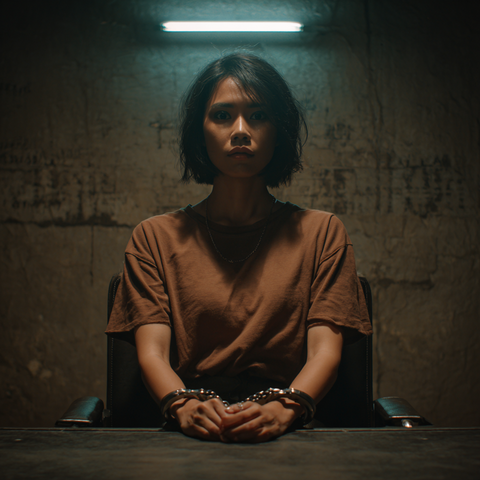
She crossed the room in three steps, dropping to her knees in front of her. “I’m so sorry,” Sadako murmured, voice breaking. “I’m so, so sorry.”
Ahn shook her head quickly. “No. I get it now.” Her voice was hushed, sharp with understanding. “This... isn’t normal military, is it? No wonder you didn’t want to just quit. You couldn’t.”
Sadako’s throat tightened. “They shouldn’t have dragged you into this.”
“I’ll be fine,” Ahn said, her hands still shaking from shock. “Whatever they need, I’ll do it. Just... so they don’t hurt us.”
“They won’t touch you,” Sadako promised, forcing the words out like an oath. “Once my name’s cleared, I’ll get you out of here.”
Ahn studied her, eyes glinting with both fear and trust. “What’s going on?”
Sadako hesitated, glancing toward the guard. “Things are... bad. Worse than I thought. And if we don’t handle it right...” She trailed off, shaking her head. “Just hold on a little longer for me.”
Ahn’s smile was small, strained. “Always.”
Sadako rose slowly, her mind already spinning. Sato was gone. The Ghost Belt was public. And the Initiative was about to close its fist around them both.
Sadako had stopped keeping track of days. The II’s walls never changed, and her shifts bled into her sanctioned “visits” with Ahn. They were always watched. Always recorded. The cameras in the visitation room were obvious, angled just enough to catch both of their faces, no matter where they sat.
She brought what she could get away with, a box of Ahn’s favorite rice cakes, sweet enough to cut through the metallic air of the facility.
“You keep spoiling me,” Ahn teased softly, but there was no hiding the relief in her eyes.
“I’ll keep doing it until you’re home,” Sadako replied. She didn’t care if they heard her. Every visit, she reminded her of the same thing: I’ll fix this.
The summons came without warning. Two soldiers appeared at her workstation, neither speaking, just gesturing toward the corridor that led to the upper conference chamber.
Inside, Hashida stood at the head of the table, posture rigid. The Supreme General sat beside him, stone-faced, his presence making the air in the room feel heavier.
“Sit, Deputy,” Hashida said.
She obeyed, feeling the tension ripple under her skin.
Hashida didn’t waste time.
“Sato’s gone AWOL,” He said flatly. “So are three lesser operatives who were in on his plan. This wasn’t a spur-of-the-moment betrayal. It’s been months...possibly a year in the making.”
Sadako kept her voice level. “Then you’ve seen the manipulated logs.”
“We have,” Hashida said. “Pulled from terminals under the authority of section chiefs who were conveniently ‘on leave.’ They doctored the files to point at you. Sloppy work, mostly Sato’s. You were never meant to take the fall permanently...only long enough for him to get across a border and request asylum.”
Relief edged into her chest, but it was short-lived. Hashida stepped closer. His hand came up before she could react, the sharp crack of the slap ringing in the chamber.
“You were the deputy,” He hissed. “It was your job to watch your superiors. You failed. And when you fail, I answer for it.”
Sadako’s eyes flicked to the Supreme General. He didn’t intervene, didn’t even flinch, but she could see it. Hashida’s fury wasn’t entirely his own. If he didn’t make this look like decisive discipline, it would be his head next.
She swallowed the taste of copper in her mouth, her cheek red and hot. “Understood. I apologize.”
The Supreme General finally spoke, his voice low but stern.
“Americans were the first to know. They know about the telescope now, too. Every major power is in emergency session. The Prime Minister is cornered...answering for why we hid the Ghost Belt for two years. Kōhangan is officially labeled a hostile state.”
Sadako’s jaw tightened. “What’s our next move, if they’re aware of us?”
The Supreme General’s gaze fixed on her like a crow perched uptop of a tree.
“We keep moving. Time is now our enemy. At least we had a head start. That’s worth something. But make no mistake...every nation will scramble to catch up. And when they do, they will want what we have.”
His voice darkened. “We already have men hunting Sato and anyone tied to him. But this will not stop the Ghost Belt. And while the rest of the world plays catch-up, you will make sure we stay ahead. Do you understand me, Deputy Kaida?”
Sadako straightened. “Yes, sir.”
The days blurred into one another. Orders came down harder, deadlines were tighter, and Sadako barely left the control room except to see Ahn. When Ahn was finally released, surfaced under “observation,” Sadako’s relief was laced with urgency.
“When things settle,” She told her quietly in the visitation room, “Stock up. Food, medicine, anything you can carry. Don’t ask why—people panic at the first signs of emergency.”
Ahn nodded, understanding without prying. She would soon know once she got up there what exactly was happening.
The hums began again, not long after. Soft, layered chords that were almost melodic, almost... inviting. Sometimes they came when she was alone in the observatory, other times from nowhere in particular, rising faintly beneath the low hum of the ventilation.
She told herself it was exhaustion. Weeks without real rest, running on coffee and adrenaline.
Tonight was no different...until it was.
The hall to her quarters was unusually dim. Regulation lighting never fell this low unless there was an electrical fault, but she saw no warning lights on the wall panels. The air seemed heavier here, the silence deep.
Halfway down, she stopped. The far end of the corridor flickered...once, twice—and then the light there went out entirely, swallowing the last stretch in darkness.
Something moved in that darkness.
A tall, narrow silhouette, too still to be a person.
Sadako’s throat tightened. “Who’s there?”
No answer. Only the faintest hint of something floral, threading into the sterile scent of the II’s corridors. It surpassed an air freshener, almost as if she were in the middle of a garden. Then the whispers came, muffled, almost playful, so close she could swear they came from just over her shoulder.
The figure stepped forward. Her name followed.
“...Sadako.”
Her breath stuttered. She yanked her sidearm from its holster, field training kicking in like a reflex. “Identify yourself,” She ordered, keeping the weapon steady.
The thing didn’t move, but its eyes lit with a brilliance she had never seen before, like molten glass catching fire from within.
“Sadako...” It whispered again.
And then...blackness. The corridor lights cut entirely.
She couldn’t see the walls, the floor. Nothing. Just her own heartbeat pounding like artillery in her ears.
Wet footsteps began to approach. Slow, deliberate. Each one landing with a soft slap, as if whoever—or whatever it was dripped water onto the concrete.
She tried to raise the gun, to move, to do anything, but her body refused. She was locked, rigid, as though invisible hands held her in place.
The footsteps stopped right beside her. The floral scent flooded her nose so sharp, intoxicating.
The whisper came again, right at her ear.
“Sadako...”
She forced herself to turn her head...and snapped awake.
Only she wasn’t in bed. She was still in the corridor, standing mere inches from a blank concrete wall.
“Kaida?”
Her head whipped around. Mio. Sadako crossed paths with her many times in the hallways; today seemed no different. She stood a few paces back, worry etched into her face.
“I’ve been calling you,” Mio said. “You were just... standing here. Staring at the wall. Whispering. You okay? You’ve been under a lot lately.”
Sadako blinked at her, still hearing phantom echoes of the steps, the voice. “Yeah. Just... tired. Probably more than I realized.”
Mio gave her a cautious look, then walked her to her quarters. At the door, she squeezed Sadako’s shoulder. “Get some rest, Deputy.”
Sadako nodded and keyed herself in, but rest felt impossible. She changed in silence, the entire scene replaying in her head.
Had she dreamed it? Fallen asleep standing?
A single tear, one she instantly wiped away before it had a chance to descend her cheekbones, reminded her she was still very alert and in fact not dreaming. My God, she thought. What if she were sick in the head? Seeing and hearing things that were clearly not real was the definition of being mentally ill.
That night, sleep refused her.
Sadako lay on her side, the thin blanket pulled up to her chin, staring at the shadows stretching across her quarters. She had closed her eyes a hundred times tonight, but the silence never remained.
The whispers were back.
She laughed to herself half-heartedly.
At first, they were faint, like a half-remembered tune drifting in from some far-off corridor. But then they layered, weaving together in harmony, their voices soft and fluid. A song without words, yet somehow speaking to her.
Follow the sound.
We’ll keep you safe.
Her chest tightened. This wasn’t exhaustion anymore. This was sickness, something wrong inside her head. She’d tell Hashida in the morning. He’d be furious, but better furious than... whatever this was becoming.
The song swelled, tender and coaxing, curling into the edges of her mind like smoke. She pressed the heel of her hand to her temple. “Stop...” Slapping her head several times, she demanded louder for it to cease.
But it didn’t stop.
If anything, it sweetened. Warm. Familiar. Almost protective.
She caught herself humming along, the notes slipping unprompted from her lips. Her breathing slowed. Her eyes glazed over. It was like being wrapped in warmth, her limbs growing light, her body relaxing into something close to sleep, except she was standing now.
She didn’t remember getting up.
She also didn’t remember pulling on a t-shirt or shorts, or walking barefoot to the door.
Yet here she was, in the corridor. The floor was cold under her feet, but she didn’t feel it. Her eyes were half-lidded as she padded forward.
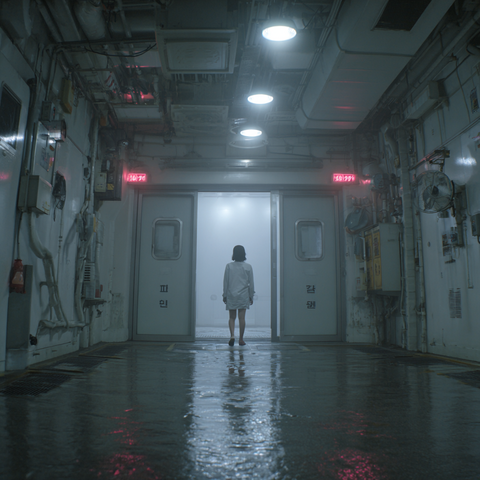
The secure doors ahead—doors that required a keycard, biometric scans–slid open as she approached. No alarms. No resistance. Just... open, as though waiting for her.
She drifted past empty guard stations. Where did they go? The thought drifted aimlessly in her head before the attention of the symphony veered her back. The song louder now, flooded her head like water. Ahead, an elevator stood waiting, its doors parting without a call button pressed. She stepped in.
By the time she surfaced, the rain was coming down in hard, icy sheets. Darkness pressed around her, broken only by the pale slivers of moonlight cutting through the storm clouds. The wind whipped her hair against her face, but she didn’t raise a hand to push it back.
She didn’t feel the cold.
Her bare feet slapped against the wet dirt, carrying her beyond the fences, into the dense wall of forest. Branches tangled overhead, dripping and swaying, letting through just enough silver light to mark the path ahead.
The song was everywhere now.
It wasn’t calling her from somewhere else...it was inside her, thrumming in her bones, guiding her deeper and deeper between the trees.
And she went without hesitation.
Their song had called her home.
That was the night Sadako Kaida disappeared.
No one noticed until it was too late. Until they saw the surveillance footage, until they watched, stunned and speechless, as she walked straight out of one of the most secure facilities in the nation without resistance, without fear.
No one could explain it.