
Chapter 1
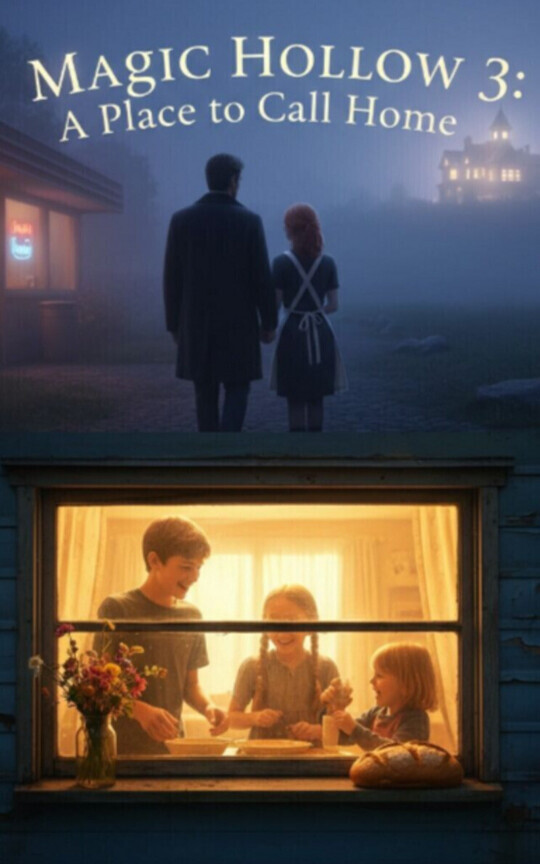
The mist was the first thing Joseph Hunter noticed every morning. It clung to the hollows and valleys of the town like a living, breathing entity, a soft, grey blanket that muffled sound and blurred all sharp edges. From the leaded glass window of his study, high in the eastern turret of the mansion everyone called the Castle, Joe watched it slowly burn away under the weak morning sun, retreating from the manicured lawns to reveal the dark, dripping pines that stood as silent sentinels around his property.
The view was panoramic, breath-taking, and utterly, profoundly lonely. The Castle was less a home and more a monument to solitude, a fortress built not for a king, but for a hermit. It had been constructed by a frantic tech millionaire for a flighty bride who had fled before the mortar was even dry, leaving behind a sprawling contradiction of stone and timber, turrets and gables, containing two swimming pools that never knew laughter, a bowling alley where pins never fell, and a private cinema whose screen had never flickered with light since the day Joe had bought the place, furniture and all, for a sum that would have been obscene if he’d ever had to think about money again.
He didn’t need the space; he needed the barrier it created. The twelve-foot, wrought-iron gates, the quarter-mile-long, winding gravel driveway, the vast, echoing rooms filled with someone else’s abandoned dreams—they were his moat, his walls, his keep. They kept the world out, and they kept him in.
His fortune, the key that had bought this magnificent isolation, had been forged from a simple, brutal, and universally understood idea: righteous vengeance. The “Hunter App.” Its genesis was a moment of petty theft in a Berlin nightclub that had cost him a phone full of irreplaceable photos of his late grandfather. The rage he’d felt had been molten. The solution was elegant. A stolen phone, once reported, would become a screaming digital pariah. A few keystrokes on the Hunter website would lock the device and trigger an ear-splitting, humiliating alarm that blared “THIS PHONE HAS BEEN STOLEN. RETURN TO OWNER!” with every touch, every movement, its location tracked, until the battery gave its last gasp. It was digital shaming, a modern-day pillory, and the world, tired of feeling vulnerable, had downloaded it by the hundreds of millions.
It had made him a billionaire before he was thirty-five. It had also, ironically, led him here, back to the one place he thought he’d escaped for good. Magic Hollow.
The name was both accurate and profoundly misleading. The magic here wasn’t the stuff of storybooks, of wands or incantations; it was subtler, a deep, humming current that ran under the surface of everyday life, felt more than seen. It was in the way the man who owned the hardware store always had exactly what you needed—a specific-sized washer, a rare spice, a book on beekeeping—even if you’d walked in just for milk and bread, your true, unspoken need somehow communicated. It was in the way the librarian with her kind eyes and silver bun, could hand you a book that would, inexplicably, answer a question you hadn’t yet learned to ask, its themes mirroring your life with uncanny precision. It was in the apples from the old Patterson orchard, which bore fruit that tasted like captured sunlight and childhood innocence, a flavor that couldn’t be replicated anywhere else on earth.
Joe had grown up with it, his own strange sixth sense for patterns and probabilities just another thread in the town’s quirky, colorful fabric. But to a sharp, ambitious young man hungry for the noise and validation of the “real” world, the Hollow’s gentle, insular pace had felt like a cage lined with velvet. The army had been his escape—a world of clear orders, defined enemies, and physical endurance that left no room for subtle magics. Then came the mustering out, the coding in a cramped apartment, the explosive success of the app, the dizzying, nauseating ascent into a stratosphere of wealth he’d never imagined.
And then, there was Marlene.
He’d been blind, willfully so. He, the man who had built an empire on anticipating the worst in people, had been utterly disarmed by a brilliant smile and a curated life. His family back in the Hollow had tried to warn him in their gentle, roundabout way. “She’s very… shiny, isn’t she, Joe?” his mother had said carefully over the phone. “Does she ever just… be?”
Their concerns about the glamorous, social media-obsessed influencer had felt like small-minded jealousy, the provincial suspicion of anything too polished or new. But his own internal compass, the one that had buzzed a warning before an ambush in Kandahar and twitched when a pickpocket’s eyes had lingered too long on his wallet in a London crowd, had whispered, too. A faint, discordant hum beneath the roaring symphony of his infatuation. A flicker of calculation in her eyes when she thought he wasn’t looking. A performative quality to her affection that was always angled toward a camera, real or imagined.
He had chosen to ignore it. It was the single greatest, most catastrophic mistake of his life.
The “fishing trip” with his two best friends had been the pretext, a boys’ weekend he’d feigned excitement about. The tiny, sophisticated listening devices he’d planted in the light fixtures and behind the abstract art in his own multi-million-dollar penthouse were the insurance policy he never wanted to need. What he heard, played back through noise-canceling headphones in a sterile, beige hotel room overlooking a different city, was a soul-crushing masterpiece of betrayal.
Marlene’s cool, calculated discussion of their pre-nup with a lawyer—her frustration at the “ridiculous” fidelity clause, her plans to “upgrade” once she was legally entitled to a significant portion of his empire—was bad enough, a clinical dissection of his worth. But it was the second recording, from a night he was supposedly at a charity gala, that was the poison that seeped into his soul and forever contaminated his ability to trust. Her giggled, wine-slurred confessions to a girlfriend, not of one affair, but two, conducted simultaneously with the very married men he’d called his brothers. The graphic, mocking details. The laughter about his “predictable” habits, his “endearing” dedication to his work. “He’s a fortress,” she’d giggled, “but even fortresses have a back door.” The words were branded onto his brain.
The clarity that followed was cold, sharp, and devoid of all emotion. It was the same focused calm that descended in a firefight. His retaliation was swift, precise, and utterly final. It was a Hunter-level operation.
A perfect, flawless cubic zirconia replica of her 7-carat emerald-cut diamond, costing a mere fraction of his fortune, was swapped for the real stone while she slept, having taken it off complaining it “pinched.” The original was now at the bottom of the Hudson River. The audio files, expertly edited to protect the innocent (the betrayed wives), were delivered via encrypted, untraceable email. The quiet, rapid sale of his penthouse, its contents liquidated by a discreet service. And finally, as Marlene posted bikini photos from the Bahamas, on a “pre-wedding celebratory trip with the girls,” a single, forwarded email from a burner account containing the most damning clips, with the subject line:The Back Door is Now Locked. Permanently.
He erased himself from her world as completely as his app could brick a phone. He returned to Magic Hollow, the prodigal son returned not in failure, but in wounded, furious triumph. He bought the Castle, the ultimate symbol of his success and his isolation, a fortress for a heart under permanent siege. He stocked the wine cellar, enabled the state-of-the-art security system, and settled into a routine of silence and solitude. He vowed, with the iron certainty of a man who had stared into the abyss of human duplicity, never to let anyone close enough to betray him again. The mist outside his window was his only companion, and the hum of the Hollow’s magic was a ghost of a life he no longer believed in