
The New Puzzle
Eris Hawthorne
I gripped the steering wheel of my ancient Honda Civic a little tighter as the wrought-iron gates of Blackwood Academy loomed ahead, their gothic arches twisting like the plot of one of my favourite detective novels.
Twenty-seven years old, and here I was, driving into what felt like the lair of some high-society dragon. Liam’s warning from last week echoed in my head:
“Eris, empires like the De Lucas? They don’t just collect art or companies—they collect people. And once you’re in their orbit, good luck getting out.”
My brother, the eternal optimist with his guitar and indie gigs, had a dramatic streak wider than the Hudson. But after his band’s “mysterious” blackout from De Luca media playlists a couple of years back, I figured he knew a thing or two about their reach.
Family dinners growing up had been my training ground for this kind of thing—Mom, the literature professor, dissecting character motivations like a surgeon; Dad, the history buff, quoting Thucydides on power’s inevitable corruption. I’d sit there, age ten, piecing together their arguments like clues in an Agatha Christie mystery. It sharpened my wit, turned me into the family’s unofficial referee.
But at sixteen, the real puzzle hit: Dad’s affair with a colleague splashed across the local paper, Mom’s world crumbling in a haze of lawyers and tears. I buried myself in books—Sherlock Holmes, Christie, anything to “solve” the chaos.
By college, I’d channelled it into a BA in History, then a Master’s thesis on the Enlightenment’s social upheavals: how ideas topple empires from within.
Teaching was my safe harbour. No more ghosting TAs like the one at 22 who’d charmed me out of my V-card then vanished like smoke—no more family scandals—just shaping young minds, unravelling their puzzles without risking my own.
Liam teased me about my “History Teacher aura”—tweed skirts and sharp comebacks hiding the woman who still craved a real mystery.
Emily, my best friend since our dumpster-fire high school days, had thrown her usual parade when I landed this gig.
“Blackwood? Elite as hell, but watch the De Lucas—they own half the skyline. Real estate kings, media spin doctors, biotech whispers. Tread lightly, Eris.”
I chuckled to myself, flipping on the blinker as the gates swung open. Tread light? Please. I’d debated grad students who made Machiavelli look tame. Emily’s warnings were just her worrywart side kicking in. Still, as the academy’s stone facade rose—marble halls gleaming under autumn sun, ivy climbing like veins—I felt a prickle. Not nerves. Curiosity. This place reeked of old money, the kind that funded museum wings and silenced scandals. De Luca Consolidated’s name was etched on half the plaques. Untouchable dynasty.
What kind of puzzles did they breed?
The main office was a time capsule of polished mahogany and hushed efficiency.
Mrs Elena, the headmistress, greeted me with a smile that didn’t quite reach her eyes—professional, but laced with caution.
“Ms Hawthorne, we’re delighted to have you. Replacing Mr Henderson was... necessary. Blackwood demands excellence.”
She handed me my schedule, her fingers lingering a beat too long.
“Senior History first. I should mention, you have a unique student in that section. Julian. He’s... older than the others. Turned twenty last month.”
I raised an eyebrow. “Twenty? In a senior class?”
Mrs Elena’s gaze drifted to the window, her voice dropping slightly.
“He left Blackwood abruptly at seventeen. Family matters. He only returned this term.”
She didn’t elaborate, but the tightness around her mouth spoke volumes. Something had happened. Something big enough to pull a De Luca heir out of school for years.
“He’s bright, but... detached. The other teachers find him challenging. A firm hand is required. Our donors expect results; his family’s foundation is a significant benefactor.”
I nodded, my curiosity officially piqued. A twenty-year-old hiding in a senior class? A dropout at sixteen? That wasn’t just teenage rebellion. That was a story.
“Understood,” I said, keeping my tone light. “I like a good challenge.”
As I navigated the labyrinthine hallways—vaulted ceilings echoing whispers, students in uniforms that screamed trust funds—I caught the stares. Assessing. Predatory. Most looked like typical teens, all angles and awkward grace. But the air hummed with privilege, thick as fog. Emily’s words nagged: They bury truths.
A prickle ran down my spine, like unseen eyes tracking my steps. Paranoia? Or just the weight of an empire’s gaze?
Room 203 was controlled chaos: seniors sprawled like they owned the place, low murmurs dying as I entered. Expensive blazers slung over chairs, phones half-hidden under desks. Game faces on. My eyes scanned the room, taking in the sea of young faces—sixteen, seventeen, hungry for college acceptances and Friday night plans. And then, in the very back row, tucked into the corner by the window like a shadow, him.
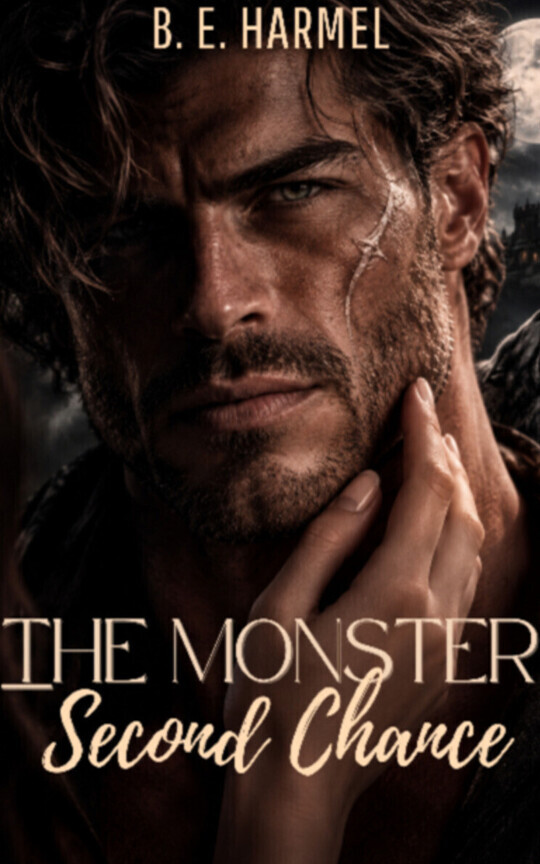
He stood out immediately. It wasn’t just that he was handsome, though he certainly was—sharp jaw, dark hair falling slightly over his brow, a lean frame that hadn’t yet filled out into a man’s but had left boyhood far behind. It was the stillness. While the other kids fidgeted, whispered, vibrated with adolescent energy, he was utterly motionless.
His gaze, dark and intent, was already fixed on me. Not with the bored resentment of his classmates, but with a cold, assessing focus that felt decades older. He looked... weathered. Not aged, but worn thin in places, like a coin passed through too many hands. Twenty, in a room of children. A wolf among lambs, pretending to graze.
“Good morning,” I announced, voice clear from years of debate club, pulling my attention from the puzzle in the back.
“I’m Ms Hawthorne—Eris Hawthorne. Your new history teacher.”
I moved to the whiteboard, grabbing a marker.
“Let’s skip the boring syllabus read-aloud for today. Instead, let’s start with a question: What’s the point of studying history?”
Silence. A few shrugged. A girl in the front ventured,
“To... learn from past mistakes?”
“Good! Not wrong. Anyone else?”
More silence. My eyes drifted to the back. He was watching me, a faint, almost imperceptible smirk on his lips, as if my attempts at engagement were a quaint little performance. Challenge accepted.
“How about you, in the back? By the window.”
I kept my tone light, conversational.
“What’s the point of all this, in your opinion?”
He didn’t shift in his seat.
“To learn who won, who lost, and how they covered it up,” he said, his voice a low, smooth baritone that didn’t crack or waver like the others’. It was a man’s voice.
“It’s a scoreboard for the powerful. The rest is just decoration.”
A few nervous titters. The class was watching us now, a tense, excited hush settling over them. This was more interesting than the Peloponnesian War.
“A cynical view,” I said, writing ‘History as a Scoreboard’ on the board.
“But not an invalid one. So, Mr....?”
I let the question hang, my marker poised.
He held my gaze, the silence stretching. Then, he leaned back.
“De Luca,” he said, as if testing the weight of the name in the new space between us. “Julian De Luca.”
De Luca.
The air in the room seemed to change. A few students glanced at each other. The heir. The ghost. The mystery.
“Julian De Luca,” I repeated, nodding as if it were any other name. I turned back to the board and circled his point.
“So, Julian suggests the victors write history to justify their power. A classic argument. Who wants to challenge that? Is there value for the... ‘losers’?”
The discussion that followed was hesitant but real. I pushed them, playing devil’s advocate, weaving in other students’ names—Chloe, Ben, Sophia. All the while, I was hyper-aware of the silent presence in the back.
He didn’t speak again, but his watchful energy was a constant pull on my attention.
As the class progressed—through a brief overview of the semester, through my attempt to spark debate about Roman imperialism—I caught him sometimes looking out the window, sometimes scribbling in a notebook, but most often just watching me.
Not the board. Not his classmates.
Me.
It was unnerving. And fascinating.
With about ten minutes left, I set a quick, impromptu task.
“Take the last page of your notebook. Write down one event in history you think is widely misunderstood. Don’t put your name on it. Pass it forward.”
The rustle of paper filled the room. As the stacks reached the front, I sorted them. My eyes flickered to the back. Julian had torn out a page, written a single line with a swift, slashing hand, and folded it once. He didn’t pass it. When the student next to him reached for it, he just shook his head, a minute movement, and slipped the folded square into his own pocket. His eyes met mine across the room. A direct, deliberate defiance. A secret he wouldn’t share.
I didn’t call him on it. I just held that dark gaze for a heartbeat longer than I should have. A silent acknowledgement of his little rebellion.
The bell rang, a sharp, shrieking sound that broke the connection. The room erupted into the chaotic pack-up of teenagers. He was the last to move, rising with a languid grace the others lacked, slinging a worn leather bag over his shoulder. He didn’t look at me again as he filed out with the others, but the space where he’d been sitting seemed to vibrate with a strange, silent tension.
As the last student disappeared and the echo of slamming lockers faded down the hall, I walked to the back of the room. His desk was empty, clean. No forgotten pen, no scrap of paper. It was as if he’d never been there at all, except for the lingering sensation of being meticulously, unsettlingly seen.
Standing alone in the sudden quiet, I let out a slow breath. My first text to Emily was already forming in my mind: “Survived first class. Met the ghost. Doesn’t participate, just observes. Older. Detached. Took a secret and walked out with it. A De Luca puzzle dropped right in my lap. Liam was right.”
Empires don’t just bite, I thought, the prickle of unseen eyes crawling up my spine once more as I gathered my things.
They watch.














Your words carry weight but never feel heavy. The pacing, the emotion, the small human moments, it’s all so effortlessly real. I kept thinking, this would look incredible on screen. The atmosphere alone could pull anyone in. It’s the kind of piece that could translate beautifully into a visual medium.